Charles Acknin remembers the sound before he remembers the screen: a 56k modem chirping its way into the internet. He was 11, living in southern France, and his father had placed a personal computer in his bedroom. It was an excellent way to lose a child to a future career. Another fascination was already waiting nearby. His father loved flight, Toulouse was half an hour away, and weekends involved radio-controlled airplanes assembled with more hope than structural integrity.
The planes flew. The planes crashed. Father and son repaired them and returned to the field. In adulthood, Acknin would give this family ritual the respectable name of iterative development. As a child, it was simply what Saturday required.
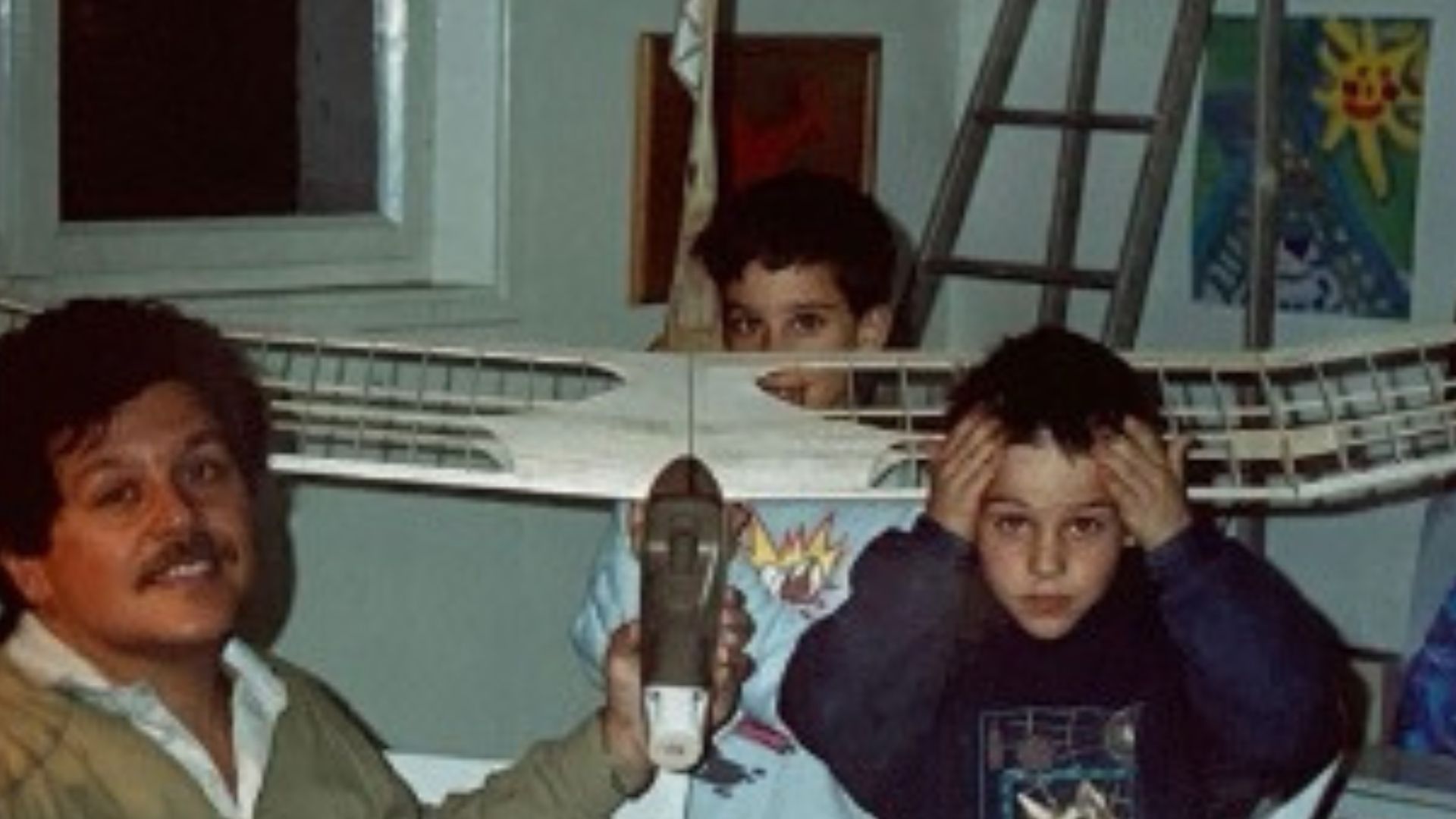
That rhythm now runs through Skyways, the Austin company Acknin co-founded to build autonomous cargo aircraft. The first Skyways machine had a three-foot wingspan, foam wings, electric motors, and a price tag around $1,000. It also had a firm relationship with gravity. Acknin welcomed the crashes because the machine was light, the damage was affordable, and each failure could become tomorrow's adjustment.
“What matters is what you've learned and what you can apply to the next step after that.”Charles Acknin
The commute with a second dimension
Acknin grew up near Toulouse, a city where Airbus assembles aircraft and people can discuss airplanes with the casual fluency other places reserve for weather. He studied computer science and software engineering, contributed to the Subversion project through Google Summer of Code, and eventually joined Google. He spent years working on search infrastructure, where enormous systems taught a useful, unsentimental lesson: hardware fails. At Google scale, hundreds of hard drives could need replacement in a day. Reliability was not the absence of failure. It was the art of expecting failure without letting the service collapse.
Silicon Valley gave him another lesson, delivered slowly on US 101. During the week, he sat in traffic. On weekends, as a private pilot, he flew with friends from Palo Alto toward Napa Valley. The contrast repeated itself: the road compressed everybody into a line while the airplane moved through three dimensions. General aviation, however, demanded pilots, airports, training, and expense. It offered freedom with a formidable entrance exam.
Then consumer drones began appearing for less than $1,000. Their appeal was not that they looked like tiny airplanes. It was that software made flight approachable. Acknin saw autonomous robotics, computer vision, and cheaper hardware converging on a question: could aircraft become ordinary transportation without requiring ordinary people to become pilots?
Small enough to tell the truth
Skyways started from software and built outward. Acknin used savings from Google to make the V1 prototype in California, then showed it to prospective customers before it had learned the expensive habit of pretending to be finished. Their feedback supplied a map. The first V2 was electric, elegant, and capable of roughly 65 miles. The initial market needed about 250.
The company added a fuel-powered cruise engine. Batteries handled vertical takeoff and landing; the engine carried the aircraft efficiently across distance and recharged those batteries in flight. The hybrid arrangement offended the tidy romance of all-electric aviation, but it did something romance often neglects: it arrived with useful range and electrical reserves.
This became Acknin's staircase. Build a version small enough to test. Put it into a real mission. Listen when the customer identifies the inconvenient bit. Generate revenue with the current aircraft and use what it earns, in money and data, to reach the next one. Ambition remained large. Its invoices arrived in manageable sizes.
The compounding flight loop
Every real route produces edge cases. Those cases become training material. Improved software permits a harder route, which produces better material.
The aircraft sees the ship
A benign demonstration can make autonomy look like a solved problem. A ship refuses to participate in the illusion. It moves, rolls, corrodes hardware, confuses ground checks, and keeps its deck in a permanent argument with the wind. When the U.S. Navy put an early Skyways aircraft aboard a vessel in 2019, sensors failed in unfamiliar ways and telemetry lit up. The environment became an impatient co-designer.
Skyways trained cameras to locate a vessel on the horizon, estimate its heading and distance, and construct an approach to the landing spot without a beacon installed on deck. The machine needed to see because waypoints alone could not describe a dynamic landing. For Acknin, this is why the company builds the aircraft around the software. Autonomy is not a feature fitted after the airframe has acquired opinions. It shapes the vehicle from the beginning.
The practical advantage compounds. Aircraft operating across three continents collect video and flight data from actual missions. An odd reflection, a false detection, or a disagreeable gust becomes material for the next computer-vision model. Competitors can buy cameras and processors. They cannot order years of awkward weather from a catalog.
“Unfortunately it's a boring moat. It’s just doing what we said we would do, consistently every time.”Charles Acknin
The remark is revealing. Autonomous aviation has endured lavish promises, particularly around passenger vehicles. Acknin talks instead about putting an aircraft in a customer's hands and having it perform the promised job. Reliability is a dull word with excellent commercial manners.
It also has to survive the move from workshop to production line. In June 2025, Skyways received a $37 million U.S. Air Force AFWERX contract intended to help carry V3 from prototype toward full-rate production. The assignment changed the species of the problem. A talented team can lavish attention on one aircraft, learn its moods, and adjust each part by hand. A fleet requires drawings that do not shrug, suppliers that arrive on time, tooling that repeats itself, and quality checks able to catch an error before the sky does.
Acknin's software history is useful here but not magical. Code can be copied with perfect fidelity; aircraft emerge from people, machines, materials, and tolerances. Skyways must turn tacit workshop knowledge into a process another technician can follow on another Tuesday. It must also make operations repeatable after the vehicle leaves Austin. A network of autonomous aircraft needs maintenance, communications, training, regulatory coordination, and a supervisor interface calm enough to manage many flights without becoming a casino dashboard.
This is the unphotogenic middle of the vision. The carbon-fiber aircraft gets the press picture. Production engineering and operational discipline decide whether it becomes a fleet. Acknin's habit of monetizing each generation supplies a useful constraint: the present machine must do work while the future one is still being drawn.
Seven minutes in a wheat field
In 2025, Skyways flew repeated beyond-visual-line-of-sight cargo routes between Grand Forks Air Force Base and Cavalier Space Force Station. The V2 completed 20 operational flights over 12 days, moving supplies through controlled airspace at 3,500 feet. One load was 23 pounds of Chick-fil-A, which gave the demonstration a pleasantly terrestrial measure of progress: a drive that could take more than three hours became a 45-minute flight.
The V3 supplied the less cheerful test. During a climb, one engine cylinder failed while another partly masked the problem. The aircraft detected declining performance and shifted into vertical-lift mode, hovering at nearly 700 feet. The change bought the team time. Seven minutes later, with battery reserves running low, it landed upright in a North Dakota wheat field without damage.
The team nicknamed the aircraft “Wheat Whacker.” The joke does useful work: it turns an emergency into a remembered engineering case without sanding off the seriousness. For Acknin's desired network, one operator may supervise five, ten, or eventually many more aircraft. That ratio collapses if every surprise becomes a human emergency. The aircraft must create options on its own.
Cargo earns the invitation
Acknin's ambition extends beyond boxes. He imagines fleets of autonomous aircraft larger than today's crewed airlines and, eventually, vehicles carrying people. His route there begins with the loads least likely to complain: parts for ships, supplies for remote bases, cargo for offshore wind farms, and goods moving between islands.
Cargo-first is an engineering decision and a social one. People reasonably hesitate before climbing into a pilotless machine. A package has fewer reservations. Repeated cargo flights can produce operational evidence, regulatory experience, and public familiarity without asking passengers to underwrite the learning curve. If a future aircraft can present regulators with extensive autonomous flight hours before adding seats, the conversation changes from prophecy to recordkeeping.
That patience has roots beyond the workshop. Acknin remembers climbing the 4,000-meter Castor peak in the Mont Rose massif with his mother and brother. The image that stayed with him was a knife-edge ridge, wind across his face, summit visible ahead. It is an apt founder memory because the pleasure was neither the parking lot nor a flag planted at the end. It was the exposed route between them.
Skyways remains on such a ridge. A prototype that travels 1,000 miles is one achievement; manufacturing aircraft repeatedly, supervising them economically, and sharing regulated airspace are separate disciplines. Acknin does not lack for altitude in his aspirations. His more transferable habit is down on the workbench: make the next machine, let reality have a vote, and return after the crash with a better question.