At a New York CPA show, Chandra Bhansali asked an accountant he knew how business was going. The answer was an odd one for someone with a successful practice: “Chandra, I don’t run my own accounting practice.” Asked who did, the accountant pointed to Intuit’s booth. Bhansali would later describe that exchange as a pivotal moment in his career. A conversation about business had become a conversation about who was in charge.
The accountant’s complaint stayed with him. A professional could own the firm, hold the qualifications and take responsibility for the work, yet still feel that somebody else had arranged the working day. Software decisions made elsewhere could determine what arrived on the desk and what needed fixing. Bhansali saw a business opportunity inside that frustration. He also saw a question worth pursuing for years: could technology give the accountant more say in how the work happened?
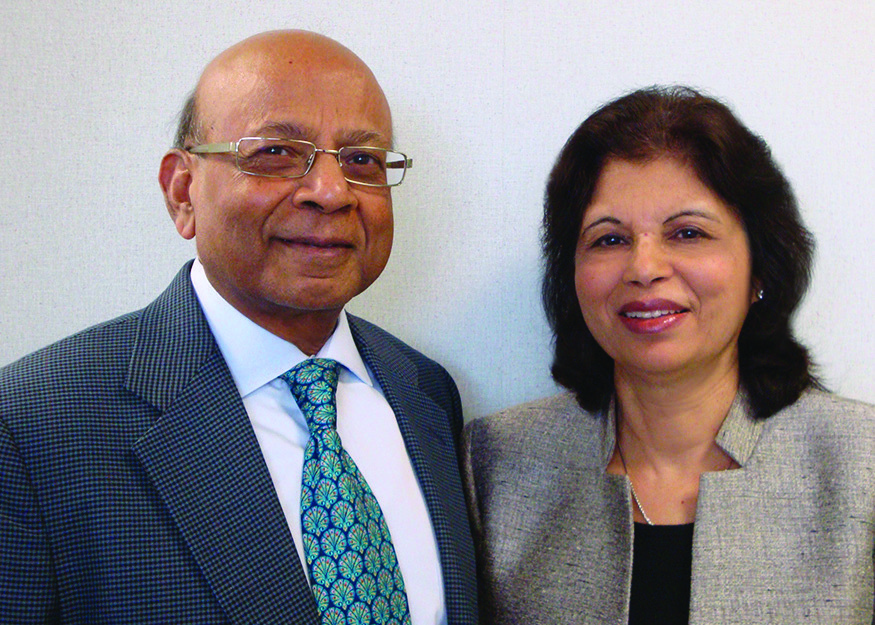
That concern gave AccountantsWorld its particular character. Chandra and his wife and co-founder, Sharada Bhansali, built around the professional accountant and the relationship with the business client. Their position was explicit: they would sell through the accounting profession rather than compete for its clients. In an industry accustomed to announcing features, they were making a promise about allegiance. The choice of customer was part of the product.
The sale that failed to produce a retirement
Bhansali’s route into accounting software began with engineering. Born in Jodhpur, India, he studied at MBM Engineering College and the Indian Institute of Science before earning a doctorate at the University at Buffalo. His early career included a management role at Perkin Elmer. The engineering background matters because his later arguments repeatedly return to processes: where information enters, where it stalls and who has to put it right.
Before AccountantsWorld, the couple built Micro Vision Software, known for its Tax Relief professional tax program. Sharada has described starting that business without a background in accounting or tax preparation. She went on to lead product development across both businesses. A profile of Chandra that treats her as someone standing beside the founder would miss the partnership doing the building.
In 2003, they sold their tax software business. Chandra recalled that friends and family expected them to retire; instead, the following decade brought more work. They had already become interested in the internet’s possibilities in 1999. Selling the earlier business left them with another problem they wanted to solve. It is an inconvenient sort of ending for a success story: the founders get to the exit and discover they still have work to do.
Being early still sends a bill
The web offered the prospect of accountants and clients working together without repeatedly moving files between separate computers. Bhansali was willing to pursue that prospect before it became a comfortable industry assumption. He later acknowledged that the early commitment to web-based products left AccountantsWorld losing money for several years. He credited the team and persistence with getting through it. Being early has excellent publicity and less agreeable bookkeeping.
His recollection complicates the easy version of the founder story. There was a period when the conviction existed and the financial reward did not. The company had to keep developing while persuading accountants that a different arrangement of work was possible. Support from colleagues appears in his explanation of how they continued; the story belongs to a working team as well as to a founder’s judgment.
Recognition eventually supplied a public record of that effort. By 2016, Chandra and Sharada had accumulated 18 appearances between them on Accounting Today’s Top 100 Most Influential People in Accounting list. Chandra responded by directing attention to the team. The number is a combined tally, a small but necessary distinction in a business built by two people whose contributions were closely connected.
“We overcame that with the support of our team and our persistence.”
Chandra Bhansali, on the early web years
His unfashionable enthusiasm for ordinary work
Payroll and bookkeeping rarely provide glamorous material for a business biography. Bhansali gave them sustained attention anyway. In 2018, while discussing the profession’s interest in advisory work, he argued that familiar transaction services deserved another look. Better automation could change their economics. He regarded the daily work as a route to a stronger practice and, potentially, to further advice that clients would need.
His explanation was practical. Payroll systems could handle direct deposits, tax deposits and filing tasks that otherwise consumed staff time. Bookkeeping and transaction processing could become easier to deliver through organized workflows. He wanted accountants to examine the effort behind a service before accepting its reputation as low margin. A dull job can become an interesting business when the machinery around it changes.
He described the mechanics in detail: capture an invoice, extract its information, route uncertain items for checking, seek approval and arrange payment. The value lay in connecting those stages. Faster calculation alone would leave many of the handoffs intact. His attention went to the journey of the work, including the moments when somebody had to wait for somebody else. Anyone who has chased an approval can appreciate the distinction.
In that account of the cloud, a shared system connected the firm with its clients, banks and agencies. The technology mattered because people in different places could complete a process together. It is a useful window into his interests: the software’s appeal depended on what happened to the actual job. A feature list needed to survive contact with an invoice.
- 01CaptureGet the invoice
- 02CheckReview the details
- 03ApproveMake the decision
- 04PayComplete the work
The accountant deserved a better Tuesday
Bhansali also wrote about the people doing the work. In 2016, he urged accounting firms to pay attention to useful tools, a clear mission, manageable workloads and recognition of individual contributions. He was skeptical that office treats and recreation could substitute for those things. A foosball table may improve lunch; it has limited authority over a pile of avoidable data entry.
He linked technology choices with the kind of employment a firm could offer. Collaborative cloud systems could support remote work and remove repetitive tasks. Employees could spend more time contributing advice and less time repairing mistakes. This was an argument about professional satisfaction as much as software purchasing. He wanted staff to understand why their work mattered to clients.
His thinking about relevance followed a similar direction. In 2018, he asked accountants to begin by understanding clients’ needs and then reshape their own firms to meet them. Giving recommendations was only part of the responsibility. A client might not know which services had become possible, so the accountant had to imagine a more useful arrangement and develop the capacity to deliver it.
The sequence is demanding. It asks the professional to change the practice before expecting the client to appreciate the possibilities. That helps explain the recurring emphasis on control in his work. An accountant needs enough command of the process to make commitments about service. Otherwise, a promising conversation with a client can run straight into the limits of the office behind it.
A second sale, and a third venture
IRIS Software Group announced its acquisition of AccountantsWorld on December 30, 2021. The business had grown into a suite serving thousands of CPA firms, covering accounting, payroll, documents, portals and practice management. For Bhansali, joining IRIS was another way to advance the mission of making accountants more closely involved in their clients’ businesses. The acquisition placed the company within a larger accounting software group.
By January 2025, he was publicly discussing a third venture, Maxmodus, aimed at small and midsize businesses. He set out a proposed division of labor for a future co-founder: he would concentrate on foundations, strategy and direction, while the partner would drive execution. Initial funding was already in place, he said. Decades into building companies, he was still thinking carefully about who should do which part of the work.
The change of technology is substantial. Maxmodus describes its work in terms of large language models, autonomous agents and business operating systems. The concern underneath sounds familiar: make business processes work better for the people responsible for them. Its accounts payable pilot addresses invoice reading, coding, duplicate checks and bill creation. Those are concrete tasks with an obvious connection to his earlier attention to accounting workflows.
These are the company’s stated aims and product descriptions. They give a clear picture of what he is attempting, while the next chapter depends on execution. His ambition now reaches beyond the accounting firm to the operations of the small business itself. The setting has widened, and the invoice has somehow managed to keep its part in the story.
The question survives the software
A 2026 Maxmodus recruitment post added a revealing requirement. Bhansali was looking for an accountant who could also build software, someone prepared to question inherited ways of working. Applicants were asked to reason about what they would remove and what they would preserve if designing accounting afresh. That is a more interesting invitation than a list of familiar software packages. It asks for judgment about the work itself.
His public writing about business processes makes the connection clearer. When software fails to fit a business, he observes, people compensate with spreadsheets, messages and manual handoffs. That complaint is close to the one he heard at the CPA show: the system has quietly begun deciding how everybody works. His proposed tools have changed with the available technology. His attention keeps returning to the same uneasy relationship.
There is a recognizable continuity across the tax business, AccountantsWorld and Maxmodus. Bhansali looks at routine work and asks who has the freedom to rearrange it. He has pursued that interest with a co-founder, a product team and successive generations of software. The accountant at the trade show pointed across the room when asked who ran his practice. Bhansali has spent much of his career trying to make a different answer possible.