Twenty paise was the price of an interruption. In 2008, Chaitanya Nallan’s mobile advertising company, mGinger, offered subscribers that amount for every advertisement they received. The arrangement came with conditions set by the recipient: subjects of interest, a daily limit and a convenient time. Even the sales pitch had to wait its turn.
It is an unexpectedly useful place to begin the story of a beauty entrepreneur. Years before SkinKraft and Vedix, Nallan was working on a small negotiation between a business and its customer. A company wanted attention. A person wanted something relevant. His job was to make the exchange worth accepting.
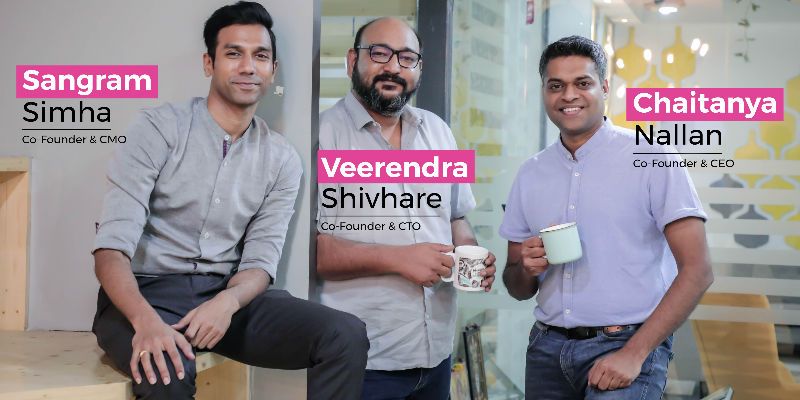
Nearly two decades later, the merchandise had changed considerably. IncNut Digital, the business he co-founded with Sangram Simha and Veerendra Shivhare, had moved from lifestyle publishing into personalized beauty. Emami reached a 60% holding in IncNut in June 2026. Between those milestones lies a career spent giving the customer questions to answer, then trying to build a business around the reply.
Twenty paise for your attention
mGinger began in April 2007, founded by Nallan, Shivhare and Anil Sharma in Bengaluru. Its premise gave mobile subscribers some control over advertising that reached them. For advertisers, declared interests and location offered a way to make an offer more useful. For subscribers, the small payment provided an additional reason to participate.
By August 2008, the company reported 1.6 million subscribers and 300 advertisers, most of them local businesses. The attraction was practical: an offer from a nearby shop could lead to an actual visit. Nallan was working with a version of personalization that fitted inside a text message, long before a beauty questionnaire entered the picture.
There were awkward details. An early examination of the service found a gap between attracting subscribers and signing enough advertisers to keep their phones busy. A payout threshold also made small earnings difficult to use. Nallan discussed allowing balances to be spent on mobile content. The idea needed more than an enthusiastic registration page.
He also had to manage expectations. Some people imagined an income where the company offered occasional pocket money. That distinction matters to the portrait: the early business required explanations about what customers would actually receive. Selling participation meant making the bargain understandable, including its rather modest financial rewards.
“We work on the premise of letting the consumers spell their interests.”
Chaitanya Nallan · 2008
A T-shirt idea that travelled
Nallan’s education took him through IIT Kharagpur and the Indian School of Business in Hyderabad. His working history included Infosys, where he and Shivhare were colleagues. Their association continued at mGinger and later at IncNut. The recurring partnership is a more concrete thread through his career than any tidy story of a single sudden revelation.
Still, he has a memorable encounter to offer. In 2008, while pitching mGinger at an entrepreneurial gathering, he met Mukesh Bansal. The early Myntra proposition involved customizable T-shirts. Nallan recalled being taken by the idea. A customer could help determine the product, rather than simply select from what a company had already decided to make.
It would be too neat to give a T-shirt responsibility for everything that followed. The encounter belongs beside several years of advertising, publishing and customer conversations. Its value is smaller and more interesting: it shows an idea catching his attention before he had a beauty business in which to apply it.
The readers who answered back
IncNut dates its founding to 2011. The team’s history also includes a later coming together: Nallan and Shivhare met Simha in 2012, when he was already building StyleCraze. Simha brought experience as CaratLane’s marketing head. Across the eventual founding trio, the work encompassed leadership, marketing and technology. Beauty commerce would ask them to stretch further.
The publishing properties gave them an audience with recurring, specific interests. StyleCraze addressed beauty and lifestyle; MomJunction built a readership around parenting. Promoting other companies’ products generated feedback as well as traffic. Nallan described hearing from readers dissatisfied with what they bought. For a publisher recommending products, that is an uncomfortable sort of correspondence.
The team investigated through surveys and conversations with specialists. SkinKraft was conceptualized in 2017 and began selling online in mid-2018. The progression matters. The founders had access to people already interested in the category, and those people were describing a difficulty with choosing. Their next task was to create something that could answer it.
Learning to put the answer in a box
Moving from articles to products changed the work. Publishing could reveal dissatisfaction and explain a proposition. A physical product also required development, manufacturing and delivery. Nallan described learning unfamiliar domains, hiring formulation specialists and establishing a lab. A good headline could bring someone through the door; it could hardly pack the order.
SkinKraft and Vedix gave the personalization idea two expressions. SkinKraft organized beauty recommendations around customer profiles. Vedix built its identity around Ayurvedic principles and individual preferences and characteristics. Both made the customer’s answers part of the shopping process. The brands shared an approach to choice while presenting distinct reasons for choosing.
In SkinKraft’s early model, a questionnaire led to a recommended routine. Buyers used the products and supplied feedback, which could inform changes. The loop placed another conversation after checkout. That was an important operational commitment: once a company asks how a product worked, it has invited an answer that may require action.
The design also changes the balance of effort at the start of a purchase. A shopper has to pause and answer, while the company takes responsibility for organizing the resulting choice. Asking is easy to put on a website. Making the answers useful requires the product team, the recommendation system and the order itself to agree. That helps explain why the transition occupied more than the marketing department.
In September 2019, Nallan said SkinKraft had reached 30,000 regimens a month within nine months, with almost a million women registered for its questionnaire. These were figures from an early period, describing different activities. Completing a questionnaire and buying a routine are separate decisions. The business had to persuade people to make both.
There was a geographic logic to the capabilities behind the product, too. Nallan described Hyderabad as a useful base for formulation expertise and Bengaluru as a place to find technology and data talent. His explanation was refreshingly specific. Each city supplied people who could do a particular part of the work.
Taking singles, changing the terms
Back in 2008, mGinger had also explored regional-language messaging, with Telugu and Hindi among the planned starting points. Relevance included the language in which an offer arrived. The detail fits a career in which the customer’s circumstances repeatedly affected the shape of the proposition.
His public advice to entrepreneurs has included a cricket image: “Stay put on the crease and keep taking singles”. It suggests patience with an activity that rarely lends itself to a dramatic announcement. Small advances count. So does remaining in a position to recognize an opening when it arrives.
Earlier in his career, the 2008 downturn had prompted a practical change at mGinger. Nallan described adding cost-per-lead and cost-per-acquisition advertising arrangements to a cost-per-view model. Customers wanted a closer connection between spending and results. His team adjusted what it sold. Survival required a revised commercial offer alongside confidence in the original idea.
At IncNut, the later move into products required another revision of what the business could do. Having readers helped the company understand demand, but manufacturing introduced obligations that publishing did not carry. The founder had to become a student again, with specialists hired to supply expertise that an advertising background could not provide.
Nallan also wrote about technology and shopping as a contributor, publishing articles in 2020 and 2021. His public record includes both building businesses and explaining the logic behind them. That combination suits a founder whose products ask for customer participation: the company has to make a case for why answering its questions is worth the time.
The next customer is harder to reach
The Emami chapter arrived in May 2026 with an agreement for a 60% stake in IncNut. The announced ₹321 crore consideration included performance-linked adjustments over 24 months. The remaining holding was to be acquired in two tranches within four and a half years of closing, with future performance helping determine the consideration.
Emami’s holding in IncNut after the June 11 share acquisition.
In June, Emami completed the step to 60% by acquiring another 1,064 shares. For Nallan, the partnership offered a way to accelerate innovation and extend the brands’ reach. A business developed through digital conversations was joining forces with a consumer company operating at a different scale. The ambition was now accompanied by a new owner.
The transaction also arrived after a difficult revenue period. IncNut’s sales had declined across the three fiscal years described in the acquisition coverage, with FY2024-25 sales around ₹175 crore. The deal therefore sits inside a story that includes pressure as well as progress. Wider reach has work to do; it cannot be counted as an accomplished result.
Nallan’s career offers a useful way to think about that next task. At mGinger, the customer chose which message could arrive. At SkinKraft and Vedix, answers helped shape a purchase. Each business asked people to contribute something before it could deliver value. The enduring challenge is to make that contribution feel worthwhile when the message arrives, the parcel opens and the customer decides whether to return.