The website was supposed to be the hard part. Harshil Mathur and Shashank Kumar were working on a crowdfunding project when they ran into an awkward complication: accepting money online. Two engineers could build the place where people would gather. Getting a bank to let those people pay was another undertaking altogether. A checkout button, it turned out, came with a surprisingly large waiting room.
This was India in the early 2010s, when a young internet business could imagine its customers long before it could collect their money. Existing payment services were geared towards established enterprises. Small companies faced paperwork, difficult integrations and bank conversations for which they had neither the staff nor the vocabulary. Mathur and Kumar began asking other founders how they managed. The frustration was familiar. Some were still relying on cash.
That changed the assignment. The crowdfunding site could wait. The two friends would work on the machinery underneath it. In 2014 they founded Razorpay, aiming to make online payments accessible to businesses that looked rather like their own. Their first useful discovery was a nuisance. Their second was that plenty of people shared it.
A mechanical engineer with other plans
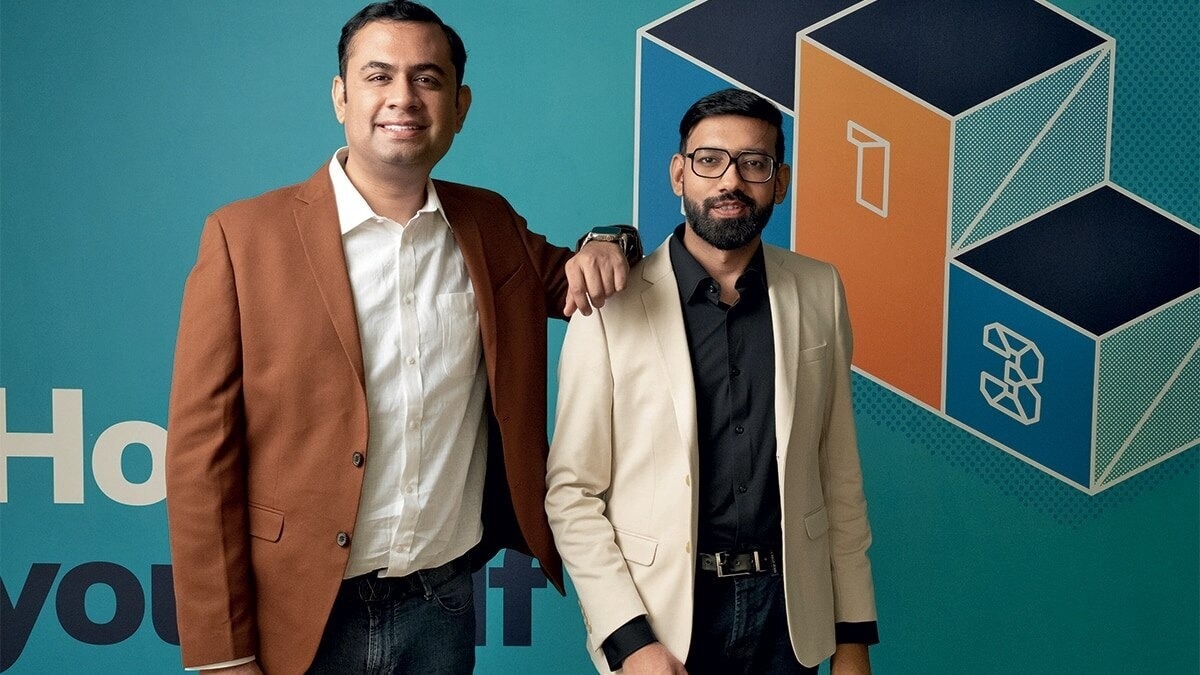
Mathur grew up in Jaipur and arrived at IIT Roorkee in 2009. His degree would say mechanical engineering; his spare time would tell a different story. He was interested in software, and the campus coding community gave that interest somewhere to go. Through SDSLabs, he met Kumar, who studied computer science and graduated a year ahead of him. Their friendship began with making things, well before either had a fintech title.
After graduating in 2013, Mathur joined Schlumberger. Kumar went to Microsoft. They kept building together around their jobs, separated by geography but connected by an appetite for code. There is something pleasingly unglamorous about that beginning. Before the fundraising, the financial terminology and the talks about India's digital economy, there were two friends who enjoyed a particular kind of work and kept finding excuses to do it.
Mathur eventually left his job. Jaipur offered a practical starting point, including his parents' home. A small startup has many expenses; a familiar roof helps. Years later, IIT Roorkee would give him its Distinguished Young Alumnus Award for 2019. By then, the mechanical engineering graduate had made a career from the software he had continued writing alongside his prescribed course.
The bankers required a costume change
Writing the gateway did not automatically produce permission to operate it. Mathur recalls approaching roughly a hundred bankers in the early stretch. Each meeting required young founders without a banking background to persuade an institution to trust them with payments. The problem they were solving was easy for another startup to recognise. The proposition was less comfortable on the other side of a bank desk.
Razorpay joined Y Combinator's winter 2015 batch. During their time there, Mathur and Kumar discussed their difficulty being taken seriously with Sam Altman, then YC's president. His suggestion was wonderfully literal: dress more like the people they were trying to persuade. They had suits made. Software could improve the payment experience; apparently a tailor could improve the meeting.
HDFC Bank eventually agreed to partner with them. The arrangement required a ₹25 lakh security deposit, and Kumar's grandfather contributed savings to help make it possible. Behind the tidy account of an institutional breakthrough was a family taking a financial chance. The bank partnership gave their software a route into the world. Getting there had required considerably more than software.
“We didn’t have a lot of hobbies and we loved to code.”
Harshil Mathur · 2025
A small customer can become a large one
The founders made a choice about whom to serve. A business with a handful of people might be small today and much larger later. Helping it accept its earliest payments could establish a relationship that lasted through that growth. The bet put young businesses at the centre of Razorpay's work, rather than treating them as smaller versions of an enterprise contract.
By 2017, the company was extending its attention beyond collecting a payment. Razorpay 2.0 included tools for subscriptions, invoices, payment links and routing money. These were adjacent problems in the working day of a merchant. Once money arrives, it still has to be identified, divided, reconciled and sent somewhere. The glamour of a sale wears off quickly when somebody has to sort out the ledger.
The expansion continued into business banking software through RazorpayX and credit services through Razorpay Capital. Its 2021 acquisition of TERA Finlabs added lending technology. A founder who originally wanted to remove a checkout obstacle was now helping build systems for more of a company's financial life. Each additional responsibility also made the original promise harder to keep: simplify the work without making the customer manage another complicated system.
Funding gave that ambition room. In October 2020, Razorpay reached a $1 billion valuation. A December 2021 Series F brought $375 million and a $7.5 billion valuation. Those figures describe financing milestones at particular moments. They do not tell us whether a shop gets its settlement on time. That quieter question would produce one of the more revealing episodes in Mathur's career.
Who gets paid when there is not enough?
In 2020, restrictions at Yes Bank left about 30% of Razorpay's merchant funds locked up. The founders faced a choice over the money they could still distribute. They could settle with a small number of large customers or support thousands of smaller ones. They chose the smaller businesses. Mathur later described the decision as a call made in the middle of the night, based on who needed the funds more urgently.
It is a useful episode because the interests did not line up neatly. Large customers matter commercially. Small customers may have less room to absorb a delayed payment. A company that began by asking why little businesses were so poorly served had to decide what that belief meant when serving them became difficult. A payment platform's priorities become particularly visible when the money stops moving.
of Razorpay’s merchant funds were locked up during the 2020 Yes Bank restrictions, in Mathur’s later account.
Even a faster company has to wait
Another interruption arrived in December 2022, when the Reserve Bank of India required Razorpay to pause onboarding new online merchants while the payment aggregator authorisation process continued. The restriction concerned new business, and final approval arrived in December 2023. It was a reminder that an engineer can shorten an integration without being able to shorten every institutional timetable.
During the pause, the company concentrated on existing customers and a wider set of products. Mathur spoke about increasing the number of products each customer used. That gave the business another way to develop while new gateway signups were constrained. For a founder associated with speed, this was a different operating problem: finding useful work inside a limit someone else had set.
Razorpay was also taking its work beyond India. It acquired a majority stake in Malaysia's Curlec in 2022 and launched a payment gateway there in 2023. Singapore followed in March 2025. These moves carried the company into different banking relationships and local payment systems. Expansion brought a fresh version of an old task: understanding how people actually move money before trying to make that movement easier.
- 2022Malaysia
Majority stake in Curlec - 2023Malaysia
Payment gateway launch - 2025Singapore
Market expansion
The black belt behind the bank meetings
Mathur has another education that does not appear on his engineering certificate. He began karate at school, after his father chose it as a hobby for him. He earned a black belt and won a national-level silver medal. He has described himself as an ambivert and recalled being a shy child who had questions but hesitated to ask them.
Leading the student software group at college meant speaking to other students. Running Razorpay meant meetings in which being quiet was unlikely to secure a bank partnership. In his account, karate helped build confidence and taught him to stay composed during competition. The lesson is modest enough to be useful: preparation includes learning how to behave while somebody else puts you under pressure.
He also follows Formula One and enjoys karting, interests he has connected with his preference for speed in business. There is an agreeable tension in the combination. Racing rewards pace; karate requires control. Payments asks for both. The customer wants the transaction to happen immediately and the person handling it to be extremely careful.
Back at the keyboard
Artificial intelligence has brought Mathur's personal coding habit into public view again. His website introduces a collection of weekend projects: a tracker for Bengaluru's Ejipura flyover, an experiment where language models play Pokémon, and a tool for retrieving Reserve Bank of India documents. The range is unusually specific. Here is a payments chief also wondering what an AI model might do in a Pokémon battle.
At Razorpay, the experiments have a commercial counterpart. In October 2025, the company announced an initiative with NPCI and OpenAI to explore agentic payments, including conversational shopping and checkout. In February 2026, it announced an India payments partnership with Replit. The underlying question had a familiar shape: if software makes it easier to build or discover something, what still stands between that activity and getting paid?
By October 2026, Razorpay had also announced a partnership to help Indian businesses advertise on ChatGPT through Razorpay Engage. Meanwhile, reporting in August described preparations for a public listing, including a confidential draft filing reported earlier in the year. Those are current developments, with their own execution still ahead. A proposal for AI commerce and a completed purchase are different stages of work.
Mathur's stated ambitions keep returning to the business using the tools. In 2026, he described success in terms of customers who would miss Razorpay and employees who had been able to do meaningful work there. It is a demanding measure because it has to be earned repeatedly. A valuation arrives on a particular date. A merchant's next working day arrives tomorrow.
The early crowdfunding project left Mathur with a problem he could not ignore. More than a decade later, his new projects still circle the same practical territory: a person wants to do something, and a piece of infrastructure gets in the way. He keeps writing software for the gap. Somewhere behind the payments executive, the student in the coding lab remains busy.
Keep following the work
Explore Mathur’s weekend projects, his GitHub, LinkedIn and Twitter/X. Visit Razorpay and its blog.
Watch: Mathur at Startup School India