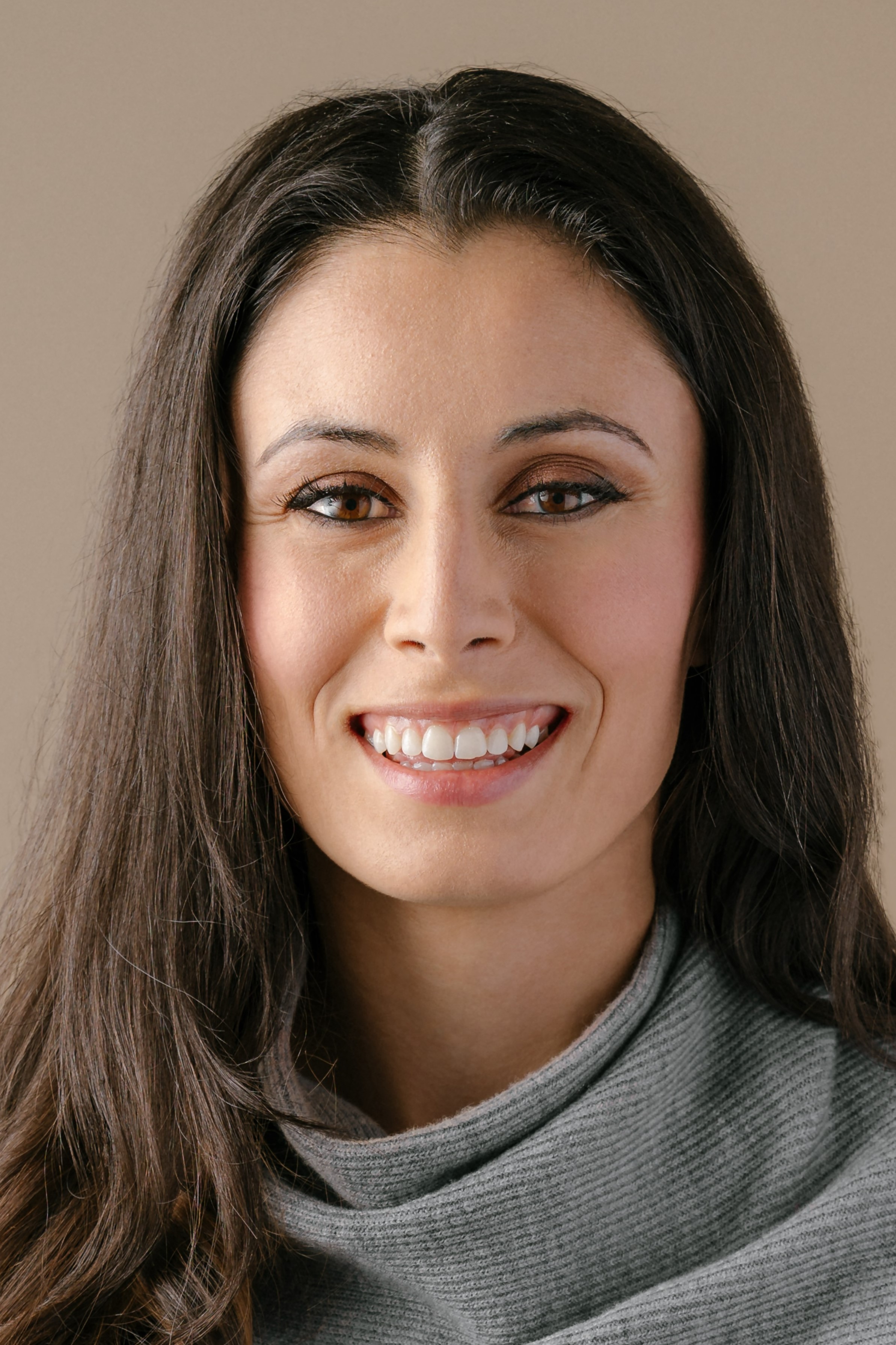
Six years ago, Celine Halioua walked into pitch meetings and got laughed out of them. She was proposing a daily prescription pill - beef-flavored - that would make old dogs live longer. Today she's closing in on the first FDA approval for a longevity drug in any species on earth.
The story begins in Austin, Texas, where Celine grew up as the first-generation American daughter of a Moroccan mother and a German father. She grew up surrounded almost entirely by rescue animals - a detail that is less biography and more foreshadowing. She enrolled at the University of Texas at Austin to study neuroscience, picked up German as a minor (the accent, presumably, was already in the genes), and in 2015 spent a year at Uppsala University in Sweden researching nanotechnology.
The turn came during a summer fellowship at the Sanford Consortium for Regenerative Medicine in San Diego. She had rented a room from John, an older man who seemed energetic, warm, and defiant about his age. The following summer she returned to find him diagnosed with Stage IV pancreatic cancer. Every morning she drove to the lab and worked with glioblastoma cell lines - each sample a record of someone who had died. Every evening she came home to John, who was still running, still moving, still trying. The contrast was unbearable. "It's a strange feeling, Celine, knowing how I will go in the end," he told her. That sentence did not leave her.
By the time you're done running a human lifespan extension trial, your patent would be expired.
- Celine Halioua
She went to Oxford to study the health economics of gene therapy - a doctorate she never finished, because a better problem pulled her away. Longevity research, she realized, had a fundamental paradox: the only way to prove a drug extends human lifespan is a trial that takes longer than any company can finance. By the time you'd have results, you'd have no patent left. The field was trapped.
Her solution was dogs. Not as a consolation prize - as a genuine scientific strategy. Dogs develop cancer, dementia, Parkinson's-like symptoms, and metabolic dysfunction at rates and in forms strikingly similar to humans. A canine trial could run in years, not decades. And the FDA's veterinary approval pathway is shorter and far less expensive than the human equivalent. The regulatory route alone would cost roughly $50 million - versus a billion-plus for human longevity trials.
She spent a year as Chief of Staff to Laura Deming at The Longevity Fund - one of the first venture funds to take aging science seriously - learning the landscape before leaving Oxford and founding Loyal in late 2019. She was 24 years old.
Loyal's drug for senior dog lifespan extension drug LOY-002 has completed its FDA efficacy package. We are on track to hopefully bring the first longevity drug to market this year.
- Celine Halioua, February 2025
The early years were defined by one specific kind of laughter. Investors - serious, experienced people - heard "drug to make dogs live longer" and could not take it seriously. She raised money anyway: Khosla Ventures, Bain Capital, First Round Capital, Valor Equity Partners. By 2026, after a $100M Series C led by age1 (the next generation of Laura Deming's Longevity Fund) and co-invested by Baillie Gifford, the total crossed $250 million.
The flagship program is LOY-002, a prescription daily pill targeting the metabolic drivers of aging in senior dogs. It works by mimicking some effects of caloric restriction without actually making the dog eat less - a critical distinction, because owners cannot train dogs who have lost their appetite. It's beef-flavored. These details matter.
The STAY study - LOY-002's pivotal efficacy trial - enrolled more than 1,300 dogs across 70+ veterinary clinics nationwide. That makes it the largest clinical trial ever conducted in animal health. As of early 2026, LOY-002 has cleared two of three major FDA requirements for Expanded Conditional Approval: safety acceptance and efficacy acceptance (RXE). The third is in progress. Conditional approval could arrive later in 2026.
The landmark came earlier: in 2023, the FDA formally accepted - for the first time in history - that a drug can be developed and approved specifically for lifespan extension itself. No underlying disease. Just healthy, longer life. Celine had pursued that ruling as a deliberate regulatory strategy, and it represented, in her words, "the lions share of the existential risk of both the drug program and of Loyal." Once that letter arrived, the diligence question that no data presentation could answer was answered. It was also a precedent that will outlast any single drug.
Behind LOY-002, there are two more programs in the pipeline. Loyal has also built a continuing education program that now reaches thousands of veterinary professionals, seeding awareness in the clinical network that will eventually prescribe and monitor these drugs.
This financing marks a transition point for Loyal. We are shifting from defining what's possible in longevity science for dogs to preparing to make these therapies available.
- Celine Halioua, Series C announcement, February 2026
What Celine is doing with dogs is not a detour from human longevity - it's a proof of concept, a regulatory precedent, and a dataset. The 40% translation rate from canine to human clinical trials (versus the 9% baseline for drugs entering human trials without animal longevity data) is not incidental. It's the business model for the next stage.
In her own words, she indexes to being embarrassed of who she was a year ago, every year. Her guiding principle - "opportunity is at the intersection" - isn't a tagline. It describes the exact move she made: veterinary medicine meets longevity biology meets regulatory strategy meets direct-to-consumer animal health. Nobody had combined those four things before. The answer was there the whole time, at the crossroads of fields nobody had thought to connect.
She was named 2024 Outstanding Young Texas Ex by the University of Texas Alumni Association, has spoken at SXSW and the Aspen Ideas Festival, and was named to Forbes' Next Billion-Dollar Startups list. She currently lives in San Francisco with her Rottweiler, Wilma - a rescue, naturally.