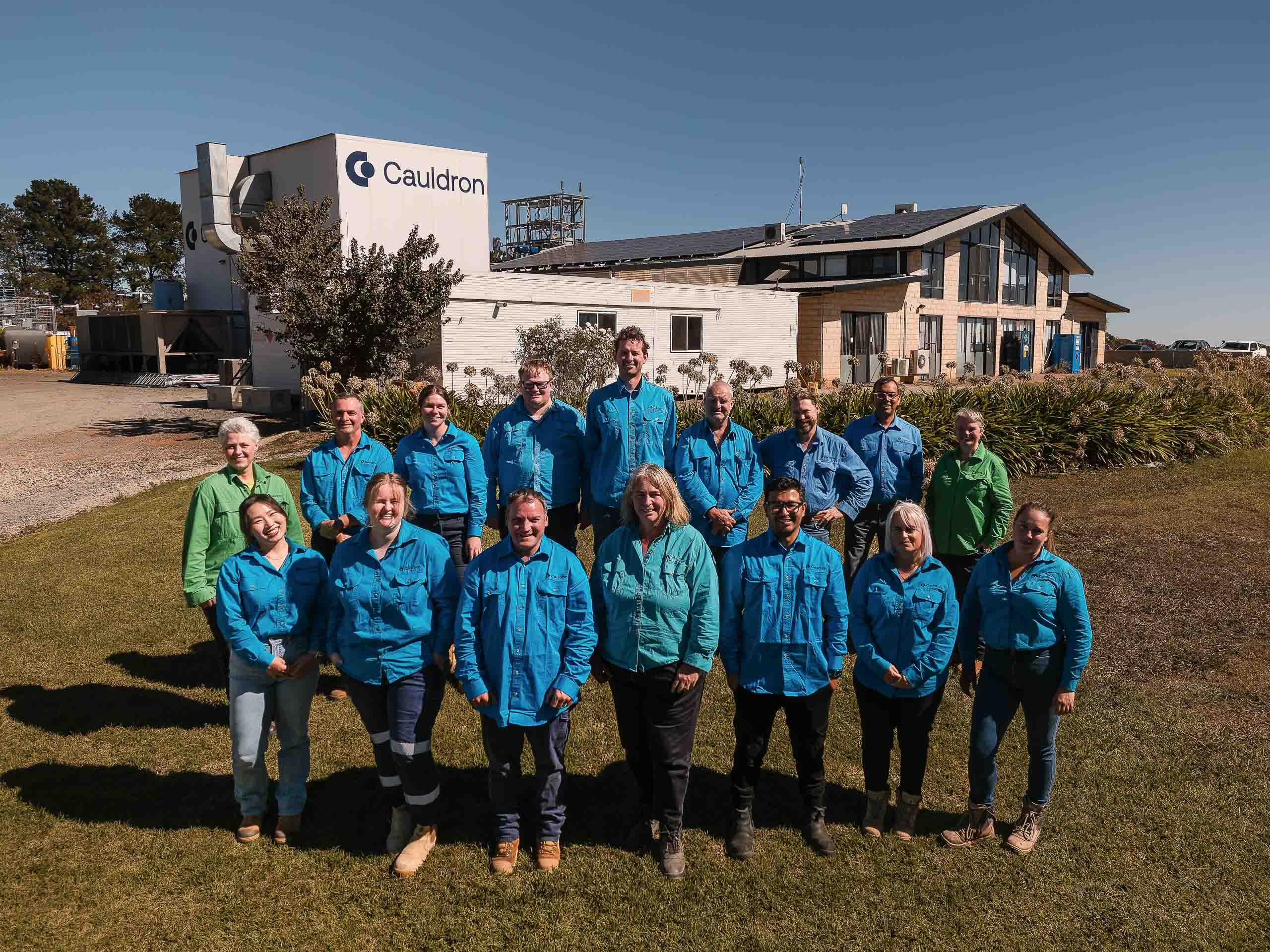
A fermentation tank has an awkward habit. Just when its microscopic workforce has done something useful, the operation stops. The product comes out. Equipment is cleaned. Another production cycle begins. For a company trying to sell an everyday ingredient at an everyday price, those interruptions belong in the business plan. Cauldron Ferm has built a company around asking how much of that stopping is necessary.
- Cauldron helps other companies manufacture bio-based ingredients.
- Its hyper-fermentation platform keeps cultures productive for extended runs.
- The commercial test: more output per tank, at a price customers can use.
Consider the difference between inventing an ingredient and supplying one. A promising sample answers a scientific question. A buyer needs repeatable shipments, dependable quality and a tolerable invoice. Cauldron occupies the awkward stretch between those accomplishments. Its customers bring biological processes; it brings manufacturing expertise and a proprietary continuous-fermentation platform. The ambition reaches food, chemicals, materials and fuels.
A startup with an inheritance
Cauldron was founded in 2022, but the knowledge inside it is considerably older. Agritechnology, the regional Australian research business where Michele Stansfield worked for more than a decade, had spent decades developing continuous fermentation. Cauldron acquired its intellectual property and infrastructure with seed funding in 2023. The startup arrived with something more useful than a clean sheet: accumulated operating experience.
In her account of the company’s formation, Stansfield describes investors confronting a manufacturing shortage and bringing industry participants together. There were ventures developing precision-fermented products. There was too little capacity to make them. A research business became the foundation for a manufacturing company because the surrounding market suddenly needed what it knew.
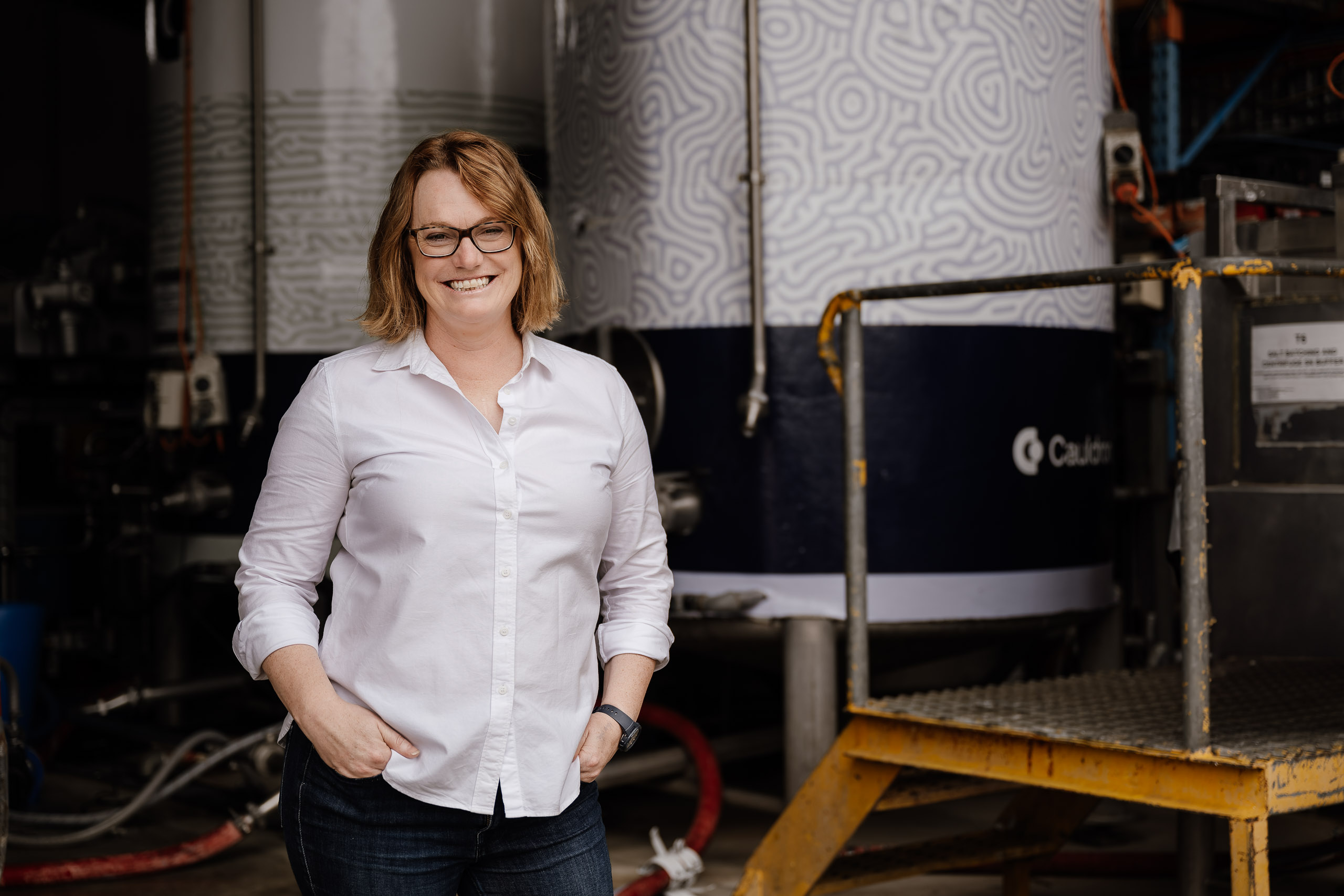
Stansfield also credits the UNSW Founders accelerator with changing her commercial understanding. “I didn’t know the value of the business when I started it,” she said. Co-founder and CFO David Kestenbaum brought a complementary background: venture investing and company building at AB InBev’s ZX Ventures. The partnership joins fermentation practice to the problem of financing its deployment.
The trouble with a very long shift
Continuous fermentation sounds wonderfully straightforward: supply inputs, keep microorganisms productive, harvest output, repeat without restarting the whole operation. Biology adds qualifications. An unwanted organism can enter the culture. A population can change genetically over time, reducing production of the molecule the customer actually wants. Keeping a tank occupied and keeping it usefully occupied are different achievements.
Cauldron identifies contamination and genetic drift as the historical obstacles its technology addresses. Its ACE media provide carefully specified nutrition, tailored to the organism. Proprietary operating protocols are designed to maintain genetic stability and productivity. The useful invention is this combination of medium, process and operation. Calling the vessel continuous does not, by itself, make the process dependable.
Keep the process productive. Reduce the need to restart.
For the customer, that distinction is financial. More productive operating time can spread equipment costs over more product. Less frequent sterilization can reduce utility demands. Smaller equipment can reduce the capital needed to establish capacity. Each improvement matters most when the output is competing with a familiar ingredient whose price buyers already understand.
Put the spreadsheet beside the tank
In its March 2024 funding announcement, Cauldron reported customer cost-of-goods reductions of 30 to 50 percent against traditional batch fermentation. Treat that as a company-reported result, tied to the processes tested. It is a meaningful proposition without becoming a promise that every organism, product or facility will deliver the same saving.
Illustrative index derived from Cauldron’s 2024 claim of 30-50% lower cost of goods. Baseline = 100; no currency or customer quote implied.
There is also the cost of building the plant. In a Qantas interview, Stansfield estimated US$25 million for a Cauldron-style facility, against US$100 million to US$300 million for conventional facilities. Those are the founder’s estimates, rather than completed-project invoices. They explain why smaller equipment attracts investors: the financing requirement can decide whether a good process gets built at all.
Bring your organism. Prove the fit.
Cauldron sells specialized biomanufacturing services. FermaFit starts with technology transfer and laboratory compatibility testing. FermaValidate moves to 10,000 litres, optimizing conditions and modelling projected economics at 100,000 litres. FermaGrow describes the commercial-production pathway. The sequence gives a prospective customer a practical question at each stage: does this organism work here, and does its output justify the next investment?
Nourish Ingredients was its first customer in 2023. By August 2024, Cauldron reported onboarding six clients. Its partnership with Boston Bioprocess links process development to manufacturing, with an explicit recognition that different strains need different partners. Chief executive Michael Tai put it neatly: “It’s not a one-size-fits-all process.” A platform still has to earn its relevance product by product.
“It’s not a one-size-fits-all process.”
Michael Tai / Boston Bioprocess
The alternatives help define the market. Pow.Bio also pursues continuous fermentation, using separate growth and production chambers. Liberation Bioindustries offers commercial contract manufacturing. A customer can also use conventional batch capacity or build internally. Cauldron’s distinguishing wager is its particular continuous process and the economics it can demonstrate for the customer’s strain.
The next factory may already exist
The expansion story now includes both new infrastructure and existing sites. Queensland support announced in 2024 concerned a planned Mackay Bio-fab. A US$1.76 million American defense award supported facility planning. In March 2026, Cauldron announced a US$13.25 million Series A2 and said it was evaluating retrofits at corporate partner facilities. Plans, planning awards and operating plants represent different stages of progress.
The lesson travels beyond biotechnology. Test compatibility before committing capital. Measure useful output rather than admiring equipment size. Make the economics specific to the product. Cauldron’s bet depends on cultures staying productive and buyers accepting the resulting cost. Somewhere between a sample and a shipment, a factory must pay for itself. That is the problem this company has chosen to work on.