Catherine Pearce did not enter biotechnology through the laboratory door. She came in carrying a sales bag. Fresh from Xavier University in 1997, biology degree in hand, she joined Hoffmann-La Roche and promoted a medicine in the cardiovascular field. It was a commercial beginning to a career that would steadily travel backward through the machinery of drug development: from explaining a medicine, to running its trials, to finding its business case, to creating the company that would carry it.
Years later, that first employer returned to the plot. Pearce and her colleagues licensed a Roche-originated drug for a new company called CinCor. The asset had promise, but promise in biotechnology is merely the opening bid. It took roughly two years to negotiate the license. Then came the clinical strategy, fundraising, a public listing and the daily work of a small team operating across several cities.
In February 2023, AstraZeneca completed its purchase of CinCor for about $1.3 billion upfront, with a contingent payment that could lift the value to roughly $1.8 billion. The neat version of the story is circular: Roche sales representative helps turn a Roche asset into a billion-dollar acquisition. The more useful version is less tidy. Pearce spent a quarter-century collecting the skills required to recognize what an overlooked molecule might still become.
The career that makes sense in reverse
After Roche came Merck, where she worked around the launch of cardiovascular medicines. In 2001, she joined Cincinnati-based Medpace and moved into clinical project management. She oversaw global studies across multiple phases and therapeutic areas. By 2007, she was building the company's first business development and marketing teams. Science had acquired schedules, vendors, budgets and customers.
Teva added another layer in 2013. As a vice president in research and development, Pearce led a group focused on repurposing generic medicines: improving delivery, extending duration or otherwise making an existing compound more useful. Xavier University later credited her evaluations with contributing to the development of Uzedy. The broader habit stuck. Newness is not the only source of value. A compound can be neglected, stranded inside a larger portfolio or waiting for a more precise development plan.
Four turns of the operating wheel
This is the part that students rarely see on a career poster. Drug development has no single undergraduate major. It needs people who can translate among scientists, clinicians, regulators, investors and operators without flattening what any of them knows. Pearce has described that orchestration as a career path in its own right. Her education follows the same hybrid logic: a biology degree in 1997, an MBA in 2004 and a Doctor of Health Sciences in 2017.
“I believe in what I call servant leadership.”Catherine Pearce
Give the asset a room of its own
Pearce co-founded CinRx in 2015 with Jon Isaacsohn. The thesis was elegantly unfashionable: license forgotten or under-optimized assets, place each in a focused company and move it toward a clear proof point. Large pharmaceutical companies have rational reasons to leave assets on the shelf. Portfolios change. Priorities migrate. Budgets favor one program over another. None of those decisions settles the underlying science.
CinRx built six portfolio companies across several therapeutic areas. CinCor, co-founded in 2018, was one of them. Pearce became its chief operating officer in 2019 and helped create its clinical-stage function. The company listed publicly in 2022. Its acquisition one year later gave the incubator model an unusually legible result, but the model itself is more modest than the exit number suggests. Strip away organizational distraction. Build a team around one hard question. Spend capital on resolving that question.
After the CinCor sale, Pearce did not convert herself into a ceremonial former founder. She started JucaBio in April 2023 and used the hub-and-spoke structure again. AllRock Bio followed in April 2024, co-founded with former CinCor colleague Justin Thompson. The company licensed its lead program from Sanofi, assembled several members of the earlier operating team and raised a $50 million Series A in September 2025, co-led by Versant Ventures and Westlake BioPartners.
There is a practical advantage in returning with people who already know one another's tempo. Drug development contains enough uncertainty without adding avoidable uncertainty about how colleagues make decisions. Pearce has emphasized constant communication inside small, distributed teams. Strategy does not arrive once a quarter in a mahogany room. It is a recurring conversation about the next population, the next design choice and whether a vendor relationship is producing what the program needs.
A bigger table, fewer pedestals
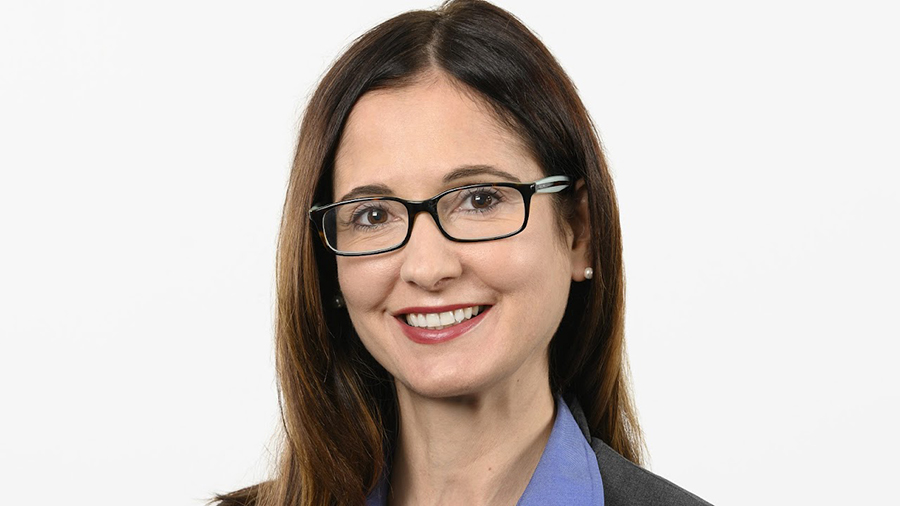
Pearce's public language about leadership is notably physical. She talks about trenches, shoulders and tables. A leader rolls up her sleeves and works beside the team. Colleagues come shoulder to shoulder. The table expands to admit more voices. These are not theories floating above the work. They describe who gets to participate when a small company has more problems than people.
Her preferred method is consensus shaped by listening, followed by judgment. She has said she does not begin with the assumption that her opinion is correct. That does not mean every decision becomes a referendum. It means the leader collects the information and motivation behind a view before choosing a direction. In a technical field, humility has operational value: the youngest person in the room may understand a tool that the most experienced executive does not.
“The true test of leadership is how are you going to respond.”Catherine Pearce, speaking in 2026
The same logic informs her case for diversity. Pearce has argued that organizations need not evict one person to add another; they can make the table bigger. She frames representation as both an ethical question and a business decision. More perspectives change what a team notices. They also widen the pool of people who can imagine themselves doing work that remains strangely invisible on many campuses.
Mentorship, in her telling, travels both directions. Pearce has mentored students over multiple years, then watched some return with news of careers at institutions such as the NIH. The student gains a guide; the mentor receives new knowledge, an evolving network and occasionally the pleasant shock of seeing a small investment of attention become a durable friendship.
Repetition is where craft becomes visible
AllRock announced encouraging Phase 1 data in September 2025 and, in April 2026, said the first participants had been dosed in its Phase 2a ROCSTAR study. Those milestones do not guarantee the next one. Biotechnology is inhospitable to narrative certainty. Data can spoil a beautiful thesis; financing markets can close; a sensible plan can meet an unsentimental result.
Pearce seems unusually candid about that environment. In a 2026 discussion of biotech markets, she described financing as divided between proven teams with strong pipelines and companies likely to struggle for capital. She expects smaller firms to consolidate and sees flexible work as a cash-preserving tool as much as an employee benefit. Her interest in artificial intelligence is similarly concrete: discovery, optimization and trial recruitment, not decorative futurism.
The most revealing thing about the CinCor exit is therefore not its size. It is that Pearce treated it as evidence for a method, not permission to stop. She returned to the starting line with another licensed asset, another compact team and another sequence of clinical questions. AllRock inherits relationships and experience from CinCor, but it does not inherit an outcome.
That willingness to reset may be the central fact of her career. Sales taught her the destination. Clinical operations taught her the road. Business development taught her how to secure the vehicle. Company formation taught her to bring only the passengers needed for the next leg. The cleverness lies less in any single turn than in seeing the entire route at once.
Cincinnati remains the base camp. Pearce serves her alma mater as a trustee, advises at CincyTech and was named Xavier's Distinguished Alumna in 2024. She and her husband, Leonard, have three children. The biography has the shape of a global biotech career, yet its center of gravity has stayed local: learn broadly, come home, build companies and make room at the table.
A forgotten asset is an awkward protagonist. It has already been declined, deferred or quietly filed away. Pearce has made a profession of taking that awkwardness seriously. Sometimes the molecule was waiting for a better question. Sometimes the company needed to be smaller. Sometimes the missing technology was not chemical at all, but organizational: the right people, assembled around one decision, listening closely enough to hear what everyone else missed.