A paycheck is an easy thing to count. A business is more awkward. It contains years of work, other people's livelihoods, a founder's hopes and, usually, quite a few things that refuse to fit neatly into a spreadsheet. Casey DeLoach has spent much of his career building businesses. In public, he has also taken up a question that makes ownership rather less comfortable: which parts of what you own are available to give?
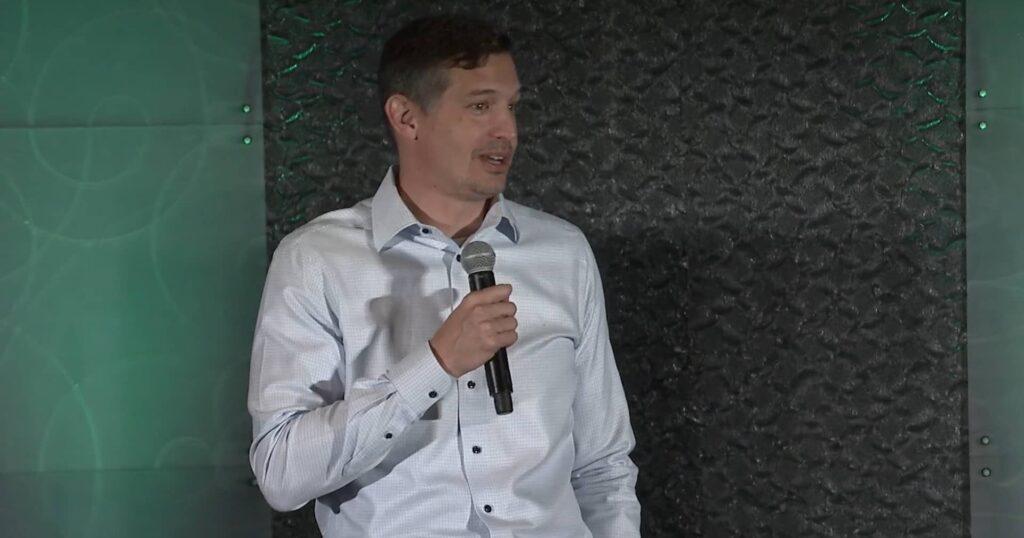
In 2022, the VaxCare co-founder and CEO brought that question to the Celebration of Generosity. His subject was giving from assets, including business interests, rather than thinking only about a portion of annual income. For a founder, that changes the conversation. The company itself enters the picture. A familiar calculation acquires a much larger denominator.
DeLoach's working life connects Yale, consulting, strategic alliances, merchant services and a company founded in Orlando in 2007. His public discussion of generosity adds another dimension to that sequence. Building something and deciding what it is for become parts of the same biography. The interesting figure here is an owner willing to examine the obligations that come with ownership.
An economist goes into the machinery
DeLoach studied economics at Yale University from 1995 to 1998. He then worked as a business analyst at McKinsey & Company between 1998 and 2000. Those are recognisable starting points in a business career: study how resources move, then help organisations work out how theirs should move. The job titles establish the sequence; they do not require a mythology about a young prodigy or an inevitable founder.
Next came Promisant, where he was vice president of strategic alliances from May 2000 to July 2001. From August 2001 to December 2005, he was president of Alliance Merchant Services. The change in titles is worth pausing over. An analyst examines an operation. An alliances executive works across organisational boundaries. A president takes responsibility for an organisation's direction. Before VaxCare, his career had already crossed several different kinds of business work.
Merchant services also puts a person close to the less glamorous side of commerce. Transactions need to work. Arrangements between companies have to survive contact with ordinary working days. There is room for imagination, certainly, but the customer would generally prefer that the payment goes through. It is a useful setting in which to consider the difference between an attractive business proposition and an operation people can depend on.
- 1995-98Economics at Yale
- 1998-2000Business analyst, McKinsey
- 2000-01Strategic alliances, Promisant
- 2001-05President, Alliance Merchant Services
- 2007Co-founds VaxCare
The founder who stayed with the assignment
DeLoach co-founded VaxCare in 2007 and remains its CEO. The dates matter because they put the business on a different clock from the quick succession of his earlier roles. An executive can change jobs and begin with a fresh set of expectations. A founder who stays has to keep revisiting earlier decisions while the organisation around them changes size, complexity and needs.
In 2020, Summit Partners invested in VaxCare. The partnership included work on senior recruitment, operations and the company's approach to reaching customers. Summit helped recruit a chief operating officer and two independent directors, Dave King and Ken Burdick. Capital arrived with additional people around the table, each bringing another set of questions to a business DeLoach had already spent years building.
Summit's company account describes a workforce that grew from 150 at the time of its investment to more than 400. That is a substantial change in the everyday meaning of leadership. Even an excellent memory eventually loses its contest with the headcount. A larger organisation needs people who can decide, systems that carry information and a shared understanding of what deserves attention.
DeLoach described the partnership as helping the company grow with “clarity, focus and impact.” The phrase is brief, but its order is useful. Clarity concerns the work. Focus concerns the choices. Impact concerns what those choices produce. Put beside the recruitment of senior leaders, it offers a practical picture of expansion: more responsibility distributed among more people.
What a company asks of its people
VaxCare gives its culture an unusually homemade name: “VaxCare-ness.” Corporate vocabulary can sometimes sound as though it has been assembled by a committee trapped in a windowless room. This one at least admits that a company develops its own habits. Its stated concern is how team members are treated, including opportunities to grow professionally and personally.
The company's published values also describe humility as a way of learning, adaptability and belief in a purpose larger than oneself. Those are organisational commitments, rather than a personality assessment of the CEO. They give a concrete account of the environment his company says it wants to build. Learning requires room to change an answer. Adaptability requires room to change an approach.
One detail is particularly revealing: the values explicitly call for setting aside ego and attachment to authorship when looking for a solution. Anyone who has watched a good idea become a territorial dispute will recognise the problem. In a growing company, the person who first suggested something cannot remain its sole custodian forever. Shared work asks people to loosen their grip.
That language creates an interesting connection with DeLoach's public interest in stewardship. The connection is interpretive, rather than proof that a company value came from a particular personal belief. In both settings, however, the question concerns responsibility for something larger than an individual. A team, a business and a pool of resources all involve other people. Ownership supplies authority; it also supplies a list of obligations.
“clarity, focus and impact”
Casey DeLoach, on the Summit partnership
When ownership enters the conversation
At the 2022 gathering, DeLoach discussed generosity in an explicitly Christian framework. His presentation connected discipleship with stewardship and placed family responsibilities alongside the handling of resources. That context matters. His discussion of business interests was part of an account of faith and responsibility, rather than a claim that a particular donation technique makes someone virtuous.
The presentation described him as one of seven children. It also placed him and Jenn in the ordinary, unfinished work of parenting and figuring out stewardship together. These details bring the subject back to household scale. A founder may speak to an audience as an owner, but family life supplies a different set of relationships, with rather fewer opportunities to settle a disagreement by referring to an organisation chart.
The useful distinction in his talk was between income and wealth. Income describes a flow over time; ownership can hold value accumulated over years. DeLoach's giving story widened to include business interests. Thinking that way asks an owner to examine resources that may sit outside the familiar routine of receiving money and writing a cheque.
There is a human difficulty tucked inside that distinction. A business can feel inseparable from the effort that built it. Discussing its value in the context of giving introduces a question about identity as well as resources. The question has particular force when the speaker continues to run the organisation. Ownership is an ongoing working relationship, with decisions still arriving every day.
A talk that became a conversation
The 2022 recording runs for about 19 minutes. Generous Giving also publishes DeLoach's contribution as an asset-based giving talk, with a continuation. The format places his experience among accounts intended to help other people think through their own responsibilities. It gives the business owner another public role: someone willing to make a personal subject available for discussion.
By 2024, a discussion guide used his story for a lunch-and-learn conversation about generosity. The prompts invited participants to consider what encouraged or challenged them, then discuss ways to build a culture of generosity. The setting is pleasingly ordinary. A subject that can sound forbiddingly technical becomes something people can consider together over a meal.
A later guide again presented his journey from giving out of earnings to considering wealth. That continuing use suggests the value of a specific question that travels beyond the person who first tells the story. Listeners can disagree, hesitate or recognise a similar dilemma in their own lives. They have something concrete to discuss: which resources have they included in their thinking?
DeLoach's biography now holds both assignments. There is the continuing job of running VaxCare, and there is the examination of what ownership makes possible beyond the business. The first demands decisions about people and direction. The second asks how widely an owner is prepared to consider responsibility. His public contribution is to put the two within the same conversation. The spreadsheet can come along. It will need a few more columns.