The email did not look like a hinge in a career. It looked disposable. Casey Armstrong was at BigCommerce, enjoying the work and learning from a leadership team he admired. He had not spent his tenure interviewing elsewhere. Then a company called ShipBob arrived in his inbox with a recruiting pitch and a peculiar name. Armstrong deleted it.
By that evening, the message had acquired an afterlife. What was that oddly named company? How was it growing so quickly without appearing on his radar? More important, why did its problem sound so familiar? ShipBob was trying to make fulfillment easier for online businesses. Armstrong had already encountered the alternative: growth that races ahead while inventory, shipping and cash flow struggle to keep up.
He met ShipBob's founders and saw the product. The deleted note became a job. In 2018 he joined to lead marketing and partnerships. Eight years later, ShipBob lists him as Chief Business Officer, a title broad enough to catch the different strands of his career: marketer, operator, partnership builder, interviewer and student of everything that happens after a customer presses “buy.”
“I got the email, and I just deleted the email.”Casey Armstrong, remembering ShipBob's first approach
The education of an operator
Armstrong's first professional chapter was not ecommerce. It was real estate, with planning and land-acquisition work in California. Then he traveled. Startup marketing followed, including growth work at Mavenlink and projects for software companies such as SignNow, Pivotal Tracker, Pantheon and SaneBox. His own old biography describes the period with the cheerful restlessness of someone who preferred a boarding pass to a five-year plan.
He and entrepreneur Patrick Vlaskovits took growth workshops across 11 European countries in one year, then five the next summer. At one of those events, possibly in Berlin, Armstrong met the future founder of Watchmaster. The company did not yet exist. Nine months later, the founder was visiting Northern California and suggested a meeting. Armstrong flew up, heard the pitch for a luxury-watch marketplace, and made a decision considerably larger than retrieving an email.
A career that kept moving closer to the box
He moved to Berlin with his wife and their one-year-old child to help start and scale Watchmaster. The business bought watches from vendors and the gray market, then sold to consumers and businesses across Europe. Rolex dominated the mix. The average order was about €6,000. At that price, “inventory” is not an abstraction in a spreadsheet. It is a cabinet full of cash wearing Swiss movements.
Watchmaster grew to roughly $30 million in its first year, but the pace exposed the unglamorous physics of commerce. Products had to be found, bought, tracked, moved across borders and sold through varying tax regimes. An item sitting in the wrong place constrained cash. A shipping mistake did not come with the forgiving economics of a misplaced T-shirt. Armstrong later described inventory management, supply chain and fulfillment as areas the company had not handled well enough. The lesson stuck because it was expensive.
Marketing walks into the warehouse
After Watchmaster, Armstrong wanted to return to B2B software while staying in ecommerce. BigCommerce offered both. He spent two years there, rising to Vice President of Marketing. His public interviews from the period are less interested in clever slogans than in the joints between departments. He talks about signup forms, product experience, sales qualification, native integrations and the exact amount of friction needed to produce a useful lead.
That last question became a miniature philosophy: “What is the necessary friction you need to create so you're actually getting quality?” Remove every field from a form and signups may rise, but sales can inherit a parade of bad fits. The attractive number and the valuable outcome are often only distant cousins. Armstrong's instinct was to trace the whole system, not celebrate the first chart that pointed upward.
The same instinct explains ShipBob. Marketing can create demand for a brand. It cannot pick the order, position inventory near the buyer or negotiate the last mile. Yet the customer experiences those actions as one promise. A handsome checkout followed by a late parcel is simply a disappointment with better typography.
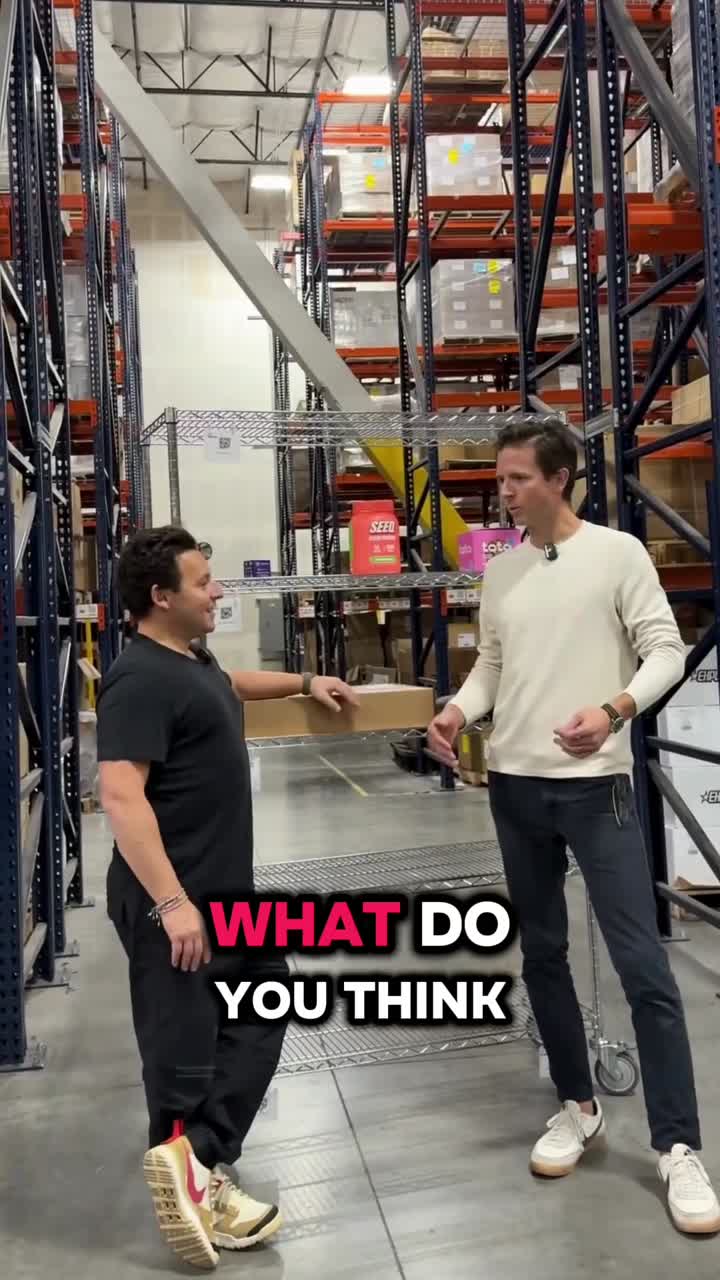
When Armstrong arrived, ShipBob had five fulfillment centers in Los Angeles, San Francisco, Dallas, Chicago and New York. The pitch was access: smaller ecommerce businesses could offer the kind of fast delivery customers associated with companies many orders of magnitude larger. The software sat above the physical network, giving merchants a view of orders, inventory and movement. The brand promise had forklifts under it.
Armstrong's remit included partnerships, an area he had come to regard as a growth engine rather than a logo exchange. At BigCommerce, native connections with companies such as Square, Amazon and Facebook could make the product more useful while opening distribution. At ShipBob, integrations and alliances connect storefronts, marketplaces, retailers and carriers to the same operational spine. A partner is valuable when the customer can feel the difference.
“I felt that pain firsthand.”Armstrong on the fulfillment problems that drew him to ShipBob
The channels collapse into one
For years, online brands could speak in tidy lanes: direct-to-consumer on a website, Amazon in another column, retail and wholesale somewhere else. Armstrong now calls what followed the “Great Channel Boom.” The lanes have crossed. A young brand can use its website to feed marketplace demand, earn a place on a retailer's shelf, sell through TikTok Shop and fulfill all of it from a shared inventory strategy.
One inventory, many shop windows
An illustrative view of the channels Armstrong says brands increasingly operate together. Bars show convergence, not market share.
ShipBob began investing in retail and wholesale capabilities around 2020, even as pandemic-era attention fixed on direct-to-consumer sales. Then social commerce accelerated. TikTok Shop arrived in the United States, and ShipBob partnered with TikTok to support Fulfilled by TikTok. The operating problem widened from “Can we ship quickly?” to “Can one system keep several promises, on several channels, at once?”
By January 2026, ShipBob said its network had fulfilled more than one billion units. Armstrong's own title had widened from Chief Marketing Officer to Chief Business Officer. Public announcements do not supply a neat date for every change in responsibility, but the progression fits the work visible across his interviews: marketing joined to partnerships, partnerships joined to product and operations, and all of it joined to how merchants grow.
Now he asks what broke
Armstrong spent years as the guest on other people's podcasts, explaining funnels and fulfillment from spare rooms, studios and conference calls. In 2026, he took the other chair. Unpacked with Casey Armstrong brings founders and executives into conversations about the parts of brand-building polished case studies usually remove: the wrong decisions, the strained systems, the near misses and the moments when a company had to change its mind.
The format suits a person whose own career turns on second thoughts. The founder of Watchmaster was a connection made during a traveling workshop, then renewed nine months later. ShipBob was a deleted email revisited before bedtime. Even his professional identity has resisted a single drawer. He started in land acquisition, marketed software, helped operate a watch marketplace, built ecommerce teams and now works across the business of a logistics company.
Away from the formal biography, the older traces are agreeably Californian. He described himself as a travel and sports enthusiast, a would-be basketball and volleyball player, fond of the beach, and game for swimming with sharks or jumping from a plane. In one rapid-fire interview, he considered sportswriter Bill Simmons as a dream dinner guest, recalling a signed copy of The Book of Basketball. When asked about his FullStackMarketer.com address, he joked that domain names, rather than cryptocurrency, were where the money was.
The jokes reveal the same curiosity as the career. Armstrong likes systems, but he also likes the odd door in the system: a useful integration, an overlooked channel, a strange company name, a conversation that begins in California and ends with a family moving to Berlin. His route has less in common with a ladder than with a parcel network. Each stop changes what the next one can reach.
And so the deleted email survives as more than a charming origin story. It contains Armstrong's operating method in miniature. Dismiss the surface. Notice the nagging problem. Return to it. Follow it farther than a department's boundary. The marketer who once helped create demand now works on the business that must carry it, box by box, all the way to somebody's door.