Company Profile · Consumer AI · Proptech
Casa Wants to Be the Uncle Kevin in Your Pocket
Two founders talked to hundreds of homeowners, decided the real product was a trusted person to ask, and shipped it as an app. This is the case for turning a family handyman into software.
There is a specific kind of dread that arrives the first time water appears somewhere water is not supposed to be. You own the house. You are, technically, in charge. And you have absolutely no idea whether the puddle under the sink is a twelve-dollar washer or the first sign of a bill with four digits in it. Casa, an app out of Brooklyn, was built for that exact thirty seconds of panic - the moment before you either grab a wrench or grab your phone and call someone who will not tell you what the work should really cost.
The company's legal name is Hom Technologies, Inc. - “home” with the last letter shaved off - and its product is an AI home advisor that lives on your phone. You describe a problem, or point a camera at it, and Casa tells you what is likely going on, whether you can handle it yourself, what a professional would charge, and when the smart move is to stop touching it. The core app is free. The pitch fits on a bumper sticker: Homeownership, handled.
The Origin
An app named after a person
Most startups are named after a metaphor. Casa is named after a man. In the founders' telling, the reference point is “Uncle Kevin” - a high-end residential contractor who functions as the family's personal home advisor, the guy you call before you do anything drastic to a wall. He is knowledgeable, he picks up the phone, and he has no incentive to oversell you. Co-founders Tyler Fallon and Tony Oliverio decided that most homeowners will never have an Uncle Kevin, and that the gap was worth building into.

Before writing a line of product copy, the two spent roughly a year doing the unglamorous part: talking to hundreds of homeowners. The thing they kept hearing was not a request for a feature. It was a version of the same sentence - I don't know who to ask. Not “I can't find a contractor” (there are a dozen apps for that), but the quieter problem of having nobody neutral in the room when a decision needs making. So they built the ask.
Managing your home shouldn't feel like having a second job.
Casa's founding premiseWhat It Does
Five jobs, one chat window
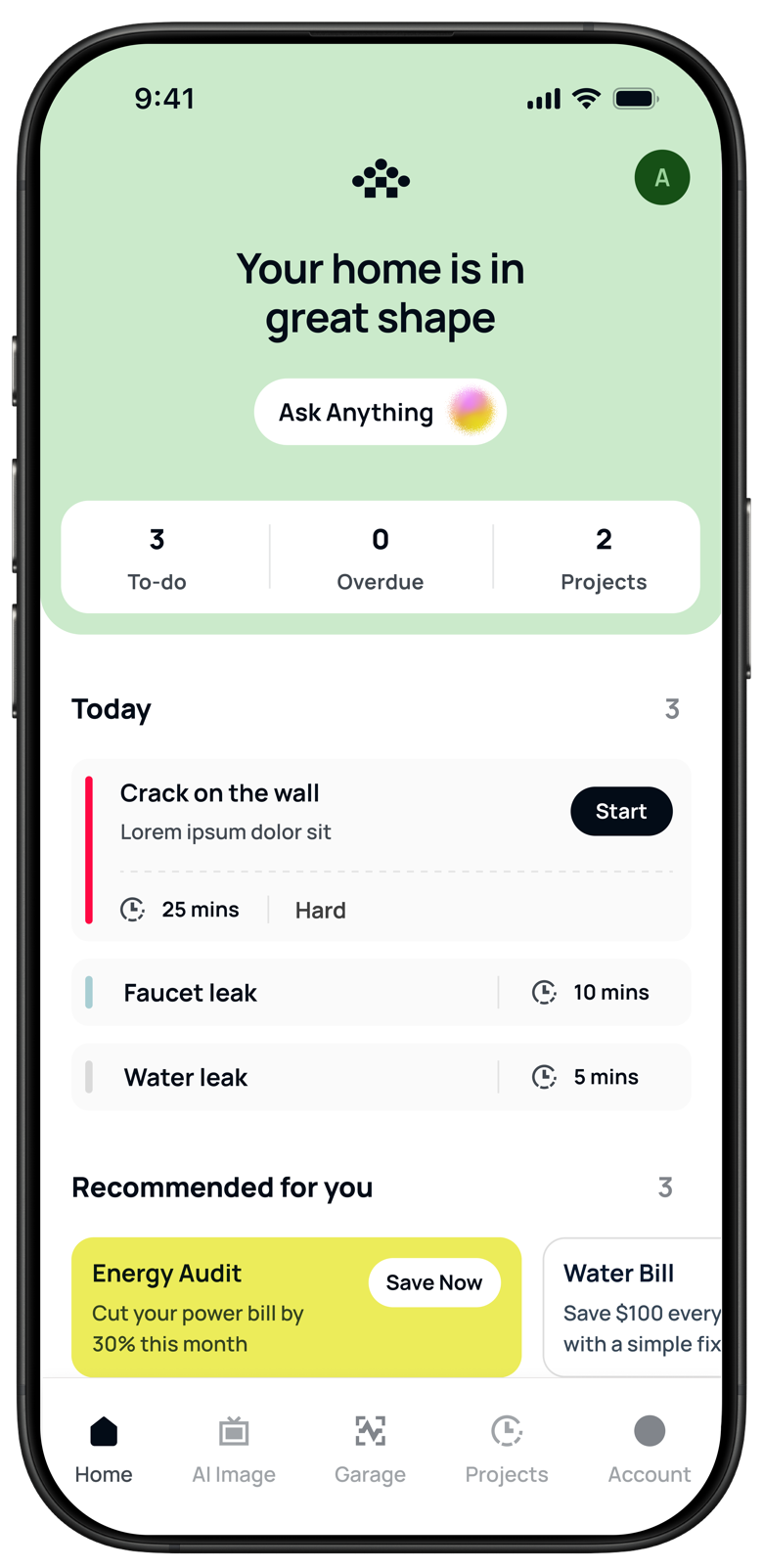
Casa organizes itself around the moments a homeowner actually has: something broke, something needs upkeep, something costs money, something needs improving, and the general “is this normal?” question that precedes all of them. The features map to that emotional calendar rather than to a contractor's org chart.
AdvisorAsk anything, anytime
A free, 24/7 conversational assistant that remembers details about your specific house and answers in plain language, not spec sheets.
RepairsDiagnose & decide
Describe the issue or send a photo. Casa suggests what's wrong, walks you through a DIY fix, or tells you when to hire out - and what it should cost.
MaintenanceStay ahead of it
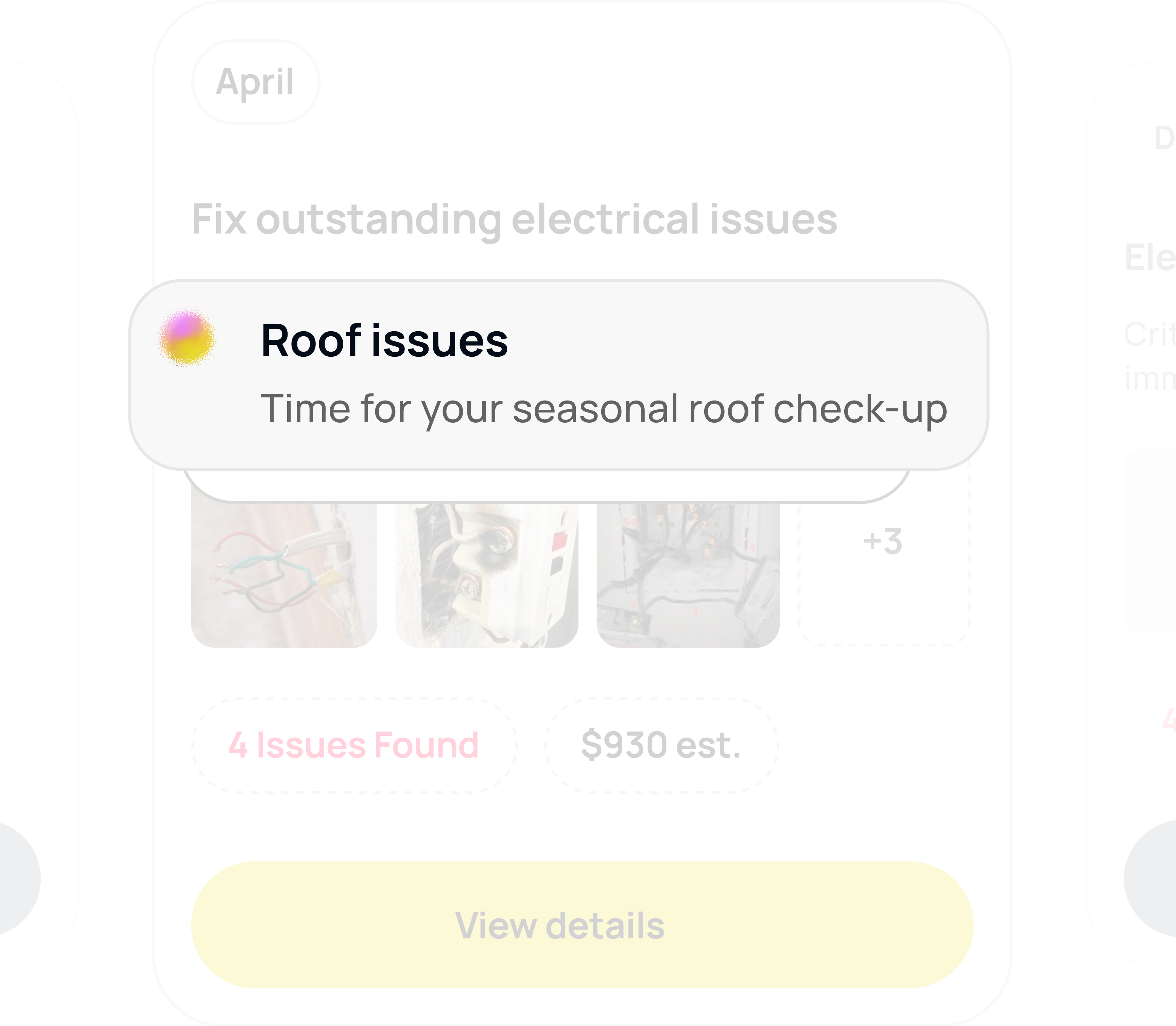
Seasonal and preventive schedules that turn upkeep into recurring tasks, so small things don't graduate into emergencies.
AffordabilityBudget the house
Guidance on home expenses and planning, aimed at the overspend that happens when nobody's counting.
ImprovementsScope before you commit
Renovation planning, budget comparison, and design visualization to pressure-test a project before the money leaves.
CoverageiOS & Android
A native app on both stores, currently focused on homeowners in the United States and running as a public beta.
The Business
Give away the advice, sell the coordination
Casa's money model is quietly clever. The advisor itself is free, which is the point - the company wants you in the habit of asking before every home decision, because a habit is worth more than a download. Revenue comes from two monthly subscriptions layered on top: Casa Family at $9.99 and Casa Premium at $24.99, which unlock deeper coordination and premium homeownership features. It's a classic freemium wedge aimed at the households that ask the most.
The number the company likes to put forward is savings: homeowners, it says, report $1,000+ a year kept in their pockets - the compounding result of not overpaying for a job you could do yourself, and not deferring a small fix until it becomes a large one. Treat it as a marketing figure rather than an audited one, but the logic is sound: the cost of asking is roughly zero, and the cost of not asking is a contractor's discretion.
The Angle
One step upstream of the quote
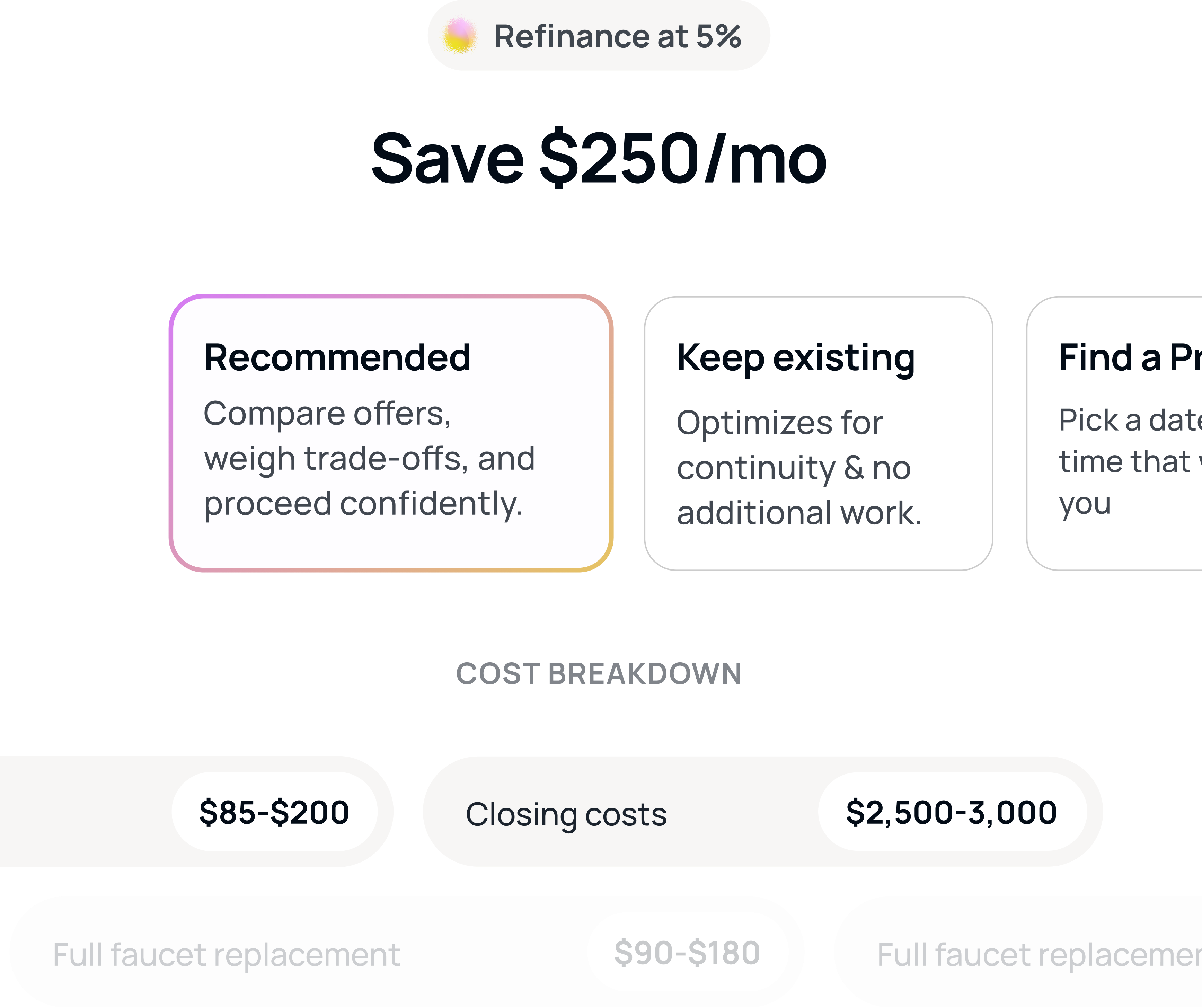
Here is the part worth stealing if you're building anything. The obvious home-services business is a marketplace - Angi, Thumbtack, Frontdoor - and marketplaces make money the moment they hand you off to a paid professional. That's a fine business, but it means the app's incentive is to route you to a transaction as fast as possible. Casa sits one step earlier in the story. Before “who do I hire,” there's “do I need to hire anyone at all, and if so, for what.” Owning that question is a strangely defensible place to stand.
Illustrative - Casa competes on the first, cheapest, most anxious step, not the last one.
The product isn't home maintenance. It's the absence of dread when something breaks.
The reframe behind CasaThere's a second, more contrarian bet buried in the company: the team is two people, on purpose. In a category where the reflex is to hire a fleet of operations staff and local handymen, Casa is leaning on the model to do the reasoning and keeping the org chart flat. That only works in 2026 because a general-purpose AI can now hold a plausible conversation about a slab leak. It's a wager that in consumer AI, taste and distribution are the moat, and headcount is just overhead.
Who It's For
The anxious first-timer, and everyone after
The clearest customer for Casa is the person who just closed on a house and realized nobody handed them a manual. First-time buyers inherit a machine with a hundred moving parts and no instructions, and they are exactly the group most likely to either overpay a contractor out of fear or ignore a small problem until it compounds. But the app isn't only for beginners. Experienced owners use it as a second opinion - a way to sanity-check a quote, remember which filter goes where, or decide whether this is the year to redo the roof. The common thread is anyone who has ever stood in a hardware store aisle and quietly googled the thing they were about to buy.
Casa also does something most AI apps skip: it publishes plain, searchable how-to content - the kind of “how to fix vertical blinds off track” guides that meet a homeowner at the exact moment they're searching for help, then hands them a smarter version of the same advice inside the app. It's a distribution strategy dressed as a service. The expertise on display isn't a claim about the founders' credentials; it's the accumulated shape of hundreds of homeowner conversations, turned into a system that knows which questions people actually ask and in what order they panic.
The Market
Boring is where the money is
Proptech has a glamorous half - listings, mortgages, iBuying - and a boring half, which is the everyday, unglamorous cost of keeping a house standing. Casa is chasing the boring half, which happens to be enormous: tens of millions of American households own their home and quietly overspend maintaining it, mostly because they lack information at the exact moment they need it. Casa positions itself as the first tap before any of those decisions, and says it's already in early conversations with organizations across homebuilding, property management, and real estate during its beta.
The risks are the honest ones for any advice product. AI has to be right often enough that people trust it with a $4,000 decision, not just a leaky faucet. The free tier has to convert enough households into $9.99 and $24.99 subscribers to pay for itself. And “the app you only open when something breaks” is a hard habit to build - the best outcome for the user is a house that never surprises them, which is also the outcome where they forget the app exists. Casa's answer to that is the maintenance calendar, the one feature designed to give you a reason to show up before anything is on fire.
Homeownership, handled.
Casa's two-word thesisWhether Casa becomes the default first tap for American homeowners is unknowable this early. What's clear is the shape of the bet: that the most valuable thing you can give someone standing over a mystery puddle is not a contractor's phone number, but a straight answer about whether they need one. Uncle Kevin, it turns out, was always the product.
Follow Casa
Homeownership, handled