Carol Tomé had a perfectly serviceable career plan. Her father ran a community bank in Jackson, Wyoming. She worked there during college summers. Eventually, she would come home and take it over. It was a future with a familiar address, a family connection and a fairly obvious first day. Then her father sold the bank. The succession plan had lost its principal asset.
Tomé went into banking anyway. The detour eventually took her to Atlanta, into the orange aisles of Home Depot and, after a brief retirement, to the chief executive’s office at UPS. A career that looks orderly when reduced to job titles becomes much more interesting when you notice how often she had to reconsider what she wanted.
The bank that wasn’t waiting
There was plenty of encouragement in her Wyoming childhood. Her mother, grandmother and great-grandmother told her that she could do anything. Years later, a photograph of those four generations helped her appreciate the distance between their opportunities. Her great-grandmother had been a wagon-train homesteader, living in a country where women could not yet vote.
That family history gives her eventual ascent a different scale. The journey begins well before a board appointment or a corner office. It includes women whose confidence in a child ran ahead of what their own society had permitted them. Tomé remembers the permission they gave her with unmistakable affection: “you can do anything, and you can be anything.”
She earned a bachelor’s degree in communication at the University of Wyoming and a graduate degree in finance at the University of Denver. Commercial lending at United Bank of Denver came next, followed by banking work at Johns-Manville and a vice president and treasurer position at Riverwood International. Those names are less familiar than the ones that followed. They explain why a retailer interested in expanding internationally would eventually call her.
An orange apron, almost declined
Tomé joined Home Depot in 1995 as vice president and treasurer. She had nearly talked herself out of it. The business seemed so successful that she wondered whether the work would provide enough challenge. Meeting co-founder Arthur Blank changed her calculation: he offered room to discover how far she could go. She accepted, and became chief financial officer in May 2001.
The distinction between those dates matters. She spent 24 years at Home Depot, including more than 18 as CFO. The job expanded beyond keeping the accounts. Real estate, financial services and strategic business development entered her portfolio. Her responsibilities connected the money to decisions about where stores went, how the business grew and which projects deserved investment.
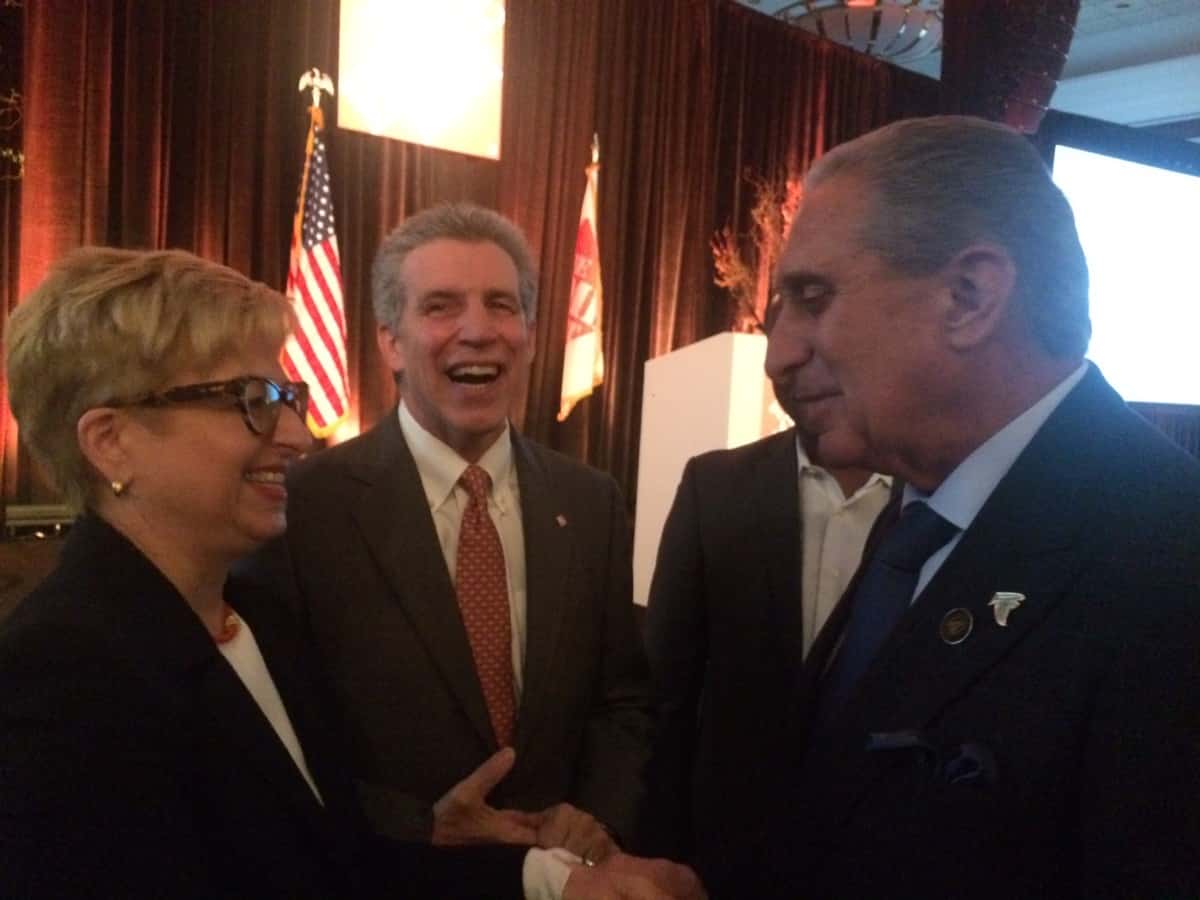
By the time her retirement was announced in April 2019, the company had a substantial record to point to. Home Depot credited her contributions as it reported more than a 450 percent increase in shareholder value since she became CFO. That is a company outcome across many years and many people, rather than a solo performance. Menear’s farewell also emphasized the personal side of their partnership and her standing with employees.
Finance can look abstract from a distance: columns, forecasts, a carefully qualified answer on an earnings call. At a retailer, those choices eventually appear in a store, a warehouse or a customer’s order. Tomé’s long tenure gave her repeated chances to see the connection. Her next employer would require much the same discipline, with considerably more brown paint.
A retirement with a return address
Her retirement began in 2019. She had a farm in northwest Georgia, a husband, Ramon, and philanthropic work to pursue. UPS was already familiar territory from the boardroom: she had been a director since 2003. But serving on a board and running the operation are different arrangements, even when the stationery carries the same logo.
On June 1, 2020, she became chief executive. She was the company’s first female CEO and the first recruited from outside its employee ranks. The outsider description needs that qualification. Seventeen years of board service meant she arrived with a long view of the business, rather than a visitor’s first impressions.
Her official strategy has three parts: customers, people and innovation. The words have to travel through a network serving more than 200 countries and territories. With approximately 460,000 employees in the company’s current description, a policy change has consequences well beyond the meeting in which someone approves it. Even a small permission can reach a very large audience.
The business card rebellion
Some of her early changes involved the rules governing how employees could look. UPS relaxed restrictions on facial hair, natural hairstyles, piercings and tattoos. For a company so visibly associated with a uniform, the decision concerned the everyday experience of wearing it. A brown shirt could remain recognizable without requiring everyone inside one to look alike.
The old tattoo rule, she observed, had been more restrictive than the Army’s. There is something wonderfully bureaucratic about a delivery company discovering it had outregulated the military on personal appearance. The change gave employees more freedom without asking customers to learn a new delivery system.
Her attempt to simplify executive titles proved harder. UPS had an abundance of presidents, and she wanted a hierarchy outsiders could understand. Colleagues objected. Business cards became a surprisingly consequential piece of infrastructure. She eventually abandoned the exercise, deciding that the effort and anxiety outweighed the benefit. It is an unusually useful story for a CEO to tell about herself: the boss had an idea, the organization disliked it, and the boss stopped.
“I will live with the confusion.”
Carol Tomé, on abandoning her proposed title changes
That episode supplies a practical limit to the romance of transformation. An executive can consume considerable energy making a diagram easier to read. The people doing the work still have customers to serve. Knowing when to leave an irritation alone is a less photogenic skill than announcing a reorganization, but it can save everyone a great deal of time.
When fewer packages becomes the plan
The larger argument of her UPS tenure concerns what kind of growth is worth pursuing. A parcel network can be busy and still earn too little for the work it does. Customers, destinations, prices and the combination of shipments all affect the economics. Tomé has pushed the business toward shipments and relationships that offer more attractive returns.
Amazon made that argument impossible to miss. In January 2025, UPS announced an agreement to cut the volume it handled for its largest customer by more than half by the second half of 2026. Walking back a major commercial relationship is an awkward way to describe progress. It is also a direct test of whether a company believes its own arithmetic.
The consequences were substantial. In April 2025, UPS said it expected to reduce roughly 20,000 jobs that year and close 73 buildings by the end of June. A smaller flow of packages meant changing the physical network and the work inside it. The strategy carried a human cost that a tidy margin chart cannot convey.
Labor had already been central to her tenure. In 2023, UPS and the Teamsters reached a five-year agreement without a strike. The contract increased pay and improved working conditions. In January 2024, the company announced 12,000 job cuts. Taken together, these events complicate any easy description of an executive as simply people-focused or numbers-focused. Workers experience the decisions, rather than the slogan.
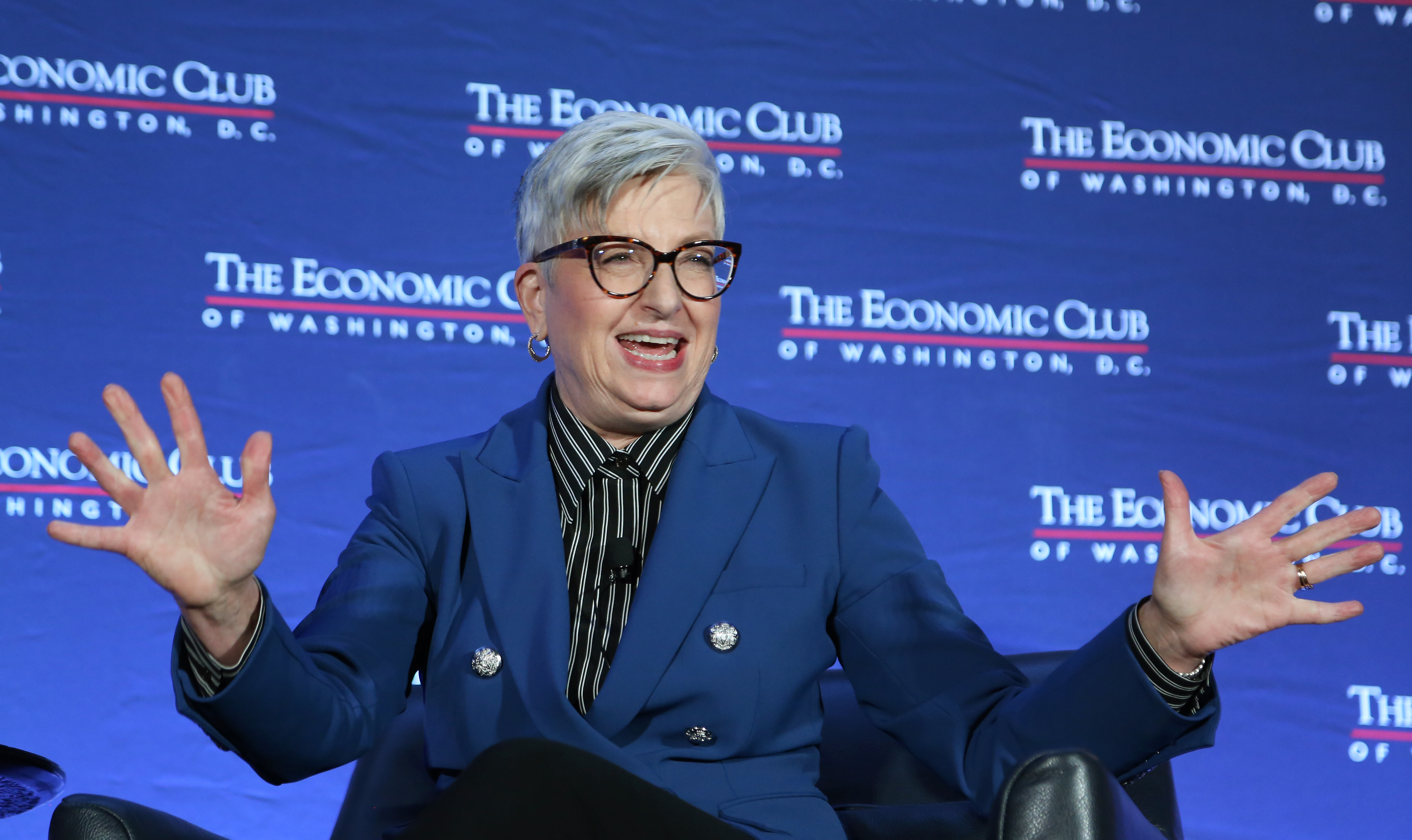
By July 2026, UPS said the Amazon reduction and associated network reconfiguration were complete. Its second-quarter revenue was $22.8 billion. Reported operating profit was $930 million; adjusted operating profit was $2.1 billion. The gap matters: the results included substantial transformation charges, primarily employee separation costs. Both figures belong in an assessment of the transition.
Reported and adjusted profit use different accounting treatments. These are quarterly results, not full-year totals.
An August announcement then set out a global operating model effective September 1, with Nando Cesarone overseeing global operations and Matt Guffey taking responsibility for the U.S. domestic businesses. The company described an effort to standardize important processes while preserving local flexibility. The next phase would require the revised network to produce sustained growth.
Another kind of capital allocation
There is a second set of investments to follow, back in Wyoming. Carol and Ramon established the Tomé Scholars to Fellows Program at her alma mater through their foundation’s support in 2021. The design combines full scholarships with experiences beyond the classroom and a continuing community after graduation.
In May 2026, she returned as a University of Wyoming commencement speaker and announced a $20 million commitment from the couple. It would strengthen the program in the Haub School of Environment and Natural Resources and extend it into the College of Business. The university estimated that their new and previous support together would provide full scholarships for more than 100 students.
On October 14, the university announced nine students in the incoming 2030 cohort. Those recipients would have scholarship support, opportunities such as field courses and community service, and a relationship with the Tomés. The cohort gives an otherwise abstract philanthropic commitment names, courses of study and a graduation year.
The connection to her own beginnings is hard to miss. Her family encouraged her before she could name the career she would eventually have. Now a program bearing the family name gives other people room to find theirs. The bank in Jackson was sold long ago. There are other ways to invest in someone’s future.