Capacity Wants to Make the Support Ticket Disappear
The St. Louis company raised more than $155 million, turned profitable at $60 million in annual recurring revenue, and is pitching itself as the AI layer that answers questions before a ticket is ever opened - a direct shot at incumbents like Freshworks.
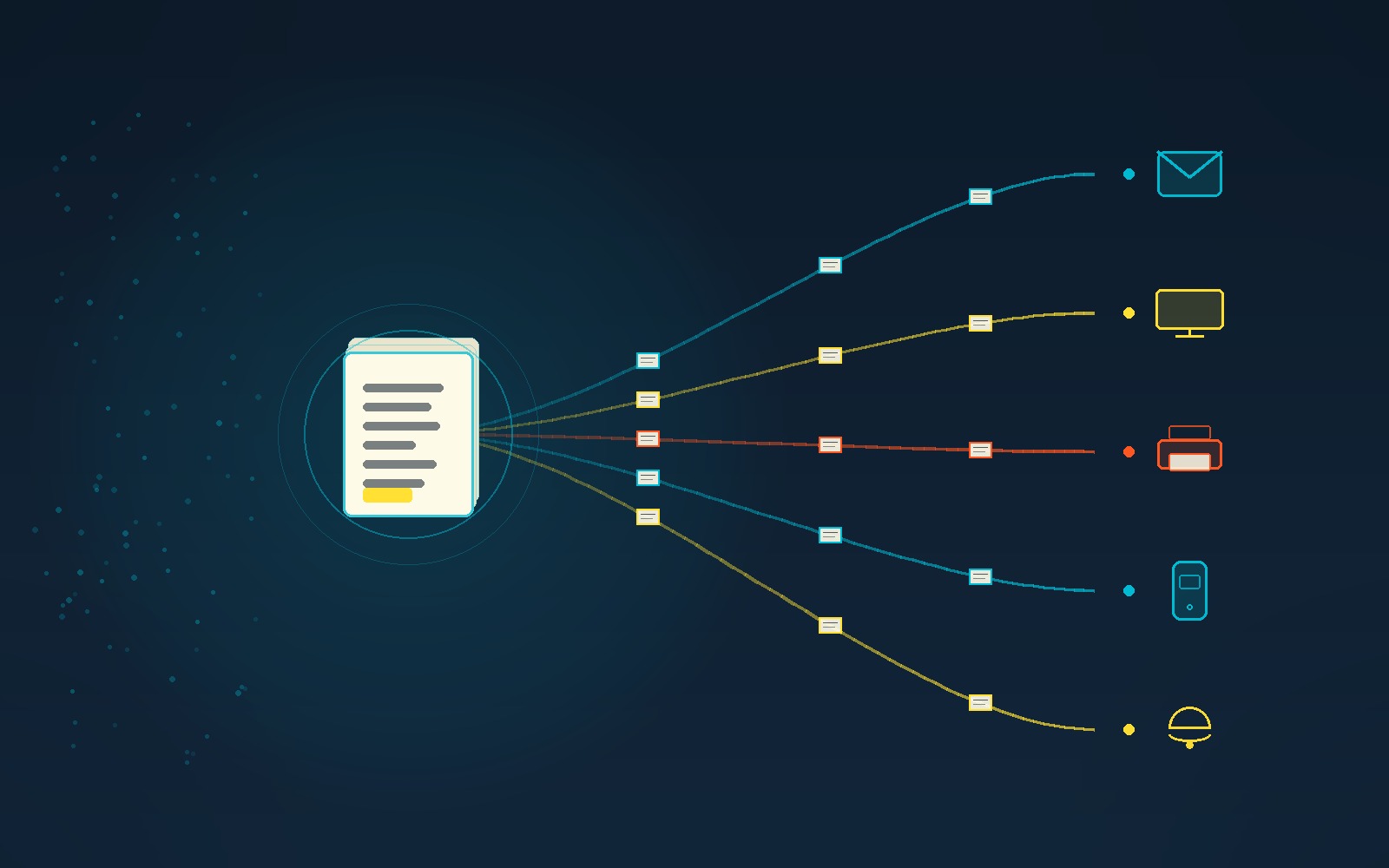
Most software companies chasing AI right now want to make their product louder - more chat windows, more suggested replies, more places to click. Capacity is trying to do the opposite. Its whole argument is that the best customer support interaction is the one that never becomes a ticket at all, because the answer arrived first.
That is a harder sell than a flashy demo. It is also, it turns out, a better business. The St. Louis company crossed $60 million in annual recurring revenue and turned profitable - a combination that has become rare in a category where most AI startups are still burning venture money to buy attention. Along the way it raised more than $155 million across equity and debt and bought roughly a dozen companies to fill in the gaps of what it calls an AI Knowledge Orchestration Layer.
The name is clunky. The idea underneath it is not. Connect a company's scattered knowledge - help docs, past tickets, internal wikis, the stuff buried in Slack and SharePoint - into one place an AI can actually reason over, then let that layer answer questions across chat, email, SMS, voice, and social. When it works, the customer gets an answer and the human agent never sees the request.
The second actFrom a $900M exit to the unglamorous problem
Capacity was founded in 2017 by David Karandish and Chris Sims, out of the Equity.com incubator in St. Louis. The two had done this before. Their previous company, Answers.com, sold to a private equity firm for more than $900 million. They could have picked any problem for the next round. They picked customer support - the part of most businesses that everyone complains about and nobody wants to own.
Karandish's framing has stayed consistent. Support matters more than ever, he argues, but the tools built to handle it were designed to move tickets around rather than resolve them. His line from the 2025 funding announcement gets at the whole strategy:
Support is more important than ever for brands across industries, but point solutions can't effectively solve complex issues. David Karandish, Co-founder & CEO, Capacity
Read that twice and you can see the acquisition roadmap inside it. If point solutions lose, you either build the whole platform yourself or you buy the pieces. Capacity chose to buy. It has counted its deals the way some startups count product launches - Call Criteria, a QA and speech-analytics firm, was described publicly as the tenth. Verbio, a Barcelona voice-AI company, came in the same breath. The leaders of both joined Capacity rather than cashing out and leaving.
How it actually worksAn orchestration layer, not another chatbot
The word Capacity keeps reaching for is orchestration. The distinction it is drawing: a chatbot answers a question; an orchestration layer decides which knowledge to pull, which system to touch, which channel to answer on, and when a human should step in. The knowledge sits in the middle. Everything else plugs into it.
The payoff Capacity sells is not just deflection. The same layer that answers a customer can coach a live agent in real time, then clean up after the call with automated summaries and QA scoring. That is where the acquisitions start to make sense as one product rather than a shopping list: Call Criteria brought the coaching and quality side, Verbio brought voice. Bolt those onto the knowledge core and you have a system that touches the whole support lifecycle instead of one slice of it.
The best support ticket is the one nobody ever has to file.
The competitor it won't stop namingWhere Freshworks fits in
Capacity is polite about it, but it is not subtle. In its own comparison content, it ranks Freshworks' Freshdesk as the number one alternative to consider - which is a marketer's way of naming the incumbent it most wants to pull customers away from. The argument it makes is a philosophical one, not just a feature checklist.
Freshdesk, and help-desk software like it, is built around the ticket: capture the request, route it, track it, close it. That model has run customer support for two decades and it works. Capacity's bet is that the model itself is the ceiling. If your starting assumption is that a ticket exists, you optimize the ticket. If your starting assumption is that most questions have known answers, you try to make the ticket unnecessary in the first place.
Illustrative framing of the two philosophies, not a benchmark.
To be fair to Freshworks, it is not standing still. The company has been pushing its own autonomous support and Freddy AI agents hard, and its enterprise deals are getting bigger. This is not a sleepy incumbent versus a nimble upstart. It is two companies arriving at the same destination - AI that resolves support on its own - from opposite starting points. Capacity built the AI brain first and is adding the workflow. The incumbents built the workflow first and are adding the brain.
Why the numbers matterProfitable is the new impressive
There is a quieter story in Capacity's ledger that is easy to skip past. It is profitable. In a category flooded with AI companies raising ever-larger rounds to subsidize growth, a support-automation business that generates $60 million in recurring revenue and keeps money at the end of the month is doing something structurally different. It means the acquisitions can be funded by more than hope, and it means the company is not one bad quarter of fundraising away from trouble.
The scale claims back it up: more than 36 billion automated interactions processed, 20,000-plus businesses on the platform, and a customer list that includes names like 3M, Disney, Nike, LinkedIn, American Express, and NVIDIA. Enterprises of that size do not buy support software for the demo. They buy it because it holds up under load. If Capacity is already running at that volume, the harder part - proving the thing works at scale - is arguably behind it.
Point solutions lose. Platforms win. Capacity spent $155M proving customer support is a platform business.
The takeawayWhat you can borrow from the playbook
Strip away the category jargon and Capacity is running a playbook worth studying whether or not you ever touch support software. First: pick the unglamorous problem. Support is not where the AI spotlight is, which is exactly why there was room to build a durable business there. Second: buy distribution and capability instead of rebuilding it - the dozen acquisitions were a way to compress years of product work into a couple of funding cycles. Third: name your competitor and define the contrast yourself, before someone else defines it for you.
The open question is the same one facing every AI platform right now: how much of support can actually be automated before the hard cases pile up, and how gracefully the system hands those to a human. Capacity's whole architecture is built around that handoff. Whether it wins the market or not, its wager is a clean one - that the future of customer support is measured not by how fast you close tickets, but by how many never get opened.
Follow the thread
Webcapacity.com - product & platform overview AboutCompany, values & leadership News$92M raise & Call Criteria + Verbio acquisitions CompareCapacity's Freshdesk alternatives breakdown DataCrunchbase funding profile SocialCapacity on LinkedInQuick answersPeople also ask
What does Capacity actually do?
It is an AI support automation platform. It connects a company's knowledge base and business tools into an AI Knowledge Orchestration Layer that answers customer and employee questions across chat, email, SMS, voice, and social - deflecting tickets and assisting human agents rather than just routing work.
Who founded Capacity, and when?
David Karandish and Chris Sims founded it in 2017 in St. Louis, after selling their previous company, Answers.com, for more than $900 million.
How is it different from Freshworks or Freshdesk?
Freshdesk is a ticketing and help-desk platform built around capturing and routing requests. Capacity positions itself as an orchestration layer that tries to resolve questions before a ticket is created and automate the full support workflow across channels.
Is Capacity profitable?
Yes. As of its 2025 funding announcement, Capacity reported roughly $60 million in annual recurring revenue and said it had turned profitable - unusual for an AI company at that stage.
How much has Capacity raised?
More than $155 million across equity and debt, including a 2025 round of over $92 million ($50 million from Chicago Atlantic plus a $42.6 million Series D close).