The easiest way to misunderstand Campbell Marketing & Communications is to imagine a room full of people making advertisements. The more accurate picture has someone wearing a headset at a racetrack, someone validating emissions data from a Volvo facility, someone training a customs officer to recognize a fake brake part, and someone else hiring the person who will greet you at Michigan Central. There is probably a designer in the room, too. But the room keeps moving.
Campbell is a privately held, Dearborn-based agency founded in 1982. It sells communications, research, creative work, digital products, training, events and customer engagement. That list sounds like every full-service agency's list until you look at the verbs in its case studies: staffed, trained, validated, operated, coordinated. Campbell does not merely make the message. It often builds the machinery that lets a person encounter it.
The man who sold the race
Rod Campbell did not begin with a fashionable theory of experiential marketing. He began with racing. Born in Saskatchewan, he went from radio to public relations and eventually into the orbit of Formula 1 figures including Stirling Moss, Jackie Stewart and Bernie Ecclestone. He discovered, early, that motorsports contained two businesses at once: the competition and the story people could be persuaded to care about.
While doing contract work for Ford, Campbell proposed becoming the company's dedicated motorsports PR operation. Campbell & Co. followed in 1982. The proposition was unusually durable because it attached the agency to a living system, not a single campaign. Cars changed. Series changed. Media changed. The need to connect engineers, racers, dealers, journalists, sponsors and fans did not.
The firm's work for what was Ford Performance and is now Ford Racing shows the compounding effect. Campbell says it helped launch and still manages the brand's social presence across seven platforms. It supports the Ford Performance Parts website and technical phone line. At the track, it handles communications, hospitality, displays, product specialists and fan activations. Online and offline are not departments in this model. They are different corners of the same circuit.
The first thing that failed
In 1984, Rod Campbell hired newspaper reporter Kevin Kennedy to write and edit a Ford enthusiast magazine. Kennedy produced his season-ending edition, laid it out and mailed it. Two weeks later, the client killed the publication. It is a fine first assignment if the goal is to induce panic.
“Look, I took you out of the newspaper business. Give me time. We'll figure it out.”Rod Campbell to Kevin Kennedy
They did. Kennedy stayed for decades and became one of five owners. The anecdote matters because it exposes the company's operating instinct: when the deliverable disappears, preserve the capability and redirect it. Campbell's service range can look like scope creep in a brochure. In its history, the range is closer to risk management. A firm that understands the client's environment can move from a canceled magazine to the next useful problem.
There were less cinematic corrections. In 2005, an industry report described Campbell's market research and training practices as historically weak and said the agency had spent the previous six months addressing them. Revenue for 2004 was $20.64 million, down 7 percent from $22.08 million the prior year, partly because Ford's centennial celebration was a one-off. The response was not a louder positioning line. Campbell added depth in research, training and client IT.
Reported agency revenue. The decline followed a one-time Ford Centennial project; Campbell said the second half of 2004 improved.
Marketing in work boots
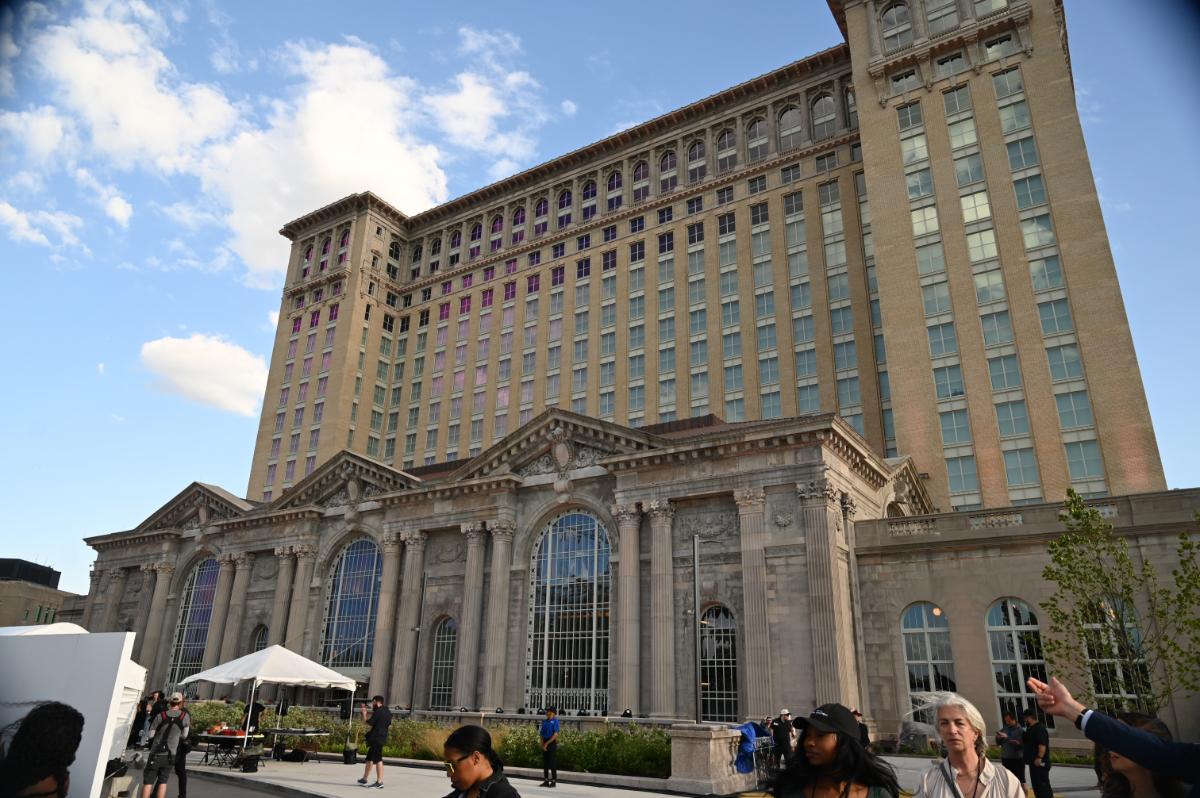
The modern portfolio is most interesting where it refuses to stay inside the expected category. For the 2024 reopening of Michigan Central, Campbell hired more than 60 part-time and full-time workers to handle the front desk, visitors, weekend events and retail. Before opening day, it worked with Newlab on community engagement, including Black Tech Saturdays. A launch agency might have declared victory at the ribbon cutting. Campbell helped run the place people entered after the ribbon fell.
For the Automotive Anti-Counterfeiting Council, a coalition formed in 2015, the agency organized nearly 150 sessions for more than 7,000 customs officers, law-enforcement agents and collision-repair technicians. It also worked with e-commerce platforms and legislators. This is communications stripped of its decorative reputation: a message has to change what somebody notices, and what they do next, when an unsafe component passes through their hands.
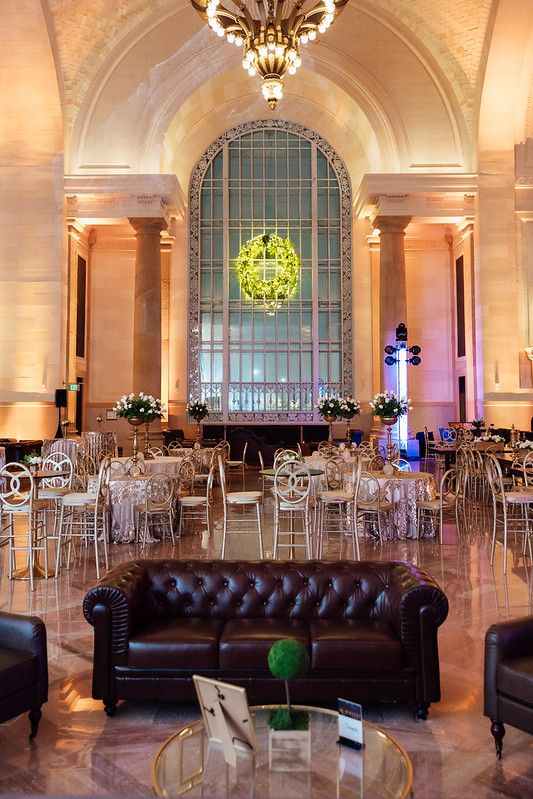
Then there is AutoGlow, the gala Campbell presents with Ford around Detroit's auto-show charity preview. It has raised more than $6 million for The Children's Center. In 2025 it moved into Michigan Central. In early 2026, Campbell staged AutoGlow one day after a Ford Racing season launch at the same venue. One event required six months of preparation; the other had a four-month promotional runway. The finished pictures show chandeliers, cars and tailoring. The actual product was coordination.
This is also how Campbell differs from alternatives. Global experiential networks can bring enormous production capacity. Specialist PR shops can offer concentrated media expertise. Digital studios may build faster. Campbell's advantage is the connective tissue between those jobs, particularly in automotive: institutional memory, technical familiarity and people who can cross from a strategy meeting into live operations without treating the handoff as somebody else's problem.
A team, not a family
CEO and managing partner Greg Shea joined Campbell in 1995. In a 2025 interview, he made a pointed distinction: the company is a team, not a family. Families do not bench people for poor performance; teams have roles, standards and accountability. It is a cooler metaphor than the usual office affection, but perhaps a more honest one. Campbell pairs it with four plain-language principles: Be a Good Human, Use Your Voice, Bring Energy and Do It Better.
The company also maintains ISO 9001:2015 quality-management certification. That sounds far removed from the romance of a pit lane, which is precisely why it belongs here. Campbell's public persona contains both. It wants the energy of the track and the repeatability of a checklist. The culture asks people to improvise, speak up and then document enough of the work that the next activation improves.
The copyable part is the sequence
A company cannot quickly copy 44 years of Ford-adjacent knowledge. It can copy the shape of the work. Campbell's dealer programs gather attendee feedback and use it to refine later events. Mustang Unleashed connects a digital portal, a national tour, driving-school resources and influencers across automotive, music, fashion and lifestyle. The Youth Education Services program joins a race event to dealerships and technical schools. Each piece makes the next piece more useful.
- Start with a community that already gathers, not a slogan looking for an audience.
- Design the live moment and the digital follow-up as one product.
- Put informed people at the point of contact, not just branded furniture.
- Collect feedback close to the experience, while details are still specific.
- Keep the useful infrastructure after the event: a portal, curriculum, database or relationship.
The model needs certain conditions. It favors clients with complex ecosystems, recurring programs and enough time for learning to compound. It is less persuasive for a one-off assignment chosen solely on the lowest bid, or for a brand unwilling to let its agency touch operations. Integration only pays when the integrator is allowed into the messy middle.
Rod Campbell's original insight was that a race could carry more than a result. It could carry a company story, a dealer relationship, a fan identity and a reason to buy. The agency that survived him kept extending the logic. A station reopening could become a staffing operation. A gala could become a durable fundraising institution. A counterfeit part could become a training curriculum. The work became less like making marketing and more like arranging the conditions in which marketing becomes true.