An oil reservoir is usually valued for what comes out of it. At Elk Hills, west of Bakersfield, California Resources Corporation has begun testing the opposite proposition. In May 2026, the company started injecting carbon dioxide into a depleted reservoir more than a mile underground. The field’s next commercial opportunity depends on what stays there.
- Produce oil, gas and electricity from an integrated California asset base.
- Use existing geology and engineering skills to build permanent carbon storage.
- Start with your own emissions, then pursue industrial customers.
This is an unusual place to look for an energy-transition story. CRC remains an oil producer. Its new activity does not erase that fact. Instead, the company is attempting to make its existing land, equipment and underground knowledge useful in a second market. The attraction is practical: the first customer is already on the premises.
A customer hiding next door
Elk Hills was discovered in 1911. CRC describes a field covering nearly 75 square miles, with gas-processing facilities and a 550-megawatt power plant. Some electricity serves field operations; other capacity and energy enter California’s power markets. This is a collection of interlocking businesses, with pipes connecting the economics as well as the machinery.
The first carbon-capture source is CRC’s cryogenic gas plant. Its initial project targets up to 100,000 metric tonnes of CO2 annually. The nearby 26R reservoir can accommodate much more: a stated maximum injection rate of 1.46 million tonnes a year and estimated total storage of up to 38 million tonnes. Those numbers describe different things. A big cupboard does not guarantee a full cupboard.
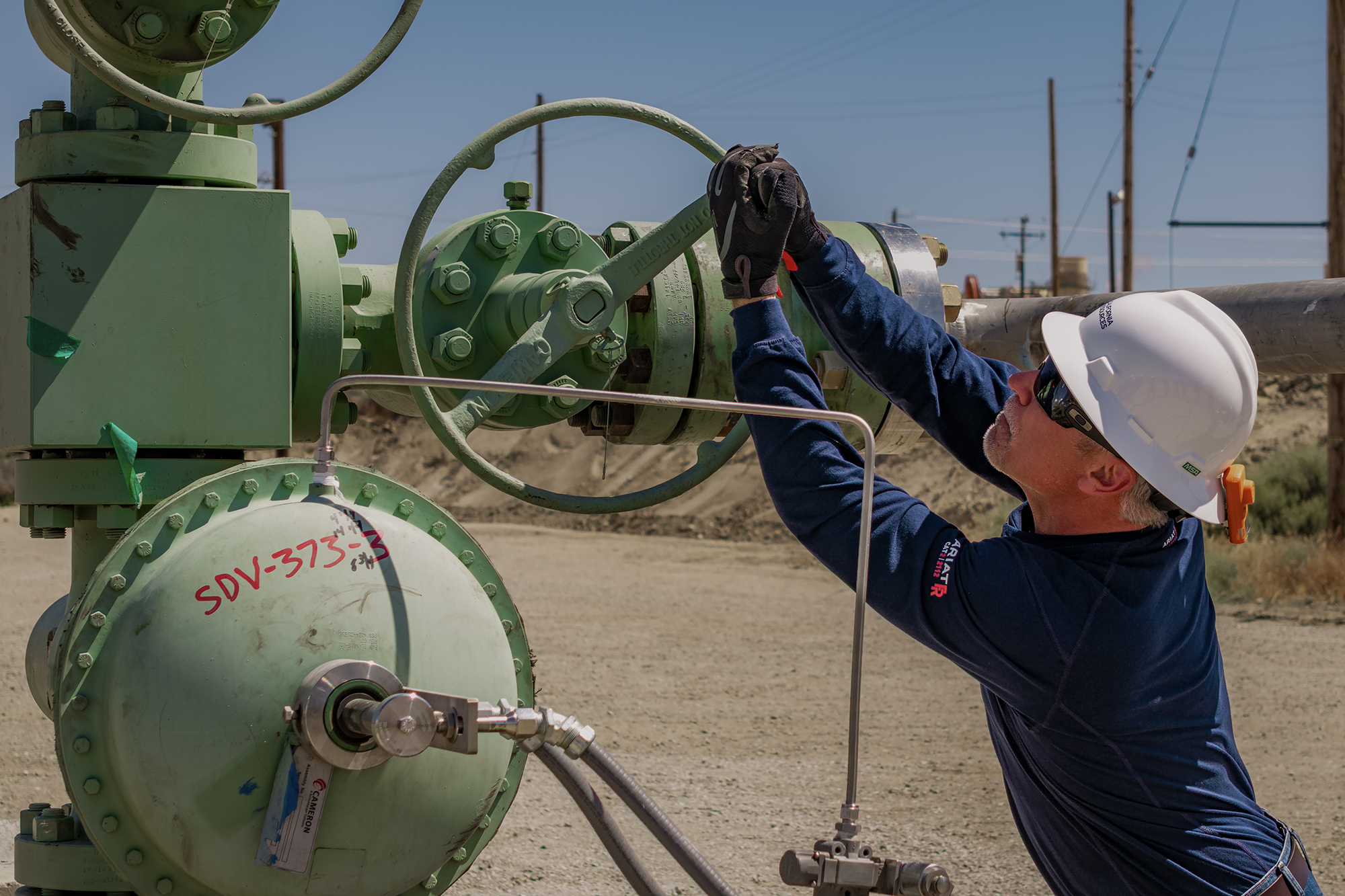
For an industrial emitter, CRC’s proposition is somewhere to send captured carbon for permanent storage. Carbon TerraVault, its carbon-management business, develops capture, transport and storage services. The commercial challenge is connecting suitable emissions sources to permitted space underground at a price that works for both parties.
The difference between room and revenue
CRC already sells oil, natural gas and natural gas liquids to commercial buyers. It also earns money from electricity and related activities. Its 2025 total operating revenues were $3.669 billion. The carbon-management segment recorded no revenue that year. In the second quarter of 2026, it reported its first $1 million. The new business has crossed an operating threshold; its financial scale remains small.
The distinction matters when judging CRC against alternatives. Commodity buyers can buy other producers’ barrels or imported supply. Carbon-storage customers need a location, transport arrangements and permission to inject. CRC’s advantage is the combination of storage rights, subsurface experience and existing infrastructure. It still needs customers and dependable operations to turn those advantages into earnings.
What the first installation was meant to cost
When CRC approved the gas-plant project in January 2025, it estimated capture capital spending of $14 million to $18 million. That was an estimate for the capture installation, not a final invoice for the entire storage enterprise. Its proximity to the reservoir was expected to keep transport costs down.
The original economics included an expected $85-per-tonne federal 45Q tax credit, subject to qualification requirements. Other potential California benefits depended on rulemaking. These were assumptions behind a specific project, not a universal price list for removing carbon. A distant factory with a different emissions stream cannot simply borrow CRC’s spreadsheet.
Brookfield supplies another part of the structure. The partners formed their carbon-storage venture in 2022, owned 51% by CRC and 49% by Brookfield. Brookfield’s initial $500 million commitment applies to jointly approved projects. It is financing capacity with conditions, rather than evidence that the entire amount has already been spent.
The balance sheet broke before the geology did
CRC became independent through Occidental Petroleum’s November 2014 spin-off. Six years later, a commodity-price collapse and the pandemic helped push it into Chapter 11. It filed in July 2020 and emerged that October. The restructuring cancelled pre-existing debt and changed ownership. A valuable field was insufficient protection against a financial structure that could not withstand the shock.
The subsequent strategy combined consolidation with new uses for existing assets. CRC completed its Aera combination in July 2024 and its Berry combination in December 2025. The pattern suggests a company seeking more value from familiar territory. Scale in the oil business and a foothold in carbon storage both depend on assets CRC already knows how to operate.
“This project reflects years of technical work, rigorous regulatory review”Francisco Leon · President and CEO · May 2026
The calendar supplied another correction. The initial gas-plant announcement anticipated injection in late 2025. First injection arrived in May 2026. In infrastructure, a target date is a proposal made to engineering, commissioning and regulators. All three get a vote.
The rock comes with responsibilities
CRC received final EPA Class VI permits for 26R in December 2024. Approval did not settle every argument. CalMatters reported concerns about legacy wells in the old field and said EPA required roughly 200 wells to be plugged or replugged before injection. The company maintained that risks had been addressed. Monitoring and well integrity remain central to the proposition.
There is also a boundary around the climate claim. Storing emissions from a gas-processing facility is different from eliminating emissions when customers burn the oil CRC sells. And CalCapture, the proposed power-plant capture project, is separate from the operating gas-plant installation. Its targeted volumes belong in the future tense.
Buy the connections
In September 2026, CRC completed its approximately $63 million Crimson acquisition, adding California pipeline and storage assets. It also agreed to sell its Utah Uinta Basin assets for about $90 million, subject to closing conditions. Together, the moves point toward a tighter geographic focus and more control over how energy reaches customers.
The useful lesson is to examine an existing asset for a second customer before building an entirely new system. CRC started beside its own plant, with familiar geology and an infrastructure investor. That approach needs suitable rock, permits, monitoring, reliable supply and durable economics. At Elk Hills, the experiment has moved beyond a presentation. Now it must earn its place in the accounts.