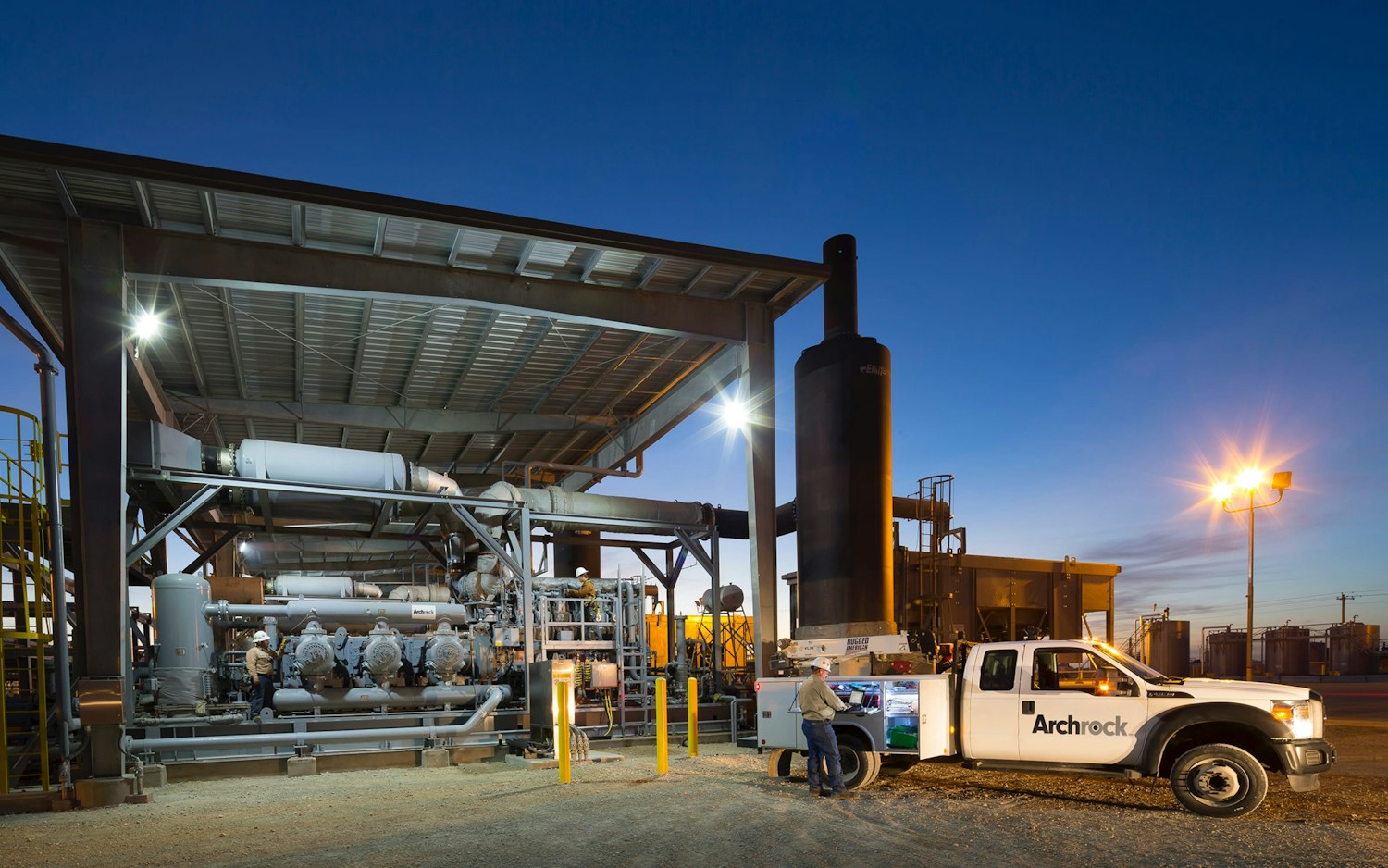
A pipeline is an invitation, not a promise. Natural gas still needs enough pressure to travel through it. That ordinary physical requirement supports an unusually durable business: somebody must supply the compression, keep the machinery running and return when something needs fixing. Archrock has made that somebody a company with roughly 4.5 million operating horsepower across the United States.
- Customers buy compression service and maintenance through recurring monthly fees.
- Two announced acquisitions worth $1.34 billion expanded the fleet and its electric-drive capabilities.
- Electric motors, methane capture and leak detection tackle different parts of the emissions problem.
The interesting unit here is time. A compressor package stays at a customer location for approximately six years on average, according to Archrock’s annual report. Consider what that means for a business often mistaken for an equipment rental operation. The machine arrives once. The relationship must work every month.
The compressor stays.
The invoice returns.
Archrock serves producers, processors, gas gatherers and transporters. Its customers need pressure to move gas through the infrastructure connecting production with markets. They can purchase equipment and maintain it themselves. Or they can hire Archrock to supply the package, operate it and handle the maintenance.
The contract operations business generally charges a fixed monthly fee based on horsepower and the application. Archrock normally carries the equipment’s operating costs, with a consequential exception: the customer supplies fuel gas or electricity. Some circumstances involving disrupted gas flows bring lower standby fees. Outsourcing the machinery does not make the energy bill disappear.
Equipment
Operations
Maintenance
Monthly fee
Fuel or electricity
Site requirements
There is a second entrance for customers who already own compressors. Archrock sells parts and supplies field service, overhauls and equipment reconfiguration. The practical choice is therefore broader than buying versus renting: an operator can retain the asset and purchase the expertise.
Buying a different kind of horsepower
Archrock’s history is a family tree of compression businesses. Its roots reach South Coast Gas Company in 1954. Universal Compression and Hanover Compression merged in 2007 to create Exterran Holdings. In 2015, the international services and global fabrication businesses were separated; the retained U.S. business took the Archrock name. Brad Childers, its president and CEO, had already been leading the predecessor business.
The recent story is easier to count. In July 2024, Archrock announced a $983 million cash-and-stock agreement to acquire Total Operations and Production Services, or TOPS. The transaction included approximately 580,000 horsepower of predominantly young electric motor drive assets. It closed that August.
That purchase brought electrical engineering knowledge along with machinery. Archrock’s stated rationale connected younger equipment, profitability, Permian Basin growth and customer emissions goals. The change in direction is visible in the assets it bought; there is no need to invent a boardroom conversion scene.
In March 2025 came another announced deal: approximately $357 million for Natural Gas Compression Systems and its affiliated company. NGCS brought large-horsepower equipment and additional electric-drive capacity. The acquisition closed in May. Together, the announced deal values reached $1.34 billion. That figure measures purchase commitments, not the price of a customer contract.
Every escaping molecule has a different fix
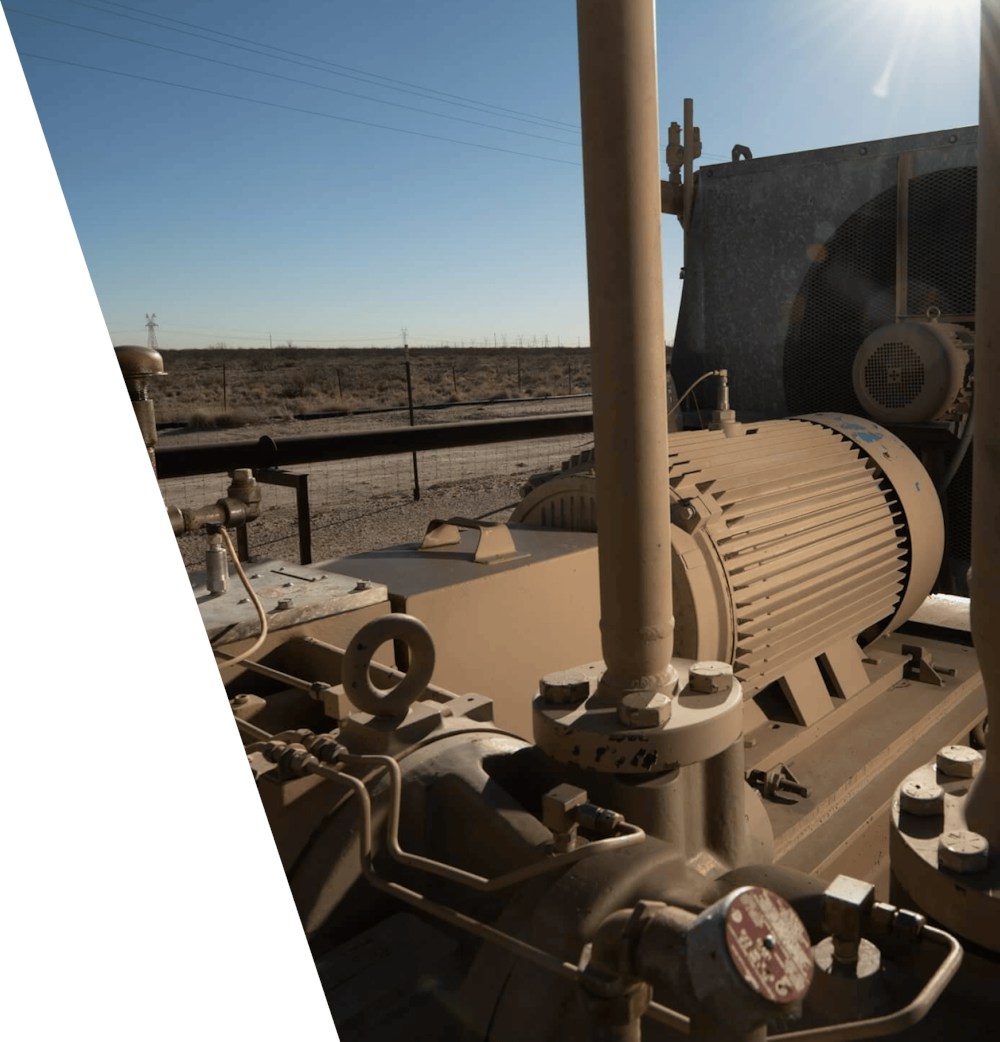
Electric drive changes the compressor’s power source. It removes the combustion engine’s on-site exhaust. It does not settle the emissions account for electricity generation, leaking equipment or the eventual use of the gas. Whether it suits a particular site still depends on available power and the economics of operating there.
Archrock’s other products reveal how many separate jobs sit inside the phrase “lower emissions.” Ecotec tools detect, monitor and quantify methane. Carbon Hawk captures gas from compressor rod packings and blowdowns. MaCH4, developed by Coldstream Energy and distributed through Archrock, separates heavier hydrocarbons from fuel gas used by engines.
Detection tells an operator where to look. Capture keeps gas from escaping through particular pathways. Fuel treatment changes what reaches the engine. None substitutes for all the others. For a customer, the useful starting question is specific: which loss, maintenance problem or operating constraint needs fixing at this site?
For a buyer, bundling these services can reduce the number of suppliers involved in a site problem. It also makes the diagnosis matter more. A leak detector cannot compensate for unsuitable equipment, and a newer motor cannot replace a maintenance plan. The product list becomes useful when it is matched to a particular operating problem.
The hands behind the hardware
Machinery alone is an incomplete explanation of the company’s position. Archrock’s service network combines equipment selection, installation, parts and field maintenance. Its careers material emphasizes technical training, mentorship and defined career paths. Its TARGET ZERO safety program sets an ambition for incident prevention; an ambition should not be confused with a claim that incidents never occur.
“Our time is your uptime.”
Archrock’s service promise
The competitive argument is practical: can the provider support the package after installation? Archrock also offers Shoreline AI equipment monitoring, which uses sensors and analytics to identify developing problems. A warning has value when someone can interpret it and act. That brings the story back to technicians, spare parts and response.
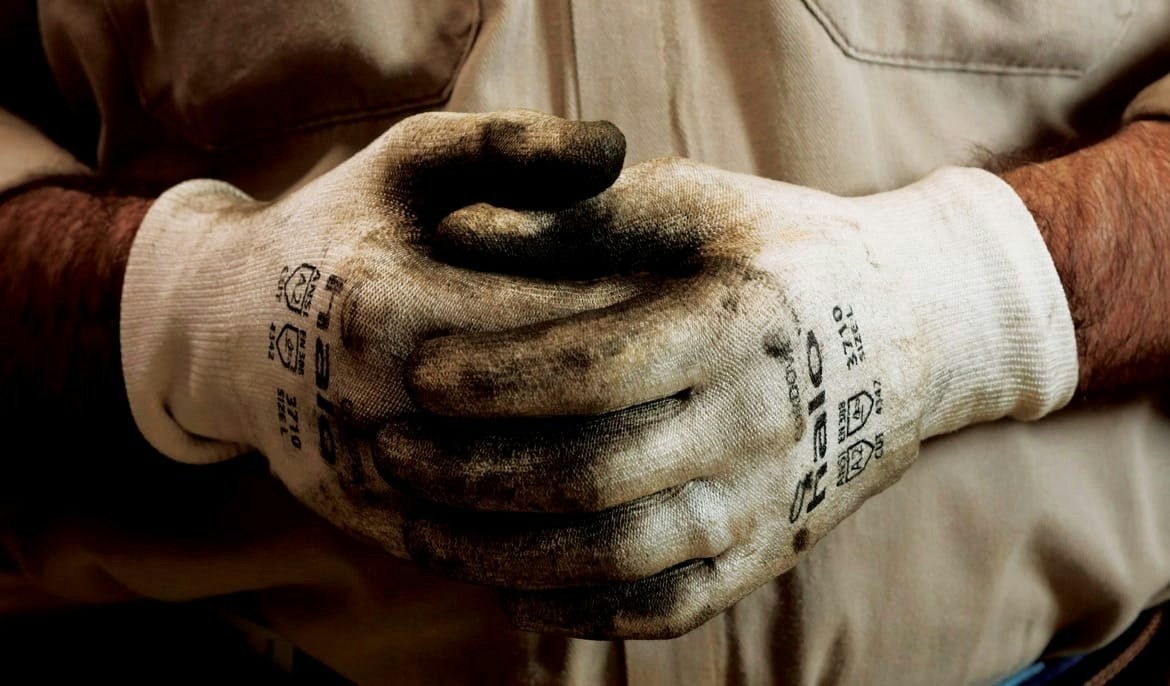
For a company in another industry, that is the part worth copying. Recurring billing asks customers to keep paying; recurring service gives them a reason. The machinery can be purchased in a transaction. Supporting it requires a system that survives staff changes, weather, wear and the inconvenient hour when a customer needs help. Those obligations arrive with the revenue.
The quarter that complicates the story
Revenue reached $1.49 billion in 2025. But the second quarter of 2026 offered a useful interruption to a simple growth narrative. Aftermarket revenue fell to $42.0 million from $64.8 million a year earlier. The prior period included non-recurring overhauled-engine sales, and the expected seasonal increase in major maintenance demand did not arrive.
Contract operations revenue rose 3% in the same quarter. Period-end fleet utilization was 94.4%, a measure that includes contracted standby horsepower. It is not mechanical uptime. Archrock also narrowed its adjusted EBITDA guidance, citing costs and timing factors. Recurring fees can coexist with expensive equipment, maintenance pressure and uneven customer spending.
The transferable lesson is precise: build the capability to maintain the result you sell. Operators considering Archrock should compare the service commitment, power requirements and retained costs with owning the equipment themselves. The appeal depends on those details. Gas needs pressure; a dependable business needs more than a compressor.