Caleb Frankel had secured a place at veterinary school before he finished college. For someone who had known his intended profession since his teens, this might have looked like the moment to accelerate. He could skip his final undergraduate year. He could get on with the plan. He turned the offer down.
He stayed at the University of Maryland, completed his animal sciences degree, and later described that last year as indispensable. He also began dating his future wife. The decision acquired a personal dividend that no admissions committee could have itemized.
Years later, Frankel would be running Instinct Science, the software company he launched with colleagues in 2017. His earlier ambition had been to own a chain of specialty veterinary hospitals. He reached a different destination through a succession of practical decisions: finish the year, write the blog, reconsider the job, take the meeting. Looking back, the detours have a suspicious amount of direction.
The year he refused to skip
Frankel grew up in Williamsport, Pennsylvania, in a family of businesspeople. His grandfather and father had owned a local store. Science and animals drew his attention, and a high-school career-exploration placement gave those interests somewhere to go. At sixteen, he spent an afternoon with a local veterinarian and wanted to stay after the scheduled end.
Maryland followed. He chose animal sciences because he wanted experience beyond the household pets he knew. The campus farm and lamb-watching course introduced him to a broader working world. He has joked about being the stubborn student who never changed his major. His professional curiosity was considerable; his administrative paperwork apparently remained admirably consistent.
He graduated in 2004, then earned his VMD at the University of Pennsylvania in 2008. During those years, he also worked at Booz Allen Hamilton, gaining a view of technology outside his chosen profession. That comparison would stay with him. A tool that seemed normal in one workplace could make the equipment elsewhere look very old indeed.
His internship took him to Coral Springs Animal Hospital in Florida. There, an ambitious workplace and its cumbersome software occupied the same building. Frankel began looking closely at the gap. If he eventually opened hospitals of his own, he would inherit that problem too. He started experimenting with ways to make the working day run more smoothly.
A blog earns a seat at breakfast
By the summer of 2013, the experiments had acquired a public address: VMD Technology. Frankel launched the website to share technological resources with colleagues and students. He was making his interests useful to other people, then seeing what happened. In his account of the period, the website was an experiment with an open ending.
One post concerned bringing a familiar professional reference, Plumb’s, into digital form. Elizabeth Green, the founder of Brief Media, noticed his writing and contacted him. An invitation to breakfast at a conference followed. Green, Indu Mani, and Mickael Lucchini discussed their plans for software and asked whether he might help.
Here was a chance to work on the very sort of problem he had been describing. Frankel initially declined the subsequent job opportunity. He enjoyed his existing work, was early in his career, and questioned whether he belonged in product development. His wife encouraged him to reconsider. Eventually, he negotiated a way to divide his time between professional practice and Brief Media.
The arrangement gave him an apprenticeship in making something people would actually use. He learned to work with software engineers, think about design, and understand the business surrounding a product. He helped develop the Plumb’s application, which launched in January 2015. The person writing suggestions from outside the software business now had responsibilities inside it.
“I’m a learning animal.”
Caleb Frankel, on taking unfamiliar work seriously
He has also recalled spending a summer teaching himself to code and discovering that he neither enjoyed it nor considered himself good at it. That discovery deserves a little space in a founder’s biography. Knowing which work to hand to someone else can be as useful as learning a new skill.
Coffee, with a second brain
In 2015, Frankel adopted a rule: he would “take a meeting” with anyone who asked. One conversation was with a University of Maryland alumni liaison. He explained his software idea. She had recently met another Pennsylvania-based graduate, Rick Genzer, whose background involved technology and startups. She connected them.
They met for coffee, then kept meeting. Genzer brought experience that Frankel could borrow while making decisions outside his original training. Frankel called him a “second brain.” After months of conversations, he asked Genzer to become a partner. A university connection had turned into a working relationship, one cup at a time.
The early company took shape in Frankel’s basement. He and his cofounders developed a prototype in 2016, tested it with professional colleagues, and launched Instinct in May 2017. Friends and family provided early backing. Once the software reached its first workplaces, some of the professionals using it asked about investing too.
- 2013A public notebook
VMD Technology - 2015A product apprenticeship
The Plumb’s app - 2017A company launches
Instinct Science - 2024Old colleagues reunite
VetMedux acquired - 2026The questions get a microphone
Pick the Brain Podcast
A basement is a useful place to start a company and an inadequate explanation for why it works. Frankel arrived with years of exposure to the problem, experience helping build another product, and relationships with the people who might use his own. The launch had a date. The preparation had a much longer history.
Learning to run what he started
Instinct began with tools intended to fit alongside existing software and connect everyday work. The ambition expanded. In January 2021, Frankel announced a full practice-management platform, built out of the earlier workflow product. His company was taking responsibility for a larger portion of its customers’ working lives.
Its geography expanded too. By 2020, workplaces across North America, Europe, Asia, and Australia were using Instinct. The challenge was becoming organizational as well as technical: hiring people, supporting customers, and learning how to keep a company useful as its responsibilities grew. Frankel credited Genzer with helping him develop from founder into CEO.
Outside investment added another set of relationships. Instinct announced backing from Mainsail Partners in November 2022; the transaction had closed earlier that year. The stated purpose included accelerating product development and strengthening service and support. Financial terms were undisclosed. The announcement marked a business that had moved well beyond its prototype.
Frankel’s writing about software adoption is interested in the humans expected to change their routines. In a 2022 essay, he described visiting a workplace where the transition was going well and hearing that its leaders wished they had started sooner. He returned to a compact question: “Do you believe?” Confidence in undertaking the work, he argued, affects how a team approaches it.
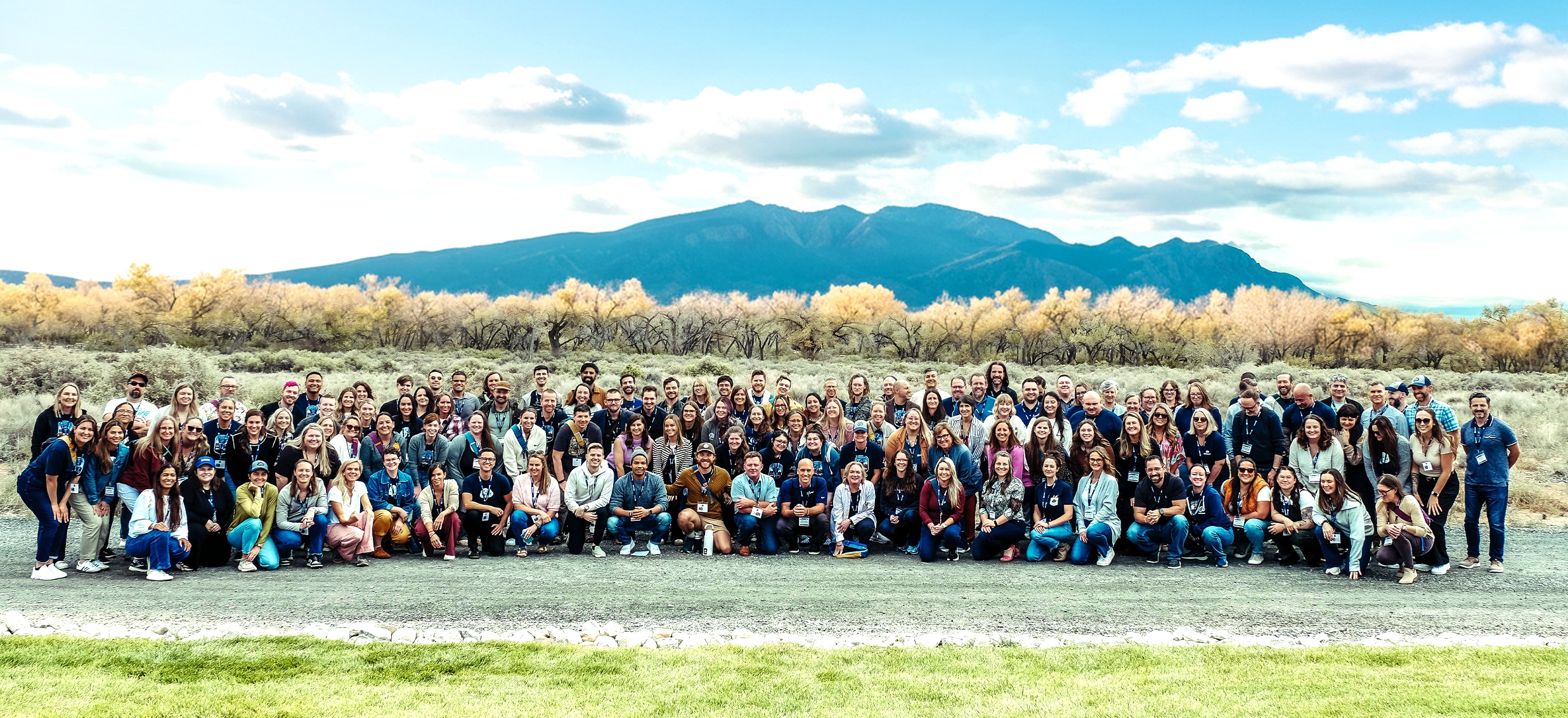
The distributed team has its own history. In 2018, Instinct deliberately chose to operate without an office. Frankel later explained that this widened the search for talent. It also meant the company already had experience working remotely when that arrangement suddenly became familiar to many more businesses.
The return of an old workplace
In January 2024, Instinct acquired VetMedux, previously known as Brief Media. Plumb’s and Clinician’s Brief joined the business Frankel had founded. The company where he had learned product development became part of the company he was running. Corporate announcements rarely come with such a conveniently circular plot.
For Frankel, the history mattered. He had worked with Green and her colleagues over the preceding decade. The acquisition brought together people who already knew one another’s work. Familiarity cannot do the job of combining businesses, but it gives the people doing it something more substantial than introductory biographies.
Remember the first connection: a person wrote publicly about a tool he wished existed, and someone building it invited him to breakfast. That small professional exchange eventually became part of a much larger business relationship. It is a useful reminder that a career can retain its earlier chapters rather than discard them at each promotion.
Still asking the next question
In 2026, Instinct acquired ScribbleVet, bringing its founder Rohan Relan into the organization. The product family and leadership group continued to expand. Instinct now describes more than 200 experts on its team and reports that its products collectively serve over 360,000 veterinary professionals worldwide. Those figures cover a family of products, rather than one application or a count of hospitals.
professionals served across Instinct’s product family worldwide, according to its 2026 company overview.
Frankel also returned to a smaller format. In April 2026, Instinct introduced Pick the Brain Podcast, with him hosting brief conversations about operations, ownership, leadership, and technology. The announced format kept episodes under fifteen minutes. For someone whose early opportunities came from sharing practical ideas, a microphone seems a reasonable addition to the toolkit.
He remains a planner with a conspicuously revised plan. His original ambition supplied the questions; colleagues and unfamiliar assignments helped him find ways to answer them. Along the route were a year he chose to keep, a job he almost refused, and meetings whose consequences took time to appear. Frankel has spent much of his career trying to make work take less time. He seems to have made good use of the long way round.