Byron Foster had a small mercy to offer the people listening to him at an automotive investor conference in August 2026. There would be no hundred-page PowerPoint. A few slides would do. For a newly installed chief executive with a proposed multibillion-dollar transaction on his desk, this was an encouraging respect for everybody's afternoon. The company had plenty to discuss. Foster began with the business already running.
He had become Dana's chief executive officer on July 1. A little more than a month later, he was explaining quarterly results, manufacturing improvements and the work ahead. The sequence suited a career spent moving between customers and operations. His subjects had changed over the years: consulting, automotive seating, driveline systems. The practical question kept returning. What must happen between a customer's ambition and a product that arrives ready to work?
That question gives Foster's career its shape. He came to Dana in 2021 to lead its commercial, marketing and communications work, then moved into the company's largest business unit. Five years later, he took responsibility for the whole enterprise. Along the way, the apparently unglamorous components of a vehicle became a useful guide to the people, factories and relationships required to build one.
Before the axle, there was the seat
Foster earned his business administration degree at the University of Michigan, graduating in 1990. Northwestern University's Kellogg School of Management followed; his public education record lists 1992 to 1994. Before joining Johnson Controls in 1997, he worked as a senior associate at Booz Allen Hamilton. Those are business credentials, and the distinction matters. His route into automotive leadership ran through the organization of industrial work, rather than a claim to have invented a particular component.
At Johnson Controls, that work became increasingly specific. He was responsible for the global metals business in 2011 and 2012, following the acquisitions of KEIPER and C.R. Hammerstein. Customer-group and strategy responsibilities followed between 2012 and 2015. His later seating remit crossed the Americas, Europe and Asia Pacific, encompassing just-in-time manufacturing, foam and trim. Even a seat, it turns out, comes with a remarkably extensive organizational chart.
By 2018, Foster was an executive vice president at Adient, leading Seat Structures & Mechanisms and its turnaround initiative. The job reached across engineering, manufacturing, program management, quality, procurement and the supply chain. This is the less photogenic side of automotive leadership: the structure under the upholstery, the mechanisms underneath a familiar movement, the arrangements that allow separate operations to produce something an automaker can use. It is also where a leader's commercial promises encounter the particulars of production.
Two familiar faces at a new beginning
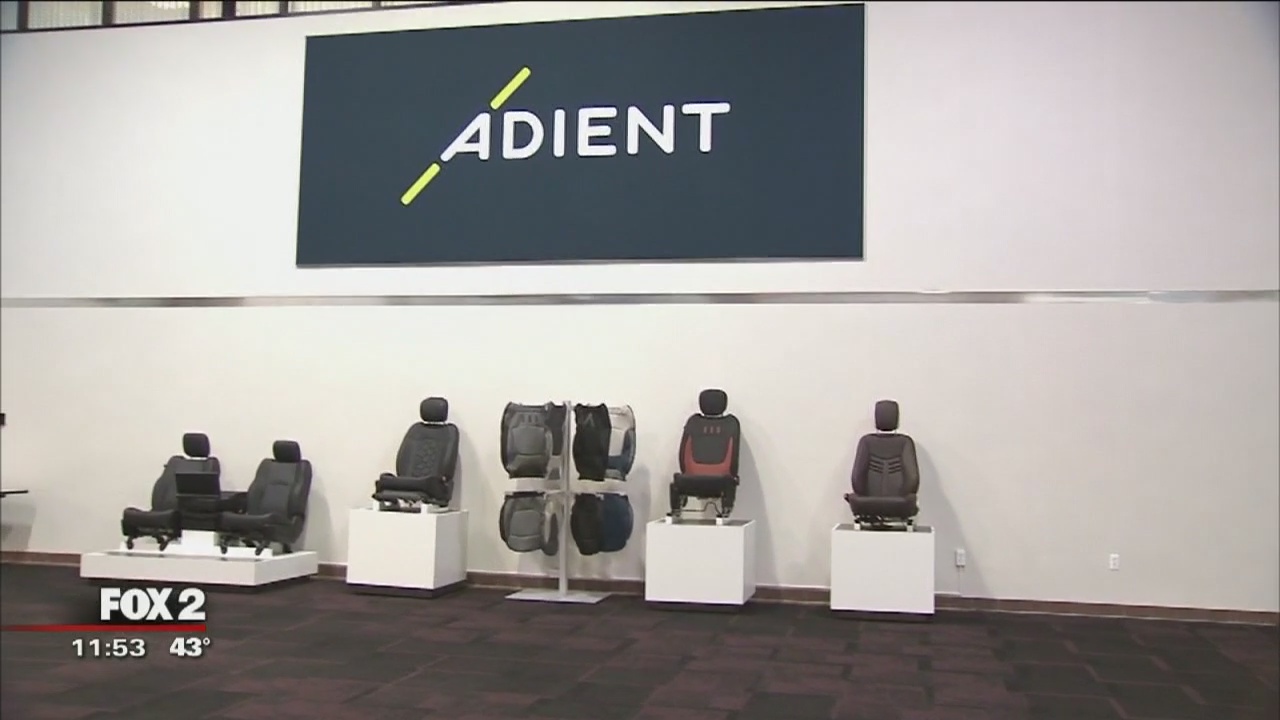
Adient began trading independently on the New York Stock Exchange on October 31, 2016, after its separation from Johnson Controls. Foster was its executive vice president. R. Bruce McDonald was chairman and chief executive. On the first trading day, the two expressed confidence in expanding the seating and interiors businesses, even as automotive shares faced a difficult market. The occasion supplied a useful early picture of a partnership that would reappear years later at Dana.
A few days before the listing, Foster discussed the Plymouth technical center with a Detroit television reporter. It employed about 1,200 people, with roughly 100 more expected to join. The figures made the corporate separation tangible. Behind a new stock symbol were people developing products and a Michigan campus preparing for more of them. A company can announce its independence in a morning. The work that gives the announcement substance takes rather longer.
His responsibilities also extended outside the company. In 2018, Michigan Ross included Foster among six university alumni recognized on Savoy's list of influential Black corporate leaders. At the time, he served as a director of the Detroit Regional Chamber and the National Action Council for Minorities in Engineering. Those historical roles place him within a wider industrial community, connecting corporate management with regional business and access to engineering careers. They belong to that period of his story.
A five-month change of assignment
Dana announced Foster's arrival on February 23, 2021. His title was senior vice president and chief commercial, marketing and communications officer. The remit covered commercial opportunities around the world, together with marketing and communications. Then-CEO James Kamsickas emphasized collaboration with customers. It was a role that put Foster at the meeting point between what Dana could make and what its customers needed.
By late June, a different assignment was public. Bob Pyle was leaving to take a chief executive position outside the mobility industry, and Foster would succeed him as president of Light Vehicle Drive Systems. The move placed the recent arrival in charge of the company's largest business unit. Kamsickas again pointed to the combination of commercial and operational experience. Within months, Foster's responsibilities had moved from supporting opportunities across the enterprise to leading a major operation directly.
The change is a useful hinge in his career. Selling an industrial capability and running the organization that delivers it involve overlapping relationships, but different daily demands. Foster's appointments put both kinds of responsibility on his record. Dana would later credit the light-vehicle business under his leadership with sales growth and improved profit margins. The company did not present that work as a single dramatic moment; it described an operating record accumulated before the CEO succession.
- FEB 2021Commercial, marketing
& communications - JUL 2021Light Vehicle
Drive Systems - JUL 2026Chief executive
of Dana
A second set of wheels
In July 2021, Wabtec appointed Foster to its board of directors. The company works across freight and transit rail, with equipment, systems and services that also reach industrial markets. His automotive experience was traveling into another branch of transportation. Wabtec chairman Al Neupaver highlighted a background spanning operations, engineering, marketing and supply chain, rather than limiting his value to one product or one vehicle category.
For Foster, the directorship added a boardroom perspective alongside his executive responsibilities at Dana. Wabtec's subsequent disclosures described experience in global operations, commercial businesses and technical innovation. Those are descriptions of professional scope, rather than a window into his private temperament. They help explain why an executive associated with car seats and light-vehicle driveline systems would have a place in discussions about a railway equipment business.
“I am honored by the trust the board has placed in me”
Byron Foster · February 2026
The promotion arrived with another moving part
Dana announced the CEO succession in February 2026, allowing several months for the handover. Foster joined its board that February; his executive appointment took effect in July. The arrangement separated the chief executive and chairman roles, retaining McDonald's experience while moving daily leadership to Foster. For anyone who remembered Adient's debut a decade earlier, the names on the announcement were familiar. Their responsibilities had changed again.
Foster's response was measured, expressing gratitude for the board’s confidence and for McDonald’s continued transition support. When he marked the start of the job on LinkedIn, he thanked employees, customers, shareholders, the leadership team and the board. The public emphasis was collective. His stated ambition was to help Dana realize its vision of becoming the world's best powertrain company. That is an aspiration to be tested through the work, rather than an award already on the shelf.
Before he took office, the assignment grew. On June 11, Dana announced an agreement to combine with Eaton's Mobility business, valued at approximately $5.1 billion. The proposed combination would bring additional transmission and electrification capabilities alongside Dana's powertrain, thermal and sealing technologies. Foster was designated chief executive of the combined company, with McDonald as executive chairman responsible for integration and realizing the expected savings. The next chapter would require coordination across another set of teams and products.
As of the August update, the transaction was expected to close in the first quarter of 2027, subject to shareholder and regulatory approvals and other conditions. Its proposed benefits remained ahead. That timing matters to Foster's story: he was already Dana's CEO, while leadership of the enlarged business depended on completion. A signed agreement gives an executive a direction of travel. It does not spare anybody the journey.
The quarter that came before the title
The first quarterly results Dana released with Foster as CEO covered April through June 2026, before his July start. Sales reached $2.01 billion. Adjusted EBITDA was $207 million, giving an adjusted margin of 10.3 percent, compared with 7.6 percent a year earlier. These were company results produced before his tenure in the top job, and they provide context for the business he inherited rather than a personal scorecard for his first month.
Dana pointed to pricing, operating improvements and cost savings, alongside improved demand. The difference between a better quarter and a lasting operating improvement will be part of Foster's continuing task. A percentage on a slide is compact. The activities beneath it occupy purchasing departments, engineering teams and factories. His career has repeatedly brought him into that space between the concise financial result and the considerably less concise business required to produce it.
The next test follows the same pattern at a larger scale. Foster has worked on the seat, the driveline and the relationship with the automaker; now he leads the company preparing to add another collection of capabilities. His public story offers a view of an executive through his assignments: learning the component, managing the operation, carrying the promise to a customer. There will be more presentations. The interesting part will be what happens between them.