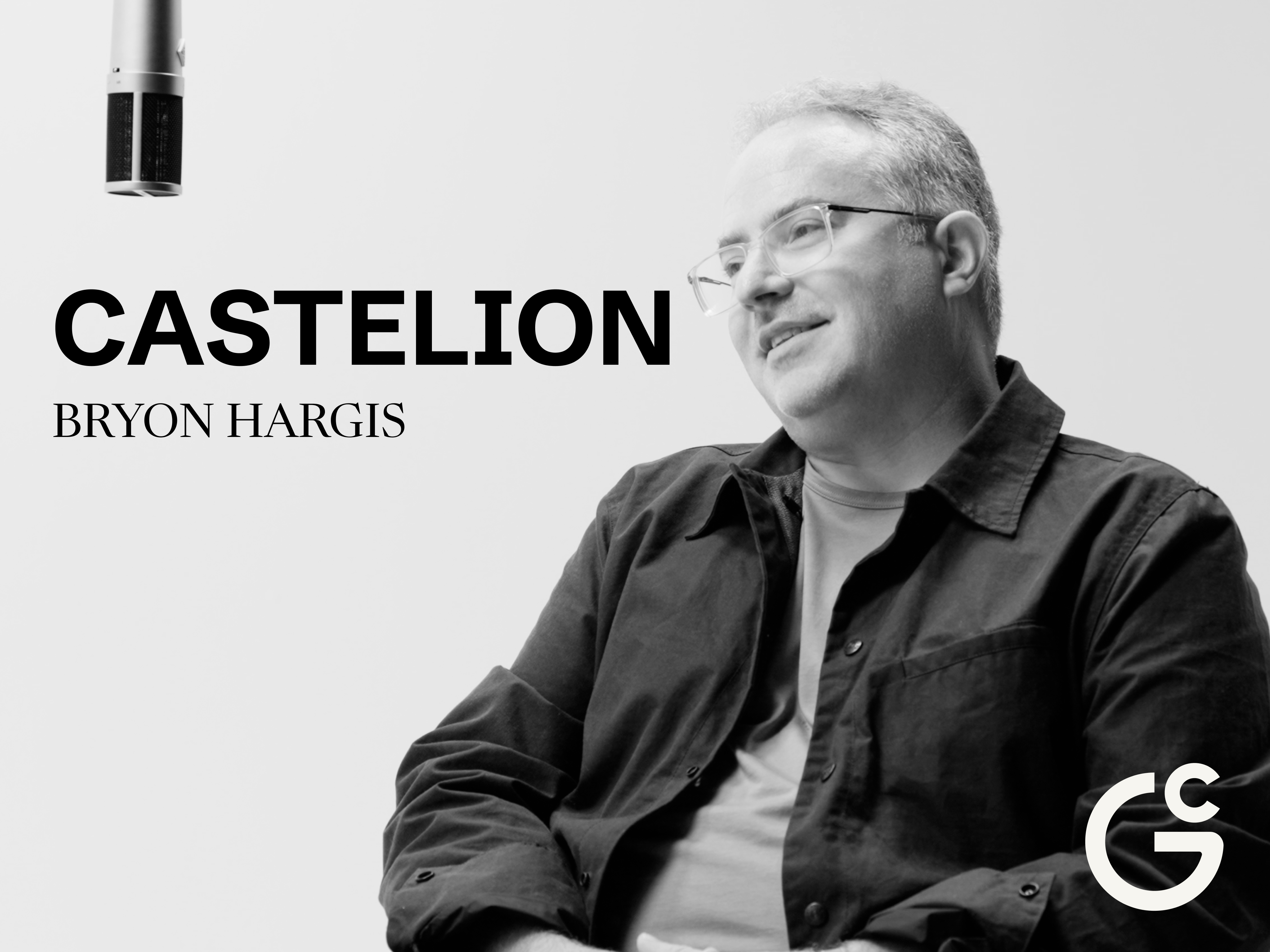
Bryon Hargis ordered the buildings before he had somewhere to put them. By December 2025, Castelion’s chief executive was describing a decision to buy more than twenty steel buildings six months before securing the site for his New Mexico manufacturing campus. Property shopping is usually followed by construction shopping. Hargis had reversed the errands. He was trying to make hypersonic missiles by the thousand, and waiting for the paperwork to catch up had apparently lost its appeal.
The anecdote offers a useful introduction to a founder whose business combines a very fast object with a very slow institutional problem. Blackbeard, Castelion’s first weapon, is being developed for military platforms already in service. The more difficult promise is industrial: build enough, cheaply enough, for the weapon to matter beyond a successful demonstration. A missile can be impressive in flight and impractical on an invoice.
In September 2026, that argument acquired a new kind of weight. The U.S. Navy announced a production delivery order valued at up to $200 million. Castelion would manufacture, assemble, test and deliver an initial lot of Blackbeard rounds. Hargis had moved from asking people to finance an idea to being responsible for fulfilling an order. The verbs had become considerably less forgiving.
The long route out of the laboratory
His preparation was unusually well matched to the problem. Hargis graduated from Georgia Tech with a bachelor’s degree in mechanical engineering and joined the Johns Hopkins University Applied Physics Laboratory in 2002. He later earned a master’s in applied physics at Johns Hopkins. A 2010 APL technical publication includes him among its authors and records those credentials. Before he became a founder explaining weapons economics, he was doing the technical work.
At APL, he served as a senior member of the technical staff and a program manager. His subsequent work at OmniEarth, an Earth observation and analytics startup, covered product definition, business development and sales. That progression matters. He learned to move between what engineers can build and what customers will pay to use. In defense, those two conversations can become separated by an alarming amount of procedure.
He joined SpaceX in early 2017. As director of government sales, he pursued early government opportunities for Starlink. The title sounds commercial; the task required understanding a satellite network well enough to see where it could solve national security problems. His later senior director role included sales, business development and early product definition for national security satellite programs, including Starshield.
There is a pleasingly unpolished detail in his account of getting hired. He submitted a résumé with a photograph, endured about eight interview rounds, and accepted a job below the level he had sought. Colleagues subsequently teased him about the résumé. A career turning point had arrived dressed as a questionable formatting choice.
A customer problem, with a rocket attached
Castelion was founded in late 2022 by Hargis, Sean Pitt and Andrew Kreitz, all SpaceX alumni. Their respective roles became chief executive, chief operating officer and chief financial officer. The team brought technical, commercial and financial experience to a business that would need all three before it had much to sell. Government customers require credible hardware; hardware requires money long before delivery.
Hargis describes his ambition as conventional deterrence: giving policymakers a credible military option between economic pressure and nuclear escalation. That is his strategic argument, rather than a claim that any particular weapon guarantees peace. In his telling, the weakness he wanted to address was already visible. A country could develop sophisticated technology and still struggle to manufacture it in useful quantities.
The distinction runs through his public conversations. Asked about the economics of hypersonics, he returns to affordability and production capacity. Speed alone does not answer the question of how many rounds a military can acquire, store and replenish. His premise puts a purchasing constraint inside the engineering brief. The factory and the budget belong in the conversation while the product is still being defined.
“This funding lets us build fast, test often, and produce at volumes that matter in the real world.”
Bryon Hargis, December 2025
At Castelion, that thinking has meant repeated development flights and work on subsystems the company can manufacture itself. Its December 2025 financing announcement reported more than twenty development flight tests during that year, covering components such as motors, flight computers, controls and thermal protection. A sequence of tests gives engineers opportunities to discover what a design actually does. The calendar becomes part of the engineering method.
There had been outside recognition before the large financing rounds. In November 2024, Naval Surface Warfare Center Crane and the Joint Hypersonics Transition Office named Castelion and Specter Aerospace winners of the Hyper-AMPD prize challenge. The competition sought low-cost, manufacturable hypersonic concepts. That combination of adjectives has followed Hargis from early feasibility work into production negotiations.
Who would buy the impossible quadrant?
Money did not arrive simply because the mission sounded urgent. Hargis has described close to a hundred investor rejections in the company’s early fundraising. One investor placed defense hardware at the distant corner of a two-by-two investment matrix, in territory he considered effectively impossible. A diagram can look wonderfully authoritative when somebody else has to live inside it.
Hargis distinguishes the first term sheet, from BlueYard’s David Byrd, from the first money received, from Jonathan Lacoste at Space VC. It is a small distinction with considerable emotional content. An encouraging conversation and cash in the bank occupy different places in a founder’s memory. He has spoken about continuing to help the investors who backed the company when doing so was unfashionable.
By December 2025, Castelion had closed a $350 million Series B led by Altimeter and Lightspeed. In August 2026, it announced a financing package described as a $1 billion Series C, with $800 million in equity and a $250 million committed revolving credit facility. The equity investors included JPMorganChase’s Strategic Investment Group, Andreessen Horowitz and Carlyle-managed funds. The announced valuation was $13 billion.
Those numbers describe the company’s financing and valuation. The work they finance remains physical: capacity, equipment, employees and systems that have to pass tests. Hargis’s argument becomes more demanding as capital becomes available. Early skepticism can explain a difficult beginning. It cannot assemble a missile or satisfy a delivery schedule.
September 2026 Navy order value. A contract ceiling, not a statement of revenue already earned.
One thousand acres of follow-through
Project Ranger makes the scale of the commitment visible. Castelion broke ground in Sandoval County, New Mexico, in January 2026, with state, local and military leaders present. The 1,000-acre campus was planned for solid rocket motor manufacturing, static testing and final assembly. The initial announcement projected roughly 300 manufacturing jobs. The setting had changed from a pitch meeting to a place people could point to on a map.
The photographs have the familiar ceremonial equipment: officials, an American flag, shiny shovels. Beneath the ceremony is an unforgiving industrial sequence. Buildings need equipment. Equipment needs commissioning. Workers need to be hired and trained. Finished rounds need to meet their requirements. A groundbreaking compresses all of that into a single agreeable photograph; the following months restore the missing detail.
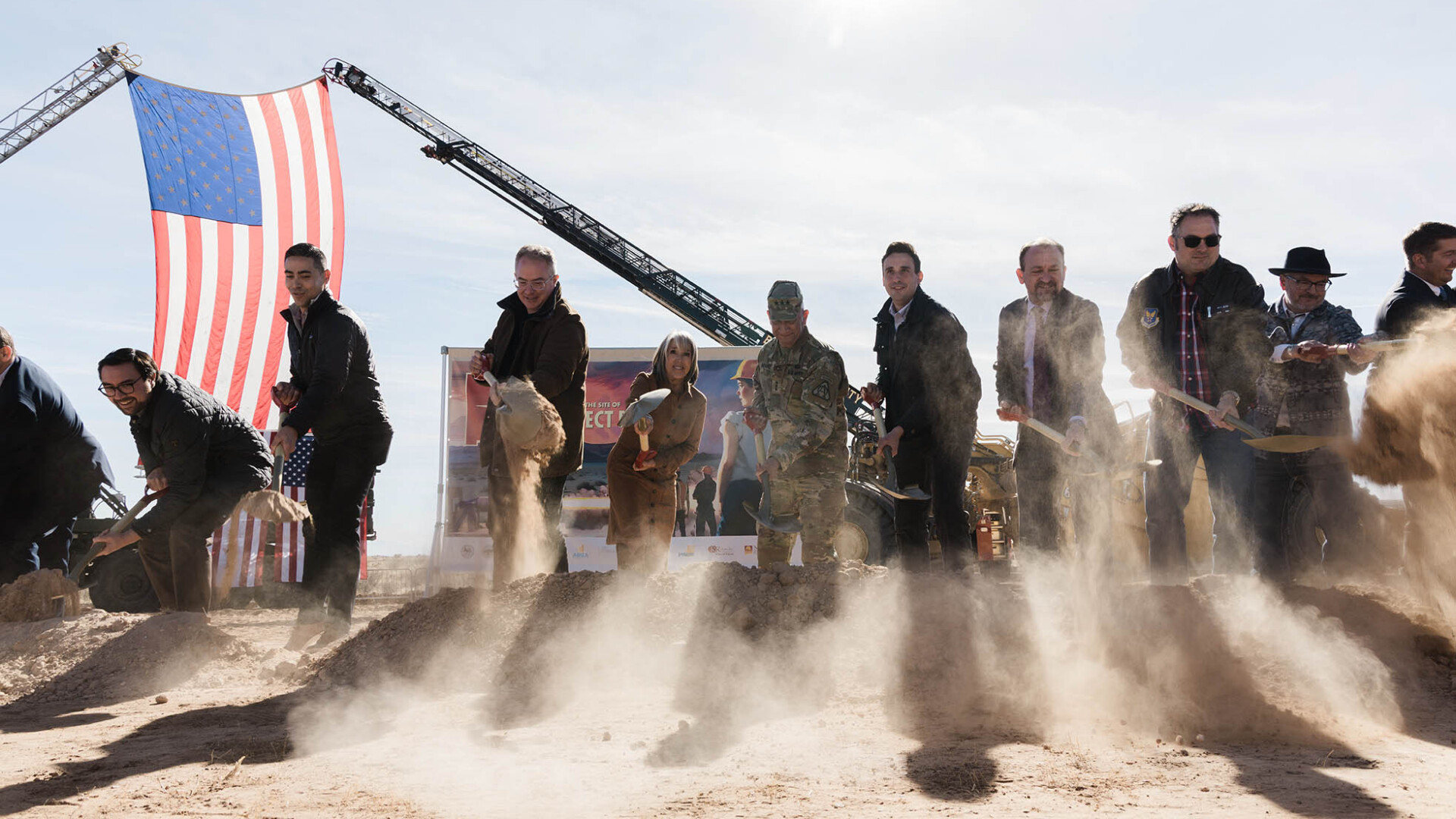
By fall 2026, Castelion’s campus timeline reported twenty of twenty-one buildings completed within nine months of groundbreaking. It expected initial operational capability by year’s end and preliminary production operations in early 2027. These are dated milestones and stated expectations. They provide a more useful measure of progress than treating future annual capacity as though the missiles have already left the gate.
- 2022Castelion founded
- 2024Hyper-AMPD recognition
- Jan 2026Project Ranger groundbreaking
- Sep 2026Navy production order
The next test is delivery
Another partnership extends the idea beyond aircraft and ground launchers. In June 2026, Castelion and autonomous vessel builder Saronic announced plans to demonstrate a Blackbeard launch from Saronic’s Marauder vessel in 2027. Their cooperation already included a late-2025 test in which Saronic’s smaller Corsair served as an at-sea telemetry and communications node. The relationship began with the supporting work required to learn from a flight.
That proposed demonstration adds a further obligation to the founder’s list. A weapon must work with the platform carrying it, and the combination must be tested. Multiplying possible launch locations can be strategically attractive. Each new integration also brings practical work. Hargis’s industrial thesis keeps returning to the same question: can the system be made useful at a scale someone can afford?
He has a fairly direct account of his own temperament: “the eternal optimist and risk-taker.” His description of the founding team gives Pitt the willingness to deliver uncomfortable truths and Kreitz the persistence to finish difficult work. Optimism may get a building ordered before the land is settled. A company also needs people who remember that the building will require electricity.
The Navy’s order has given that combination a concrete test. Hargis’s career has taken him through laboratory research, satellite sales and startup fundraising to the less theatrical business of manufacturing on schedule. The origin story is interesting because the task now ahead of him is measurable. There are buildings to commission, people to hire and rounds to deliver. The price of peace, in his version, comes with a production plan.