Long before Bryan Olshock measured a software funnel, somebody handed him a pencil and a scorecard. Golf is ruthless that way. There are no persuasive adjectives in the final column, no convenient story to tell the clubhouse. There is only the number you made and the number you wanted. Olshock grew up in Lakewood, Colorado, and became good enough to win 10 high-school tournaments, finish fourth at the state championship and qualify for the state tournament in each of his final three seasons. On the first day of the Colorado State Match Play Tournament, he shot 66. It is the sort of number a young golfer remembers because everyone else does too.
He took that game west to the University of California, San Diego. The old roster page is wonderfully specific about a young person's ambitions. Olshock studied economics, rooted for the Broncos and Avalanche, admired Tiger Woods, liked sports and travel, and wanted to play professional golf. His favorite film was Forgetting Sarah Marshall, a detail with no strategic significance and therefore considerable charm.
College golf supplied the less cinematic part of an athlete's education. As a freshman he averaged 78.3 across 12 competitive rounds. The next season included a 76 and a 77 at the Western Washington Invitational, along with harder days elsewhere. Promise and frustration can occupy the same bag. Golf teaches this before most professions get around to it: a good round is not a personality, and a bad one is not a verdict. You review it, find the miss and play again.
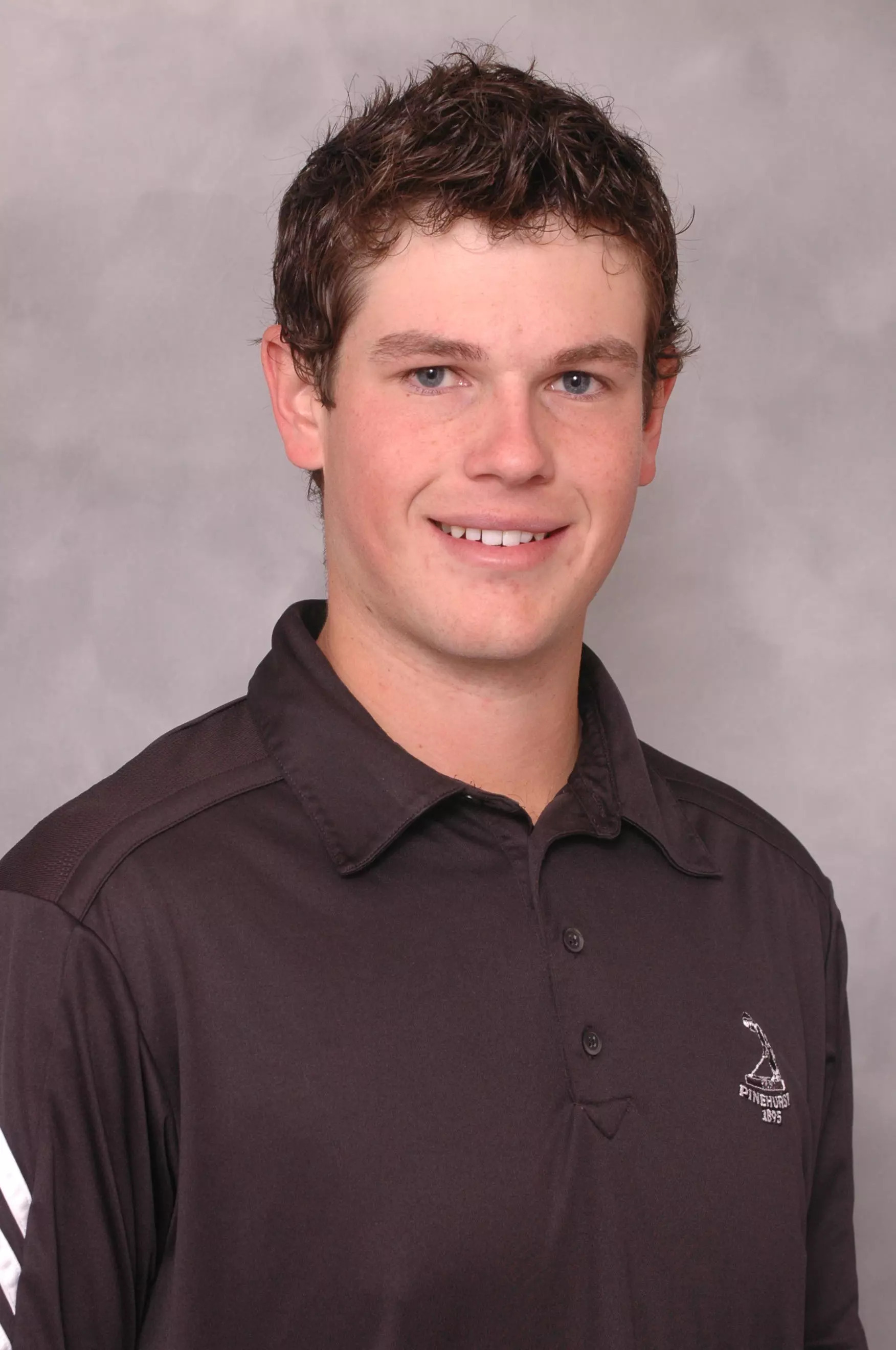
A founder between classes
While studying full time, Olshock started Under The Table Marketing. The name sounded like something dreamed up by a student, because it was, but the work was real. A colleague later described him as its key visionary and dedicated chief executive, managing employees and business partners in both Colorado and California while expanding the client base. The enterprise lasted from 2009 to 2011. It gave him an early look at the unglamorous mechanics beneath a business: customers, delivery, coordination and the constant need for another sale.
His next education was narrower and deeper. In 2011, he joined Red Door Interactive as an associate digital analyst. He advanced through digital analyst and senior digital analyst roles before becoming manager of analytics and optimization and a marketing strategist. The job titles read like sedimentary layers. Each added a little more responsibility, but they all sat on the same bedrock: watch what people do, test why they do it, and resist the temptation to confuse a hunch with evidence.
“Turn complex analysis into easy to understand frameworks and stories.”How an early conference biography described his work
In 2013, at the Online Marketing Summit, Olshock presented a practical theory of conversion optimization. Doing it properly, he argued, required three people: the data scientist, the creative user-experience thinker and the persuasive copywriter. It was a neat little coalition, and it still sounds like the internal politics of a healthy marketing team. Discovery came first: behavior, usability, competitors and the customer's voice. Only then did the testing tools earn their keep.
By 2015, he was on a Pubcon stage discussing big data and analytics in marketing planning. His speaker biography praised his ability to make analysis intelligible and his use of data visualization. This was not yet the language of a CMO. It was the language of the person in the room who has opened the spreadsheet, noticed the inconvenient cell and now must explain it without causing everyone's eyes to glaze over.
Measurement is useful only when it changes a decision. Olshock's career moved from producing the analysis to building the organization that acts on it.
The funnel widens
The next moves pulled him closer to revenue. He led marketing analytics and optimization at Renovate America from 2016 to 2018, then became digital marketing director at Housecall Pro, another software company serving home-service professionals. In 2019 he spent several months leading demand generation at mobile-app builder BuildFire. That September, he joined ServiceTitan as head of demand generation.
The title matters. Demand generation is marketing with its sleeves rolled up and its arithmetic showing. It asks who arrived, what they understood, whether they acted and what happened to the pipeline afterward. At ServiceTitan, Olshock soon became vice president of pipeline generation, then senior vice president of marketing in 2023. In May 2025, he became Chief Marketing Officer.
During that climb, ServiceTitan itself crossed a consequential threshold. Founded to give trades businesses purpose-built operating software, the company expanded across residential and commercial work and went public in December 2024. Its customers do the jobs that make modern life feel ordinary when everything is working: plumbing, heating, cooling, electrical work, roofing, pest control and more. Marketing to them requires a useful respect for reality. A burst pipe is wonderfully indifferent to brand positioning.
Olshock's public language tends to begin with that reality. When ServiceTitan released its first Commercial Sales and Marketing Report in September 2025, the headline number was not a vanity metric. Fifty-seven percent of the contractors surveyed said they spent close to half their time on non-selling activity. Olshock framed the problem through deals, customer relationships and overhead. The software story was attached to hours people wanted back.
“Commercial business leaders run complex operations that rely on deals closing, building strong customer relationships, and reducing overhead work to consistently drive growth.”Bryan Olshock, 2025
He can get even more concrete. Writing about ServiceTitan's integration with SRS Distribution, Olshock focused on the dangerous space between the price a roofer quotes and the price paid for materials. Live catalogs and electronic purchase orders are not naturally romantic subjects. Margin leakage is. It puts a recognizable villain in the story and gives the product a job beyond displaying menus on a screen.
The new instrument panel
Now the marketer who built his career in analytics is working through the arrival of generative and agentic AI. His endorsement of Jasper is revealing because it does not dwell on novelty. He talks about efficiency, faster execution and campaign quality. Elsewhere, he has described an integrated environment in which teams plan and build campaigns at scale. The emphasis remains operational: Can people do better work sooner, and can the organization preserve its standards while moving?
That question travels neatly between his worlds. A golfer may buy a more forgiving driver, but the club cannot choose the shot. An analyst may gain a sharper dashboard, but the chart cannot decide which problem deserves attention. A marketing team may deploy an agent, but speed has value only when the direction is sound. Tools compress effort. They do not repeal judgment.
His more recent public work also reaches beyond software adoption. In 2026, ServiceTitan joined Metallica's All Within My Hands as a corporate partner supporting skilled-trades education. Olshock's statement was characteristically direct: trades professionals keep the lights on, the water running and homes comfortable. “Without them, everything stops,” he said. In a separate Day of the Trades post, he connected his respect for tradespeople and veterans to his grandfather's service in World War II and to the shared habits of discipline, service and showing up for neighbors.
“Trades professionals are the backbone of our economy - keeping our lights on, water running, and homes comfortable year-round.”Bryan Olshock, 2026
What the card cannot say
A career summary can make promotion look mechanical: analyst, manager, director, head, vice president, senior vice president, chief. Life is never as orderly as the typography. Olshock's path includes a college company with an impish name, tournament wins, ordinary rounds, a brief stop at BuildFire and years spent learning how websites reveal human indecision one click at a time.
The connective tissue is less grand than destiny and more useful than luck. He learned systems by measuring them. He learned persuasion by watching where it failed. He learned leadership by moving from the person who explains the chart to the person accountable for what the team does next. The former NCAA golfer never reached the professional tour he imagined as a student. He did, however, find a profession obsessed with performance, marginal gains and the difficult art of repeating a good result.
There is a final golfer's distinction worth keeping. The score matters immensely, right up until the moment it tempts you to play the scorecard instead of the course. The customer does not live inside the funnel. The contractor does not wake up yearning for an integrated platform. There is a job to schedule, an invoice to send, a roof whose material cost has shifted and a family waiting for the air conditioning to return.
Olshock's best public work keeps finding its way back to those specifics. Numbers tell him where to look. The story tells everyone else why they should care. Somewhere between the two, a marketing career became an operating one.