The first important thing Brunet-García Advertising made was not an ad. It was a correction. In 2003, Jorge and Diane Brunet-García had a $25,000 Florida transportation assignment, two people in the company and an audience of young Hispanic and African-American men who were unusually unlikely to wear seat belts. The official line was crisp: Click It or Ticket. It had rhyme, authority and the unmistakable aroma of a laminated notice.
The audience did not much care for it. A ticket was a threat, and threats invite a little private contest: you say I must; I decide whether you can make me. The young agency changed the appeal. Buckle up not merely to avoid a fine, but to save your life or the life of someone you love. The subject remained a strip of woven polyester. The motive moved from obedience to affection.
That switch explains more about Brunet-García than its long service list ever could. The Jacksonville firm became skilled at taking an institution's objective - enroll in an immunization registry, resist opioid stigma, practice cybersecurity, prevent poisoning - and locating the human reason underneath it. Its product was not just advertising. It was the translation of public policy into private motive.
The threat was the problem
Jorge came from art direction and design; Diane from writing and video production. Both had worked around major brands before starting their own shop from a dining-room table in 2003. An Interline Brands market-launch assignment was promised. Two early accounts produced roughly $125,000 in revenue. Soon the founders rented space inside a photographer's studio for less than $1,000 a month.
The seat-belt campaign gave them a market as well as a method. They had opened with an emphasis on Latino consumers, then watched North Florida become more visibly multicultural. The friends their son brought home came from Latino, Asian and Persian families. “Multicultural” was not an abstract demographic layer. It was the neighborhood. Brunet-García widened its lens accordingly.
“The government has an objective. The audience has a life. The work begins in the gap.”The Brunet-García method, in one sentence
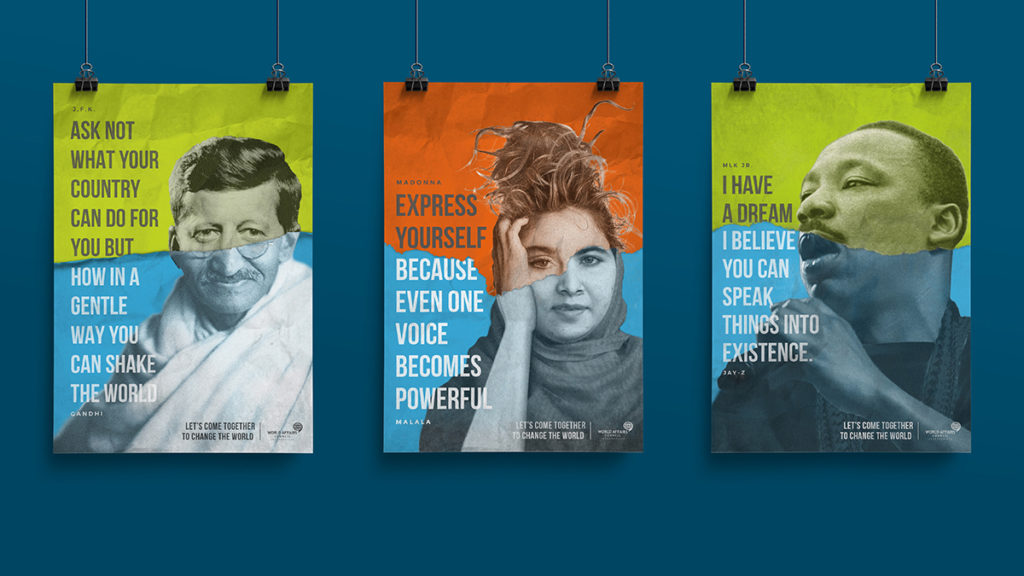
Failure had a second use
Agencies polish their origin myths until every stumble looks choreographed. Brunet-García's record is more interesting because the mistakes kept producing something useful. A client once panned an edgy presentation in a room full of Haskell executives. The creative lost. Afterward, an executive who admired the approach introduced the founders to his newly graduated niece. She became the agency's second paid employee and stayed seven years.
A larger reversal followed. Brunet-García had picked up Florida Department of Health work promoting a new statewide immunization information system to physicians. A key subcontractor walked away. The small agency assumed the abandoned work, and the engagement grew into its first million-dollar account. “Stretch” is an abused business verb; here it meant accepting delivery risk before the organization felt comfortably sized for it.
Replace an official threat with a human motive.
Take on the difficult work a partner leaves behind.
Turn past performance into access to federal assignments.
That distinction matters. Plenty of creative shops can make a provocative film. Far fewer can also navigate a government procurement process, coordinate stakeholders, test messages, buy media and document delivery. Brunet-García pursued SBA 8(a) certification and a GSA schedule. A small CDC assignment created past performance; past performance helped the agency win a place on a contested CDC communications vehicle. Administrative competence became part of the creative advantage.
Culture gets an invoice
The agency described itself as a tribe - a word that can turn syrupy in a recruitment deck. Then its largest state contract lost funding. Wholesale staff cuts were on the table. Employees instead agreed to voluntary salary reductions of 10 to 15 percent so no teammate would be removed. Vendors helped. Landlords offered patience. Eventually the business turned the corner.
It is hard to copy that choice responsibly. Shared sacrifice works only when trust already exists, the pain is time-limited and leaders bear it credibly. In a chronically weak business, a pay cut merely asks employees to finance management's denial. At Brunet-García, it functioned as a bridge, and the company later rebranded from red to green. “Bleed B|G green” became an internal phrase, with the slightly alarming cheerfulness peculiar to ad agencies.
By 2010, Florida Trend reported more than $3 million in annual billings and 26 employees. In 2019, Adweek put Brunet-García among its 100 fastest-growing agencies. The 2020 Inc. 5000 ranked it No. 1,798 after 238 percent three-year growth; the company appeared again in 2022. Awards accumulated, but the more revealing 2020 numbers were cultural: a 75 percent female leadership team and colleagues representing seven countries.
Government work, without government voice
Brunet-García sat in a useful market seam. On one side were large communications contractors with research depth and procurement machinery. On the other were smaller multicultural and creative agencies with cultural instinct. Brunet-García tried to carry both: the process discipline to serve public institutions and the creative nerve to avoid sounding like one.
Research, focus groups and message strategy aimed at action rather than awareness alone.
Cross-cultural creative and outreach for communities general-market work often flattened or missed.
Branding, advertising, PR, social, media buying, web development and video under one assignment.
Contracting credentials and stakeholder management suited to federal, state and nonprofit work.
The customer list followed the seam: the CDC, Florida Department of Health, Department of Homeland Security, Social Security Administration, HRSA's Poison Help campaign, arts groups and food-security nonprofits. Its 2022 CDC film “The Path to Recovery” challenged the idea that addiction reflects a character flaw. “Still Going Strong” spoke to adults 65 and older through connection and activity rather than a scolding list of precautions. The surface changed; the first lesson did not.
The business model was conventional professional services - projects, contracts and ongoing agency relationships - but the buying context was not. Public assignments can take longer to win, carry exacting compliance duties and disappear with a budget decision. The approach travels best when an organization can fund research, grant the agency access to the actual audience and tolerate findings that complicate the original brief. Without those conditions, “multicultural” becomes translation after the fact, and “behavior change” becomes a nicer label for broadcasting instructions.
The acquisition was a reunion
In late 2022, Jorge and Diane stepped back from daily management. Kimberley Collins became CEO, with Kim Vermillion and Eduardo Sarmiento in senior operating and creative roles. In April 2023, long-time partner Fors Marsh acquired the agency for undisclosed terms. The deal paired Fors Marsh's behavioral research with Brunet-García's multicultural creative and outreach practice. Two twenty-year firms became one larger argument: evidence and imagination work better in the same room.
The independent brand now resolves to a Fors Marsh page. That makes the company's history feel less like a tidy rise and more like a chain of accepted invitations: take the little contract, inherit the abandoned scope, pursue the certification, enter the national competition, join the research partner. None was guaranteed to work. Each made the next move possible.
Four things worth borrowing
- Rewrite the brief from the audience's point of view. An institutional objective is not yet a human motive.
- Treat awkward assignments as capability builders. The unglamorous delivery record may become the next credential.
- Build access before scale. Certifications, partnerships and past performance can distribute good work farther than self-promotion.
- Test culture when it is expensive. Values become legible only when another choice would save money.
Brunet-García's cleverest move, then, was not a poster, a procurement vehicle or an acquisition. It was the habit of asking one extra question. The state wanted a seat belt clicked. The agency wanted to know what the person in the car might love enough to click it for.