Brigid Stevens announced her new job with two words that fit both the moment and the merchandise: “All in.” In January 2026, after closing a long chapter at Lee, she became chief marketing officer of DIFF Eyewear. Her farewell to denim had promised that something new was “coming into focus.” A glasses emoji followed. If a marketer is allowed one perfect transition gag, Stevens had earned hers.
The joke works because her career has been built around objects that sit close to identity. A James Perse T-shirt, a pair of TOMS, a bouquet arranged at home, a fitness community, old blue jeans, a new pair of frames. These are not anonymous purchases. People wear them, give them and use them to compose a version of themselves. Marketing such things requires a peculiar restraint: give the object a story, but leave the customer enough room to enter it.
Stevens has learned that balance from the store floor upward. Her public record begins with retail management at James Perse, continues through a broad run of marketing work at TOMS, and moves into senior brand roles at The Bouqs Company. Later came Tone It Up, Lee and now DIFF. The categories changed. The central problem did not. How can a consumer brand be unmistakable without becoming overbearing?
Start with the hands
At The Bouqs Company, the product arrived alive, slightly unruly and unfinished. The customer still had to trim stems, choose a vase and make an arrangement. Stevens saw this less as friction than authorship. Flowers were tactile, she said. They were about “creating and making something.” The company could deliver a bouquet, but the buyer completed the scene.
That idea became vivid on a company field trip. Stevens and colleagues traveled to partner farms, met growers, toured fields and learned to arrange and package bouquets. She said the visit brought the reason behind the daily work to life. It is a small episode, but an instructive one. Purpose becomes less foggy when someone can point to the hands, field and decisions behind a product.
“What's so appealing about this industry is that it's tactile. It's about creating and making something.”Brigid Stevens, on flowers and customer creativity
The same instinct appears throughout her work: do not flatten the object into campaign language. Find the physical detail that carries the larger idea. Flowers have stems and farms. Shoes have a giving model. Denim has rivets, silhouettes, wash, wear and the tiny branded button above the fly. Eyewear has a frame around the face. The material is not beneath the message. It is where the message starts.
The category changed. The operating question traveled.
purpose
participation
heritage
next chapter
The archive is a toolbox
When Stevens became a senior marketing leader at Lee, she encountered the opposite problem from a young direct-to-consumer florist. Lee had more than a century of recognition. Its danger was not invisibility, but becoming so familiar that nobody looked closely. The archive was enormous. The useful question was what, exactly, still had work to do.
The 2021 LeeOriginals campaign gave one answer. It paired the label's trailblazing language with a cast of contemporary originals and enlisted photographer Mark Seliger and stylist Arianne Phillips. The work treated optimism, authenticity and tenacity as traits shared by brand and customer. History supplied the grammar; living people supplied the sentence.
Over the following years, collaborations opened more doors. Basquiat placed art across denim. Roaringwild brought electronic music and youth culture into Lee's first fully unisex collection. Paul Smith, Buck Mason and Crayola each provided a different frame for the same old material. At Bonnaroo, a giant tree made from scrap denim collected decorated leaves from festivalgoers. The common thread was participation, not reverence.
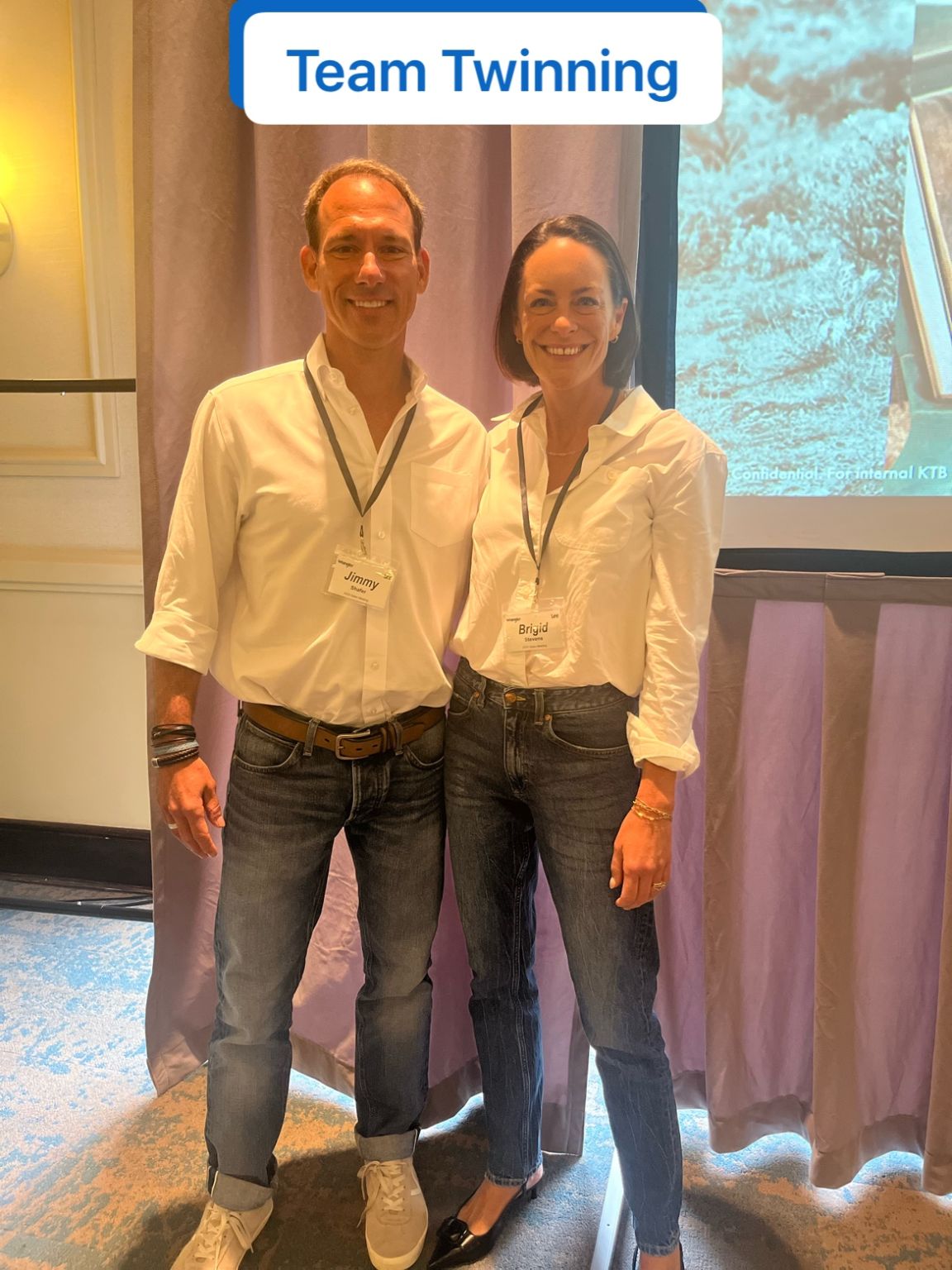
There was play inside the work, too. At an internal gathering, Stevens and colleague Jimmy Shafer showed up in near-matching white shirts and cuffed jeans. Their name badges removed any danger of confusion. Shafer called it “Team Twinning,” a small office joke that also happened to make the case for denim as a shared language.
Research before reinvention
By 2025, Lee was preparing a broader reset. The team conducted a segmentation study to understand both its core shopper and the person it wanted to reach next. The core wanted essentials that felt comfortable and put together. The opportunity was a younger “trendy sophisticate,” as Stevens described the segment: someone with classic style who might define trends through a personal lens instead of chasing the loudest viral look.
This mattered because it converted “younger audience” from a lazy aspiration into a person with taste. The resulting Built Like Lee platform used recognizable pieces such as the Rider jacket and 101 jean, real-world settings and a cast of optimistic doers. The button stitched into Lee denim for generations became a recurring visual cue. One small piece of metal connected old product to new people.
One decision revealed the discipline behind the platform: no celebrity fronted its introduction. Early testing showed the non-celebrity ads performed better, and Stevens argued that this particular spot needed to be about Lee and the people who wear it. Celebrity remains a legitimate tool. Here, however, a famous face would have borrowed the attention the brand needed to reclaim.
That choice also protected the campaign from the short half-life of borrowed relevance. A celebrity can create a clean spike in conversation, but the next campaign must often rent attention again. Built Like Lee aimed for a platform that could last several years. Its recurring characters were not stars under contract but the brand's own ingredients: the button, the silhouettes, the builder's outlook and the person already wearing the clothes. Repetition could accumulate meaning instead of merely repeating a face.
“We didn't want another denim ad. We wanted something real, human and built to last.”Brigid Stevens, introducing Built Like Lee
The campaign launched across the United States and Europe with streaming, social, audio, retail, influencer and event components. Its media plan was digital-first, but its idea was old-fashioned in the best sense: make a good product recognizable, invite people into its world and resist the urge to shout over them.
A leader who leaves the names in
Stevens's public writing offers another clue to her operating style. Her posts often end in long rolls of collaborators: designers, agency partners, photographers, researchers, brand managers and colleagues. The captions can look almost crowded. That is the point. Campaigns arrive in public as a neat rectangle, but they are made by a village with calendars.
She is just as willing to celebrate the odd little artifact. A vintage matchbook advertisement, a collaboration pulled from an archive, the absurd pleasure of adults coloring outside the lines with Crayola: each becomes evidence that a brand lives through details people can pass around. Her enthusiasm is specific. She points to the object, names the makers and lets delight do some of the explanatory work.
A former TOMS colleague described her as a marketer who developed thoughtful, measurable consumer ideas, took smart risks and built supportive teams. The recommendation praised her command of retail, brand, digital and research. Range can become vagueness; in Stevens's case, it appears to function as translation. She can move between the commercial brief and the creative conversation without pretending they are separate species.
Her Lee farewell made the team central again. She wrote about big swings and small details, then named more than two dozen people and partners. “Heritage isn't about looking back,” she wrote. It is “about knowing what endures.” That line is tidy enough for a campaign and precise enough for an operator. Modernization begins with selection.
The frame changes
DIFF gives Stevens a younger company, a different accessory and a familiar tension. The brand has an established point of view, a fashion business and a charitable program embedded in its identity. In announcing the role, Stevens did not promise a rescue or reinvention. She said she wanted to amplify what was already powerful and build what came next.
That phrasing is modest, and strategically useful. New executives are often encouraged to perform arrival by disowning the previous chapter. Stevens's career suggests another method: notice what the customer already recognizes, identify what has gone quiet, and make a few details speak again. A brand does not need to forget itself to surprise people.
The lesson is portable. For operators, the archive is not a museum. Purpose is not wall copy. Research is not a ceremonial prelude. Each is material for making choices. Keep the part that still tells the truth. Risk the part that merely looks familiar. Then put the product back in someone's hands - or, in this case, squarely on their face.