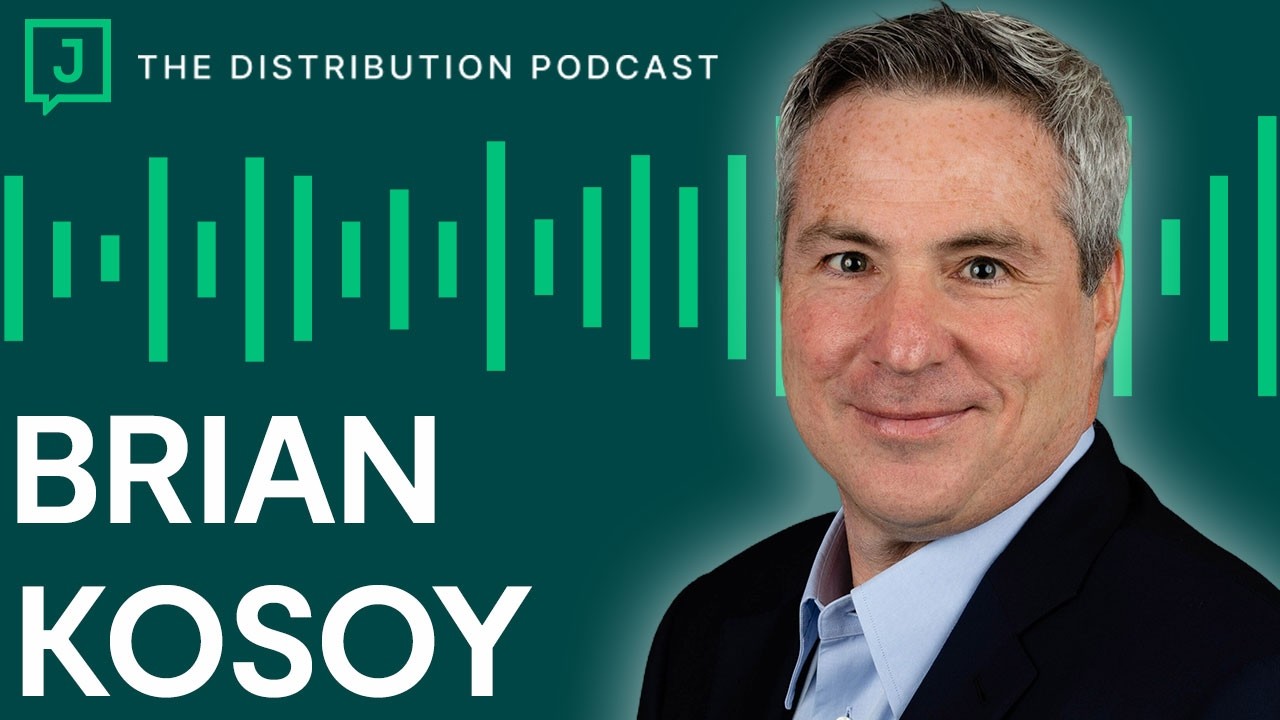
Brian Kosoy has a shopping story that sounds almost indecently efficient. In March 2018, Sterling Organization bought a property on Rodeo Drive for $55 million. The following day, it sold the property to a subsidiary of LVMH for $110 million. A building had doubled its purchase price without requiring so much as a second weekend. For anyone hoping real estate might provide a shortcut to a more comfortable life, this was encouraging arithmetic.
The arithmetic leaves out the calendar. Kosoy and Jonathan Mendis, Sterling’s senior investment executive for the western United States, had begun negotiations with the seller’s trustee the previous July. A ground lease with purchase rights followed in October. The two closings came in March. The headline occupied a day; the arrangement occupied months.
That distinction is a useful place to begin with Kosoy. His career contains the sort of transaction people repeat over dinner. His working life has largely involved the things they leave out of the telling: contracts, tenants, operating teams, and the patience required to keep owning shops when other investors have developed an enthusiasm for something else.
A lawyer’s education in the shopping trip
He grew up in Toronto. His memories of Bayview Village include Sam the Record Man, where he could discover the music charts, an electronics shop offering the latest gadgets, and the arcade. The mall supplied entertainment, information and company. You could go there to find out what was happening, then spend money on a small part of it.
His route into the ownership side went through law. After studying political science at the University of Western Ontario, he earned a law degree at Touro’s Jacob D. Fuchsberg Law Center in New York. He practiced in the city, with work that included representing retailers on leases across the five boroughs.
A lease is an unusually thorough introduction to a shop. Customers can leave after ten minutes. The agreement may govern years. It puts obligations, time and control into writing. For someone who would eventually allocate capital to retail buildings, that was a practical education in what happens after a promising address has been found.
He moved into real estate and founded Sterling Organization in 2007. The timing supplied a demanding opening assignment. Credit markets were heading into the financial crisis; the new firm had chosen a business in which borrowing, consumer spending and the survival of tenants all mattered. There was no leisurely interval in which to become accustomed to being a founder.
The unfashionable address
Kosoy’s attention to retail was already specific by 2011. Discussing South Florida, he pointed to Miami-Dade’s geography: ocean on one side, Everglades on the other, with dense development between. His argument rested on limits to new supply and the area’s international connections. A struggling national retailer and a constrained local market could exist at the same time.
“There are significant barriers to entry,” he said. It is a sentence with little decorative potential. It also explains why a property investor might keep studying a location after the wider industry has acquired an unfortunate reputation. A tenant can disappear more quickly than a desirable site can be reproduced.
By late 2014, another difficulty had appeared: other buyers were interested again. Kosoy described a market where institutional investors were willing to purchase the easier opportunities they had previously passed over. Sterling’s search needed to include properties requiring more substantial work. Remaining in a specialty did not mean making precisely the same investment forever.
That is the less picturesque side of conviction. It requires adjusting the task while keeping an understanding of the customer and the property. An empty unit can represent an opportunity, but only if someone can find a business willing to occupy it on terms that make sense. The word “vacancy” is compact. The work it conceals can be extensive.
The day that took eight months
Then came Rodeo Drive. The property at 456 North Rodeo included a 6,200-square-foot building on a 7,634-square-foot parcel. Sterling secured control through a negotiated arrangement before the eventual purchase. When an intermediary approached LVMH about leasing the space, the luxury group expressed an interest in owning it instead.
The sale is instructive because the participants valued different possibilities in the same address. Sterling could negotiate control and complete a transaction. A luxury group could consider what ownership meant for its presence on a particular street. The building did not need to become twice as large for the next buyer to pay twice the price.
- JUL 2017Negotiations begin
- OCT 2017Ground lease + purchase rights
- MAR 2018$55m purchase
- NEXT DAY$110m sale
In his September 2026 conversation with Katie Fasken, Kosoy was cautious about treating the deal as representative. It was an opportunistic transaction, he explained, rather than a promise of a repeatable overnight return. The reservation matters. A founder can enjoy an unusual outcome without making it the instruction manual for the business.
Shopping centers offer a less glamorous daily itinerary. Their success depends on tenants trading, customers returning and space earning its keep. Rodeo Drive makes an excellent story. A grocery trip supplies considerably more occasions to test whether an ordinary center is working.
Nineteen points of occupied space
A March 2026 sale provides another view of the work. Sterling sold seven shopping centers for $298 million on behalf of two of its value-add funds. The portfolio covered 956,865 square feet across markets including Los Angeles, San Diego, Dallas, Fort Lauderdale and Minneapolis. Six properties had grocery anchors.
The revealing figures were the occupancy rates: 77% at acquisition and 96% at disposition. Sterling described leasing, capital improvements and asset management during the holding periods. Those percentages turn an abstract investment description into something you can picture: more of the available space had paying occupants when the properties were sold.
+19 percentage points in occupancy
The distinction between buying and operating runs through Kosoy’s explanation of the firm. He describes the operating skill required to invest through an unfavorable sector environment:
“We needed to add alpha to sort of counterbalance that.”
In less financial language, the team needed its own work to contribute to results while the wider market was making life difficult.
He chairs the investment committees for Sterling’s investment vehicles and oversees capital allocation and strategy. His responsibilities also extend, alongside senior management, to operations, fundraising and asset management. The job connects the decision to buy with the organization expected to live with that decision afterward.
The work has colleagues
The platform around him has identifiable operators. Principals Jordan Fried and Bob Dake explain the plans behind recent acquisitions: filling space, improving the tenant mix, and addressing rents as leases expire. Their roles give the founder’s strategy a practical next chapter. Someone must take the investment out of the committee room and into the leasing office.
In July 2026, Sterling announced its $93.2 million purchase of Merchants Walk in Marietta, Georgia. Whole Foods anchored the 271,992-square-foot property, which was 90% leased. The business plan included leasing more than 26,000 square feet of vacant space. A successful existing center and unfinished work were available in the same purchase.
September brought a different variation in West Hollywood. Pavilions Marketplace was 89% leased when Sterling announced its acquisition. The stated plans included improving occupancy and the property’s physical appeal. Its tenants included a grocery store, a bank and two businesses selling sweets. The ordinary shopping trip remained a fairly versatile economic unit.
The firm also announced three grocery-anchored acquisitions in California and Hawaii that month, including its first Hawaiian investment. These properties were collectively 99% leased. Together, the announcements illustrate why a retail specialty can contain different assignments: improving an incompletely occupied property, or managing one whose shops are already largely full.
Kosoy’s firm also invests in consumer fulfillment and distribution property. Its stated strategies include neighborhood facilities serving the delivery of goods. That gives his retail interests a route beyond the cash register. The location where a customer receives an item, and the location from which it travels, belong to the same commercial journey.
Forty students, a different investment
Outside the property business, Brian and his wife Andrea helped establish the Kosoy Women in Business program at Georgetown’s McDonough School of Business. Its inaugural cohort welcomed 40 undergraduates in fall 2024. The program offered workshops, connections with alumni and opportunities to visit workplaces.
The planned activities were concrete: personal branding, entrepreneurship, personal finance and leadership development. Students arrived with interests spanning established business careers and ventures of their own. The useful unit of progress here was a relationship or a new skill, rather than a square foot of occupied space.
It adds another dimension to a career spent assembling the conditions for other organizations to operate. A retailer needs a workable location and agreement. A student may need access to an experienced person, or an opportunity to ask a question before entering a profession. The activities differ; both make the surrounding circumstances consequential.
Kosoy’s public story returns, repeatedly, to the gap between the visible result and the work underneath it. A building changes hands. A tenant opens. A student makes an introduction. The event is easy to mark on a calendar. The preparation takes longer. At the checkout, as at the closing table, somebody has already done quite a lot before the receipt appears.