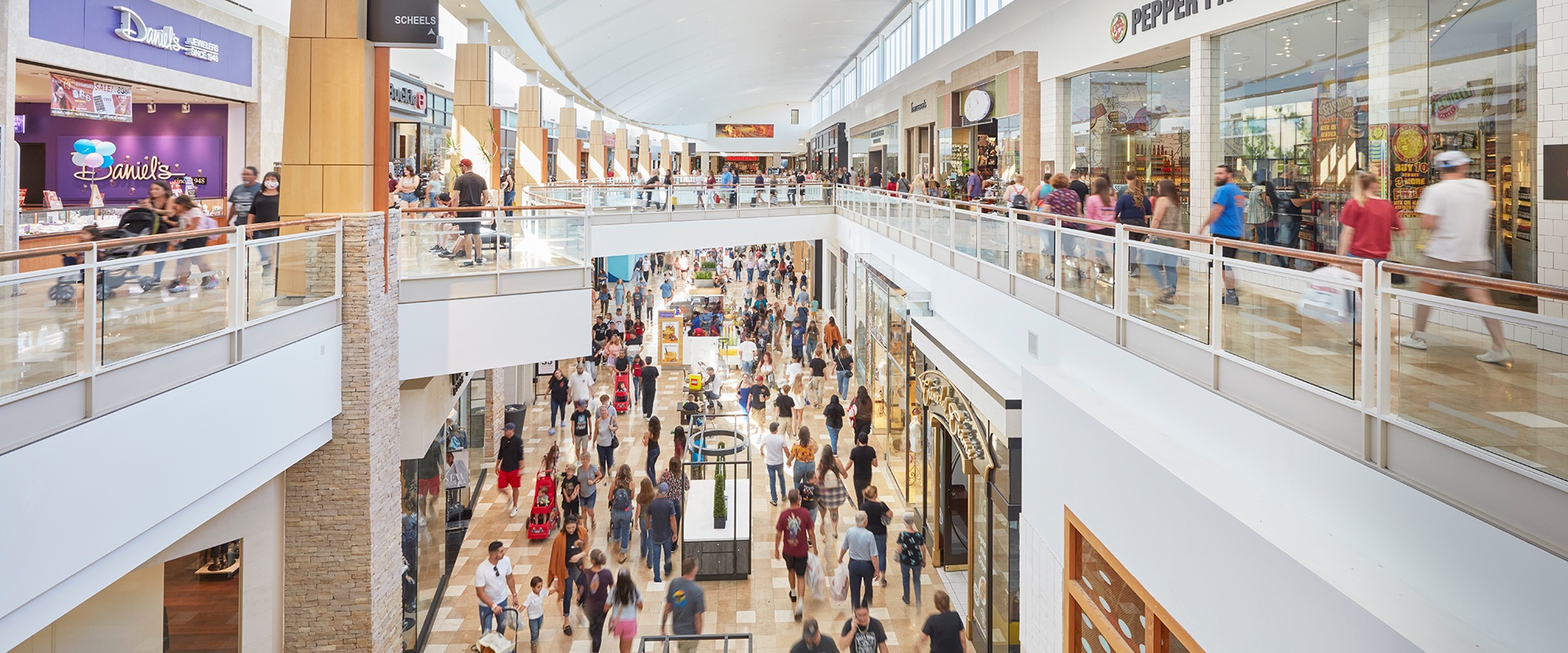
At Chandler Fashion Center, a sporting-goods store contains a Ferris wheel. There is also a saltwater aquarium. Somewhere between the running shoes and the fish, a familiar question about American retail becomes rather more interesting: what persuades someone to leave the house?
The store is SCHEELS, which opened here in September 2023. The shopping center was developed by Westcor, the Phoenix company acquired by Macerich in 2002. Westcor built places where retailers could gather an audience. Decades later, the audience still needs a reason to arrive. The merchandise has acquired some unusually elaborate company.
- The business: develop, own, lease and manage shopping centers.
- The distinctive move: pair regional malls with nearby urban villages and community retail.
- The price: Macerich paid approximately $1.475 billion in 2002, including assumed debt.
- The lesson: the location can endure while its attractions change.
The second shopping trip
A regional mall is an ambitious answer to a fairly ordinary problem. Retailers need customers; customers would rather avoid driving to twelve different addresses. Put stores together and each can benefit from visits generated by the others. The developer must arrange the land, buildings, tenants and operations well enough for that convenience to become a repeat habit.
Westcor extended that idea beyond the main mall. Its portfolio included what it called urban villages: smaller community and specialty shopping properties generally situated near regional centers. The 2002 acquisition covered interests in nine regional malls and eighteen of these smaller retail assets across Arizona and Colorado.
That combination is the revealing detail. A large destination and the shops around it serve overlapping, but different, errands. A household might make a special journey to a department store, then return another day for something more practical nearby. Westcor assembled property around both kinds of visit. The interpretation is straightforward: the company’s opportunity extended beyond the doors of the enclosed mall.
How to buy a neighborhood for $1.475 billion
On July 26, 2002, Macerich acquired Westcor Realty Limited Partnership and affiliated companies. Its filing put the price at approximately $1.475 billion, including $733 million of existing debt and about $72 million of convertible preferred partnership units. This was a purchase of an operating property business, with obligations attached.
$733mAssumed debt
$72mPreferred units
~$670mRemaining cash*
The annual report described Westcor as a fully integrated real estate operator and said substantially all of its portfolio had been developed from the ground up. That matters because the purchase included experience in creating shopping centers, rather than simply a collection of completed buildings. There were also projects already under development and options over undeveloped land.
For its valuation, Macerich considered cash flows, leases, operating costs, physical condition, redevelopment possibilities and financing. The checklist makes an excellent antidote to a beautiful architectural rendering. A property’s appeal must eventually survive a meeting with the numbers.
The customer pays rent
Westcor’s direct commercial customers were tenants, including national and local retailers. Shoppers supplied the demand those tenants wanted to reach. The operating model combined property ownership and rental income with leasing and management services; ownership included joint ventures as well as wholly owned properties.
The management companies provided property management, leasing, development, redevelopment and acquisition services for affiliated and non-affiliated centers. These functions explain the company’s expertise. Building a mall and keeping it commercially useful are related professions, but the second requires continuous attention after the ribbon has been cut.
For a retailer considering a former Westcor property today, the useful route is the current manager’s leasing operation. Macerich lists long-term space, short-term opportunities, carts and kiosks. A small business can examine a temporary presence; a larger tenant can investigate a permanent location. The decision still depends on the available unit, the customer catchment and the negotiated terms.
A property’s appeal must eventually survive a meeting with the numbers.THE ECONOMICS BEHIND THE ESCALATOR
Same region, different invitations
Westcor’s legacy is easier to understand through individual places than through a single description of “the mall.” SanTan Village in Gilbert is open-air, with dining and retail arranged as an outdoor destination. Macerich currently reports 9.3 million annual shopper visits there. That is a property marketing figure, rather than a measure of Westcor’s present business.
Chandler Fashion Center combines an enclosed mall with an outdoor village. Its current leasing materials emphasize the surrounding employment base and household income. Desert Sky Mall, meanwhile, is presented as a bilingual cultural destination with a predominantly Hispanic shopper base. These are distinct propositions for distinct audiences, despite sharing a regional retail lineage.
The competitive difference follows from that specificity. A tenant comparing locations needs the right audience, neighboring businesses and access, rather than a generic amount of floor space. Other malls, lifestyle centers and standalone stores can offer alternatives. Online shopping also competes for the purchase. A physical destination must make the trip useful or enjoyable enough to earn it.
The opening date that kept moving
There is a less cheerful chapter in the development story. Westcor proposed Estrella Falls in Goodyear in 2005. Plans included an open-air regional mall alongside a broader mix of uses. Then the recession interrupted the timetable. Published histories record repeated postponements, with the projected mall opening moving from 2009 toward 2016.
In that episode, the schedule broke before the planned regional mall could establish a shopping habit. Expected growth and an attractive site could not force the original opening date into existence. The lesson for anyone borrowing the strategy is conditional: complementary uses work best when there is enough demand, tenant commitment and financing to support their arrival.
It is tempting to imagine an executive’s sudden conversion from one grand theory to another. The observable change is more prosaic. Projects were deferred. Later owners have revised what goes into existing properties. The useful evidence lies in those decisions, rather than in a story about private convictions.
The anchor changes its costume
SCHEELS at Chandler Fashion Center replaced a former department-store anchor. Its attractions include a Ferris wheel, an aquarium and sports simulators. The replacement gives the site another set of reasons to visit, including activities that cannot be packed into a delivery box.
The next chapter reaches beyond the anchor. Macerich describes a redevelopment of Chandler’s outdoor dining and entertainment district, with new restaurants and gathering spaces. Chandler advisory-board minutes in June 2025 described securing Din Tai Fung as a catalyst for attracting other retailers to Chandler Village, with an early-2027 opening planned.
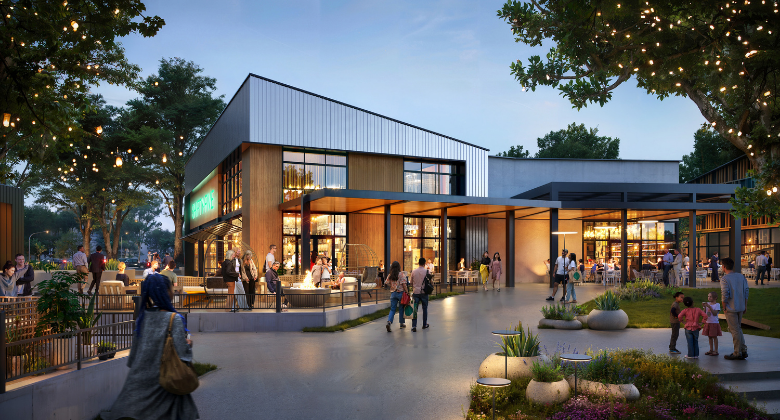
Elsewhere, Macerich’s current plans for FlatIron Crossing contemplate a mixed-use district in its outdoor village. The former Paradise Valley Mall site is being remade by RED Development as PV, combining residential, retail, dining and gathering space. These are successor projects. They show how differently the same broad category of property can evolve.
Copy the adjacency, then check the arithmetic
Westcor’s transferable idea is to consider the main attraction and its neighbors together. For a smaller operator, that might mean choosing a location beside businesses that already draw the desired customer. For a developer, it means asking how different uses support different visits, and whether the economics justify building them.
The limits are equally practical. An open-air setting has to suit its climate. A proposed restaurant needs customers as well as an appealing terrace. An anchor must draw people who will use the surrounding shops. None of those relationships is guaranteed by a master plan.
Westcor’s brand was eventually folded into Macerich, while its name persists in some property entities. The buildings keep receiving new tenants, new plans and new arguments about what shoppers want. At Chandler, the answer currently includes fish and a Ferris wheel. Retail can be a serious business without requiring every visit to behave seriously.