An investment firm can write a check in a moment. Teaching a seventh grader what to do with money takes a different kind of commitment. In October 2021, LongueVue Capital announced an eight-module financial literacy course at the Good Shepherd School in New Orleans. Its professionals would teach budgeting, savings, credit scores, and the relationship between risk and reward. There would be games, real-life examples, and students working together. Finance was coming down from the boardroom to meet a younger audience.
John McNamara, the firm’s co-founder, described the effort as a way to put professional skills to work in students’ futures. The setting mattered. Good Shepherd offers tuition-free education to children from families living below the federal poverty line. A lesson about savings lands differently when access to money has never been something a household can take for granted.
The classroom makes an unusual starting point for a private equity story. Yet it offers a useful view of McNamara’s career: the recurring work of helping an organization acquire the resources for its next stage. There are factories in that story, and delivery companies, and a family food business. There is also a school. The sums vary considerably. The question of what people can do with better support keeps returning.
Before the check, the factory
McNamara’s early career crossed two worlds that investors sometimes discuss as though they were separate countries. At Drexel Burnham Lambert and Donaldson, Lufkin & Jenrette, he worked in investment banking, specializing in leveraged buyouts, restructurings, and principal transactions. His corporate finance work involved aggregate transaction volume above $5 billion. That figure describes the transactions he worked on, rather than a personal fortune.
He also worked on the Heico Acquisitions operations team during the turnaround of Davis Wire Corporation in Irwindale, California. A 2005 account of his career identified him as general manager of its corporate division. Wire manufacturing gives the word “operations” a pleasingly solid meaning. Whatever a financial model says about a business, someone still has to make the product.
By 1996 he was chief executive of Stewart Capital, a privately held investment company active in businesses and commercial real estate. In April 2005, he was elected to the board of Stewart Enterprises. These appointments place his later private equity work within a longer history of managing investments and taking responsibility for companies.
LongueVue began in 2001, when McNamara and Rick Rees founded the firm in New Orleans. Rees brought his own background in maritime businesses and financial management. Today Rees is chairman and McNamara is CEO. Their shared institution has outlasted several changes in the investment climate; its founding date is a useful reminder that the present portfolio sits on years of earlier work.
A growing fund, a familiar assignment
LongueVue’s fundraising milestones give that history a measurable shape. Its second private investment fund closed in March 2012 with up to $175 million available, including access to SBIC leverage. The third closed at $252 million in March 2017, including leverage through the Small Business Investment Company program. The fourth reached its extended hard cap of $360 million in October 2022. These are individual fund closings, each with its own structure and date.
The distinction matters because a fund size is an assignment as much as an achievement. Investors commit capital that the firm must put to work. More money increases the scope for deals, but also the obligation to find businesses where an investment can accomplish something useful. A larger number on the announcement creates a larger amount of work on Monday morning.
For the fourth fund, LongueVue described its focus as control investments in middle-market businesses, entering as the first institutional investor. That position brings the firm into companies whose founders and managers have already built something substantial. The next stage may require systems, specialist executives, or capacity that the business has not previously had.
Ten current and former portfolio company executives committed to that fourth fund. Their participation is a specific, observable form of continued involvement. It also makes for an interesting change of seats: people who have experienced an investment firm as an operating partner can later choose to become investors in its fund. The relationship has acquired another chapter.
The last mile has furniture in it
Select Express & Logistics supplies a concrete example of the work after an acquisition. LongueVue partnered with its management team in 2018. The company arranged final-mile delivery and assembly for large consumer and commercial goods. Furniture, outdoor structures, and other bulky products were part of the assignment. Anyone who has tried to maneuver a sofa through a doorway can appreciate that “last mile” understates the final few feet.
During LongueVue’s investment, Select Express tripled revenue and doubled its employee base. It diversified customers and acquired Go Configure. LongueVue supported technology, infrastructure, operating improvements, and personnel. The sale to AIT Worldwide Logistics was announced in January 2022. McNamara worked on the investment alongside Ray Jeandron and Austin Rees.
McNamara credited the executives’ attention to customers and their vision for the business. The attribution is worth keeping intact. The operating team’s work belongs to the operating team, even when an investor has helped finance it. Jay Waldman, Select Express’s co-founder and CEO, in turn described LongueVue’s continuing provision of resources and capital.
The example helps translate private equity vocabulary into everyday consequences. A technology investment has to serve a delivery network. Hiring has to make that network function. An acquisition has to fit into the service customers actually receive. The financial outcome and the operating work are connected, but they are different measures of what happened.
Select Express & Logistics during LVC’s investment, acquired in 2018; exit announced January 2022.
Egg rolls, control panels, and continuity
In June 2023, LongueVue invested growth capital in Global Gourmet Food Solutions, working with the second generation of its family leadership. Based in Garland, Texas, the company makes specialty food products, including egg rolls, burritos, flautas, and taquitos. Its customers span retail, food service, distribution, and other institutional settings. McNamara’s portfolio responsibilities include a seat on its board.
The company’s chief executive, Danny Luong, described plans to expand products, services, and production capacity. McNamara emphasized the fit between the leadership team and LongueVue’s approach. There is a practical issue beneath those sentiments: a family business seeking more capacity must decide how an outside partner will fit into an enterprise with an existing identity.
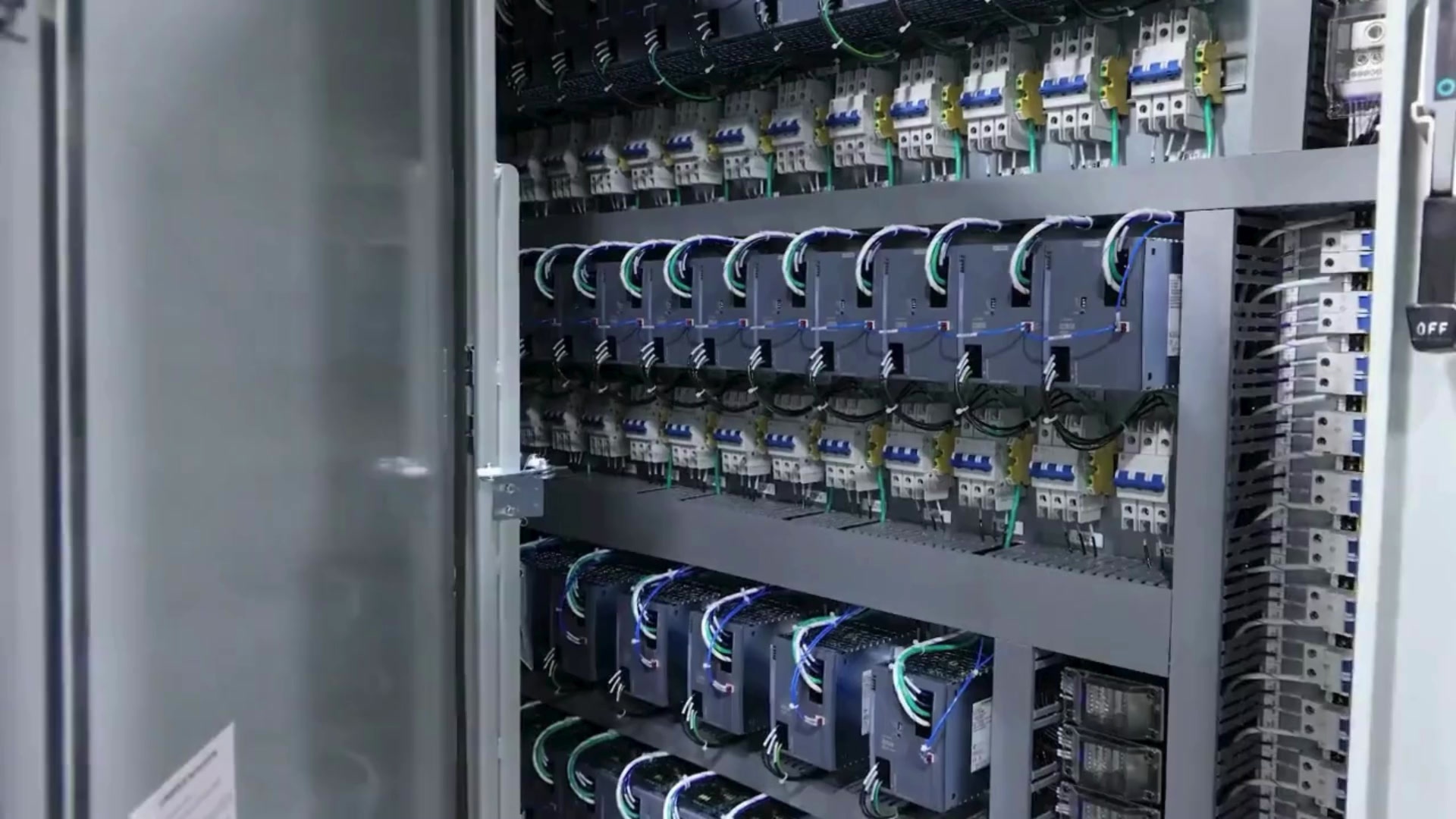
In April 2025, the firm announced its investment in Daedalus Industrial, which works on building controls, industrial automation, and field services for data centers and industrial customers. Its work includes control panel fabrication and engineering. McNamara placed the investment within LongueVue’s history of backing industrial infrastructure. His board responsibilities also include Daedalus.
The food factory and the control panel make an instructive pair. Both involve businesses that turn expertise into something customers can use. The products differ, as do their markets. Looking at them together reveals the range of McNamara’s assignment without pretending that one recipe can run every company. A burrito and an electrical cabinet have wisely declined to share an operating manual.
The work continues through other people
More recent announcements show the organization continuing to build its industrial and logistics portfolio. In December 2025, LongueVue announced a partnership with Saelens, a Wisconsin precision manufacturing business with 230 employees. The business had doubled revenue over the preceding five years. Its leadership sought support for continued growth, while the investment team included Jeandron and operating partner Len Zaiser.
In August 2026, LongueVue and Lake Ten Capital Partners announced a recapitalization and growth investment in Customized Distribution Services. The New Jersey-based company operated approximately two million square feet of facilities across several states. LongueVue described it as the firm’s eighth transportation and logistics platform investment. Jeandron and operating partner Scott McWilliams were among the people involved.
These are firm developments, with named teams doing the work. They show the scope of the institution McNamara co-founded rather than establishing that he personally led every transaction. The distinction makes the career more interesting. Building an investment firm includes building an organization in which other people can take responsibility for evaluating companies and supporting management.
McNamara’s current responsibilities still include investment decisions and day-to-day firm management. After a quarter-century, those duties sit within a business populated by partners, investment professionals, and operating specialists. The founder’s story has become partly a story about colleagues. An institution gets more durable when its working knowledge can travel beyond the people who started it.
A classroom, a cellar, a finish line
Education has its own long place in McNamara’s life. He graduated magna cum laude from Georgetown University in 1987 and earned an MBA from Harvard Business School in 1992. His appointment to the advisory board of Georgetown’s McDonough School of Business began in July 2018. Georgetown’s current leadership listing continues to include him among its advisors.
Those connections run alongside his founding board membership at Good Shepherd. By 2005, he was listed as the school’s chairman. The financial literacy program announced sixteen years later added a practical teaching effort to that association. The two dates show continuity without requiring a grand theory about his motives.
Beyond work, McNamara has completed numerous half-distance Ironman events and dozens of Olympic-distance triathlons. He also collects fine wine and shares it with family and friends. These are small but welcome details in a life that could otherwise disappear under committee memberships. One pursuit has a finish line; the other generally benefits from sitting down.
It would be easy to make those hobbies explain every investment decision. People deserve more room than that. What the details do offer is a human scale: a person who races, enjoys company, and has committed time to education while building a financial institution. The calendar contains more than closings.
The seventh-grade course remains a particularly revealing episode. It took familiar professional knowledge and changed its audience. A child learning how a budget works is beginning a different journey from a founder seeking expansion capital, yet both need tools they can use for themselves. Across McNamara’s career, the interesting work begins when the resources arrive and someone has to decide what comes next.
“a direct and personal investment in the futures of these students”John McNamara · October 2021