Buying a business can change the name on the door. When J. A. Lacy’s family office acquired Dealers Wholesale, the door business kept its own name. Jimmy Rayford stayed as CEO. His leadership team stayed, too, and members of management reinvested as owners. For a distributor that sells and installs doors, hardware and fireplaces, the arrangement had a pleasing literal quality: the entrance remained familiar.
The transaction was announced in December 2025 and published by LDI the following January. Dealers Wholesale, founded in Indianapolis in 1963, served construction markets across 20 states. LDI would supply capital and operating experience for expansion, technology and broader services. The people who had built the company would help decide what happened next.
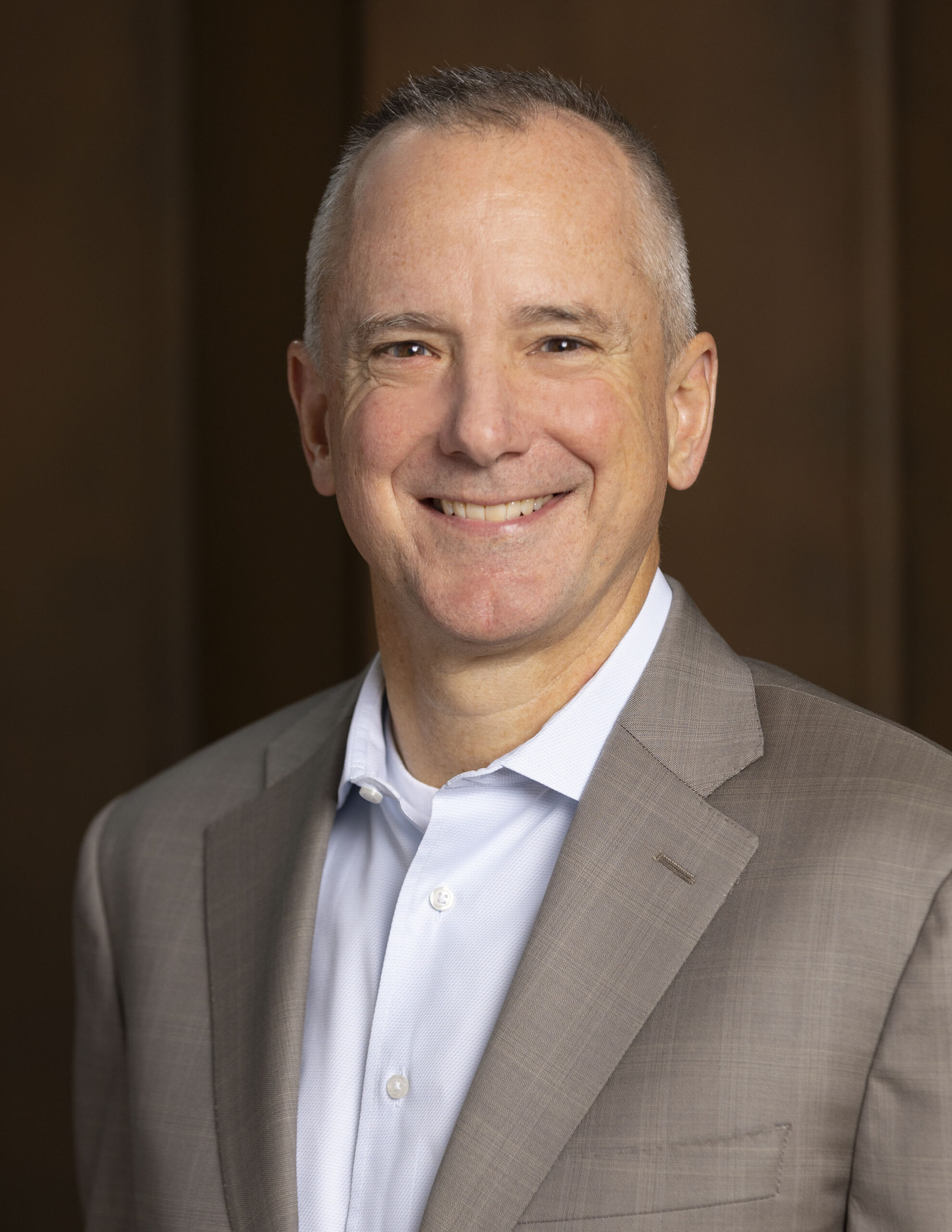
Lacy, LDI’s board chair and chief executive, put the local connection plainly: “Investing in market-leading Indiana companies has been a priority for us.” It was a practical statement about where he wanted to put money, and an unusually good place to begin understanding his career. His business travels widely. Its point of departure remains Indianapolis.
There is a familiar temptation in a family enterprise to make history the main product. Lacy has an actual portfolio to manage. Freight has to move. Components have to perform. Construction customers need equipment that arrives when promised. A family name can open a conversation; it cannot complete a delivery. The interesting question is what the owner brings once introductions are over.
A box company learns to travel
The family enterprise began in 1912, when Howard J. Lacy Sr. co-founded U.S. Corrugated Fiber Box Company in Indianapolis. Shipping containers were a sound way to participate in other people’s commerce. Whatever a manufacturer was excited about making, somebody still had to get it safely to the customer. Packaging belonged to the less theatrical end of the economy.
In 1972, the business reorganized as Lacy Diversified Industries and began looking for acquisitions in value-added distribution. The sale of the corrugated company in 1984 gave that effort fresh momentum. By 1990, the enterprise had acquired three operating companies. The family’s original product had gone; experience in running businesses remained available for reuse.
J. A. belongs to the fourth generation of this enterprise. His father, Andre, led the family holding company before him. J. A. became CEO in 2012. The dates make succession look tidy, as dates usually do. They also place him in charge of a business that had already made a consequential choice: continuity would depend on changing what the family owned.
His education took him to Notre Dame for a Bachelor of Arts and to the University of Chicago Booth School of Business for an MBA. Before leading LDI, he was president and CEO of FinishMaster, the automotive paint and refinishing distributor. That role matters because it puts an operating company, with branches and customers and inventory, between the family history and the chief executive’s title.
- 1912Corrugated box company founded
- 1972Reorganized for diversification
- 1984Original box business sold
- 2012J. A. becomes LDI CEO
- 2026New companies, new operating hires
The education inside the paint business
In 2007, FinishMaster announced George Rickus’s promotion to vice president of its industrial business. Rickus had been leading that initiative since 2005; the company reported double-digit annual growth in industrial sales, an expanded sales force and improved processes. Lacy’s statement credited Rickus’s leadership and the company’s commitment to the segment. It was an executive talking about another executive doing the work.
At the time, FinishMaster operated three major distribution centers and 168 branches in 39 of the country’s 50 largest metropolitan areas. The scale of that job is easy to overlook if one thinks of paint as something chosen from a sample card. A national distribution business has to coordinate purchasing, stock, delivery and service across many local relationships. Each branch is an occasion for the plan to encounter real life.
LDI entered the automotive refinishing distribution industry in 1995, acquired majority control of FinishMaster in 1996 and sold it to Uni-Select in 2011. Over the 16-year investment period, it completed 38 acquisitions. That figure describes the company’s ownership history, rather than 38 transactions personally attributed to Lacy. His experience sits inside a longer institutional effort.
FinishMaster’s supply chain offers a useful example of the work involved. The company built a regional distribution-center network to coordinate purchasing and inventory with vendors. It shortened lead times and simplified ordering at branches. In distribution, adding a step can sometimes remove trouble elsewhere. The extra handling had to earn its keep through better service and lower costs.
The technology needed attention as well. Multiple acquisitions had left FinishMaster with three general ledgers and five order-management systems. LDI helped consolidate those into an integrated enterprise system, alongside online commerce and pricing tools. A buyer can collect businesses faster than employees can learn to work across them. Integration is where the arithmetic of a deal meets the inconvenience of Tuesday morning.
Patience with a job description
LDI describes its capital as permanent and generally prefers majority ownership. It looks for growth potential in manufacturing, distribution and supply-chain businesses, often in fragmented industries with varied customers and suppliers. Those choices give Lacy a recognizable field of work: established companies that can gain something from operating experience, investment and carefully chosen acquisitions.
Permanent capital is a statement about the ownership arrangement. The harder question is what to do with the time it provides. LDI’s answer includes developing sales teams, investing in systems and expanding products, services or geography. Patience, in this setting, has a job description. The owner still needs a reason to believe a company will become more useful to its customers.
In October 2026, Beau Lintereur joined LDI as operating partner, following more than 25 years at Cummins. Lacy described the ownership model this way:
Our model is to own businesses for the long term and invest in the people and capabilities necessary to make them better.J. A. Lacy / October 2026
Lintereur’s assignment is to lead the internal team working on organic growth and operating improvements across the portfolio. He will work with company CEOs and management teams on growth, organizational capability and long-term value. That is a specific addition to Lacy’s resources. An ownership philosophy becomes easier to assess when there is somebody assigned to carry it into the businesses.
On the same day, Polygon Composites announced Alex Duffy as CEO. Lacy, who also chairs Polygon’s board, emphasized Duffy’s operating discipline, commercial experience and ability to apply technology. Polygon manufactures engineered composite components, including bearings and cylinders, in Walkerton, Indiana. Here again, the public decision concerned the person who would run the company and the capabilities he would bring.
An Indianapolis address, a wider map
The portfolio gives Lacy several different versions of the same operating question. OIA Global provides logistics and supply-chain services. Polygon makes composite components. ACME Barricades supplies traffic-control products and services. Dealers Wholesale distributes and installs building products. The customers differ, but each company has to deliver something dependable beyond an attractive sales presentation.
OIA’s expansion demonstrates the distance these businesses can travel from an Indianapolis owner. Its 2013 acquisition of Bellville Rodair International added 150 employees and 22 offices in 15 countries. LDI has used follow-on acquisitions to broaden OIA’s geographic presence. A freight business needs useful connections in the places its customers are going, rather than a map colored in for decoration.
Lacy’s other connections remain strongly tied to central Indiana. He serves on the boards of Citizens Energy Group, the Central Indiana Corporate Partnership and the Christ Church Cathedral Foundation. His previous civic board work includes the YMCA, United Way, Teach for America Indianapolis, Downtown Indy and the Women’s Fund. These are distinct institutions, with responsibilities beyond his portfolio.
At Citizens, the work concerns a utility serving central Indiana. At CICP, it involves a partnership of business and institutional leaders concerned with the region’s prosperity. The cathedral foundation oversees an endowment and investments intended to support future ministries. Board service is a concrete form of participation: another organization, another set of decisions, another obligation to think beyond one’s own company.
What happens after the handshake
In May 2026, the Dealers Wholesale acquisition received ACG Indiana’s Deal of the Year award. Rayford’s account of the transaction emphasized relationships formed years before the deal existed, and the importance of trust when decisions grew difficult. Lacy credited the Dealers Wholesale team, the partnership and Indiana’s business community. Both accounts put people around the transaction back into the picture.
That July, Lacy was included in IBJ Media’s Indiana 250, alongside five other leaders connected to LDI’s board, executive work or portfolio. Among them were Melina Kennedy, Aman Brar, Mitch Daniels and Rayford. It is a reminder that a family office can also be a meeting place for executives with quite different experience. The family owns the enterprise; the work draws on a wider circle.
The latest chapter gives the portrait its shape. A local distributor has joined the portfolio while keeping its team involved as owners. An operating partner has arrived to help companies grow from within. A manufacturing business has a new chief executive. Lacy’s stated ambition to invest in people and capabilities is accompanied by decisions that can be followed over time.
There is something quietly demanding about staying. It leaves the owner around for the awkward second act, when systems need replacing, a sales plan needs work or a new manager has to learn the business. Lacy’s career has moved from a national paint distributor to the stewardship of a fourth-generation enterprise. The useful measure of that stewardship is what the companies become while he is still there.
Continue the conversation
Explore LDI’s website, Lacy on LinkedIn and LDI on LinkedIn.
- The FinishMaster investment and operating history
- Dealers Wholesale joins LDI
- Beau Lintereur’s operating assignment
- Alex Duffy’s appointment at Polygon
- Lacy’s Citizens Energy Group board biography
- LDI’s fourth-generation chapter in BizVoice
- The cathedral foundation’s board and investment responsibilities
- LDI’s 2026 Indiana 250 recognition
- FinishMaster’s 2007 industrial leadership announcement
- The family enterprise’s history and operating approach
- The ACG Indiana deal award