The least sexy number in private equity may be five. Lynx Equity wants a company to have operated for at least five years. It prefers annual growth of no more than 10 percent. It looks for stable demand, mature industries, strong barriers to entry, and USD $2 million to $6 million in EBITDA. This is not the shopping list of a gambler. It is the grocery list of someone who has already lost the house.
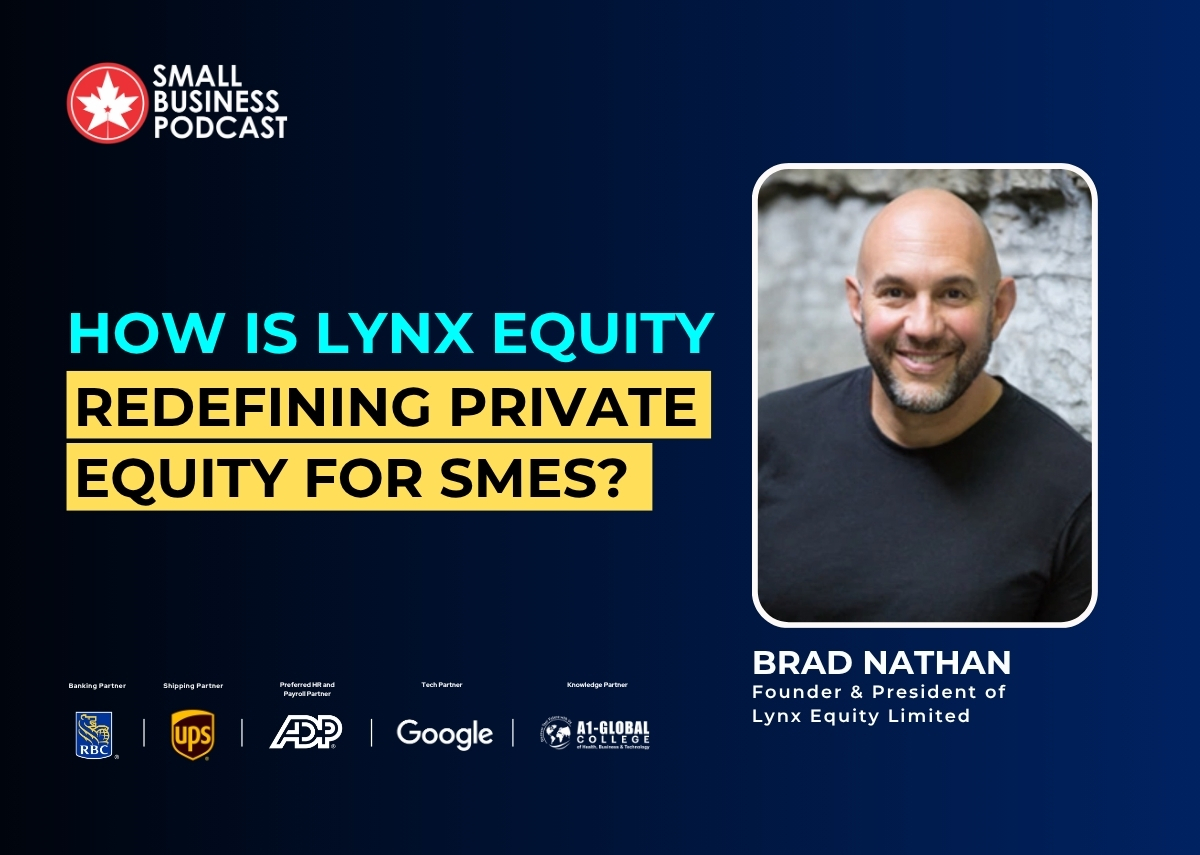
Brad Nathan, a Toronto accountant turned merchant banker, learned that distinction brutally. After leaving Rothschild Canada to build a business, his first deal collapsed and took everything he owned with it. He spent seven years digging out. The mistake, as he later described it, was not mysterious: he had ignored his training, accepted too much risk, and failed to read the balance sheet with enough suspicion.
In 2007, Nathan founded Lynx Equity Limited around the opposite impulse. Instead of chasing young companies that might become enormous, Lynx would buy proven small and medium-sized businesses whose owners were ready to retire. It would buy the whole company, arrange a transition that suited the seller, keep the identity and relationships that already worked, and own the business for the long term.
“Now I really pay attention to understanding the balance sheet.”Brad Nathan, on the lesson from his first deal
The product is a dignified exit
On paper, Lynx sells two things. To an owner, it offers succession. To an eligible investor, it offers access to cash flows from a private portfolio. In practice, the more interesting product is emotional: a founder can turn decades of work into liquidity without immediately watching the company’s name disappear into a corporate blender.
Lynx asks for 100 percent ownership. That rules out sellers who want to take chips off the table while keeping control. But the firm says a retiring owner can remain involved during a negotiated transition, and local management may continue operating the business. Head office supplies a deeper bench in finance, cash management, payroll, tax, audits, operations, revenue, business development, marketing, human resources, IT, and security.
The Lynx handoff, in four moves
That last verb is the wedge. A standard private equity fund often works backward from an exit in three to five years. Lynx presents itself as buy-and-hold. For a seller who worries about employees, customers, and a family name on the door, removing the resale deadline changes the conversation. The buyer is not promising stasis. It is promising that improvement does not require a quick flip.
A portfolio of things people still need
The collection sounds like someone emptied the pockets of Main Street onto a table: commercial flooring, signs, custom cabinetry, facility cleaning, wholesale distribution, trucking, groceries, electrical work, washroom fittings, communications cabling. One business helps casinos fit out interiors. Another installs solar panels. Another cleans Danish offices and schools. The common factor is not a sector. It is usefulness with a track record.
In 2025, Lynx added Formwise Washrooms, a British manufacturer and installer serving commercial, education, and healthcare projects. It bought Pennsylvania’s MNM Group, which installs low-voltage networks, distributed antenna systems, wireless infrastructure, and EV chargers across a broad North American footprint. Later that year came Valley Plumbing & Heating in British Columbia, a contractor with more than four decades in mechanical services.
These are not random trophies. Lynx is underwriting a pattern: recurring or repeat demand, entrenched customer relationships, practical expertise, and an owner transition. Diversification then operates across geography and industry. The firm reports 54 businesses in Canada, the United States, the United Kingdom, the Netherlands, and Denmark. It forecasts roughly CAD $1 billion in fiscal 2026 revenue, split across Canada, the U.S., and Europe.
How the acquisition machine gets fed
Lynx does not fit neatly into the classic limited-partnership picture. It says acquisitions and portfolio growth are financed through individual investors, bank debt, institutional capital, and vendor financing. Eligible investors can make fixed-term loans or purchase shares, receiving monthly interest or dividends depending on the instrument. A separate Lynx Equity Income Trust, created in 2016, offers preferred units that can qualify for several Canadian registered account types.
The financing has a visible cost. A CAD $10 million term loan made in November 2024 carried 10 percent annual interest, payable monthly. A 2021 CAD $50 million facility from Washington Federal Bank was priced at LIBOR plus 2.35 percent. In December 2025, Placements Italcan and two family offices supplied another CAD $60 million for acquisitions and operations. Debt can accelerate compounding. It can also make a bad quarter less forgiving.
The portfolio is supposed to dampen the damage from one weak company or one regional shock. Still, diversification is not a force field. Flooring, construction services, distribution, and discretionary retail may react together when credit tightens. Private investments are illiquid. Payments and return of principal depend on financial performance. Lynx says more than 90 percent of its investors renew at maturity, but renewal history is not a guarantee.
What changed after failure
Nathan’s change of mind was not from optimism to pessimism. It was from narrative to evidence. The first deal taught him that liking a story is not the same as understanding working capital, leverage, customer concentration, and the claims ahead of you on a balance sheet. Lynx’s acquisition box is the institutional memory of that mistake.
Notice the unusual cap on preferred growth: up to 10 percent a year. Most buyers advertise an appetite for speed. Lynx treats excessive speed as a possible symptom. A mature company growing modestly may be easier to price, finance, and hand from one owner to another. It may also have fewer heroic assumptions buried in the forecast.
“If the math passes, that’s when you want to get to know who the people are.”Brad Nathan, on the sequence of a deal
People come second in that sentence, not because they matter less, but because charm should not rescue bad arithmetic. Once the figures pass, relationships become the diligence. Does the owner care what happens to the business? Can the management team operate without the founder? Will customers stay? Lynx’s pitch works because those questions matter to the seller too.
The playbook worth copying
Steal this, carefully
Five useful rules from the Lynx model
- Define the seller before the asset. “Retiring owner who wants a complete sale” is sharper than “good small business.”
- Make continuity part of the consideration. Price matters, but so do the name, employees, customer promises, and handoff.
- Write a narrow acquisition box. Age, EBITDA, demand, growth, concentration, and barriers should disqualify deals quickly.
- Centralize scarce expertise. A small operator may not need full-time tax, HR, security, or digital specialists. A portfolio can share them.
- Separate screening from seduction. Let the math pass before the personalities make a questionable deal feel inevitable.
The system would not travel well everywhere. It fails when a startup needs experimentation rather than continuity, when a troubled company requires a sharp turnaround, or when one customer holds the economics hostage. It strains if debt is expensive, purchase multiples outrun cash flow, local managers are weak, or the shared-services team becomes a remote bureaucracy. It is also the wrong answer for an owner who wants a minority recapitalization or a buyer promising the highest short-term price regardless of what happens next.
The subtler danger is cultural. “Preserve the legacy” sounds lovely until an old practice needs to change. Lynx must decide which features are heritage and which are merely habit. Its operating team works on productivity, revenue, EBITDA, automation, software, and AI across portfolio companies. Patient capital still has opinions.
Where Lynx fits
Lynx sits between the search-fund entrepreneur buying one company and the conventional private equity fund assembling assets for resale. It is a permanent-owner proposition at lower-middle-market scale, paired with an income proposition for eligible investors. Its real competitors are strategic buyers, family successors, management buyouts, employee ownership plans, family offices, and the easiest option of all: the founder postponing retirement for one more year.
The firm’s edge is not a secret valuation formula. It is alignment around time. The seller wants the work to outlive the exit. The operator wants room to run. The investor wants cash flow. Lynx wants to own long enough for ordinary improvements to compound. When the business is durable, the price is disciplined, and management is capable, those clocks can agree.
Nathan’s first deal delivered its lesson overnight. Lynx has spent nearly two decades applying it slowly. That may be the most honest feature of the model: the businesses are supposed to be boring, but the discipline required to keep them boring is not.
Follow the trail
Explore Lynx’s current portfolio, acquisition criteria, team, investor information, and recent announcements directly through the links below.