On the drive south from the Charlottesville airport in April 2024, Fran Palmer began to cry. She and her daughter, Lisa, had come from Florida to watch Virginia play softball. The Cavaliers were nationally ranked again, and their destination bore the family name: Palmer Park. For a mother who had once followed the team’s minibus all the way to Florida, the journey had acquired a rather satisfying symmetry.
Lisa Palmer runs Regency Centers, the Jacksonville company that owns, operates and develops open-air shopping centers across the United States. Her working life involves leases, land, capital and the question of what belongs beside a grocery store. Yet when asked at a company event what made her proudest, her thoughts kept returning to the ballpark. A chief executive accustomed to answering questions about the business had found an answer outside it.
There is something useful in that detour. Palmer has spent her career dealing with places people use together. At Virginia, she has helped change the circumstances in which young women compete. At Regency, she makes the case for shopping centers built around ordinary, recurring needs. Both pursuits require patience with an unfashionable proposition: a physical place can still make a considerable difference.
A pitcher, a mother, and a very long road trip
Palmer pitched for Virginia from 1986 through 1989. Her career produced 74 victories and 102 complete games. In 1988, she won 27 games, a total that remains tied for the school’s single-season record. Her 14 shutouts in a season also remain a program record. The No. 22 jersey became the first retired in Virginia softball history. These are fairly persuasive credentials for someone who would later spend much of her time discussing numbers of a different sort.
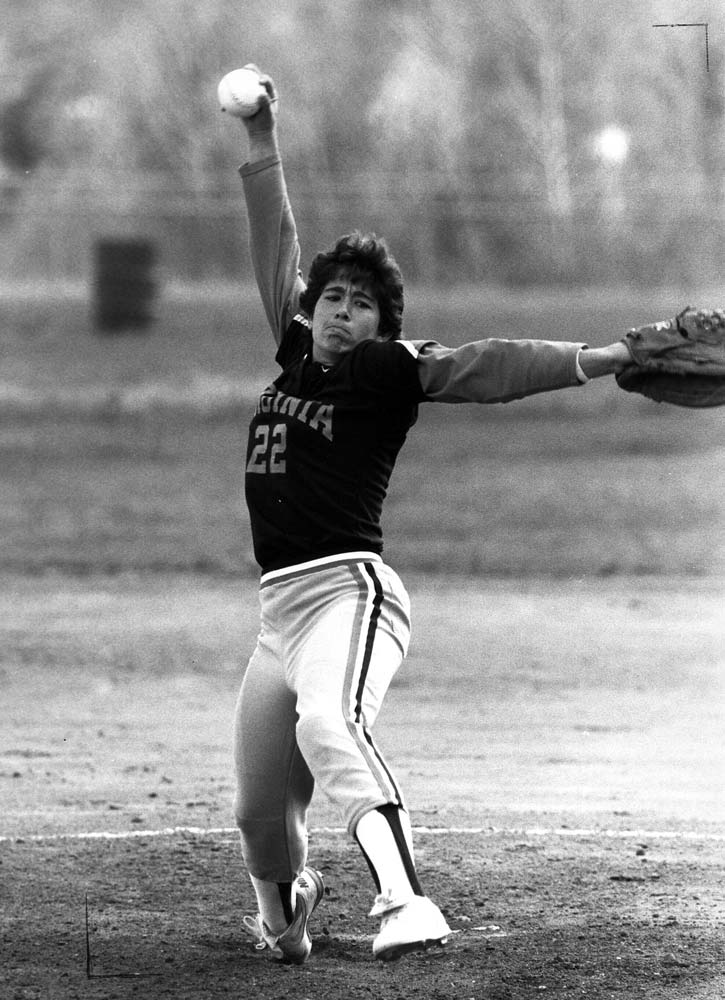
Her mother’s contribution was measured in miles. Fran drove from Pennsylvania to weekend games, home and away. In Charlottesville she watched from beside an unassuming field, parking in the grass along the road. On longer trips she followed the team bus. Before there was a stadium with the Palmer name on it, there was a mother determined to get to the game.
Lisa attended Virginia on an athletics scholarship. She learned that alumni and donors had helped pay for the opportunity. Even a small contribution could begin the process of returning that favor. That early explanation matters: philanthropy entered her story while she was still a beneficiary, years before she could finance a building.
In 2014, Lisa and Fran endowed a full softball scholarship for a player from outside Virginia who demonstrates leadership, hard work and dedication to the team. It was a practical expression of gratitude. Another player would get the chance Lisa had received, and the family would remain connected to the people actually taking the field.
The move that began with a phone call
The professional route to Jacksonville began with family, too. Palmer grew up in Bristol, Pennsylvania. After her MBA, she worked in Atlanta for Andersen Consulting, the firm now known as Accenture. Her parents had moved to Jacksonville in 1990. Visiting them, she came to like the city and wanted to live nearer them. Her father suggested using her Virginia network.
She contacted Albert Ernest, the Barnett Banks executive who also served on Regency’s board. The connection led her toward a company much smaller than her previous employers, General Electric and Andersen. She joined in 1996 as senior manager of investment services.
“I really got in on the ground floor,” Palmer later recalled. Her ensuing promotions give that phrase a literal sort of evidence. She became vice president of capital markets in 1999, senior vice president in 2003, chief financial officer in 2013 and president in 2016. She joined Regency’s board in 2018. The ascent took years, with plenty of opportunity to learn how the enterprise worked before being asked to lead it.
- 1996Investment services
- 2003SVP, capital markets
- 2013Chief financial officer
- 2020President & CEO
The education behind those steps included an economics degree from Virginia in 1989 and an MBA from Wharton in 1994. Finance supplied a way to evaluate choices. A long tenure at one company supplied something a degree cannot: familiarity with the consequences of earlier choices, and with the colleagues who had made them.
Taking over without erasing the handwriting
Regency announced Palmer’s succession in August 2019. She became chief executive on January 1, 2020, while Martin E. “Hap” Stein Jr. moved to executive chairman. Mike Mas became CFO. The arrangements made the handover visible: responsibility moved, and the previous chief remained involved.
Stein praised Palmer’s knowledge of the company and her standing with employees and the capital markets. Her own response emphasized colleagues and the work of earlier leaders. A succession announcement can be a ceremonial document, heavy with adjectives. This one also described a straightforward business fact: Regency was promoting someone who already knew its strategy from inside the organization.
Her current responsibilities extend beyond the company. She chairs the Jacksonville Branch board of the Federal Reserve Bank of Atlanta, where she was appointed in January 2022, and serves on ICSC’s board of trustees. Those positions put her in conversation with business conditions beyond a single portfolio. A shopping-center executive has reason to pay attention to what local businesses, customers and employers are saying.
The argument for buying the milk nearby
Palmer’s retail thesis starts with the errand. In a 2024 interview she summed up Regency’s merchandising mix as “necessity, convenience, and value.” Grocery-anchored centers give people recurring reasons to arrive. The businesses around the supermarket must then make sense for the surrounding neighborhood. A center’s usefulness depends partly on how well its tenants fit together.
“Our merchandising mix is necessity, convenience, and value.”
Lisa Palmer, 2024
That emphasis does not remove economic pressure. In the same conversation, Palmer discussed inflation, higher interest rates and customers becoming more sensitive to prices. Retailers could have difficulty passing along their own rising costs. The attraction of essential shopping is a business argument made in full view of those constraints.
Growth has also involved buying existing properties. Regency completed its all-stock acquisition of Urstadt Biddle Properties on August 18, 2023. At closing, the combined portfolio contained 480 properties and more than 56 million square feet of leasable space. Those are transaction-date figures, a snapshot of the scale Palmer was managing as the companies came together.
In June 2025, she reported that foot traffic was running ahead of the previous year despite uncertainty about consumers. She also pointed to more than $500 million of ground-up development then underway and the company’s access to financing. The combination captures the job’s two directions: keep the current centers useful while committing capital to places that have yet to open.
Regency’s Fresh Look approach gives that work three components: merchandising, placemaking and connecting. In practice, that means considering the mix of tenants, the character of the place and ways for merchants to engage their neighbors. The labels are tidy. The underlying work is less tidy, because a useful neighborhood center depends on local choices rather than a universal shopping list.
A ribbon worth coming back for
Palmer Park hosted its first game on March 3, 2020. At the dedication three days later, coach Joanna Hardin wished the returning alumni could have played in the new facility. Former catcher Kim Furphy promptly agreed. Alumni have a gift for bringing lofty ceremonies back within conversational range.
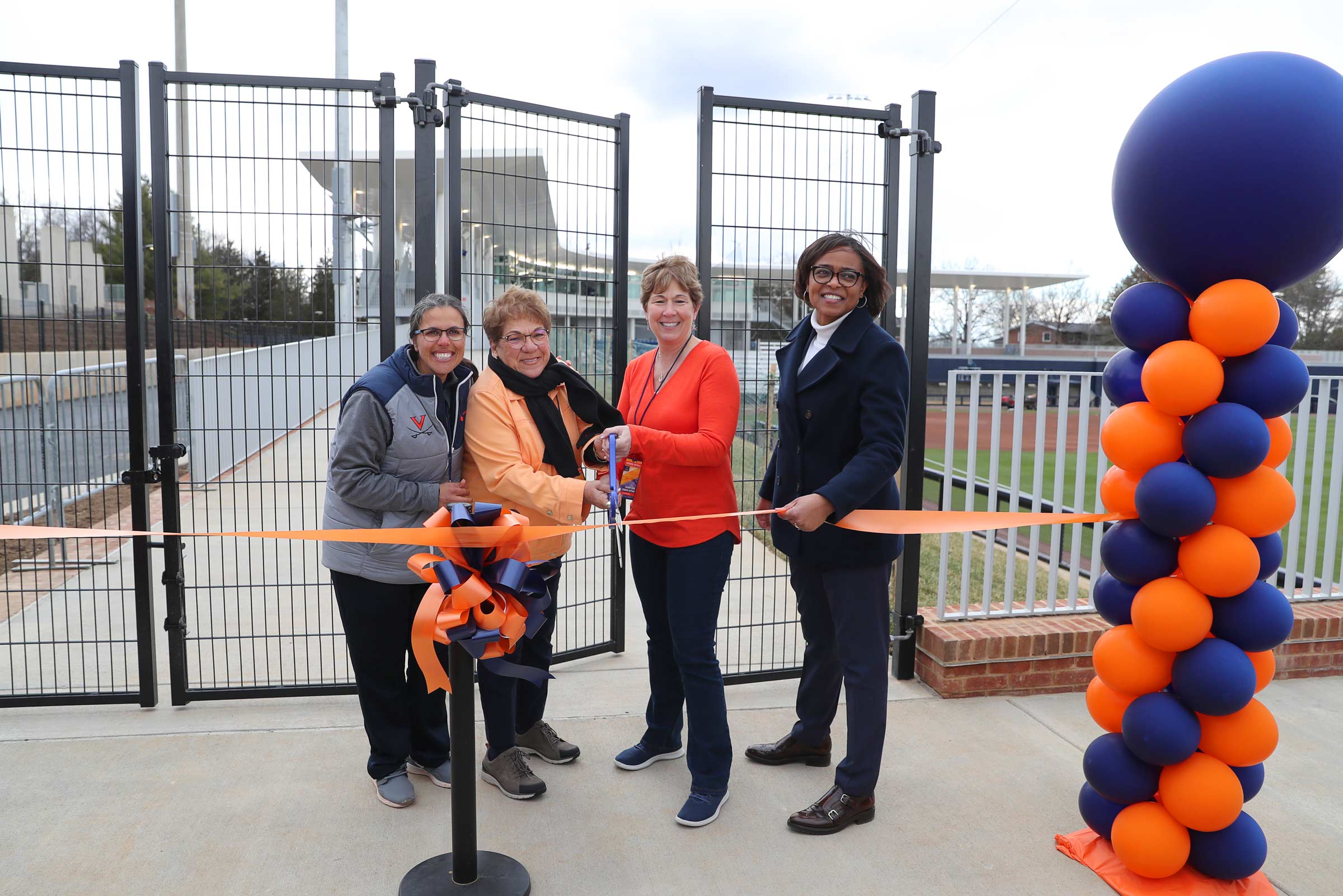
Fran threw the ceremonial first pitch, with Hardin catching. The family that had spent years travelling to other people’s ballfields was welcoming players into one it had helped make possible. The building supplied concrete improvements: an indoor player development center, a locker room, a team lounge and a press box. There are less entertaining uses for a successful finance career.
The scholarship had preceded the stadium; the stadium did not end the commitment. By 2024, Virginia was back in the NCAA Tournament for the first time since 2010. Facilities alone do not win games, but they change what coaches can offer recruits and how players can prepare. Palmer’s investment addressed conditions that would outlast any one season’s results.
Paying for the seasons she will never play
On October 8, 2026, Virginia announced Palmer’s new $4 million commitment, supporting an endowed head-coaching position and the Softball Enhancement Fund. She also expanded a planned gift commitment. The coaching role will carry the Palmer family name. After helping fund a player’s place and a team’s home, she was helping provide continuity for its leadership.
“Great coaches have an impact that extends far beyond wins and losses.”
Lisa Palmer, October 2026
Her explanation focused on confidence, discipline, resilience and belonging to a team. Those are outcomes that cannot all be entered beside a final score. The endowment gives that belief a financial mechanism, intended to support the position over time.
Her business plans also remain tied to a particular place. In August 2026, she discussed Regency’s future headquarters at The Village at Seven Pines in Jacksonville, with offices above ground-floor retail in a Publix-anchored center. It is a fitting address for the argument she makes about physical stores: the company will work above the sort of everyday commerce it asks investors to understand.
Palmer’s story keeps returning to people who made room for her: the donors behind a scholarship, a family willing to travel, a contact who answered a call, colleagues who entrusted her with larger responsibilities. Now she can help determine what the next group inherits. At Palmer Park, that inheritance includes a place to pitch, somewhere for a mother to sit, and a coach whose work has been provided for. The next game belongs to somebody else. She intends to be useful to it.