Brian Katzman’s best-known marketing lesson begins with a small white square and a ring of keys. Tile, the Bluetooth tracker he helped launch as its original marketing leader, could follow wallets, pets, bags and whatever else its owners were prone to abandoning. That abundance was useful in a product meeting and dangerous in a sentence. Katzman’s answer was reduction. Lead with the keys. Give a new category one familiar anxiety. Let the rest arrive later.
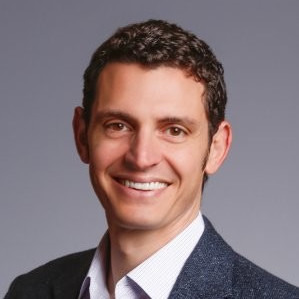
“Keep your message simple,” he told a visiting group of founders in San Francisco. “What’s the one thing you want people to walk away with?” It is the sort of maxim that risks becoming motivational wallpaper, except that Katzman has kept choosing jobs where simplicity is expensive. He started at Google in 2003, when online advertising still required explanation. He helped turn a crowdfunded tracker into an intelligible consumer habit. Now, as chief marketing officer of Ketryx, he has to make traceability, validation and quality systems sound less like a compulsory seminar.
The objects changed. The puzzle stayed put: find the clean human doorway into a complicated technical room.
Before the pitch came the system
Katzman’s public career starts in Google’s AdWords operation. He later moved into corporate-development integration and spent time in Hyderabad. A former colleague recalled a meticulous operator who built a training plan for a rapidly growing office, documented it, and then saw the work used elsewhere inside Google. The same colleague remembered Katzman specifying an internal tool to automate a manual review process. Long before he held the senior marketing titles, he was already doing a marketer’s most useful hidden work: observing friction, organizing it, and turning it into a repeatable system.
He stepped away from Google for a three-year run at the University of Michigan, earning an MBA in finance and strategy and an MS in sustainable systems. He graduated with High Distinction, became a Zell Lurie Scholar for Entrepreneurship, and co-founded a renewable-energy case competition that drew teams from leading MBA programs. His graduate research examined dynamic electricity pricing for Detroit Edison customers. Even the academic detour had a Katzman-like shape: incentives, infrastructure and what people do when a system changes the price of attention.
AdWords, operations, integration work and a formative stretch in Hyderabad.
Michigan
An MBA, an MS in sustainable systems and an entrepreneurship scholarship.
Tile
The original marketing leader for a product inventing its own consumer category.
Yubico
Vice president of ecommerce at the security-key company.
Vector Growth to Ketryx
Consulting led to medical-device clients, then directly to Ketryx.
The little square with one big job
Tile arrived with the usual burden of a category-creating gadget. It needed people to understand not only why this particular object mattered, but why any object like it should exist. Katzman joined in 2013 and became vice president of marketing. An account of one of his later talks credited him with helping take the company from $10 million to $100 million. The official version is more restrained but equally clear: he was the original marketing leader and helped establish the tracker’s category.
He gave the abstraction texture. In 2015, hundreds of people descended on downtown San Francisco for a Tile-powered Easter egg hunt. Real prize eggs carried trackers; decoys turned the streets into a Bluetooth farce. Katzman described Tile then as the world’s largest lost-and-found, already operating in more than 50 countries. The event demonstrated the network by making adults search bushes for money. A technical feature became a public game.
The stories customers supplied were even better. On a long, cheerfully loose podcast called Marketing Over Ice, Katzman discussed the strange things people had recovered with Tile, his Google years in India and his fondness for the outdoors. His assigned cocktail mixed rye, vermouth, Luxardo and amaro. The drink had five more ingredients than the preferred Tile message.
A consultant finds the pain worth joining
After Tile came leadership roles across consumer and business technology, including ecommerce at Yubico. In 2019 Katzman founded Vector Growth, a boutique consultancy. Its work eventually included medical-device manufacturers such as iRhythm and HeartFlow. That is how he met Erez Kaminski and the Ketryx team. The route matters because it made his eventual move less like a cold recruitment and more like a customer-discovery exercise with a job offer at the end.
Katzman has described the decisive scene himself. He watched prospects encounter a Ketryx demo and physically rise from their seats. One blurted, “I can’t believe this tool exists.” The response told him three things at once: the pain was real, it mattered, and the product’s message landed. He joined the company in 2023, first publicly listed as vice president of marketing and now as chief marketing officer.
Ketryx sits above tools such as Jira and GitHub, connecting requirements, risks, tests, changes and the evidence regulated teams must produce. The category contains a thicket of standards and abbreviations. Engineers want to keep moving. Quality teams need proof. Executives want release schedules that do not punish either side. Katzman’s task is to create a shared sentence without pretending the underlying work is simple.
That restraint is important. Safety-critical software does not need the “move fast and break things” costume hauled out of storage. The more credible promise is that automation can remove lag while preserving the record of what changed, why it changed and how it was tested. Ketryx calls the destination zero-lag compliance. The phrase turns paperwork from a trailing tax into something generated alongside development.
The message has acquired consequences
In September 2025, Ketryx raised a $39 million Series B led by Transformation Capital, bringing total funding above $55 million. The company said customers had cut documentation time by as much as 90 percent and accelerated release cycles by more than tenfold. Three of the world’s five largest medtech companies were using the platform. Those are company metrics, not a personal trophy case, but a CMO’s work is to decide what they mean together.
Katzman returned to the demo-room moment when announcing the round. At Tile, he wrote, he had loved watching a simple message resonate. Ketryx produced the same spark in a different register. The mission, he said, had become some of the most gratifying work he had done: help make medical devices safer and shorten the journey of useful innovations.
His public advice elsewhere has the same practical suspicion of entitlement. After two decades with one mobile carrier, a bungled attempt to restore his number sent him to a competitor in 20 minutes. The lesson he published was blunt: loyalty is fleeting and must be earned each day. It is a marketer’s observation, but also an operator’s. Systems communicate. A broken path can outvote twenty years of brand advertising before lunch.
Colleagues describe Katzman as reliable, diligent and organized, but also charismatic and unusually high in emotional intelligence. That combination explains the arc better than the titles. Structure without empathy creates manuals no one reads. Empathy without structure creates charming improvisation. He has built a career in the middle, where an unruly product becomes a sequence people can follow.
His own writing makes the operating instinct plain. One article lays out the order in which a startup should hire its marketing team. Another offers a set of questions for deciding whether a young company is worth joining. The titles are practical, almost checklist-like, but the subject underneath is judgment: who owns the work, what evidence deserves belief, and which signs reveal a durable organization. He has also kept enough technical curiosity to complete public coursework in Python, pandas and NumPy. None of that turns a marketer into an engineer. It does make the conversation with engineers less ceremonial. Katzman’s version of curiosity appears to come with homework.
Keys, code and the discipline of omission
There is a pleasing line from the keys to the code. Tile helped people recover objects after the physical world slipped out of order. Ketryx helps teams recover context before a release turns into a documentary scavenger hunt. Both products are networks hiding behind a compact promise. Both become less legible when described as an inventory of everything they can do.
Katzman’s particular talent is not merely making things sound easy. It is accepting the responsibility to choose. A memorable message excludes good details so that one important idea can travel. At Tile, the keys earned that privilege. At Ketryx, the chosen pain is the distance between the speed of modern software and the pace of manual compliance.
The sentence is harder now because the consequences are heavier. A tracker can be playful. Regulated infrastructure must carry engineers, quality leaders and regulators through the same doorway without insulting any of them. Katzman’s two decades in digital marketing have led to a job where clarity itself is a kind of control: the mechanism that keeps ambition, evidence and trust attached.
Follow the thread
Read, watch & listen
- Brian Katzman’s biography and the Ketryx leadership team
- Brian Katzman on LinkedIn
- Brian Katzman on X
- Marketing Over Ice: Brian Katzman on Tile, Google India and the outdoors
- ClickZ podcast: smart location and the internet of things
- ABC7: Tile’s 2015 San Francisco Easter egg hunt
- Ketryx’s $39 million Series B announcement