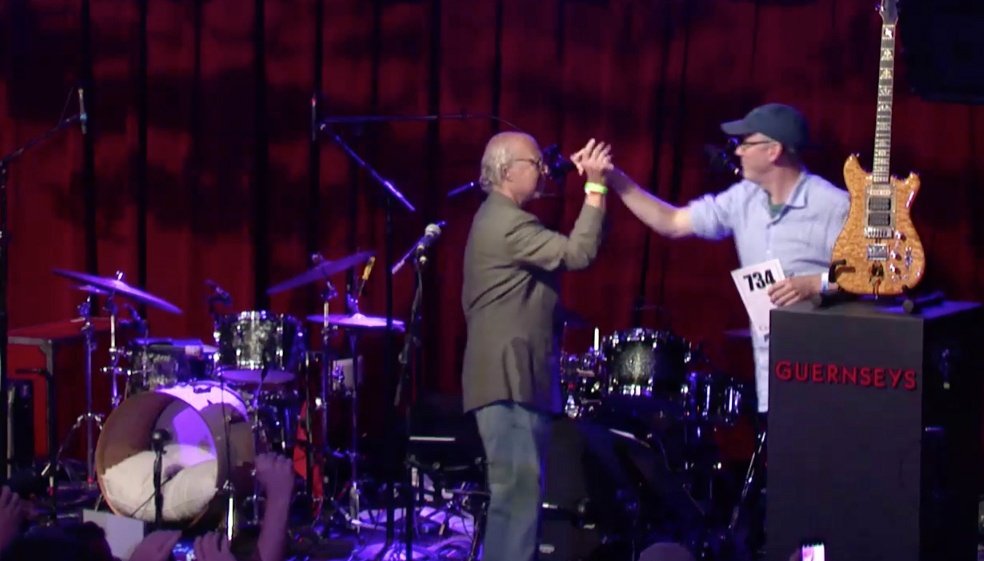
At a charity auction in Brooklyn in 2017, Brian Halligan acquired a rather demanding souvenir: Wolf, the guitar Jerry Garcia had made famous. A software founder could have celebrated with something easier to explain to an accountant. Halligan chose an instrument with decades of music and a cartoon canine attached.
The purchase benefited the Southern Poverty Law Center. For Halligan, it also brought a long-running interest into his hands. He had attended more than a hundred Grateful Dead shows. Years before buying the guitar, he had helped write a business book about the band. By then, the connection between his record collection and his working life was already well established.
There is a temptation to treat the guitar as the colorful bit at the edge of a conventional technology career. It belongs nearer the center. Halligan kept returning to a question the Dead made interesting: what happens when the audience takes an active part in spreading what you make?
An engineer goes where the customers are
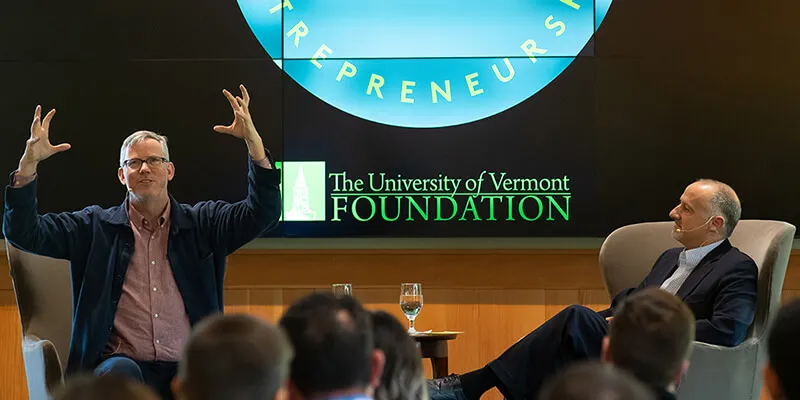
Halligan’s route to that question began with electrical engineering at the University of Vermont, where he graduated in 1990. His account of college includes a useful disappointment. During an engineering internship, he discovered he preferred spending time with the salespeople. They were occupied with customers, and that appealed to him.
He joined PTC, the software company, initially working as a secretary to a sales vice president. Sales projects followed. Over a decade, his responsibilities grew; he helped establish the company’s Pacific Rim operation in Hong Kong and Tokyo. The young engineer had found a profession that put him in contact with the people buying the technology.
He later ran sales at Groove Networks, the collaboration-software business acquired by Microsoft in 2005. Before HubSpot, there were years of selling software, watching organizations buy it, and learning the practical difference between a product’s possibilities and a customer’s willingness to pay.
Vermont left another impression. Returning to campus, he described wanting to combine its friendly, sociable culture with his technical education. He could talk with engineers without surrendering his interest in the people on the other side of the transaction. His advice to students was brisk: “Think big.” Then, describing his own approach: “We swung hard.”
Useful enough to be found
At MIT Sloan, Halligan met Dharmesh Shah. Both had experience in software, and they noticed that buying was changing. People could investigate products themselves. A company’s next prospect might arrive through a search result or a useful explanation, having already done considerable homework.
Halligan earned his MBA in 2005. HubSpot’s current company history dates its founding to 2006, although its original seed-funding announcement described a business founded the previous year. That June announcement recorded $500,000 in funding and a plan to bring integrated software to very small businesses. The early pitch included websites, customer relationships, and collaboration tools.
The partnership made room for different strengths. Halligan described Shah as the more technical co-founder and himself as more business-oriented. It is a modest-sounding distinction with substantial consequences: they could approach the same problem from different directions without having to become copies of one another.
Inbound marketing gave their observation a name. Earn attention with material that helps someone do something, then make the company easy to find when that person needs it. Halligan and Shah turned the idea into software, a book, and a continuing educational effort. A marketing department had something more useful to do than interrupt a stranger’s afternoon.
The Grateful Dead offered Halligan an example from another world. Fans recorded concerts and exchanged tapes. The band sold tickets directly and built a community around live performances. Listeners could circulate the music themselves. A recording passed from one fan to another could become an invitation.
Halligan and David Meerman Scott explored those practices in Marketing Lessons from the Grateful Dead, published in 2010, with a foreword by Bill Walton. A business book about a band can sound like an excuse to expense concert tickets. Their subject was more practical: the value of giving people a role in the life of the thing they love.
“Avoid compliments. Find complements.”Brian Halligan, on building a team
The crowd has to come back
HubSpot began trading on the New York Stock Exchange on October 9, 2014. Its offering of five million shares at $25 raised $125 million. Employees rang the opening bell. For a company that began by trying to make business software accessible to smaller organizations, the trading floor was a conspicuous change of scenery.
The milestone provides a date and a number. It provides less guidance on what a founder should do the following morning. Customers still need help. Products still need work. A company with a public share price has acquired another audience, and that audience also expects to hear from it regularly.
HubSpot’s founding year in its current history
NYSE debut
$125m raised
Propeller launches
$100m first fund
At INBOUND in 2018, Halligan presented the flywheel as a model for growth. The familiar funnel followed prospects toward a sale. The flywheel placed customers at the center of an ongoing cycle: attract, engage, delight. Their experience could help bring the next customers in.
The model required attention to friction. A clumsy handoff between teams could waste the goodwill built elsewhere. A customer who had to repeat the same problem to several employees would have little reason to recommend the experience. The diagram’s circle made continuity visible; the company had to supply it.
stays in the picture
Halligan’s 2018 growth model, simplified
Halligan’s later account of retention supplies a less polished illustration. HubSpot had tried leaving an empty chair in meetings for the customer. People ignored it. He added a large doll. That failed too. Corporate symbolism had acquired a body without acquiring a voice.
Actual customer panels worked better, especially once customers were encouraged to be candid. The company also changed incentives, including sales commissions for accounts that left early. In his November 2024 retrospective, Halligan put net retention around 63 percent in roughly 2010 and around 103 percent at the time of writing. The improvement took years.
Revenue retained from existing customers, including expansion. These are historical figures Halligan reported, not a current operating update.
The customer in the room and the customer on the spreadsheet finally had something to do with each other. For a founder interested in attracting an audience, this was the more exacting part of the work: changing what happened after somebody arrived.
A wardrobe change for the CEO
Halligan had another habit to reconsider. In the early company, he readily approved experiments. Website Grader encouraged more graders, including versions for Twitter and Foursquare. Exploration had its uses. Eventually, the company accumulated more projects than it could execute well.
Board member Lorrie Norrington challenged his enthusiasm for saying yes. He began putting omissions into a written planning document, alongside the mission, chosen customers, planned work, and measures of progress. A decision about what to leave out became something colleagues could point to.
One omission was an international office. Halligan deferred it while the company concentrated on serving its chosen marketing customer. HubSpot opened its European headquarters in Dublin in 2013. The delay came with awkward consequences for people who had been preparing to move, which he acknowledged in his account.
He also made a shirt bearing the word NO and wore it to management meetings. A wardrobe change is an economical way to announce a policy. It suggests a CEO who understood that his own behavior was part of the problem, and that changing it might require a reminder visible from across the table.
The ocean gets a seat at the table
In 2021, Yamini Rangan succeeded Halligan as HubSpot’s CEO. He became executive chairperson, then moved to a non-employee director role on May 8, 2025. The board connection remains; the daily assignment has changed.
Propeller, which he helped establish, announced its first $100 million fund in October 2022. Its focus was ocean-based climate technology. A partnership with Woods Hole Oceanographic Institution connected the venture effort with scientific research and intellectual property. The investment areas included ocean carbon, marine organics, and industrial activities such as shipping and energy.
The firm also introduced a short Ocean MBA program for early founders, drawing in part on Halligan’s experience teaching companies how to scale. That combination suits his career: technical ideas on one side, customers and an organization on the other. Someone has to help the conversation cross the distance.
The ocean venture brings different demands from marketing software. Its premise depends on science, and its companies must find workable ways to put that science to use. Halligan’s contribution is the experience of building a business around an idea that others first need help understanding.
Still asking questions
At MIT Sloan, Halligan is a senior lecturer teaching Scaling Entrepreneurial Ventures. In 2023, he received the Monosson Prize, which recognizes mentors who commit time, energy, or capital to future entrepreneurs. The classroom gives his operating experience somewhere to go beyond the company that produced it.
At Sequoia, he now describes his work as helping startup founders become scaleup CEOs through coaching, community, and content. His relationship with the firm began on the other side of the table, when Sequoia invested in HubSpot. He has moved from receiving that support to offering it.
His podcast, Long Strange Trip: CEO to CEO with Brian Halligan, makes the inquiry public. Its guests include Notion’s Ivan Zhao, Databricks’ Ali Ghodsi, and former Twitter CEO Dick Costolo. The title keeps the musical connection in view while the conversations examine how people run companies.
He is also experimenting himself. In a public LinkedIn demonstration, Halligan described Hal, a personal AI agent that organizes work and participates in Zoom meetings. Those capabilities are his description of the experiment. The interesting personal detail is his willingness to become a builder again, while advising other people who build.
A revised edition of his Grateful Dead book was announced in November 2025, fifteen years after the original. The old interest still has something to offer the newer work. Halligan keeps finding occasions to ask how people gather around an idea, how they help it travel, and what persuades them to stay.
The guitar is an unusually handsome reminder. The customer panels, the written omissions, and the coaching sessions are quieter ones. Together they make a career with room for enthusiasm, correction, and another question from the audience.
Keep the conversation going
Writing, interviews, and the places Halligan works.