The first departure came four years before Joanna Kulesa retired. In December 2017, she took her name off her agency. A founder who made a living advising other companies about their identities had decided that her own company needed an identity it could share. It became Offleash. The explanation was personal: the business had grown into the work and experience of everyone around it. One surname was beginning to look like an inadequate guest list.
There was a small practical benefit, too. Kulesa joked that her surname was difficult to pronounce and spell. Public relations involves enough corrections without requiring one every time somebody asks where you work.
The longer story starts in Massachusetts. Her hometown is Billerica. She attended the University of Massachusetts. In her account of growing up in a working-class Italian and Irish family, the advice available to a girl included learning to type quickly, with a secretarial job in view. Her father offered another instruction: work for yourself. Kulesa heard an opening in it, whether or not he had intended the advice for her.
A business education with a long set list
As a teenager, she read Jack Kerouac, Allen Ginsberg and Gregory Corso, and developed a conviction that California suited her better than the small Massachusetts town around her. She hitched a ride to San Francisco to follow the Grateful Dead. The destination offered both a city and a community she wanted to join.
By 2016, she counted more than 100 performances by the Dead and its later incarnations. That year she described a vacation following Dead & Company through three cities with lifelong girlfriends. There are less complicated ways to hear a favorite song. They rather miss the point.
She drew management lessons from the band: keep a recognizable identity, enjoy the work, leave room for improvisation, share openly, and care for the community around you. The connection mattered particularly for a creative agency, where an unfinished suggestion needs a hearing before anyone can discover whether it is useful.
“Your network is your community. Nurture it.”
Joanna Kulesa
The musical analogy gave her a vocabulary for relationships that extended beyond a transaction. People could return, contribute and become part of the experience. A business built around communication had good reason to pay attention to how that happened.
Coffee with the competition
Some of that thinking took a very ordinary form: an email asking a rival agency owner to meet for coffee. Kulesa remembered feeling nervous about it. Conversations with clients and journalists were familiar territory. An unsolicited invitation to the competition carried the possibility of looking suspicious, or simply odd.
She contacted the owners of about a dozen agencies with Silicon Valley operations. Most responded warmly. The meetings turned to common business problems, operations and the challenges of employing people. Familiar concerns began replacing the imagined differences between competitors.
One owner replied two years after the invitation. Even in public relations, a follow-up can apparently take the scenic route.
By the time Kulesa described the experiment in 2016, it had developed into a group of roughly 30 agency owners and partners, which she co-chaired with another principal. They met over lunch or dinner. They could still compete for work. They also had people to talk to who understood the business from the inside.
That is a concrete version of her community argument: send the invitation, risk an awkward answer, and find out whether the person across the market has something useful in common with you.
- 2003Start the agency
- 2017Share the name
- 2021Pass the keys
A founding, a renaming, a succession.
Small enough to know the other players
Kulesa founded the agency in 2003. Its clients worked in technology, an industry comfortable measuring ambition through expansion. Her own argument about agency size was more selective. In 2020, she described an Offleash team typically numbering 20 to 25 people, and defended keeping the firm at a scale where trust and close working relationships could hold.
She was interested in the advantages of small, cohesive groups, drawing on a discussion by UserTesting executive Mona Sabet. For Kulesa, colleagues who knew one another well could stay committed to both the assignment and the people doing it. Growth still had to produce value and expertise. Crossing an employee threshold was insufficient reason to risk losing that familiarity.
The practical work of togetherness could be surprisingly regimented. For a 2016 retreat in Santa Cruz, she advocated employee input into the agenda, sessions that invited ideas, and enough time for people to enjoy one another’s company. She also wanted punctuality, participation and phones put away during sessions. Freedom had an appointment book.
A karaoke rendition of Eminem’s “Lose Yourself” helped illustrate her point about discovering sides of colleagues that office work might leave concealed. Fun deserved planning; it could not reliably be summoned by booking a room and issuing an optimistic calendar invitation.
The investment mattered to people imagining a future there. Julie Tangen later described repeatedly asking whether she was learning, advancing, influencing the company and enjoying its culture. She kept finding reasons to stay. Her career would eventually include buying the business.
A name that could belong to everyone
The 2017 renaming made a change in Kulesa’s thinking visible. She wanted a name with energy, playfulness and room for individual freedom. A communications company ought to be able to communicate its own character. Keeping the founder’s name indefinitely would have continued centering the founder, however collective the daily work had become.
That decision also makes an interesting companion to her advice about executive reputations. In 2019, she wrote that building a CEO’s public identity required the executive’s own engagement. The work could not simply be handed over to marketing or an agency. She valued honesty, curiosity and the willingness to take a position.
There is a useful discipline in that view of PR. The person being represented has to supply something beyond availability for a photograph. An executive must participate, remain interested in the world, and have a position worth explaining. An agency can help shape the communication; it still needs a person with something to communicate.
Kulesa took public positions herself. In 2017, she called for action against sexism in Silicon Valley, including discrimination and unequal pay. She also discussed her company’s involvement, alongside client Distil Networks and other organizations, in the Women Forward in Technology Scholarship Program. The program announced $3,000 scholarships for women pursuing undergraduate or graduate STEM studies.
Her argument connected criticism with a specific way to support entry into the industry. The girl who had heard advice about typing was helping make a different set of options available to other women.
The people who stayed got the keys
In February 2021, Robin Bulanti and Julie Tangen became Offleash’s co-owners. They had been among Kulesa’s earliest hires and had worked alongside her for nearly two decades. Immediately before the change, Bulanti was president and Tangen was executive vice president. The succession placed ownership with people already deeply involved in running the firm.
The business they acquired had work ahead of it. Offleash had added nine clients and hired four people during 2020. Clients Jamf and Sumo Logic had recently gone public. Bulanti and Tangen described carrying forward a boutique model with broad services, attention to results and a commitment to the people doing the work.
Tangen’s subsequent reflection gave the transfer another dimension. She had started in the junior role of account coordinator. Becoming an owner made her career an unusually literal example of growing with a company. The next opportunity had arrived inside the same business.
Succession is often narrated from the departing founder’s chair. From an employee’s desk, it raises different questions: who will make decisions, what will they value, and how much shared history will survive? Offleash’s buyers could answer with years of experience together. Their promise of continuity had familiar faces attached.
By the agency’s twentieth anniversary in 2023, the team numbered 30. Bulanti and Tangen credited Kulesa’s influence and described a remote-friendly approach that had existed from the beginning. The agency had also added an integrated marketing practice in 2022. Continuity left room for the business to change its services.
There was still a show to catch
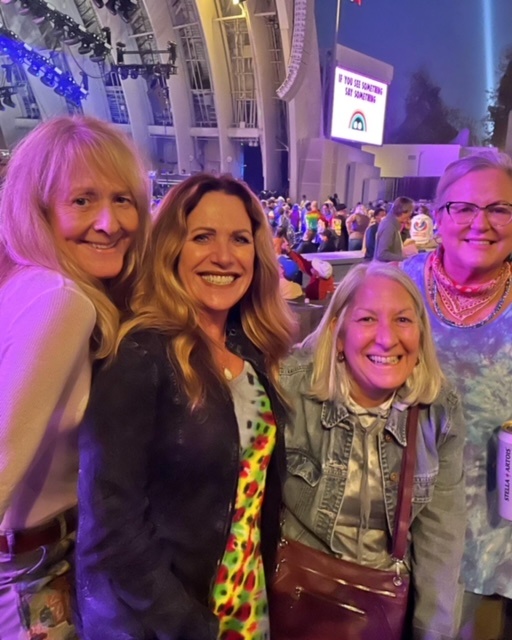
Retirement left space for an existing life. In her farewell, Kulesa looked forward to philanthropy, travel, live music and time with her husband, Tony. Advising Offleash was part of that plan. She described affection for the team and mixed feelings about leaving a business she had led for 18 years.
Her description of the pleasures she noticed in 2020 had been pleasingly specific: camping, evening walks, autumn leaves, a neighbor’s holiday lights and a peppermint mocha Frappuccino. The last item introduces a modest complication for anyone hoping to turn her whole philosophy into a solemn management doctrine. Sometimes the thing that improves the day comes with whipped cream.
Music remained on the calendar. Offleash’s account of 2021 included Kulesa and Tangen enjoying Dead & Company shows at Wrigley Field and the Hollywood Bowl. The work relationship had changed. There were still reasons to get together after hours.
Today, Offleash lists Kulesa as founder and advisor. Her name remains connected to the business, alongside the people running it. The agency has a name of its own, successors with years of shared work behind them, and a founder whose next plans included another concert.