Brett Goldberg’s introduction to the ticket business came with an unusually agreeable dividend: he got to see the Red Hot Chili Peppers for free. In his senior year at Lehigh, two people dropped out of a four-person concert plan. He sold the spare tickets, covered his own night out, and began wondering whether the arrangement might bear repeating. A concert had acquired a spreadsheet-shaped afterlife.
He went to more shows. He bought and sold more tickets. Eventually, the exercise became less flattering. Tickets did not always sell at the price he wanted. Work interfered with attending. A seat could be worth a hopeful sum on Monday and a disappointing one as showtime approached. Goldberg had discovered the peculiar economics of a product with a very firm expiration date.
That experience matters because the business he eventually built, TickPick, is often reduced to its fee policy. The policy is easy to explain: buyers see the price upfront, without an added buyer service fee at checkout. Getting there required a more complicated education in what sellers would supply, what customers would understand, and which clever ideas they could happily live without.
A roommate with a different skill set
Goldberg graduated from Lehigh in 2007. He had studied finance and competed in Division I track and field. Chris O’Brien, his roommate and Delta Phi fraternity brother, brought the technical background. Their friendship became a running conversation about going into business together, one that continued after college while each held a job elsewhere.
Goldberg worked in investment banking at Barclays and then at Sixpoint Partners. O’Brien worked on speech-recognition technology. They were building separate careers while keeping a shared possibility alive. The division of labor that later emerged at TickPick was practical: O’Brien concentrated on the website and its technology; Goldberg took on finance, marketing, and operations.
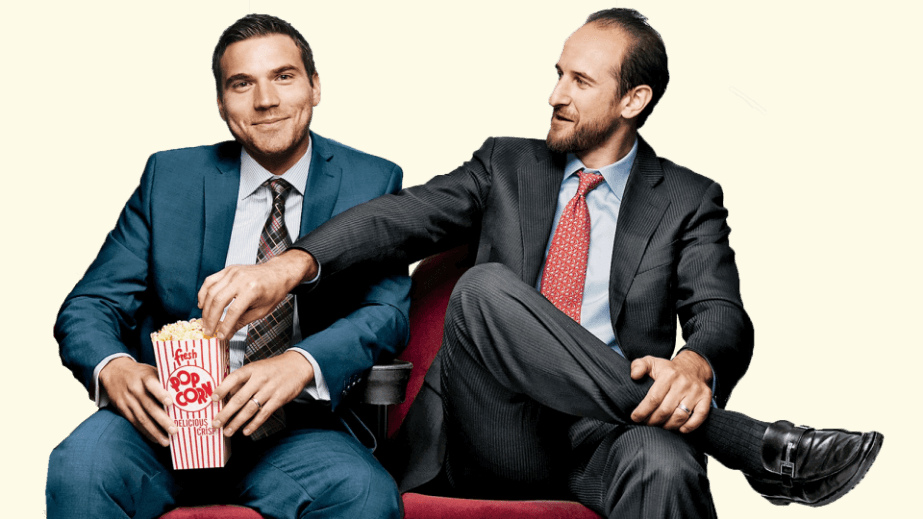
The partnership has remained central to Goldberg’s account of the company. Asked in 2017 what startup advice he wished he had received, he described how much more consequential a dependable partner had proved than the familiar recommendation to find a co-founder. Trust, in his telling, was a working requirement. The business gave that trust plenty to do.
The pitch that got him hung up on
The pair quit their jobs in June 2011. While O’Brien built, Goldberg called ticket brokers and visited their offices. The original proposition included a bidding marketplace: customers could indicate what they would pay rather than endlessly inspecting listings. A finance graduate might find that quite reasonable. A broker receiving an unsolicited phone call had other options, including hanging up.
Goldberg learned to shorten the pitch. “We just want your inventory,” he recalled. The change was small and instructive. Sellers needed a reason to provide tickets; they did not need to embrace his entire theory of how ticket markets ought to work before doing so.
“We just want your inventory.”
Brett Goldberg, recalling his early broker pitch
Even the name needed work. The early business was called Ticket Picket, a phrase that required an explanation on the phone before the actual explanation could begin. Goldberg said they had spent hundreds of dollars on that domain. TickPick, the replacement, cost $13. There are expensive lessons in entrepreneurship. This one at least came with a cheaper sequel.
Customers supplied another correction. The bidding concept drew interest, but some visitors simply wanted to buy tickets. By the time Goldberg discussed the business in 2017, bidding represented about five percent of activity. The founders had spent years imagining a mechanism; the growing company had to accommodate the ordinary urgency of someone trying to book Saturday night.
The number that stays put
A ticket listing asks the buyer to make several judgments at once. Is that section close enough? Is the view worth the difference? How much will the final order cost? TickPick’s seat-value grading addressed the comparison problem, while its upfront pricing addressed the last question. Goldberg described both as ways to make a purchase easier to evaluate.
The underlying business still had to earn money. In his 2017 explanation, sellers paid a flat ten-percent fee. A buyer-facing promise of no added service fees therefore belonged to a functioning commercial model. The distinction is useful: a marketplace can choose where to collect its income and still make the total clearer to the person purchasing a seat.
Illustrative figures, not a live offer. Applicable taxes may affect an order total.
Goldberg also understood the apparent disadvantage. An upfront total can look more expensive beside an incomplete one. That makes explaining the product part of selling it. A customer who compares the first visible number on two websites may be comparing different things. The marketing has to make that difference legible before the customer leaves.
His broader interest in explanation shows up in TickPick’s publishing, too. A 2019 article under his byline walks readers through the ticket industry’s participants and mechanics. It treats the business as something consumers ought to be able to inspect. The helpful impulse and the commercial motive sit comfortably together: an informed shopper has a better chance of understanding what TickPick is offering.
A good price still has to get you inside
The unglamorous work runs beneath that proposition. Ticket purchases attract fraud, and a low-friction checkout cannot mean an unguarded one. Goldberg anticipated that a growing company would attract more fraudulent activity. TickPick adopted additional prevention technology and reported that its chargeback rate fell by half after implementing Kount.
The operational work is a part of Goldberg’s job that a pricing slogan cannot perform. Someone must decide which systems protect an order, how to review suspicious purchases, and how to keep the checkout usable while doing it.
He has also described limits on what the marketplace should carry. In a 2015 podcast conversation, he discussed TickPick’s decision not to list resales for the Pope’s visit to the United States. The same conversation addressed working with brokers who had fulfilled their obligations during that year’s troubled Super Bowl ticket market. Choosing suppliers becomes part of choosing what sort of business to run.
Growing large enough to buy possibilities
The early capital was modest by the standards of the later business. A $250,000 seed round closed in 2012. Goldberg and O’Brien then went years without selling more equity, keeping the operation lean. Goldberg has described an awkward fit with conventional startup financing: TickPick was growing while trying to break even or make money, rather than following an uncomplicated growth-at-any-cost script.
In 2019, PWP Growth Equity invested $40 million. In August 2024, Brighton Park Capital announced a $250 million growth investment, with Rory McIlroy’s Symphony Ventures also investing. Those are company financing events. They should not be mistaken for Goldberg’s personal wealth, or for the amount the business earns from selling tickets.
- 2012$250KSeed capital
- 2019$40MPWP Growth Equity
- 2024$250MBrighton Park growth investment
Separate financing rounds; figures are not revenue or valuation.
The 2024 announcement put ticket sales at nearly $1 billion and reported 14 million mobile-app downloads. Ticket sales measure the value moving through a marketplace; the company retains a portion. That distinction can disappear inside a large headline number. For Goldberg, the substantial change was the room to invest in products, awareness, and further expansion.
Fanimal supplied one such direction in March 2025. TickPick acquired the primary-ticketing company, whose tools served smaller and midsized venues and promoters. Moving into primary ticketing brought the business closer to event organizers, extending beyond the resale transaction that had first caught Goldberg’s attention. Fanimal founder Jonny Halprin joined the integration effort.
What remains after the ticket disappears
In April 2026, TickPick announced its acquisition of Momento, an app for recording and revisiting live events. The idea moves the relationship beyond choosing a seat. A fan can keep a record of attendance and return to the experience afterward, when the ticket itself has finished its practical work.
Goldberg explored that direction with Momento founder John Brennan on a May 2026 podcast. Their conversation ranged across fan data, recommendations, and the connection between attending an event and remembering it. The accompanying episode description reported more than 20 million tickets transformed into digital Momentos. It is a different measure of value from the price of entry.
There is also more conventional company building underway. In June 2026, TickPick named Ryan Sullivan chief marketing officer. Goldberg emphasized Sullivan’s ability to connect performance marketing with brand building. Acquiring a customer and becoming the place that customer remembers are related jobs, but they call for different kinds of attention.
Goldberg’s own off-duty description is pleasingly ordinary. He gardens with his children and attends live events with his wife. His favorite New York escape, named in that earlier interview, was Greenacre Park and its waterfall. For someone whose working life revolves around putting a price on access, a public place to linger makes a rather agreeable counterpoint.
The ambition remains sizeable. He has spoken of reaching the level of TickPick’s established competitors. Yet the revealing parts of his story happen at a smaller scale: a broker’s interrupted phone call, an awkward company name, a customer who wants to skip the clever feature and just buy. Goldberg’s career has grown through those corrections. A night out may begin with an exciting plan. Buying the ticket ought to be the easy part.