Sara Providence
The Chief of Staff to the CEO of the ticket marketplace at 902 Broadway. A lawyer, an MBA, and a former restaurant operator, all in one seat.
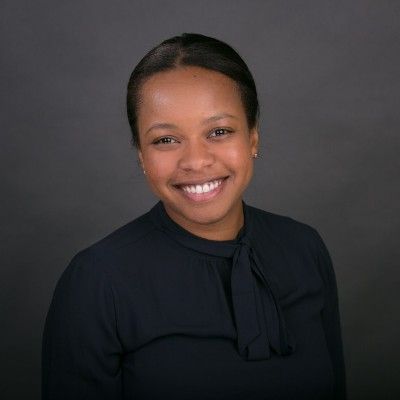
The person the operating rhythm runs through.
SeatGeek is a company whose entire product is a promise: that the QR code on your phone will get you into the arena, that the seat number is real, that a stranger's PDF will not disappoint you at the turnstile. Around 830 people at 902 Broadway are in the business of making that promise credible for concerts, playoff games, comedy shows, and Broadway matinees. One of them is Sara Providence, who took the job of Vice President and Chief of Staff to the CEO in May 2023.
Chief of Staff is a title of famously loose definition. In some companies it is a scheduler with a corner office; in others it is a strategist without a P&L; in the good version, it is the person who runs the operating cadence so the CEO can spend their attention on the two or three decisions no one else can make. At a Series E ticketing marketplace with roughly $125 million in annual revenue and $403 million raised across its lifetime, this is a real job.
Providence came to it from McKinsey & Company, where she spent nearly a decade in different roles - a Senior Business Analyst, then an Engagement Manager in the Growth, Marketing & Sales practice - working most recently on the McKinsey Institute for Black Economic Mobility, where she co-authored research on the trajectory of Black consumer spending. The pieces she contributed to noted that Black consumers' collective economic power was set to nearly double, from about $910 billion in consumption in 2019 to a projected $1.7 trillion by 2030, roughly the projected GDP of Mexico.
That is a consultant's kind of fact. It sits neatly in a slide. It is also the sort of research one does not immediately expect to precede a jump into event ticketing, which is what makes the transition interesting.
Before McKinsey, before SeatGeek, there was a stretch of work most executives do not put on the front page of their resume. She was a Legal Student Associate at Madison Square Garden Entertainment. She spent a summer at Cravath, Swaine & Moore, another at Proskauer Rose. She helped Bleecker Street Hospitality lead the buyout of Saint Theo's, a small Italian restaurant in the West Village, and worked on its early marketing. These are the sort of resume lines a person accumulates when they are not sure yet whether they want to be a lawyer, an investor, an operator, or all three.
The credentials, counted.
Human Evolutionary Biology, and other unusual doors in.
Providence entered Harvard College and concentrated in Human Evolutionary Biology. She graduated in 2014 as a member of Pforzheimer House, one of the twelve upperclass residential houses at the far end of the Radcliffe Quad, known among students for a certain cheerful remove from the river houses.
While she was there she rose to co-Chief Executive Officer of Harvard Smart Woman Securities in 2013, having earlier served as Chief Development Officer. Founded in 2006, SWS was the first finance organization for undergraduate women at Harvard College. Providence's own alumni database entry from that era described her as a Senior Business Analyst at McKinsey heading toward a JD/MBA at Columbia. She was, in other words, already thinking in the register of law-and-business-and-strategy before she had finished any of those degrees.
Her Human Evolutionary Biology background may be the thing on her resume most likely to make an interviewer pause. It is a small program - HEB, as the concentration is known on campus - and it is not an obvious feeder for management consulting or venture-stage operations. But there is a particular kind of Harvard student who studies the deep history of how humans got here, and then takes a corporate job. The pattern is old enough to be its own trope.
A decade, drawn.
What a Chief of Staff at a Series E ticketing company actually does.
Operating Rhythm
Board prep. Exec offsite design. Weekly staff meeting agendas. Which questions get asked, which slides get made, which decisions get named as decisions.
Cross-functional glue
Sitting between product, engineering, finance, growth, and the CEO. Making sure the three teams that need to talk actually do, before the CEO has to ask.
Special projects
The initiatives no one owns yet. New market expansion prep. Post-acquisition integration. The M&A workstream that outgrew a workstream.
None of this is written in a job description because none of it fits inside one. The job is defined by the CEO. Providence reports to that CEO. The value is created upstream of any dashboard, which is why the role is famously hard to hire for and famously hard to evaluate. The people who do it well share a profile: multi-domain, high context, comfortable in ambiguity, allergic to the phrase "not my job."
From MSG's legal department to SeatGeek's C-suite.
One line item on her early resume: Legal Student Associate at Madison Square Garden Entertainment Corp. The Garden is one of the largest event venues in North America - Knicks, Rangers, Billy Joel's ongoing residency, the Radio City Christmas Spectacular. It is also, incidentally, one of the venues whose tickets flow through SeatGeek.
She joined MSG as a student, at the intersection of law school and the entertainment industry. She now sits at a company whose product routinely resells MSG's inventory. The pipeline from a venue's legal department to a ticket marketplace's executive office is not one anyone would draw on purpose. But it is a very New York career.
Saint Theo's, and what a small West Village restaurant teaches an operator.
Between the more traditional resume lines, Providence spent time with Bleecker Street Hospitality, where she was involved in leading a buyout and developing early marketing strategies for the restaurant Saint Theo's, a small Italian spot on West 10th Street. It is the sort of detour a person who is only interested in optimizing a corporate ladder does not take. It is also the sort of experience that changes how a person thinks about operations. Restaurants force you to close the loop between decision and consequence in a way corporate planning cycles rarely do. A menu change matters by Tuesday. A staffing decision matters by Friday. A marketing plan works or it does not, and the counter tells you which by Sunday brunch.
Operators shaped by that kind of feedback loop tend to arrive at bigger companies with a bias for action. Whether Saint Theo's shaped Providence's operating instincts specifically is not something the public record can prove. It is, however, a plausible reading of a career that went from restaurant buyout to McKinsey engagement management to Chief of Staff at a marketplace where the product either works by 7:30 p.m. tonight or it does not.
Twelve things you might not know.
- Concentrated in Human Evolutionary Biology at Harvard.
- Lived in Pforzheimer House.
- Was co-CEO of Harvard Smart Woman Securities in 2013.
- Graduated Harvard in 2014.
- Holds a JD from Columbia Law School.
- Holds an MBA from Columbia Business School.
- Was an Engagement Manager at McKinsey in the Growth, Marketing & Sales practice.
- Co-authored McKinsey research on Black consumer economics.
- Once did a legal internship at Madison Square Garden.
- Summered at Cravath and Proskauer.
- Helped lead the buyout of Saint Theo's restaurant.
- Started at SeatGeek in May 2023 as Chief of Staff to the CEO.