A mobile network can look splendid on paper. Paper rarely tries to watch a video on the train. Brendan Gill helped build Opensignal in the space between those two experiences: the service a company describes and the service a person receives. His subject has been the ordinary connection, with all its inconvenient habits. It slows down. It disappears indoors. It produces a fine result at precisely the moment nobody needs one.
There is a pleasing fit between that work and his degree in Physics and Philosophy at Oxford. One discipline asks how the world behaves; the other makes a nuisance of apparently simple questions. Gill’s career has given both plenty of employment. What counts as coverage? When should you measure it? Does a higher speed mean a happier customer? A phone bill is admirably certain about its monthly total. The experience it buys deserves equal scrutiny.
Three friends and a weak signal
Before the analytics business came the equipment. Gill met Sam Westwood and Sina Khanifar at Oxford’s Balliol College. They wanted to go into business together, and signal boosters offered a practical use for their technical interests. RepeaterStore sold products intended to improve mobile reception in places where it struggled: homes, buildings and vehicles. Its appeal was straightforward. A customer had a problem with a signal and wanted help fixing it.
The early business had to work through the unglamorous arithmetic of retail. Smaller purchases meant less favourable supplier prices. As profits accumulated, the founders could buy in larger quantities. They also concentrated on explaining a specialist product clearly to prospective customers. By 2009, the business reported revenue of $3 million. Its small team and remote management belonged to a company learning how to make a narrow market support a viable operation.
Gill also founded BetaFoundry, an accelerator programme designed to give students access to mentors and advisers. The idea was to encourage an alternative to the conventional career route. It is an apt early entry in his biography: having chosen to build with friends, he was helping make that choice more accessible to others. Entrepreneurship can sound rather grand until somebody explains the first customer, the supplier terms and the work still waiting on Monday.
A phone makes a useful witness
Opensignal followed in 2010. Gill’s fellow founders were Westwood, Khanifar and James Robinson. Their work brought a different perspective to the reception problem. Smartphones could contribute measurements of the networks people were using. Gather enough observations, analyse them carefully, and the familiar complaint about poor service becomes something that can be investigated across places, operators and devices.
The company attracted funding as that approach developed. A $1.3 million seed round in 2012 preceded a $4 million Series A led by Qualcomm Ventures in 2014. In 2018, Octopus Ventures led an $8 million Series B, joined by Qualcomm Ventures, O’Reilly AlphaTech Ventures and Passion Capital. These were successive rounds in a business selling insight into mobile performance to audiences that included operators, regulators and analysts.
Gill’s November 2017 presentation to an International Telecommunication Union workshop gives a useful period snapshot. It described 10 million active devices globally and two billion measurements each day. Those numbers are impressive enough to distract from the harder question he brought to the room: which measurements explain the experience of using different applications? The presentation argued that an expanding range of uses called for different measures of quality.
Historical snapshot · November 2017
The geography mattered as much as the volume. In 2015, discussing Brazil ahead of the Rio Olympics, Gill described measurements contributed by more than 80,000 app users in the country. A major event brings the question into focus: people arrive with phones, expectations and very little patience for a connection that fails just when they wish to share something. Network experience has a habit of becoming personal at inconvenient moments.
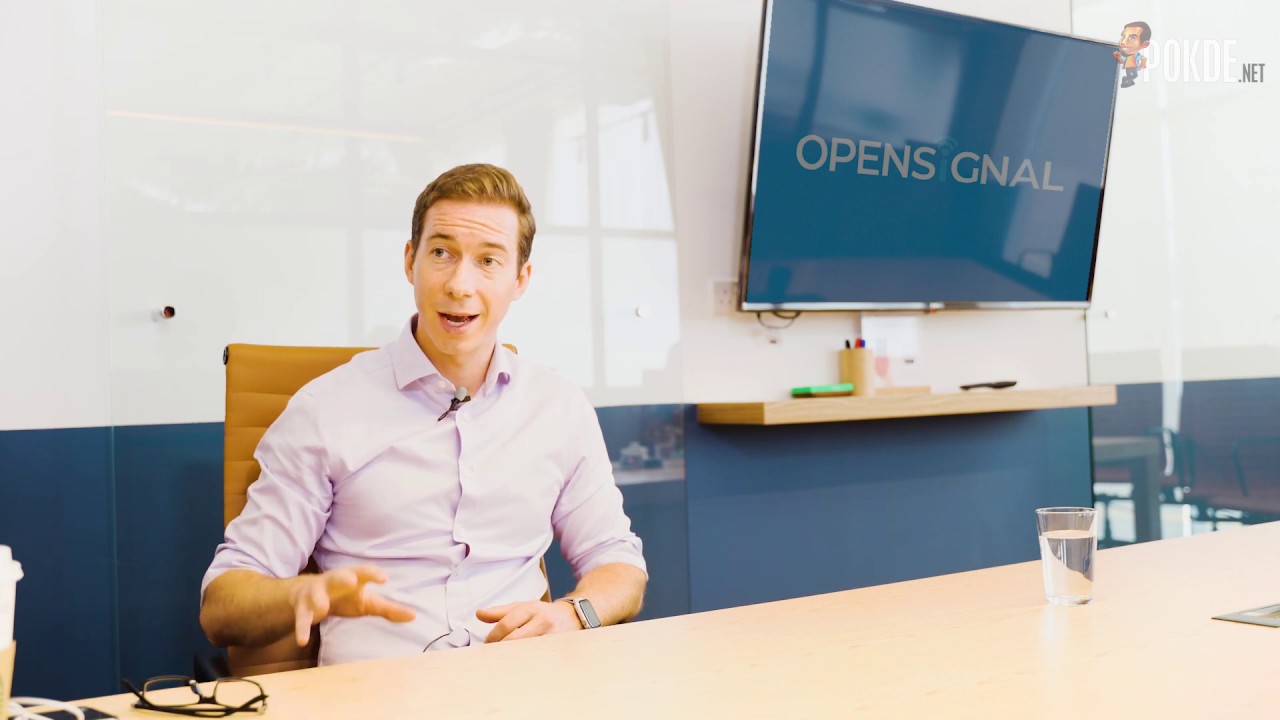
The trouble with a winning speed test
Gill’s explanation of crowdsourcing was more particular than the word might suggest. A test started by a user measures a moment the user has chosen. That choice can favour the extremes: a connection so poor it invites investigation, or so fast it deserves a little showing off. In 2019, he explained that Opensignal’s automated tests ran at random intervals, reducing the influence of a person’s decision about when to test.
He also questioned the industry’s affection for speed as a convenient summary. Video experience could express the service in terms people recognised from using their phones. A faster result may be useful, but it cannot, by itself, describe every application or every situation. Even the speed changes with circumstances. Gill’s argument made room for that untidiness rather than editing it out of the picture.
His comments on testing location were equally concrete. People use phones indoors and outdoors, on many models of device. Road-based testing samples a different slice of life. In 2018 he contrasted those approaches and pointed to a UK report involving more than 50,000 users and hundreds of millions of data points. The distinction concerned the conditions being observed. A journey along a road cannot reproduce every room in which a phone will be asked to work.
By Opensignal’s tenth anniversary in 2020, its global awards report compared five measures: video experience, voice app experience, download speed, upload speed and 4G availability. The list suggests how much lies inside the everyday word “service”. People call, watch, send and wait. Each activity can expose a different weakness. A useful account of a network needs enough vocabulary to describe those differences.
The argument also took Gill to Parliament. On 23 January 2018, he gave evidence to the Scottish Affairs Committee’s inquiry into digital connectivity, alongside representatives of ThinkBroadband and Which?. He warned that population coverage figures could present an overly comfortable picture. Choosing the right measures was part of understanding what still needed fixing.
Asked about expected broadband speeds, he drew attention to the needs of everyday applications and the importance of having adequate service consistently. It was a useful setting for his central concern. A committee examining public access needs a picture of the gaps as well as the progress. Gill’s contribution brought the conversation back to what people could depend on, a less glamorous subject than a peak speed and a rather consequential one.
A generation with an availability problem
The arrival of 5G gave Gill a particularly good reason to insist on practical language. In November 2019, he acknowledged that early deployments were producing gigabit speeds. He also described a pronounced gap in how often early users could connect. His examples put South Korean users on 5G around 20 per cent of the time, against roughly one per cent in the United States. These were observations from the early rollout, not figures for today.
Fast is only useful when it is there.
He questioned the US reliance on millimetre-wave spectrum and argued for mid-band spectrum to improve coverage. The consumer message concerned something simpler: tangible benefits. Promises about a more enjoyable future were getting ahead of the account of what a customer could actually do. His verdict was admirably brief.
“We need something more tangible than that.”
Brendan Gill, on 5G marketing, 2019
A sale, and more people to build with
In September 2021, Comlinkdata announced an agreement to acquire Opensignal. It had already bought Tutela in 2019; the proposed combination brought together network experience measurement and customer analytics. The announcement said the combined business would serve more than 140 clients in over 60 countries. Frog Capital, an Opensignal investor since 2018, subsequently recorded the acquisition as its exit.
Gill described the combination through the principle that had animated the business: better connectivity begins with independent, reliable information. Joining forces offered a way to extend that work. The language was consistent with a founder whose product depended on making an industry easier to examine. There was an industrial purpose behind the transaction as well as a change of ownership.
Robinson’s reflection on the acquisition adds some welcome texture to the founding story. He recalled joining Gill, Khanifar and Westwood nearly twelve years earlier to build something, then described a journey with digressions, hard work and luck. The company that emerged had required contributions from investors, advisers, app users and colleagues. It is a more convincing picture than the immaculate origin story in which the founders appear to have known the ending all along.
Gill’s interest in other founders has continued alongside his own operating work. His professional profile identifies him as an investor associated with Techstars London. Cambridge’s 2025 founders programme lookbook thanked him among its mentors. These roles put the experience of building a company back into circulation, in conversations with people still deciding what to build and how to keep it going.
Still working on the connection
In 2026, Gill announced that he was taking on the executive chair role at Bondio after advising it from its early days. The announcement accompanied news of $7.5 million in funding led by Breega. Bondio works on eSIM infrastructure, connecting sellers with mobile networks. Gill’s statutory directorship began on 10 July. The work takes him into another part of the same industry, closer to the machinery that makes access possible.
There is also a less corporate detail worth keeping in view. Back in 2015, Gill described a commute split between a shared car and a rental bicycle, arranged around the reach of the bicycle scheme and London’s congestion zone. That historical anecdote makes a useful companion to the career. The route worked because he paid attention to where services were actually available. Read alongside his network work, it suggests a practical question with a long life: can you use the thing where you need it?
Follow the conversation
Explore Gill’s public work, interviews and the companies in his story.
- LinkedIn · Brendan Gill
- Opensignal · company website
- Opensignal · company profile
- Bondio · executive chair announcement
- Watch on YouTube · Pokde interview
- Read · the 5G conversation
- Read · the early RepeaterStore business
- Read · the London interview
- Browse · Gill’s Light Reading articles
- Explore · Gill’s Wellfound profile