The little bars at the top of your phone are very reassuring. Until the video stops. You can be connected to a network and still be unable to do the thing you picked up the phone to do. In that familiar, irritating gap sits Opensignal: a company that turns everyday connections into evidence about how telecom services perform.
- Phones supply observations of network experience.
- Operators buy tools for engineering and commercial decisions.
- Public rankings make independence a business requirement.
Its consumer apps are the visible part. Behind them is an enterprise analytics business serving mobile operators, broadband providers, regulators and financial analysts. The proposition is practical: measure what people receive, compare it with competitors, then help the people running networks decide what deserves attention. A connection becomes a management question.
The phone gets a vote
Founded in 2010 by Brendan Gill, James Robinson, Sina Khanifar and Sam Westwood, Opensignal began with a way for consumers to examine mobile connectivity. The phone was both the beneficiary and the measuring instrument. That remains an elegant arrangement: the device experiencing the network can help describe it.
Today, measurements come from Opensignal and Meteor, plus partner apps. Opensignal says collection is consent-based, with most measurements produced by automated periodic tests. This matters because someone deliberately opening a speed test may be investigating a problem. Regular observations can capture more of the unremarkable moments between complaints.
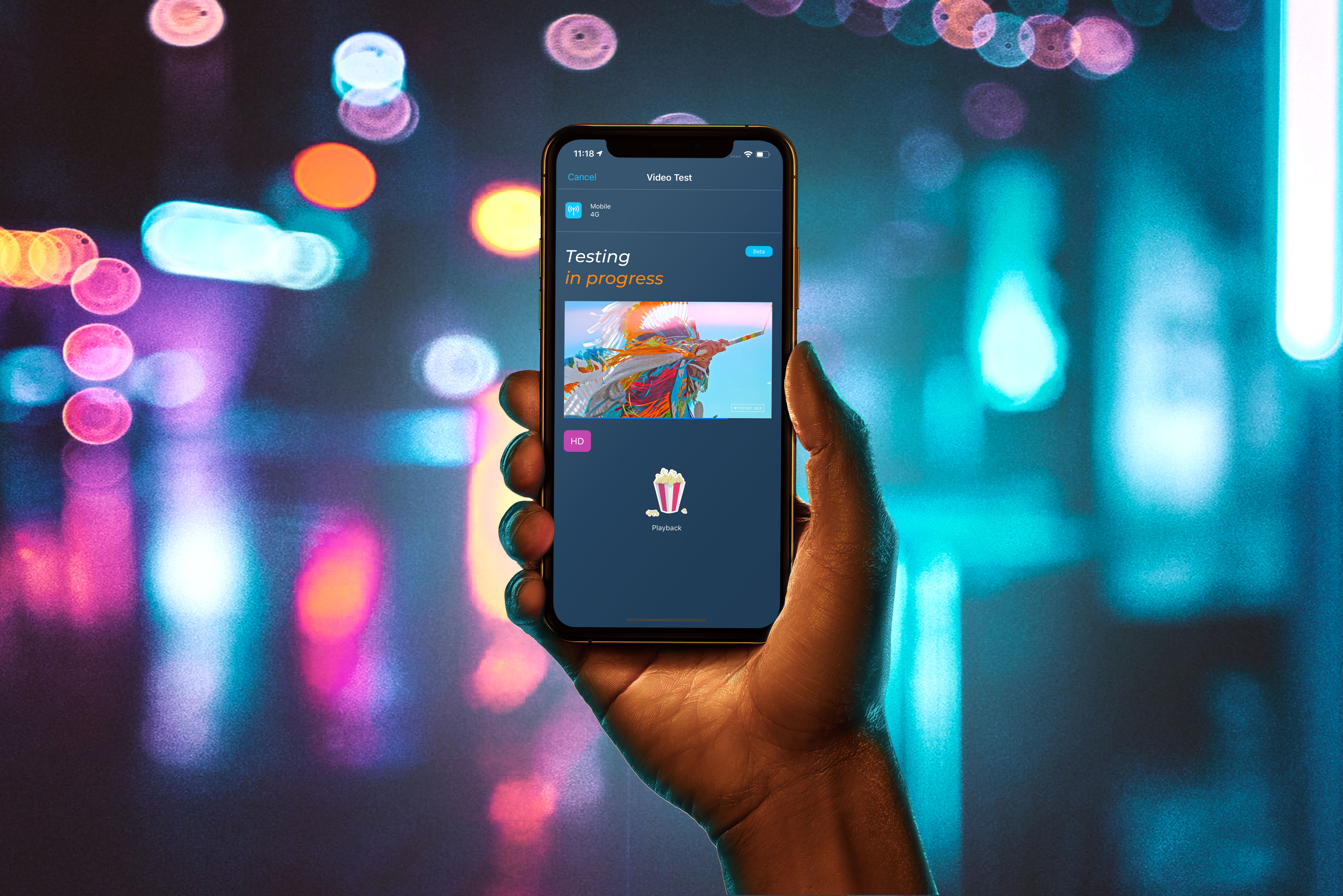
The tests reach ordinary internet destinations, including content delivery networks. They look beyond the radio connection toward the content a person wants. The expertise sits at this intersection of mobile engineering, measurement design and data analysis. A fast link to an accommodating test server is useful information; an everyday connection raises a broader set of questions.
A faster number can miss the point
Opensignal measures experiences such as video, gaming and reliability alongside speed. These distinctions give an operator several different problems to investigate. Can a subscriber connect? Can they complete a task? Does performance hold up? Reducing all of that to one speed figure would throw away much of the explanation.
Even an average contains choices. Opensignal treats unsuccessful downloads as failed tests rather than folding them into average download speed. It also averages by device before combining results. A reader comparing networks should care about these rules: they determine what the number can honestly say.
Conceptual workflow. No simulated performance scores.
The customer is buying a decision
For engineers, the Opensignal Network Experience Suite, or ONX, organizes the work into increasingly specific views. Spotlight compares performance. Focus helps investigate local patterns. ONX 360 supports diagnosis of radio and core network issues. Data gives customers measurements to combine with their own systems. The sequence moves from a disappointing ranking toward a possible repair.
Subscriber Analytics addresses a different anxiety: where are customers going? Its Market Share and Flow Share offerings track competitive position and switching between operators. The engineering department might see deteriorating service in a locality. The commercial department wants to know whether a rival is gaining there. Those observations belong in the same conversation, even when they do not establish cause.
For a consumer, the entry point is simpler. The free Opensignal app offers speed and video tests and coverage maps. Meteor translates connection performance into scores for familiar apps. You can investigate your connection before calling support or comparing providers. The company earns money on the enterprise side through analytics, data access and brand licensing; commercial purchases begin with a sales enquiry.
Trust, with a price attached
Here is the interesting tension. Operators can license Opensignal awards for advertising. The same industry being measured therefore helps pay for the measurement business. Brand Licensing includes campaign assets, review and support. A trophy has commercial value because someone else is supposed to have judged the race.
Opensignal’s Independence Charter says customers cannot purchase a favorable public report or a predetermined result. It also says the company is not owned by an operator or equipment vendor. These commitments are central to the proposition. If readers stop trusting the referee, the advertising claim loses the thing that made it worth buying.
“We have long believed that improving connectivity starts with access to independent, reliable information.”
Brendan Gill · September 2021
Buying the view beyond the network
The expansion has involved money and acquisitions. Opensignal raised $1.3 million in seed financing, $4 million in Series A funding and $8 million in Series B funding. In September 2021, Comlinkdata announced an acquisition bringing it together with Opensignal and Tutela. The announcement projected more than 140 clients across over 60 countries for the combined business.
The rationale was explicit: connect network experience with market activity. By February 2026, CEO Charles Rutstein was describing a portfolio combining subscriber analytics, network experience and pricing intelligence. Quality matters, but customers also consider price and alternatives. The broader business tries to examine those competing explanations together.
Another constraint was making the data usable. In June 2024, Opensignal acquired Brytlyt’s GPU-based analytics platform and hired its Warsaw engineering team. Initial integration into ONX let customers analyze and aggregate billions of measurements interactively. The transaction addressed a practical issue: collecting observations is only helpful if people can interrogate them quickly enough to decide.
Read the map at the right scale
Opensignal occupies the independent network intelligence market alongside alternatives such as Ookla and umlaut/connect benchmarking. Its particular pitch combines network experience and subscriber behavior. Buyers should compare measurement methods, local coverage and the decision each product supports, rather than assume every network ranking answers the same question.
There are boundaries. Opensignal declares statistical ties when differences are not significant and withholds analysis when uncertainty is too large. A national result cannot guarantee the experience inside a particular home. Its newer satellite map is similarly specific: it records observed device connections, with collection starting January 11, 2026. An observation map should be read as evidence of observations.
The useful lesson travels beyond telecom: start with the task the customer wants to complete. Measure ordinary conditions. Give uncertainty room on the chart. Then connect the result to a decision someone can change. The bars on the phone remain reassuring. The more useful question is whether the connection delivers.