The monthly phone bill is a modest document for a business that reaches beneath a sea. Mobily sells the familiar things: minutes, mobile data, home internet, another way to get a new phone online. Behind that shop window sits a different operation, supplying the connections that businesses, cloud platforms and other telecom companies need. Its consumer brand is only the part most people see.
That distinction matters in Saudi Arabia, where the company began by giving mobile customers a choice. Today, Mobily’s challenge is to turn its network into a broader source of earnings. In the first half of 2026, revenue reached SAR 10.12 billion and net profit SAR 1.78 billion, up 5.3% and 11.5% respectively. Those results come with an unusually instructive backstory: an expensive entry, explosive customer acquisition and accounts that eventually demanded a rewrite.
A SAR 12.21 billion entrance fee
Mobily did not begin with a founder coding through the night. It began with a consortium and an auction. In 2004, a group led by the United Arab Emirates’ Etisalat won Saudi Arabia’s second mobile license for SAR 12.21 billion. A separate third-generation license carried a SAR 753.75 million fee. Before the first customer made a call, access to the market was already a multibillion-riyal commitment.
Etihad Etisalat, the legal company behind Mobily, was established that year. Commercial service followed in May 2005, ending Saudi Telecom’s wireless monopoly. Mobily says it acquired more than a million subscribers in its first 90 days. The attraction was straightforward: a market accustomed to one operator suddenly had another. Distribution, pricing and execution now had an opening that no amount of clever advertising could have created on its own.
The expansion soon moved beyond mobile. In 2008, Mobily acquired data provider Bayanat al-Oula and a majority stake in internet service provider Zajil. The company introduced 4G in 2011 and 5G in 2019. Those milestones trace a shift from selling access to a phone network toward assembling a wider communications business.
The accounts interrupt the ascent
Rapid expansion did not make the numbers reliable. Mobily’s 2014 annual report described errors in the timing of revenue recognition and restated earlier results. Previously reported 2013 net profit of SAR 6.677 billion became SAR 4.692 billion. The revised 2014 result was a SAR 1.576 billion loss. These were changes large enough to alter a reader’s understanding of the business.
The consequences reached the balance sheet. A breached financial covenant caused long-term borrowings to be classified as current liabilities, and the company entered discussions with lenders. Dividend distributions were passed over for the third and fourth quarters of 2014. The trouble was not a shortage of interest in mobile service; it was a breakdown in the financial reporting that investors and lenders depended on.
In July 2015, Mobily appointed Ahmad Farroukh, a telecom executive with a finance and auditing background, as chief executive. That change followed regulatory scrutiny, restatements and a share suspension. It is the clearest documented turning point in this story. A sensible reading is that growth now had to coexist with the less glamorous work of restoring confidence in the accounts.
A change in the reported past can redraw the financial future.
One network, three kinds of customer
For individuals, Mobily remains a practical shopping decision. Its range includes prepaid and postpaid mobile subscriptions, visitor bundles, roaming, eSIMs, fiber broadband and home wireless access. A compatible phone can use an eSIM in place of a physical card; customers can obtain one through the online shop, app or a branch. The benefit is convenience, although compatibility and activation requirements still matter.
Home internet makes the promise concrete. On September 9, 2026, Mobily’s website listed its 200 Mbps fiber plan from SAR 230 a month including VAT, with uploads up to 50 Mbps. Higher tiers and promotional offers were also available. A buyer should check the service address, upload requirement and full contract price before choosing. A large download number tells only part of the household’s story.
Businesses have more complicated shopping lists. A chain of shops needs branches connected; an employer needs applications accessible; an organization running sensitive systems needs monitoring and protection. Mobily sells connectivity alongside cloud hosting, data center services, cybersecurity and managed networks. Its SD-WAN service brings branch connections into a centrally managed system, with encrypted traffic and application-aware management. The commercial opportunity is to handle more of the work surrounding the connection.
There is also a buyer who never walks into a phone shop: another network. Mobily’s wholesale customers include carriers, mobile virtual network operators, hyperscalers and global platforms. They buy capacity, international reach and infrastructure. Mobily’s corporate overview says it owns 66% of the Saudi National Fiber Network. That underlying reach helps explain why a consumer-facing operator can also be a supplier to other providers.
The alternatives depend on the purchase. stc and Zain compete for mobile customers; fixed and enterprise buyers also encounter providers such as Salam and specialist technology firms. Mobily’s case rests on combining network access with adjacent services. That combination can simplify procurement, but it does not make every product unique. Buyers still have to compare performance, support and the terms of the service being purchased.
The sea is part of the network
In November 2024, Mobily and Telecom Egypt signed a cooperation agreement for a Mobily-owned submarine cable between Saudi Arabia and Egypt. The planned Red Sea connection would also offer onward options toward Europe. This is the physical side of international internet service: landing arrangements, route choices and infrastructure that must carry traffic across borders.
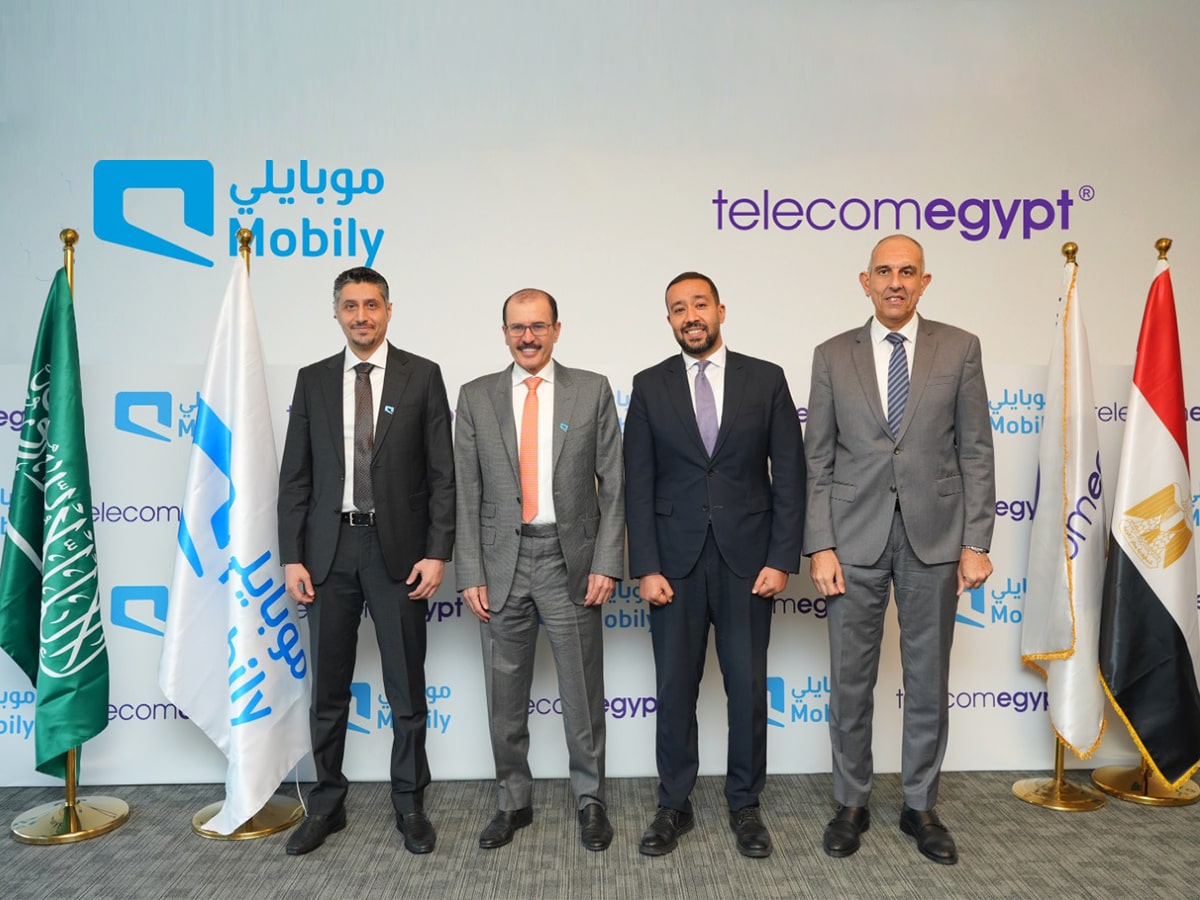
The business rationale is route diversity and room for growing traffic. Telecom Egypt’s announcement described the cable as an addition to Mobily’s international infrastructure, intended to improve reliability and support demand. An agreement is one stage of that work; the revenue opportunity depends on building, operating and filling the route. A line drawn between two countries is not yet a paying customer.
Data centers extend the same logic on land. Mobily’s 2025 business review records two newly commissioned facilities in Riyadh and Jeddah, with 13 megawatts of combined capacity. The wholesale review also describes dark fiber linking three hyperscaler data centers in Riyadh. Together, these investments move Mobily closer to where enterprise computing happens, giving it more to sell than the last connection into an office.
Hajj gives automation a real job
A dense, moving crowd gives network engineering a deadline. During Hajj 2025, Mobily worked with Ericsson on automated network management. Ericsson’s case study describes a monitoring platform called Markaz, new performance indicators and software that detected problems and adjusted network parameters. One coverage-gap process executed 598 corrective actions across 116 sites.
“Leveraging Ericsson’s advanced AI software, Mobily achieved Level 4 autonomy for uplink optimization.”
Omar Al Omar / Chief Network Officer
In Ericsson’s Hajj 2025 case study
The scope of that statement is important: uplink optimization, not an entire company running itself. Ericsson reports a 10% gain in 5G throughput in the case study. These are supplier-reported results for a particular deployment. The useful detail is the feedback process: observe conditions, diagnose a problem, change a setting and measure again. AI had a defined operational task.
The partnership had also produced a February 2025 memorandum of understanding to explore autonomous networks. That document described an ambition; the Hajj account supplies an example of implementation. Keeping those two kinds of announcement separate helps a reader judge progress without treating every signed agreement as a finished product.
A bigger bill behind the monthly bill
Mobily reported SAR 19.642 billion in revenue for 2025, up 7.9%, and SAR 3.466 billion in net profit. Capital expenditure reached SAR 5.828 billion, compared with SAR 2.578 billion in 2024. Revenue growth was healthy, but the investment bill rose much faster. Capital expenditure is not the same as an immediate operating expense; it is a commitment whose usefulness and returns must emerge over time.
Annual capital expenditure. Bars share a zero baseline.
The spending is lumpy. First-half 2026 capital expenditure was SAR 1.287 billion, down from SAR 2.697 billion a year earlier, even as revenue increased. One reporting period cannot tell the whole investment story. Investors need to follow both what has been built and how effectively the resulting capacity is used.
People are part of that calculation. Mobily recorded 37,652 training hours and 75 employee engagement events in 2025. Its Elite graduate program runs for 15 months and rotates participants across business units. The company also allocated shares to an employee long-term incentive program. Those measures reveal the organizational work behind a move into more complex services, although company-reported engagement measures are not a substitute for hearing directly from employees.
What travels beyond telecom
Mobily’s stated vision is “Leadership in enriching your digital world.” Its refreshed strategy gives that broad language a more practical direction: deeper enterprise offerings, better customer journeys and income from digital infrastructure. There are adjacent bets too. Mobily Pay, its digital wallet business, reported 76% transaction growth in 2025 and introduced a redesigned app. A telecom customer relationship can open another door, but each new service still has to earn its use.
The transferable lesson is to expand around a problem already understood. A provider connecting a branch can learn what that branch needs next: secure access, reliable applications, hosting and support. The harder lesson sits in the restated accounts. Selling more does not relieve a company of measuring what it has actually earned.
There are conditions attached. Networks require capital, licenses, skilled operations and enough demand to use the capacity. Adding services works only if the provider can deliver them well. For a household or business choosing Mobily, the decision eventually returns to something small and testable: does the connection work where it is needed, and does the service solve the problem at a price worth paying?