The tomatoes had arrived. The potatoes were accounted for. Somewhere in the conversation, however, the captain would ask about the SIM cards. Ahmet Bahadir Özdemir was supplying ships, and his customers kept submitting the same amendment to the shopping list. Food could be delivered to a harbor. Reaching home required another arrangement. A supplier with sufficient curiosity could hear a second business taking shape.
That is a pleasingly practical beginning for a career now associated with Airalo, the travel eSIM platform he co-founded in 2019. Its proposition fits on a phone screen: buy a mobile plan for your destination, install it digitally and connect without hunting down another physical card. The work behind that proposition has occupied him for years. His entrance into telecommunications came through listening to people whose working lives crossed borders long before travel apps became fashionable.
He has called himself an accidental telecom guy
. The description leaves room for the earlier ventures, the awkward experiments and the customers who provided a better direction than any polished introduction could have done. Accident, in this telling, had rather a long apprenticeship.
A prize, a departure, a different measure of success
Özdemir’s early ambition had a family audience. As a teenager in Turkey, he compared his hardworking father, an agricultural technician, with relatives whose businesses bought conspicuous comforts. He later admitted that he had confused material possessions with success. University offered one route forward. Business appeared to offer recognition rather more quickly.
At 19, he won an entrepreneurship competition with a $50,000 prize for a vehicle black-box idea. He left university. His studies had been in business administration at Middle East Technical University; the first venture took him in a quite different direction from the mobile connections that would eventually occupy his days.
He has since reconsidered those youthful motives. There is a useful candor in the distinction between wanting relatives to admire your possessions and wanting customers to find your work useful. Plenty of careers begin with a desire to be impressive. Fewer public accounts linger over how small that desire can look in retrospect.
The order the warehouse could not fill
His maritime work put him near an unusually persistent connectivity problem. Seafarers moved between countries, collecting local SIM cards so they could contact their families. A new port might mean another purchase. The vessels had schedules; conversations with home had to fit around whatever service the crew could arrange.
The company he developed to address this, Sim4crew, offered a global physical SIM for seafarers. One card could serve across 150 countries. That represented an improvement over the accumulating collection of local cards. It also gave Özdemir a working education in mobile services, acquired through a particular group of customers rather than through an abstract fascination with networks.
The distinction matters to his story. A ship supplier is expected to notice what a vessel lacks and arrange for it to arrive. Özdemir carried that habit into another trade. The product changed, while the question remained recognizable: what are these people repeatedly trying to get done, and why does getting it done still require so much effort?
- 01ProvisionsShips need supplies.
Crews ask for SIM cards. - 02Sim4crewA physical global SIM
for seafarers. - 03AiraloTravel plans downloaded
to a compatible device.
A business worth putting at risk
Then the hardware changed the calculation. Apple’s eSIM-compatible iPhones arrived in 2018. A mobile plan could be downloaded, removing the physical exchange that had helped define his existing business. For a customer, this promised convenience. For someone selling physical cards, convenience had arrived carrying a rather pointed question about the future.
Özdemir recognized that a store bringing downloadable plans together could displace the service he already sold. Airalo launched the following year, co-founded with Abraham Burak. The leap had a commercial logic: give travelers a way to find and buy connectivity across destinations from one place. The customer base could extend far beyond people working at sea.
There is nothing comfortable about finding a reason to question your own product. A functioning business supplies daily evidence that yesterday’s decision was sensible. New technology asks whether tomorrow will be equally obliging. Özdemir’s response was to pursue the downloadable alternative while the category was still taking shape.
The pitch between floors
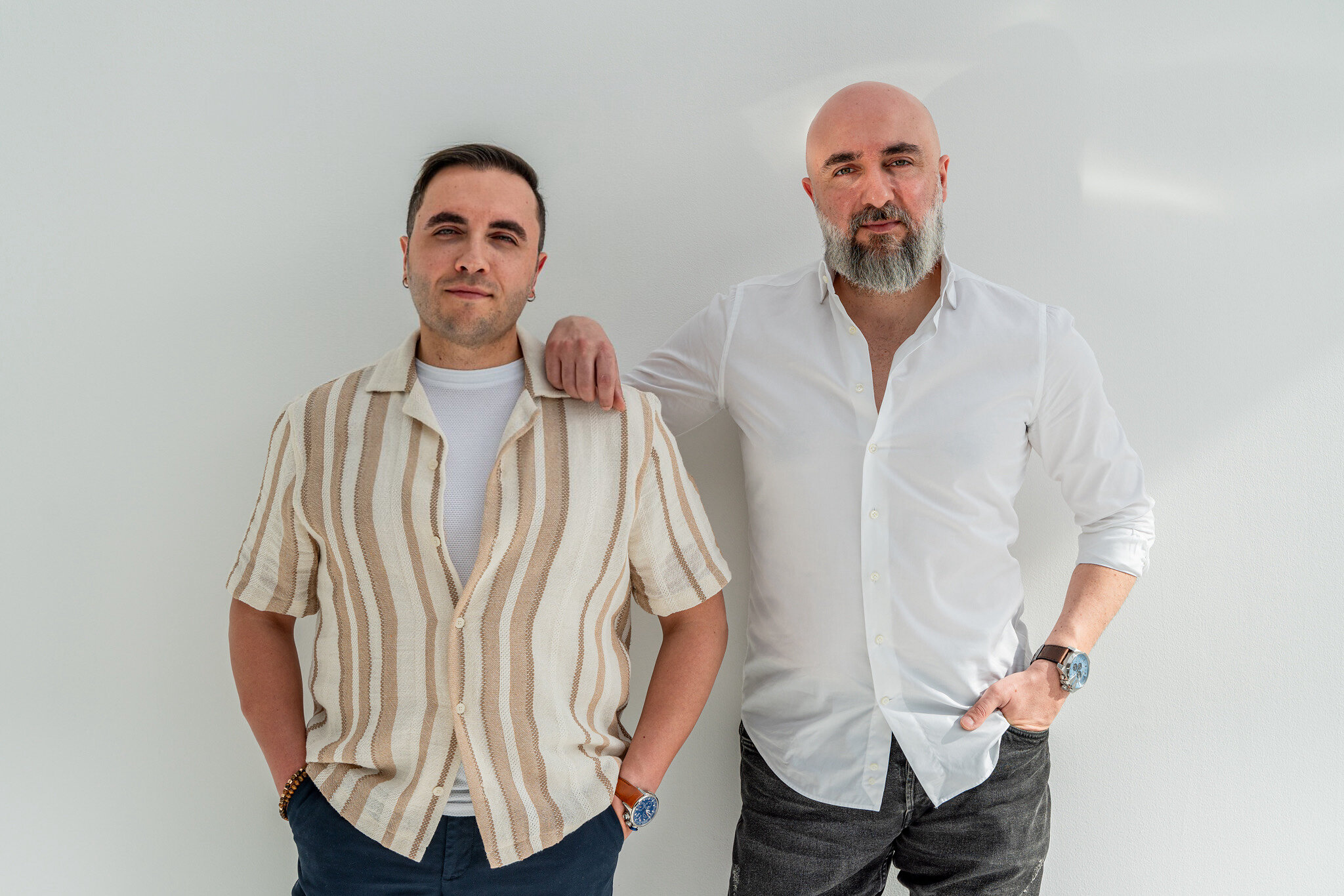
Early distribution was considerably less elegant than buying a plan inside an app. Özdemir has recalled wearing Airalo shirts and staging phone conversations in elevators, talking up the service within earshot of fellow passengers. The elevator pitch had acquired literal doors. One hopes the building had enough floors to accommodate the explanation.
In the same account, a $5,000 YouTube sponsorship brought a striking response and helped reveal the value of explaining eSIMs through creators. That experience gets at a basic difficulty for the business. Customers needed to understand a new way of obtaining something familiar. Mobile data was familiar; downloading the means of accessing it still required an introduction.
Burak supplied another form of close contact with customers. In Airalo’s early days, he handled support himself, learning what people needed and where they became stuck. He later described a strategy of refining the offering, removing expenses and features that users did not value. Together, these accounts put customer conversations unusually close to the center of the company’s development.
The carriers came to the table
Airalo’s financing history also complicates the simple picture of a startup marching against an established industry. A $5.4 million Series A was announced in 2021, led by Rakuten Ventures. In 2023, a $60 million Series B led by e& capital drew participation from investors linked to several telecom groups, including Singtel, Orange, Telefónica and Deutsche Telekom.
Established operators were helping finance a service that offered travelers another way to buy mobile access. This was a business built through relationships with the networks carrying the connection. A customer might encounter a single app, but delivering the product required cooperation across a much less tidy commercial map.
Özdemir has credited Antler’s Jussi Salovaara with regular mentoring and introductions to investors. It is an instructive connection to retain in a founder profile: the person in the headline still needed people willing to make introductions, examine the business and back another stage of its development. A company grows beyond its founder’s personal reach.
In July 2025, Airalo announced a $220 million investment round led by CVC, including $185 million from that firm, at a valuation above $1 billion. Peak XV and Antler Elevate also participated. The stated uses included improving customer support, developing products and expanding connectivity for companies and their customers. The funding gave a larger budget to some very ordinary obligations: make the service work, help people use it and keep improving the offer.
“Share the market. Be happy.”
Ahmet Bahadir Özdemir
A place on the packing list
The customer milestones make the expansion visible. Airalo announced more than 10 million users in May 2024, more than 20 million in April 2025 and more than 30 million customers in June 2026. These are announced customer milestones, rather than a count of people connected simultaneously. They still describe a substantial change in the audience for a once unfamiliar purchase.
Özdemir described Airalo as having become part of their packing list
. It is a modest domestic image for a large commercial ambition. A successful travel utility can become something people arrange almost automatically, alongside finding a charger and checking the departure time. Ease of use has done its job when the technology stops demanding a starring role in the trip.
Yet a digital product can still benefit from a person explaining it. In July 2026, Airalo published a partnership with WHSmith North America covering 90 airport retail locations. Store colleagues were trained to explain eSIMs and help with activation. The airport counter, once a place to acquire another physical card, had become a place to learn how to dispense with one.
August brought a partnership with Consumer Cellular. A co-branded portal offered the carrier’s 4.5 million subscribers access to Airalo plans across more than 200 destinations. That is a potential distribution audience, distinct from Airalo’s customer milestone. For Özdemir’s company, it extends the route to a traveler beyond persuading that person to discover an unfamiliar app unaided.
The company he would want to work for
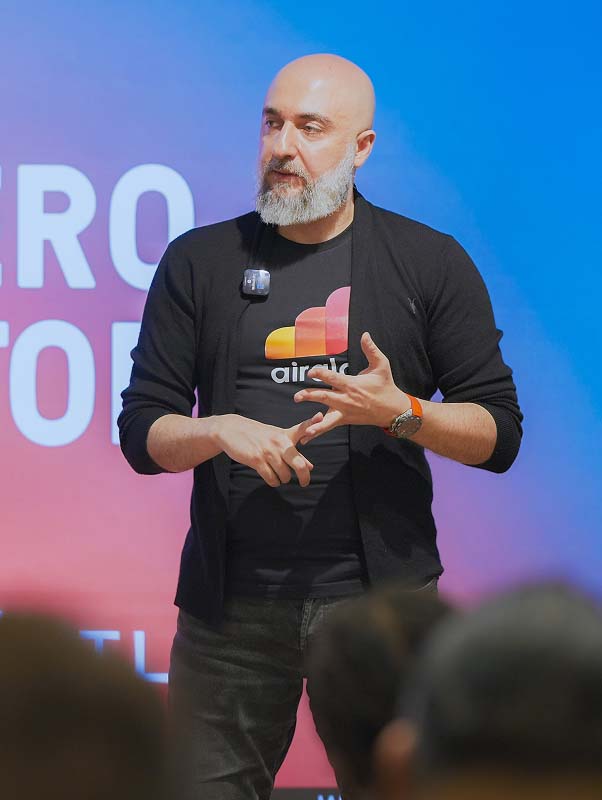
By June 2026, Airalo described a fully remote team of more than 400 people across over 50 countries. Managing that organization involves a different set of tasks from supplying a vessel or packaging a SIM. The people building a service for international movement are themselves spread across borders.
Özdemir’s public arguments about work return to freedom, ownership and kindness. Airalo lists ownership, empathy, authenticity and iteration among its values. His co-founder has similarly described accountability and collaboration as central to how the company operates. These are stated principles; their practical test comes in the everyday decisions employees and customers experience.
His younger self wanted business success to settle a family comparison. The later Özdemir talks about proving that decent people can build a successful company without making greed its operating philosophy. A valuation can be announced in a morning. That proposition has to be tested repeatedly, by people who have reasons to notice when the behavior falls short.
The sailors’ request remains a useful place to leave him. They needed a connection, and kept asking the person already delivering what they needed. Özdemir listened long enough to change what he sold. Years later, the product is downloaded, the audience is larger and the groceries belong to an earlier chapter. The original question still deserves a prompt answer: can you help us reach home?