Before Andreas Åfeldt Franke and Theis Jensen wrote code for Telgea, they picked up the phone. They spoke with 100 international IT managers. There are more glamorous ways to begin a technology company. There are certainly quieter ones. But a hundred conversations offer something a handsome pitch deck cannot: a chance to discover whether anyone else is annoyed by the same thing.
The complaint that emerged was remarkably consistent. Managing employees’ mobile plans across borders meant dealing with a collection of local providers, agreements and systems. Every additional country brought another helping of administration. The company might have one international workforce; its phone arrangements behaved like a committee of independent republics.
When the founders presented a mockup, they secured early commitments worth $1.8 million in annual recurring revenue. Those were commitments, rather than booked revenue. Still, they gave Franke and Jensen a reason to proceed: prospective customers had moved beyond agreeing that the problem was irritating. They were willing to discuss paying to remove it.
The operator’s view of a phone bill
Franke came to this problem through the machinery of growing businesses. His earlier work included Tipser and Innometrics, companies he helped expand internationally. Finance and operations were central to his career. These are jobs in which a promising new market also means someone must work out who signs, who pays and how the arrangement will function next month.
He had been chief financial officer at Tipser before its acquisition by Bolt. At Bolt, his responsibilities included finance, operations and integration across European entities. His background also included Apsis and a chief operating role at Tørn. It is a career seen from the side of the business where expansion acquires an invoice number.
Earlier, he studied at the Stockholm School of Economics from 2010 to 2012. His master’s thesis concerned knowledge management and professional service firms. A student consulting project examined internationalisation and location decisions for LynxEye. Cross-border organisation was already a subject of practical study long before Telgea became the vehicle for it.
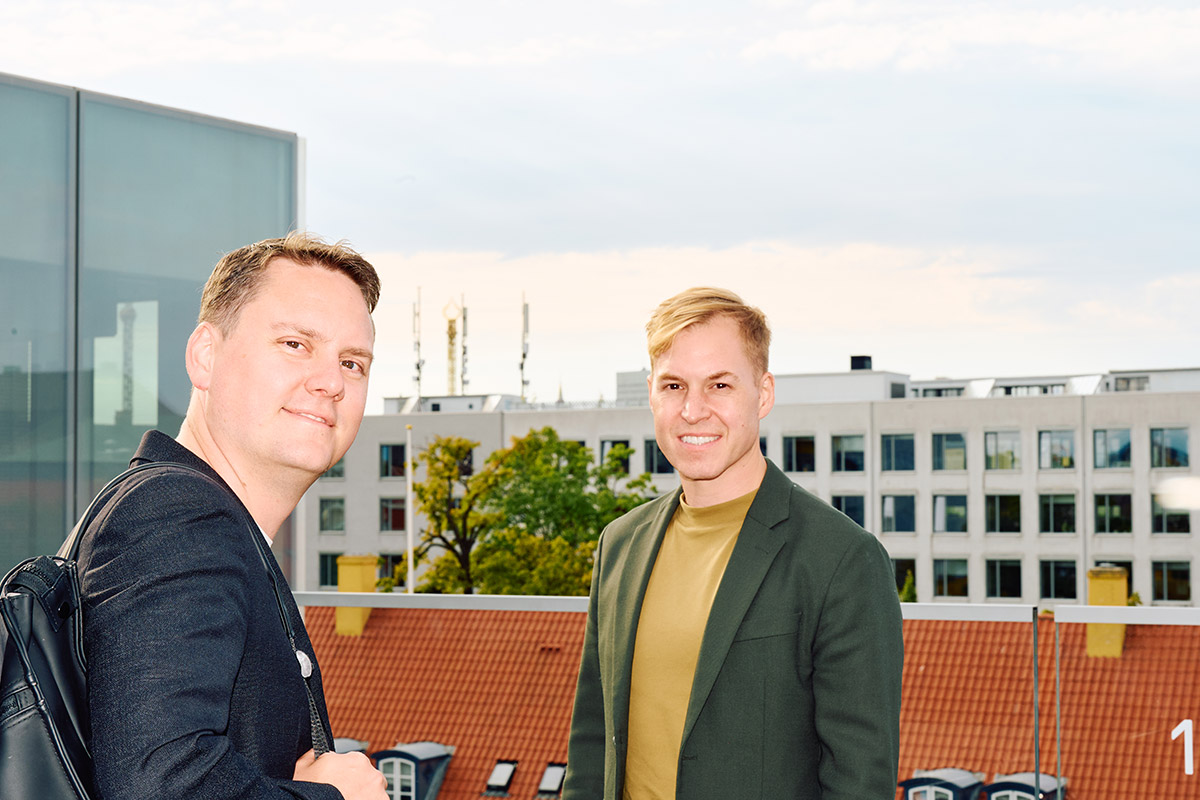
In introducing Telgea, Franke described the mobile-plan problem as something he had repeatedly encountered while running international teams and entering new markets. He met Jensen at the beginning of 2024. Their proposed solution was a carrier that could provide local connectivity wherever a company’s employees were based, with administration gathered into one place.
A thousand versions of “no”
Franke’s account of fundraising is less tidy than the customary procession of announcements. In a public reflection on his previous 15 years of pitching and scaling companies, he estimated that investors had turned him down roughly 1,000 times. The number was his approximation, a way of describing repeated rejection rather than a count of Telgea’s fundraising meetings.
He was preparing to pitch Telgea at the Stockholm School of Economics incubator when he shared that observation. Even after participating in three successful exits, he still expected refusals. His advice was to revise the pitch, improve the work and keep approaching people. Rejection belonged inside the process, alongside building and selling.
That attitude makes his return to familiar founder networks interesting. He later described going back to Antler to pitch Telgea and reconnect with entrepreneurs he had met there before. Rather than presenting company-building as a solitary performance, he wrote about the value of exchanging ideas and making connections. The work continued in rooms he already knew.
“It turns out, a lot harder than we thought!”
Andreas Åfeldt Franke, on building an international telecom operator
The line appeared in his introduction to Telgea, after he wondered how difficult creating an international telecom operator could be. It is a useful little puncture in the founder’s announcement. The idea can be expressed in a sentence. Delivering it requires agreements, infrastructure and the cooperation of people whose businesses already exist.
One agreement has a lot underneath it
Telgea’s proposition gives Franke’s operational background a specific outlet. A business receives local mobile plans and numbers across supported markets while managing them through one provider. Behind that simple arrangement sit relationships with local networks. The enterprise gets a common administrative layer; the underlying connectivity remains connected to individual countries.
Transatel, an NTT company, has described enabling Telgea as a mobile virtual network operator in France and the UK, with API provisioning through its connectivity platform. That partnership supplies a useful glimpse below the surface. The fewer systems a customer has to operate, the more carefully the relationships underneath must be assembled.
In May 2025, Franke joined a Telekomdagen panel alongside leaders from Telenor and 3 Scandinavia. He argued that better networks alone did not address all the ways customers wanted telecom to change. He called for more open partnerships and access, treating collaboration as a condition of innovation rather than a courtesy between companies.
It is a demanding position for a new entrant. Franke wants to change the way enterprises buy connectivity, while working with the network companies that make connectivity possible. His conference outreach in 2026 was accordingly practical: he asked to meet local operators and specialists who could help Telgea launch in more countries. The ambition needed counterparts.
The customer’s map sets the itinerary
Customer announcements put some names and places around the original interviews. In September 2025, Phyron selected Telgea for mobile management across five countries. Phyron had 45 employees and offices including London, Brighton, Toronto, Dubai and Stockholm. A comparatively small organisation could already have a mobile administration problem spread over a substantial map.
For Franke, that example fitted the problem he had described from the beginning: employees should be able to work across markets without their employer managing a separate patchwork of telecom relationships. A company did not need tens of thousands of staff to experience the complications. A handful of offices could be enough to make the task recur.
Poland supplied another concrete decision. When Telgea announced its launch there in November 2025, Franke said demand from existing and prospective enterprise customers had made the country a priority. Expansion followed a request from the customer base. The next dot on the map had a reason to be there.
The startup programme introduced in 2025 extended the same proposition to younger companies. Franke’s explanation was grounded in resource allocation: founders scaling internationally should spend less time negotiating telecom arrangements in each market. The customer interviews, the country launches and the programme point toward the same preoccupation. Growth creates work around the work.
When the carriers start investing
Telgea announced $2.7 million in financing in April 2025, backed by investors including Amigos, Antler, Motivate Ventures and the Stockholm School of Economics. The funding supported a business trying to replace multiple local arrangements with a common platform. Franke’s case was that removing administration could release resources inside the customer’s organisation.
By February 2026, an established operator had joined the investor group. Telenor Amp announced a $3 million investment within a $5 million round. At that point, Telgea had 60 enterprise customers, local connectivity in 10 countries and roaming coverage in 192. The local footprint and the roaming footprint measured different things; the distinction matters to a business hiring abroad.
For Franke, the investment also brought an industrial partner with international reach. It gave his argument for operator collaboration a financial expression. A company challenging the country-by-country purchasing model now had backing from a telecom group. The relationship was part of the mechanism by which the proposed alternative could grow.
In a further announcement in 2026, Franke welcomed Founders Factory and Fastweb + Vodafone as an investor and partner. He explained the relationship in terms of additional networks and countries brought under the customer’s agreement. As an aspiration, global telecom sounds sweeping. As an operating task, it arrives one partnership at a time.
In another public explanation of the business, Franke put eSIM inside a larger set of responsibilities. Faster provisioning mattered, but so did cost visibility, consistent onboarding and governance across markets. He described the objective as running more of the operational work through software, while keeping local operators underneath the shared arrangement.
That emphasis sets a practical test for his ambition. An IT team must still be able to manage the service, and a finance team must understand what it is paying for. Franke has argued that execution depends on removing complexity without introducing new risk. The technology has to make an ordinary working day easier.
The next call still needs making
Recognition has accompanied those steps. Telgea won Best B2B Offering at the MVNO Nation Global Awards 2025. In the 2026 competition, it appeared on the shortlists for Best B2B Offering and the MVNO Challenger Award, ahead of the November ceremony. Awards provide a moment to pause. The shortlist is also a reminder that the competition continues.
Franke’s recruitment language offers a more everyday glimpse of how he expects the work to proceed. A Stockholm sales role promised a route from sales development representative to account executive in six months, conditional on performance. The post spelled out cold calls, emails and qualified meetings. His expansion plan still required someone to get on the phone.
There is a pleasing continuity there. The early version of Telgea began by asking people what made their work difficult. The expanding version still needs conversations with customers, operators and possible colleagues. Franke’s wager is that enough careful arrangements behind the scenes can leave international employers with fewer arrangements to make themselves. A hundred calls were a beginning. Fewer contracts is the point.