Braze Is Quietly Making Your CDP Optional
Braze built Currents to stream engagement data out of its platform. Now its Data Platform ingests, enriches and activates events natively, and marketers are asking whether Segment is still worth a second bill.
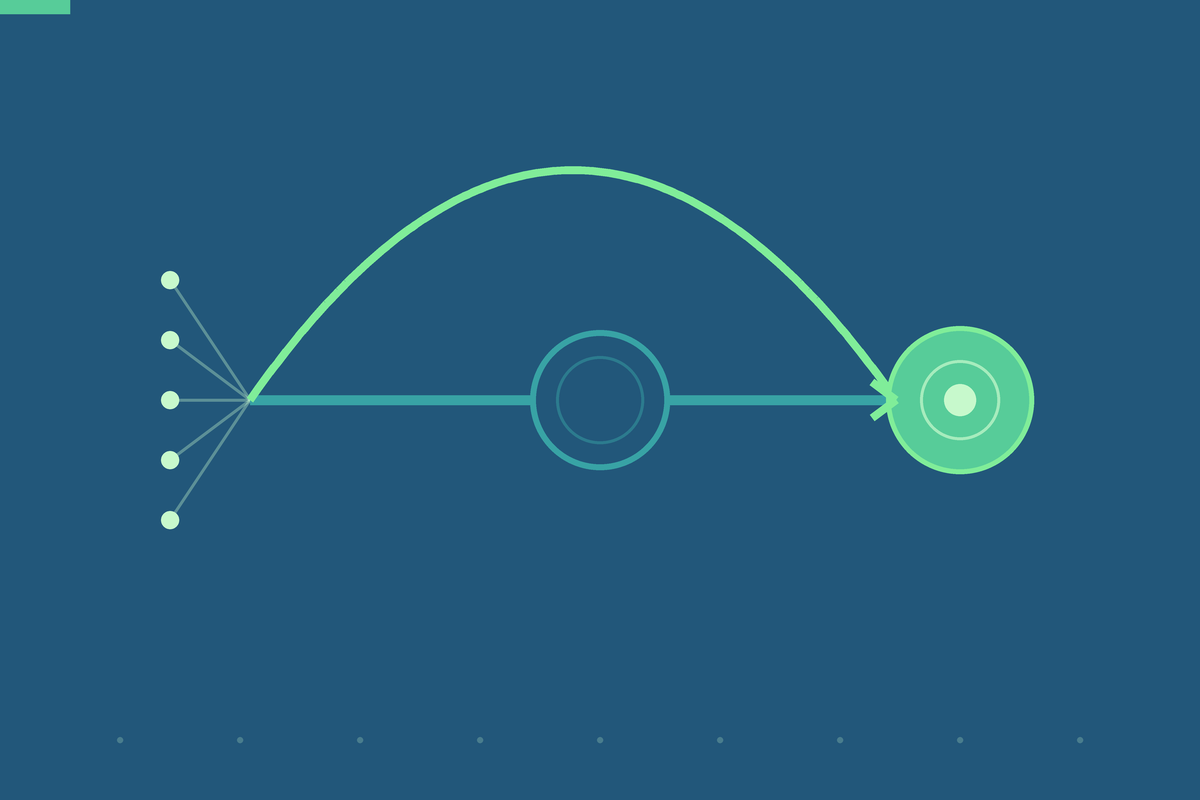
For about a decade the modern marketing stack ran on a tidy division of labor. A customer data platform sat upstream and did the plumbing: it collected events, unified profiles, and routed clean data everywhere it needed to go. An engagement platform sat downstream and did the talking: email, push, SMS, in-app, web. Segment, now owned by Twilio, became the default pipe. Braze became the default mouth. Nobody argued much about it, because the two jobs looked genuinely different.
That arrangement is getting harder to defend on a purchase order. Braze has spent years turning Currents, its data-streaming product, from a one-way export hose into the visible edge of a much larger data platform. In 2025 alone the company says Currents streamed close to 13 trillion events out of Braze. When the messaging tool is moving that much data on its own, the pipe upstream starts to look less like infrastructure and more like a line item somebody should defend at renewal.
What Currents actually became
Currents started as an export product. You turned it on to get granular engagement data out of Braze - sends, opens, clicks, purchases, custom events, attributes - and into somewhere useful: an S3 bucket, Google Cloud Storage, Azure, a warehouse, a BI tool. The events arrive with consistent schemas and enough metadata to be worth joining on later: user IDs and external IDs for warehouse joins, campaign and canvas names, message variants, channels, timestamps, device and platform context.
To see how far that is from the original pitch, it helps to remember where Currents came from. Braze launched it back in 2018, three years before the company went public on the Nasdaq. At the time the promise was modest and one-directional: your engagement data does not have to stay trapped in the messaging tool, so pipe it out to your own storage and do whatever analysis you like. That framing suited a world where the warehouse was a passive destination and the CDP was the active brain in the middle. The value was getting data out.
The 2026 Braze Data Platform release quietly reversed the arrow. Cloud Data Ingestion pulls warehouse data into Braze. User Profile Streaming, generally available for Snowflake, pushes user-level attributes back out. Zero-copy Canvas triggers let Braze start a customer journey off warehouse data it never copies. A new ingestion UI lets a marketer launch a data sync without filing an engineering ticket, and an early-access SQL editor lets them query the warehouse directly instead of waiting for someone to pre-format a table. A Databricks Delta Sharing partnership makes the whole thing bi-directional, so engagement signals can flow back for machine-learning enrichment and attribution.
The two shapes of the same stack
Braze positions itself as a warehouse-native engagement layer that eliminates the "middleware tax" by activating data where it lives rather than replicating it. Braze Data Platform positioning, 2026 launch
"Middleware tax" is the phrase doing the heavy lifting. It is Braze's shorthand for everything a separate CDP layer costs you: duplicate storage, the ETL jobs you maintain to keep copies in sync, the licensing on a second system that mostly moves data you already own. The company's argument is not that a CDP is useless. It is that if you can act on data where it already lives, a lot of the copying - and the tool you bought to manage the copying - becomes optional.
The part Braze still can't do
Here is the honest limit, and it matters. Braze's Data Platform improves ingestion and activation, but it does not do cross-source identity resolution. That is Segment's original job and it is genuinely hard: taking a logged-out web session, an app install, an email address, a loyalty ID, and a support ticket, and deciding they are all the same person. Braze can trigger off warehouse data and enrich profiles, but it assumes the identity work has already happened somewhere upstream.
So the buying question is not "CDP versus CEP" as a philosophy. It is a spreadsheet question about your own data. If most of what you need is warehouse data activated inside Braze, and your identities are already resolved before they land, the CDP layer may quietly become redundant. If you route data to dozens of downstream tools, or you resolve identity across many sources, Segment is still doing work Braze does not. The two stay complementary right up until the moment your architecture stops needing the middle.
Why this is really a budget story
Vendor consolidation is not usually a features fight. It is what happens when a finance team looks at two contracts that both claim to own the customer and asks why. At enterprise scale Segment runs anywhere from about $25,000 to well past $200,000 a year. Braze typically starts around $60,000. A full dual stack lands somewhere between roughly $85,000 and $300,000 or more annually, and cost shows up as a top complaint in reviews of both tools.
Those ranges hide the part that actually stings, which is not the license but the labor. A CDP in the middle is not a static purchase; it is a standing commitment to keep pipes healthy, schemas aligned, and copies fresh. Every source added is another integration to babysit. That maintenance cost rarely shows up cleanly on a contract, which is exactly why it survives so long unexamined. When Braze talks about a "middleware tax," the tax it means is mostly the quiet salary of the people keeping the middle alive.
Braze did not announce a war on CDPs, and that restraint is the smart part. Declaring war invites a defense. Shipping zero-copy triggers, warehouse-native ingestion, and a self-serve sync UI does something quieter: it lets the customer arrive at the conclusion during their own renewal math. The company gets to keep saying "complementary" while the overlap on the invoice does the arguing.
Segment is a developer-first CDP built for data collection and routing across any stack; Braze is a customer engagement platform built for real-time cross-channel messaging. The distinction both vendors still lean on
There is also a tell in what enterprises say out loud. A director of loyalty and digital marketing at RaceTrac, describing a Databricks-centered strategy, put it this way: "we're able to remove limitations when speed and complexity exceed connected platform capabilities." Translated, that is a customer choosing to keep the warehouse as the center of gravity and asking every tool around it to read from that center rather than build its own. That instinct is exactly what favors a warehouse-native engagement layer over a chain of copies.
What to actually do about it
If you run Segment and Braze together, the useful exercise is not "which is better." It is an audit of overlap. List the sources Segment collects. Mark which ones already resolve identity somewhere else - your warehouse, your auth system, a loyalty platform. Mark which destinations only exist to feed Braze. If a large share of your Segment spend is routing already-identified data into a single downstream tool that can now ingest it directly, you have found the redundant column. If Segment is the only thing stitching a fragmented identity graph together, leave it exactly where it is.
There is a deeper tension underneath the invoice, and it is worth naming. A CDP is often sold as a system of record for the customer - the canonical place where identity is decided and truth is kept. An engagement platform is supposed to be a system of action - it reads the truth and does something with it. What Braze is really testing is whether the warehouse can be the system of record while Braze is the system of action, with nothing canonical living in between. If the warehouse holds the resolved identity and Braze reads it in place, the middle tool is no longer keeping any truth of its own. It is just moving copies of a truth stored somewhere else, and moving copies is the cheapest job in the stack to question.
The broader lesson is older than martech. Every layer in a data stack eventually tries to become the layer that owns the customer, and it usually attacks from an unexpected seat. The CDP category was itself born by eating the identity and routing work that used to live in a dozen point tools. Watching the engagement layer now reach back up the pipe is just the same move, running in reverse. The winners will be the teams who treat "do we need both" as a live question every renewal, instead of a settled fact they signed once and stopped reading.
Read & verify
Questions people are actually asking
Can Braze replace Segment?
Not entirely. Braze's Data Platform now ingests, enriches and activates data natively through Cloud Data Ingestion and Currents, but it does not provide cross-source identity resolution, which is a core Segment function. For teams that mostly need warehouse data activated inside Braze, the CDP layer may become optional; for teams routing data to many downstream tools or resolving identities across sources, Segment still does work Braze does not.
What is Braze Currents?
Currents is Braze's real-time data streaming product. It exports granular engagement events - sends, opens, clicks, purchases, custom events and attributes - with consistent schemas and rich metadata to warehouses, analytics tools, lakes and partner destinations like S3, GCS and Azure.
What is the difference between a CDP and a CEP?
A CDP (customer data platform) like Segment collects, unifies and routes data across your stack. A CEP (customer engagement platform) like Braze orchestrates and sends messages across email, push, SMS, in-app and web. Segment is the pipe; Braze is the messaging engine. The 2026 debate is how much of the pipe Braze can now handle itself.
What is a zero-copy Canvas trigger?
It lets Braze trigger a customer journey (a Canvas) using data that stays in your warehouse, without copying that data into Braze. Braze reports processing 16.6 billion zero-copy updates in 2025, which reduces duplicate storage and ETL maintenance.
Do you still need both Segment and Braze?
It depends on your data model. A dual stack can cost roughly $85,000 to $300,000 or more per year. If Braze's native ingestion covers your activation needs and you do not require multi-source identity resolution or broad downstream routing, running both may be redundant. If you do, the two remain complementary.