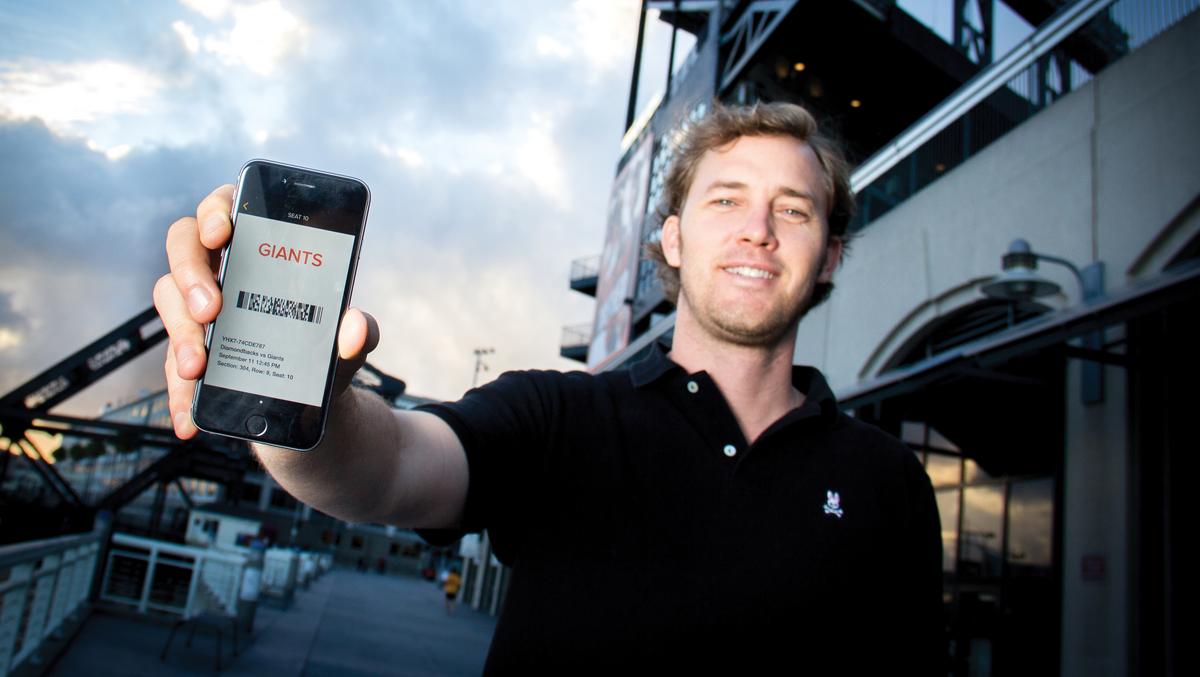
Brad Griffith had tickets to a Giants playoff game. He had his brother with him. What he needed, absurdly, was a printer. Outside San Francisco’s ballpark in 2012, the evening had acquired an administrative subplot: getting into a baseball game required finding office equipment. A bartender let the brothers print their tickets. Griffith made it inside, but the errand stayed with him. The barcode was the useful part. The paper was enjoying a position of authority it scarcely deserved.
Plenty of people would have complained over the next round. Griffith began building a different way in. He wrote the first version of Gametime’s iOS application in 2012; the service launched in 2013. Its proposition suited the circumstances that produced it: find a ticket on your phone, buy it on your phone, enter with your phone. For a fan already close enough to hear the crowd, returning to a printer was a particularly unappealing form of time travel.
A cold afternoon, a lasting attachment
The longer history begins at Candlestick Park. Griffith remembers his parents taking him and his brother to their first game on one of those San Francisco summer days that manages sunshine and cold without considering either a contradiction. The field seemed enormous. There were sodas, a crowd to disappear into, and the excitement of being there together. In a later recollection, the physical details remained vivid long after the afternoon itself.
His family became season-ticket holders for the Giants and Golden State Warriors. Hundreds of games followed. “Watching live sports was our bonding agent,” he wrote. It is an unusually plain explanation for a technology company’s purpose. The attachment preceded the business model by years. When Griffith talks about getting people into venues, he has a specific family history in mind: parents, brothers, a shared view of the field, and memories that accumulated by showing up.
First, he studied the players
A Santa Cruz native, Griffith earned a Stanford engineering degree in 2001. He subsequently worked on statistical infrastructure for the Colorado Rockies and Chicago White Sox, examining player value. Before he spent his working life thinking about the person buying the seat, he was thinking about the people being watched from it. Baseball offered a meeting place for his interest in numbers and his affection for the game.
His route also passed through Google, where he worked as a senior financial analyst, and Zappedy, a business that supplied customer analytics to local merchants. He helped launch Zappedy in 2010; Groupon acquired it in 2011. These were different settings for a recurring practical question: what can information help somebody decide? A roster, a local business and a ticket marketplace require different answers. Griffith had worked near all three before Gametime became his full-time occupation.
- 2001Stanford engineering degree
- 2010Helps launch Zappedy
- 2012Writes Gametime’s first iOS app
- 2013Gametime launches
By 2014, his decisions had become a Stanford Graduate School of Business case study. Its questions were pleasingly less tidy than the founding anecdote: how to recognize a worthwhile opportunity, how to judge product-market fit, and whether to recruit a co-founder. The case examined his choice to start as a solo founder while using contractors and advisers. A memorable inconvenience could suggest a product. Building a business around it still required working out who would buy, who would supply tickets, and who would help put the thing together.
The art of leaving things out
Early Gametime had a second objection to the usual ticket-buying ritual: the exhausting list. In January 2014, Griffith described an algorithm that selected 25 ticket options using price and location. The idea was to spare fans an unwieldy catalogue while they were deciding whether to go. Warriors and Sharks tickets were among the early offerings. The small selection was deliberate. A ticket app used on the move had to respect the limited patience of somebody who was, quite reasonably, trying to have an evening.
That preference for selection has endured. In August 2024, Gametime introduced Picks, arranging ticket recommendations on an interactive venue map that refreshed availability in nearly real time. Deal labels helped shoppers compare options, with a Super Deal designation available for some events. The presentation had grown more elaborate, but the old question remained recognizable: which of these seats should I actually consider? A warehouse can be impressive. Finding the right shelf is generally more useful.
A shorter list
Recommendations on the map
Another route to ticket value
In March 2025, the company announced Zone Deals 2.0 alongside a ticket tracker, a redesigned checkout and an AI customer support assistant. Griffith linked the changes to affordability and getting fans to more events. These are fairly workaday places to look for a founder’s ambitions: the checkout screen, the delivery update, the answer to a question at an inconvenient hour. Yet each sits between someone wanting to attend and actually getting through the gate. The promise of spontaneity has a considerable amount of plumbing behind it.
Letting the clock run
Griffith also helped make the final minutes before an event commercially useful. Historically, some teams restricted resale in the hours before play began. Gametime built around the fan who decided late, including purchases after a game had started. By 2018, its audience was predominantly 35 or younger, and Ticketmaster had established a relationship that let partner teams distribute primary inventory through the service. The young fan outside the stadium was becoming a customer worth accommodating.
The figures eventually gave that proposition some weight. Gametime placed third on the 2017 Inc. 5000, then 199th in 2018 and 455th in 2019. In May 2022, it announced $30 million in funding from investors including Nimble Partners, Maven Ventures, Accel, GV and Giants principal partner Jeff Mallett. The company also said cumulative ticket sales had passed $1 billion. That figure measured the value of tickets sold through the marketplace. It gives a sense of how far the original phone app had travelled.
Tickets delivered across Gametime’s history.
In July 2026, Griffith appeared again among Sports Business Journal’s ticketing Power Players. Gametime had delivered more than 40 million tickets and was an authorized MLB ticketing partner. The former baseball analyst now ran a business connected to the league from another direction. The continuity is appealing: the sport stayed in the picture while his place in its economy changed.
The founder steps back from the details
Writing the first application gave Griffith an intimate knowledge of the machinery. Leading a growing team required him to loosen his grip. In a 2019 conversation, he recalled an emotional company meeting in early 2017 when he acknowledged that his involvement in the details had become a problem. He needed to let other people do the work they had been hired to do. An engineer can fix a particular issue personally; a chief executive who tries to fix everything personally can become everybody else’s delay.
He described a planning process built around one main goal for roughly six months, developed through discussion rather than delivered as the founder’s decree. Supporting objectives and measurable work followed. He also favoured leaving time between conversations so people could reconsider. There is a nice distinction here: a business devoted to last-minute decisions could afford to take its time over the consequential internal ones.
“We’re here for the opportunity to help people grow.”
The answer Griffith said he heard from his direct reports
Another lesson arrived when he asked his direct reports why they worked at Gametime. He expected the answer to echo the mission he put in front of meetings: bringing people together through shared experiences. They talked instead about helping people grow. His initial surprise gave way to appreciation. Teaching, learning and building together were shared experiences too. His account leaves room for colleagues to understand the company in their own terms, and for its founder to learn something from the answer.
Beach volleyball, books, spaghetti
Away from ticketing, Griffith’s enthusiasms are reassuringly particular. In a 2016 account of his weekend plans, he looked forward to Dodgers-Giants, a restaurant crawl with his wife Britt and her family, and pickup beach volleyball in Santa Cruz. A former Stanford volleyball player, he still wanted to compete. He admired Clay Shirky’s books about technology and society, including Here Comes Everybody and Cognitive Surplus. The reading list and the weekend itinerary both involved people getting together.
At home, he deferred to Britt’s cooking and nominated spaghetti as his own reliable contribution. Cookie dough was his preference at Swensen’s. These details have the virtue of scale. Founders speak readily about millions of customers; it takes a different register to explain what you order for ice cream. Griffith’s public account allows both the executive and the ordinary enthusiast into the room.
He has also described bike trips and a visit to Everest Base Camp, and has encouraged his team to take time away. In a public post, he outlined avoiding evening and weekend calls unless urgent, planning around seasonal demand and giving employees credits to attend events. He said taking breaks himself was part of the job. A company selling evenings out would have a curious employment proposition if nobody inside it ever got one.
A phone that earns its keep
Griffith’s interest in technology stretches beyond the purchase itself. Back in 2017, he imagined intelligent agents finding suitable events and seats, consulting friends’ agents and fitting fun into calendars. He also treated television as a serious competitor to attendance: a comfortable evening at home keeps improving, so going out has to become easier. Even his futuristic answer was occupied with a familiar social problem. Who is free, what would they enjoy, and can somebody please organize it?
In May 2025, he returned to a smaller, immediate concern in a signed note about upfront pricing: people should be able to understand the total ticket cost quickly. Across the years, the impediments change from paper to choice to price. His attention keeps returning to the moments before an outing happens. Somewhere beyond the screen, there is a friend to meet and a game beginning. The phone has done its job when its owner can finally put it away.