A ticket ought to contain a little suspense. Will the band play the song? Will the home team remember how to defend? The amount on the checkout screen should be easier to predict. Chris O’Brien helped build a company around that distinction, in a business where the final bill had acquired a theatrical life of its own.
At TickPick, the central promise is that the displayed price is the price the buyer pays. There is still a business underneath: sellers supply tickets, transactions produce revenue, and somebody has to keep the machinery running. O’Brien came at that machinery as an engineer. His more interesting achievement was helping decide which parts customers should never have to think about.
Two roommates and an unfinished plan
O’Brien and Brett Goldberg met at Lehigh University, where their friendship became a roommate arrangement and, eventually, a business partnership. They belonged to Delta Phi. O’Brien studied computer engineering; Goldberg studied finance. By graduation in 2007, they had the complementary qualifications that look tidy in retrospect. A functioning company would take rather more work.
O’Brien joined Nuance Communications, implementing speech recognition technology for corporate clients. It was an engineering job with a practical test: a system had to work when somebody actually used it. Goldberg went into investment banking. Their conversations about doing something together continued after college, while both still had other employers and other responsibilities.
The ticket idea had a particular irritation behind it. Goldberg had bought and resold tickets to Red Hot Chili Peppers concerts and found the experience wanting. By 2009, the friends were developing their own approach on weekends. There is something appealingly ordinary about that beginning. Before the company had investors or partnerships, it had two people using their spare time to reconsider an annoying purchase.
The question that beat the algorithm
TickPick was founded in 2011, and its public website launched in 2012. O’Brien built the website and pricing algorithm. The original proposition included bidding, with an eBay-like mechanism that gave buyers another way to express what they would pay. It was a technically interesting answer. Customers supplied a more immediate question: How do I just buy tickets?
That little sentence contained a product review, a business argument, and a request to hurry up. A fan planning an evening did not necessarily want to learn another marketplace ritual. O’Brien and Goldberg shifted their emphasis toward pricing. The complaint about fees was easier to understand than the mechanics of a bid.
There is a recognizable engineering discipline in that adjustment: let actual use revise the design. O’Brien had built something, then helped change the way it was presented. Keeping every original idea would have been an expensive form of sentimentality. The customer wanted a ticket, and the company increasingly organized itself around making that purchase straightforward.
“The fee structure is a huge pain point.”
Chris O’Brien
A seat is a small information problem
A ticket marketplace contains another puzzle. Two seats can cost the same amount and offer quite different evenings. Distance, section, row, and angle all complicate the comparison. Sorting a page from cheapest to most expensive answers only one question. The useful question is which option represents better value.
TickPick used algorithms to grade tickets on that relationship between price and seat quality. That makes O’Brien’s role more substantial than simply putting a checkout on a website. The product needed to organize a messy collection of choices into something a buyer could assess. The code had to help a person decide where to sit.
The company’s 2018 acquisition of Rukkus assets addressed the visual side of that problem. Rukkus had high-definition, 360-degree venue views, which TickPick planned to incorporate into its platform and mobile app. A seat number is precise; a view explains why anyone should care. Together, grading and imagery offered buyers different ways to make the same decision.
The telephone had a hiring department
For a while, O’Brien and Goldberg were also the people answering support calls. TickPick’s first employee arrived through one of those conversations. A customer asked O’Brien whether they were hiring, then suggested her son. After several interviews, Jack Slingland joined in 2013, following his graduation from Penn State.
It is a useful counterweight to the polished language of company building. The founders needed someone they could afford. A customer knew someone looking for a start. An introduction passed through the same phone line as questions about tickets. By 2024, Slingland oversaw an operations organization with dozens of people reporting up to him.
The anecdote also keeps O’Brien visible in the day-to-day business. His job included writing software and picking up the phone. Those activities sit unusually close together in a small company. Every support conversation is a chance for a carefully designed system to receive a blunt review from the person trying to use it.
Eight years before the institutional cheque
The company took its time getting to institutional capital. In August 2019, PWP Growth Equity invested $40 million. The announced uses included marketing, business development, and a data team. Technology remained part of the operating plan: the investment would support work on machine learning and artificial intelligence to improve service.
By then, TickPick had already used acquisitions to expand, including Razorgator in 2018. The company could bring in customers and capabilities as well as build them internally. For O’Brien, the original technical creator, that meant working on a business whose next useful component might come from another team.
The recognition has continued across different stages of the company. TickPick ranked No. 90 on the 2016 Inc. 5000. In 2026, it appeared at No. 1,740, with 201 percent growth over three years. The positions belong to different years and growth windows. Together they show a company still appearing on the list long after its first burst of attention.
A golfer enters the picture
In August 2024, Brighton Park Capital announced a $250 million investment in TickPick. Rory McIlroy’s Symphony Ventures also joined as a strategic investor. GreyLion, the earlier institutional backer, exited. O’Brien and Goldberg stayed with the business and retained significant minority stakes. A large ownership change did not end their working partnership.
The accompanying company figures put the scale in context: 14 million mobile app downloads and nearly $1 billion in ticket sales. Downloads describe distribution; ticket sales describe the value passing through the marketplace. Neither is a substitute for revenue. They do, however, mark a considerable distance from a website built by two former roommates.
McIlroy brought a recognizable sporting identity to a business already pursuing relationships with teams. O’Brien discussed the possibility of using that connection to increase brand awareness. The company’s partnerships included the Eagles, Rams, Twins, and LaLiga North America. Such relationships put a marketplace name into the places its customers already cared about.
O’Brien also described a profitable company handling roughly 10,000 transactions a day in 2024. He spoke about expansion beyond the United States, identifying the United Kingdom as a priority. Acquisitions could help, including businesses in primary ticketing. His ambitions were becoming broader than finding another buyer for another resale ticket.
The evening does not end at checkout
The primary-ticketing step arrived in March 2025, when TickPick acquired Fanimal. Its technology served small and mid-sized venues and promoters. That brought the company closer to the original sale of admission, extending its work into the tools organizers use. The business could now address a different part of the same evening.
Then, in April 2026, TickPick acquired Momento, an app for recording and revisiting live events. Momento said more than 20 million tickets had been captured on its platform since its 2023 launch. It would remain a standalone app. The acquisition added a place for memories, attendance histories, and plans for the next outing.
O’Brien framed the opportunity in terms of recognizing and rewarding fandom. Attendance offers a concrete record of participation: somebody went to the game or the show. Connecting those histories with a ticket marketplace could create new ways to serve regular attendees. That remains an ambition to develop, rather than a finished outcome to celebrate.
It is an intriguing next problem for the engineer who helped simplify checkout. The original customer question concerned getting hold of a ticket. The newer one concerns what the ticket means afterward. Fans already understand that distinction. Few people keep an old stub because they enjoyed the payment process.
O’Brien’s founder biography offers a short description of his working style: We work hard and we smile while we’re doing it.
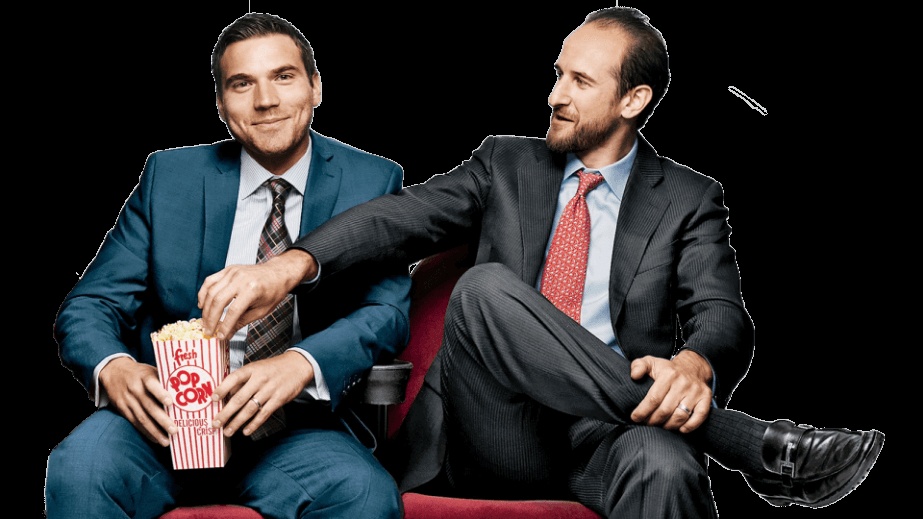
The photograph with Goldberg supplies a less formal version, complete with popcorn. After years spent making a transaction less aggravating, there is room for a business to pay attention to the pleasure it is supposed to enable.
The surprise belongs somewhere between the opening act and the last play. O’Brien has spent much of his career trying to keep it out of the bill.