Boris Yamnitsky’s first customer shipment went out over the July 4 weekend in 1995, from a family vacation rental on Cape Cod. He had spent the previous six months writing the software in his parents’ basement in Brookline, Massachusetts. A holiday house is an unconventional dispatch office. Then again, a basement is an economical place to begin rearranging what an editing room can do.
The package was Mac-only, built for Adobe Premiere and Media 100. It let editors add digital video effects to their work without buying the expensive hardware traditionally used to produce them. The company was initially called Artel Software. The product carried its creator’s first name, which eventually became the name of the business too. For someone selling ways to alter an image, Yamnitsky chose a remarkably straightforward introduction.
Thirty years later, he stood at a microphone in North Hollywood holding an Emmy for Continuum, the effects collection that grew from that beginning. By then, the business around it included tracking, compositing, photography and audio software. The distance between those two scenes contains a useful story about creative technology: how to give people more room to work, and how to keep doing it when everything around their desks changes.
A mathematician finds an editing room
Yamnitsky came to images by way of mathematics. He emigrated from the former Soviet Union in the 1970s and studied at Boston University, concentrating on theoretical computer science and linear programming. With Leonid A. Levin, he co-authored research accepted at the 1982 IEEE Symposium on Foundations of Computer Science. Long before his name appeared in an effects menu, it appeared beside a problem about computation.
The paper examined an older linear-programming algorithm and established polynomial-time behavior. Its geometrical vocabulary belongs to a different working world from lens flares and animated titles. Still, the academic record gives his later career a particular texture. This founder arrived with experience investigating what an algorithm could accomplish, rather than simply spotting a market for attractive pictures.
In the early 1990s, he worked on the first release of Media 100, a computer-based editing system. There he encountered the practical demands of video: pictures had to move, effects had to look convincing, and people needed access to them while assembling a programme. His knowledge of the problem came from inside the engineering effort. He had helped build the kind of system his own software would soon inhabit.
By 1995, the opportunity was specific. Desktop editing was developing, but the visual tricks available through dedicated hardware remained costly. Page peels and three-dimensional moves might seem quaint today; to an editor trying to deliver a finished piece, they represented capabilities the computer ought to provide. Yamnitsky set about putting them within reach.
The pleasure of a well-rendered cube
His early advantage involved a tradeoff. Dedicated effects hardware needed to deliver results in real time. His software could take time to render, allowing him to concentrate on the quality of the finished effect. A computer making you wait is rarely endearing. Give it a sufficiently smooth result, however, and patience acquires a business case.
“I focused on smoothness and render quality of the effects.”
Boris Yamnitsky, 2013
The first package won a Best of Show award at Macworld Boston in 1995. Recognition arrived early, but the product’s usefulness was rooted in something quieter than an exhibition prize: it worked where the editor was already working. A plugin could place an effect inside the timeline, close to the cut that needed it.
That placement matters. Editing involves repeated decisions about timing, sequence and emphasis. An effect lives among those decisions. Moving work between separate applications introduces additional handling; making a tool available within the editing environment changes how readily someone can try it. The original Boris FX proposition treated access as part of the design.
The range soon extended beyond transitions into keying, titles, compositing, vector graphics, masks, painting and motion tracking. In a 2009 interview, Yamnitsky described an engineering team whose research could support that breadth. The solo programmer’s package had become an organization capable of tackling several different image-processing problems. The company’s name remained short. Its list of responsibilities did not.
From the original Mac effects package to Continuum’s Engineering, Science & Technology Emmy.
There is a reason the list of tools reads like a list of editing-room chores. An editor may need to rescue an image, build a title and track a moving object within the same project. A collection that handles those jobs has to accommodate several kinds of thinking. Yamnitsky’s business grew around that variety, following the work beyond the effect that first attracted attention.
The price of working everywhere
A plugin company makes a peculiar promise. Its product must coexist with software whose next release it does not control. Hosts change, interfaces move, and something that worked yesterday can require attention tomorrow. Yamnitsky has spoken plainly about the work involved in keeping pace with those moving targets. Compatibility is a continuing job.
His company expanded across editing platforms rather than tying its prospects to a single application. In 1998, it worked with Avid to introduce an AVX plugin for Avid systems. Supporting different environments made the software available to more editors. It also meant maintaining more relationships with the systems on their desks.
In 2005, that relationship took an unusual turn. Boris FX acquired Media 100’s assets and technical-support obligations. Yamnitsky was now responsible for a product he had helped engineer years earlier. The transaction included retaining support and quality-assurance staff, preserving experience that existing users depended on.
There is a pleasing circularity here, though the practical details deserve equal attention. Purchasing a familiar name also meant taking responsibility for its users. The announcement emphasized continuity of support and the accumulated expertise of those customers. A software business can inherit a product in a day. Knowing why someone still relies on it takes longer.
Buying the people who know how
The acquisitions that followed widened the company’s technical reach. Imagineer Systems brought Mocha’s planar tracking in 2014. GenArts brought Sapphire in 2016. SilhouetteFX and Digital Film Tools joined in 2019, adding specialist rotoscoping, painting and photographic tools. Each deal brought a different set of tasks into the same organization.
- 2014ImagineerTracking
- 2016GenArtsEffects
- 2019Silhouette + DFTRoto, paint & photography
- 2023SynthEyes3D camera solving
- 2026Vegas Pro + iZotopeEditing & audio
SynthEyes joined in 2023. Its creator, Russell Andersson, had developed software for solving camera movement so computer-generated elements could sit properly inside photographed scenes. Yamnitsky expressed particular interest in its precision, tracking and handling of lens distortion. Andersson remained in a leadership role as the companies combined their development resources.
These are distinct kinds of expertise. A tracking tool follows movement; a paint tool changes what is in the frame; a camera solver helps establish how the camera moved through space. Bringing them together creates opportunities to share technology. It also requires respecting the accumulated judgment inside each tool.
Asked about his acquisition choices in 2024, Yamnitsky began with the developers. He wanted talented, knowledgeable people who cared about their products succeeding. His formulation was blunt enough to fit on a purchase agreement: “I never buy to destroy.” The ambition he described was continued development, with the acquired company and its software doing well.
An Emmy for the work between the cuts
On October 14, 2025, Continuum received an Engineering, Science & Technology Emmy. The named recipients were Yamnitsky, Jason Clement, Mike Escola and Peter McAuley. The award recognized a collection used for effects, transitions and image restoration, with ongoing development in GPU acceleration and machine learning.
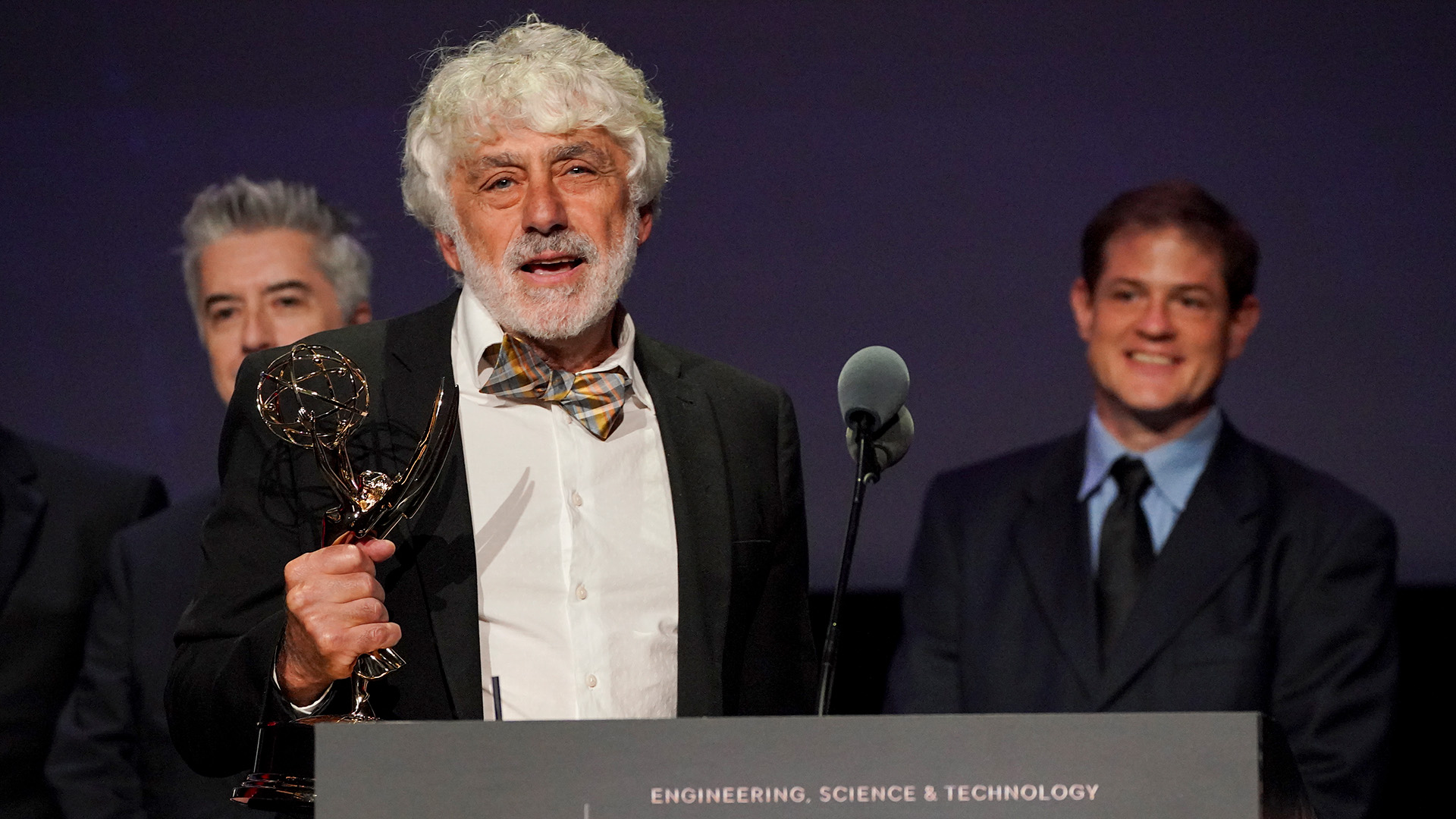
The four names give some shape to the work behind the software. McAuley, Continuum’s senior product manager, joined Boris FX in 1999. Clement leads engineering. Escola handles releases, along with responsibilities including licensing and machine-learning training. Around them are testing, design, support and development colleagues. A product that began with one person now requires many forms of care.
Yamnitsky described receiving the award as “humbling and exhilarating.” He remembered the early customers and the opening created by computer-based editing. His account also emphasized beta programmes and users whose feedback shaped releases. “Every relationship goes both ways,” he said. The sentiment has a practical consequence: requests arrive from people doing real work, and the software changes in response.
The other half of the picture
In 2026, his field of responsibility widened again. March brought the acquisition of Vegas Pro, Sound Forge and Acid Pro from MAGIX. The development teams in Wisconsin and Germany remained with the organization. For a founder long associated with plugins, owning another editing platform made the relationship between host and effects newly interesting.
He reiterated the commitment to supporting major platforms across the market. Then, in July, he announced that iZotope was joining Boris FX, bringing RX, Ozone and other audio tools. Picture finishing now sat beside audio repair, mastering and mixing. His stated vision covered what an audience sees and hears.
His recent discussion of AI is similarly grounded in the workbench. At IBC2026, he emphasized removing technical bottlenecks while “allowing artists complete control over each element.” Earlier conversations had covered noise removal, restoration and assistance with difficult image tasks. These are problems an editor can recognize before anyone has finished explaining the technology.
The basement, the vacation rental and the Emmy stage are memorable settings. The enduring setting in Yamnitsky’s career is the editor’s computer: a place where an ambitious idea meets an awkward shot, a missing capability or a deadline. In 1995, he found a way to put another tool there. He has spent the intervening years finding more things that belong within reach.
Keep the picture moving
Explore the tools, conversations and milestones.
- Boris FX · official website ↗
- Boris Yamnitsky · personal LinkedIn ↗
- The Continuum team’s Emmy conversation ↗
- Yamnitsky’s letter welcoming iZotope ↗
- Watch: the 2026 Vegas acquisition interview ↗
- Watch: Yamnitsky at NAB New York, 2016 ↗
- Boris FX · company YouTube channel ↗
- A conversation about AI and software development ↗