The most revealing Boris FX demo is not a fireball. It is a license plate becoming anonymous, a wire vanishing from an actor's jacket, or a noisy voice turning intelligible. These are tiny miracles with terrible personalities. They require judgment, repetition, and an artist willing to stare at the same frames until the edges stop wobbling. Boris FX built a company by treating that annoyance as a market.
Boris Yamnitsky founded the business in Boston in 1995 after working on the original Media 100 nonlinear editing system. His first idea was practical: put digital effects inside the editor instead of sending every job to a separate compositing workstation. Three decades later, the same instinct runs through a much larger catalog. Boris FX makes plug-ins and standalone applications for effects, tracking, rotoscoping, paint, editing, photography, audio repair, music production, and mastering. The company says more than one million creators use its tools.
The company sells minutes, not magic
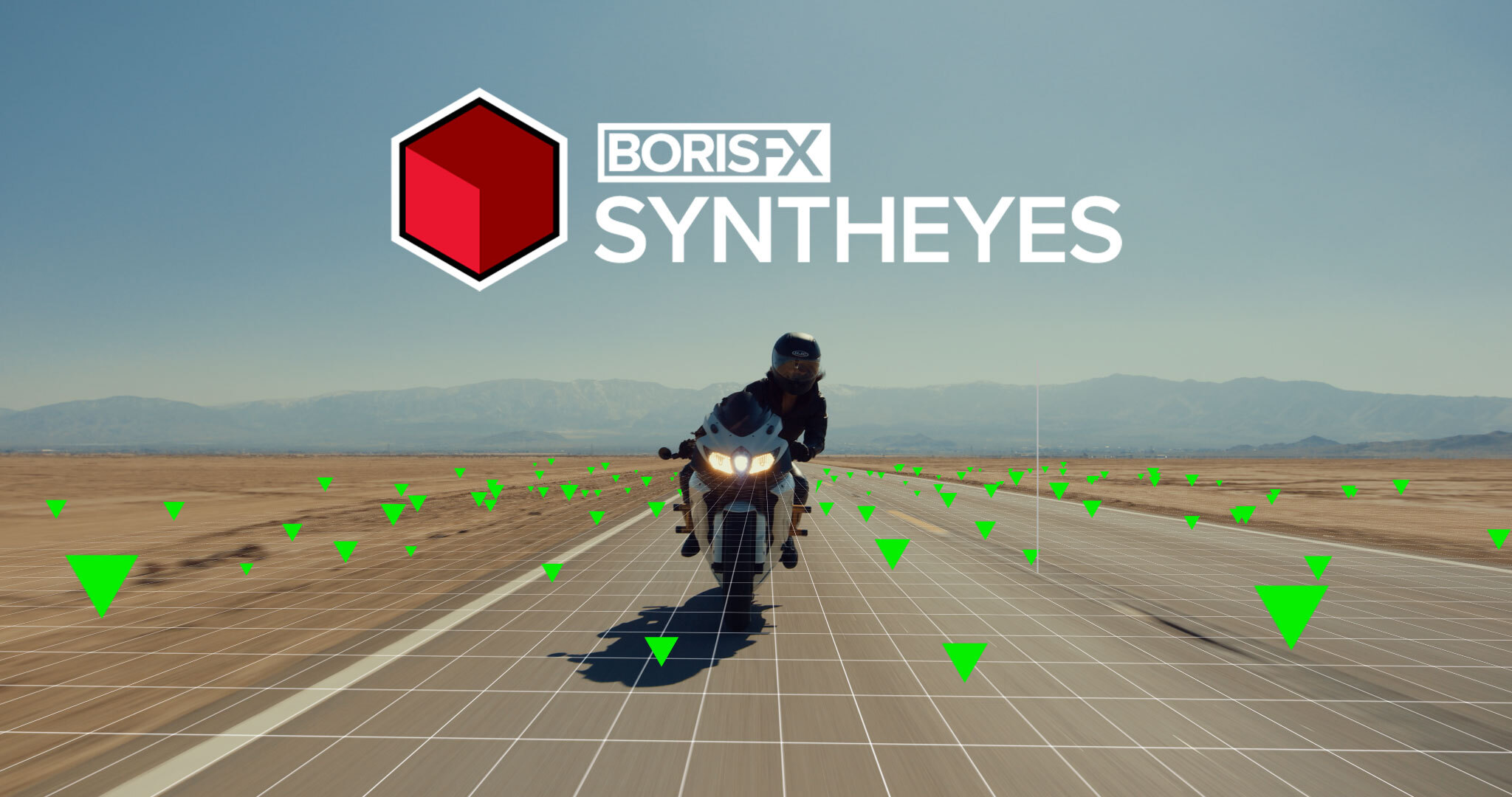
A post-production artist rarely begins the day hoping to rotoscope hair, repair wind noise, or solve a lens distortion. Those tasks are tollbooths on the way to the shot. Mocha Pro tracks flat surfaces and deforming objects so a graphic can stay attached to a moving phone, shirt, or wall. Silhouette gives roto and paint artists fine control over mattes and cleanup. SynthEyes reconstructs a camera's 3D motion so computer-generated objects sit in the photographed scene. Sapphire and Continuum provide effects, transitions, restoration, keying, particles, looks, and thousands of presets. CrumplePop and iZotope attack the equally stubborn problems in sound.
The distinction from an all-in-one editor is important. Boris FX usually does not ask a studio to abandon Adobe After Effects, Avid Media Composer, DaVinci Resolve, Foundry Nuke, Autodesk Flame, or Apple Final Cut Pro. It arrives inside those environments, bringing a specialist to the artist's existing desk. Several products also run alone. Compatibility is not a footnote here; it is the distribution strategy.
A roll-up that leaves the labels on
Boris FX grew by writing software, but its more distinctive move was collecting focused products with loyal users. It acquired Imagineer Systems, maker of Mocha, in 2014. In 2016 it bought former competitor GenArts, bringing Sapphire into the same house as Continuum. Silhouette FX and Digital Film Tools followed in 2019. CrumplePop and SynthEyes joined in 2023. Then the perimeter widened: Sequoia, Samplitude, and Music Studio in 2025; VEGAS Pro, Sound Forge, and ACID Pro in March 2026; iZotope in July.
The portfolio is broad enough to look chaotic on a spreadsheet, yet the acquisitions share a pattern. Each product owns a hard, recurring piece of creative labor. Each has a name practitioners already know. Boris FX generally keeps that name, the core team, and the workflow while cross-pollinating technology. Mocha tracking appears inside other Boris FX products. Machine-learning work acquired with audio tools informs a wider roadmap. The Boris FX Suite bundles much of the catalog for customers whose jobs cross disciplinary lines.
Mocha makes tracking a cornerstone
Imagineer Systems adds planar tracking and masking that can travel through the rest of the portfolio.
Sapphire, Silhouette, and Optics fill the frame
Effects, roto, paint, compositing, and photography turn a plug-in maker into a post-production shelf.
Sound cleanup meets 3D camera solving
CrumplePop and SynthEyes bring two different headaches under one roof.
The shelf becomes picture and sound
MAGIX products and iZotope push Boris FX into editing, digital audio workstations, repair, mixing, and mastering.
“The worlds of audio and video are inherently intertwined.”Boris Yamnitsky, explaining the move into professional audio
What it costs - and what remains private
Boris FX is privately held, and the prices paid for its acquisitions are generally undisclosed. The customer math is easier to inspect. The company uses monthly and annual subscriptions, perpetual licenses, bundles, floating licenses, and multi-host plans. Current posted examples show Mocha Pro starting at $37 per month or $295 per year for a single host, with a $695 perpetual option. Sapphire starts at $80 per month, $545 per year, or $1,865 perpetual for Adobe and OFX or Avid hosts. Prices rise for licenses that span every supported host.
Software and setup
License fees, GPU and memory requirements, installation, updates, training, and the friction of another tool in the pipeline.
Manual artist hours
Keyframes, splines, paint passes, slipping tracks, noisy dialogue, failed handoffs, and the expensive rework that follows.
That pricing makes sense only against labor. In a Boris FX case study, Framestore described some shots in the animal stampede from Guardians of the Galaxy Vol. 3 as requiring about 75 days of rotoscoping per shot. Silhouette handled frame-by-frame wire removal and roto; Mocha Pro tracked areas for paint patches and shapes. Software does not make that craft disappear. It changes where the artist spends the next hour.
The company also sells continuity. Annual subscriptions and upgrade-and-support plans keep studios current as operating systems, graphics cards, and host applications change. Perpetual licenses appeal to buyers who want to freeze a known setup, while floating and multi-host options fit facilities where artists move between Avid, Adobe, Nuke, Resolve, and Flame. The Boris FX Hub centralizes installation and activation, and a deep library of tutorials lowers a different cost: the afternoon lost to learning what a specialized button means. This is conventional software economics wrapped around unusually specific craft knowledge.
What failed first, and what changed
The old failure was often the handoff. An editor needed a task the host application could not do well, so the shot moved to another system, another operator, or a stack of brittle manual fixes. Boris FX's original plug-in idea attacked that break. The later acquisitions reveal a second change of mind: one broad effects package was not enough. Specialists had solved tracking, roto, 3D camera work, and audio repair better than a generalist could. Buying those specialists was faster and more credible than pretending every problem belonged in Continuum.
AI has altered the mechanics, not the standard. Mocha Pro can generate an object selection or an animated matte from an initial input. Continuum can detect and obscure license plates. CrumplePop can separate stems or remove wind and echo. These tools offer a first pass that remains inspectable and editable. In professional work, that last clause matters. A confident wrong mask is not automation; it is a new cleanup job.
The customer spectrum is wider than the movie titles suggest. A solo YouTuber may use CrumplePop to rescue dialogue recorded beside traffic. A sports editor can apply Sapphire while color grading. A photographer can build a cinematic look in Optics. At the other end, a post house can pass Mocha tracking data into a compositing pipeline and manage licenses across workstations. The common purchase is not prestige. It is avoiding a reshoot, a hand-painted fix, or another round trip between departments.
The part worth copying
Own the annoying layer
Find a recurring, expensive chore inside a valuable workflow. Integrate where the customer already works. Preserve specialist brands after acquisition, then share technology underneath.
Skip the roll-up
If users want one simple app, native tools are already good enough, standards do not connect products, or acquired teams cannot keep shipping, the bundle becomes shelfware.
The playbook travels beyond film: buy tools that solve costly edge cases, keep the identity customers trust, and make the collection more valuable than the parts through interoperability. It works when customers repeat the task, quality errors are visible, and time saved has a clear price. It weakens for occasional creators who need one effect twice a year. Built-in features, a cheaper single-purpose tool, or a free editor may be enough.
Boris FX now sits in an unusual market position. Adobe, Blackmagic, Avid, Foundry, Autodesk, and Apple can be hosts, partners, and alternatives at once. Maxon's Red Giant line competes in effects and motion graphics; native trackers, roto tools, and AI features compete task by task. Boris FX answers with breadth across hosts and depth in ugly problems. Its catalog is not tidy, but neither is post-production.
That may be the company's clearest achievement. It turned invisible work into recognizable products without making the work itself invisible to the artist. The mask can still be adjusted. The track can still be corrected. The sound can still be judged. Boris FX does not sell a button labeled “Hollywood.” It sells a shorter route through the parts nobody puts in the trailer.