Bobby Tzekin has conducted the business of raising money in two rather different costumes. During Wisetack’s early fundraising days, he pedaled around San Francisco between meetings. Later, he raised a $45 million round while sitting at his computer in sweatpants. The bicycle required more exertion; the sweatpants appear to have delivered a respectable return.
He tells the second story with a joke, which is useful insurance against the solemnity of startup life. In 2019, while raising Wisetack’s Series A, he was belatedly watching Silicon Valley. The characters happened to be fundraising during his own most heated week of it. Finding his predicament so accurately satirized made the problems easier to bear. Even a difficult investor meeting loses a little grandeur when television has already written the scene.
Today, Tzekin is CEO and co-founder of Wisetack, which puts financing inside the software used by service businesses. Its territory includes plumbing, electrical work, home improvements, and car repairs. These are purchases with a stubborn physical existence. A pipe cannot be repaired by clicking “add to basket,” however confidently the internet recommends it.
A summer internship with a seven-year extension
Tzekin grew up in Bulgaria and moved to the United States for college in 1996. He has said he had not heard of the internet before arriving. That makes a career spent building internet financial products a particularly pleasing turn of events. His route into the industry began with an introduction rather than a childhood declaration of purpose.
He studied economics at Pomona College, began his career at Bain & Company, and earned an MBA at the University of California, Berkeley. Consulting gave way to a different sort of apprenticeship. In business school in 2004, a friend asked whether he wanted to apply for a summer internship at PayPal. He did, and stayed for seven years.
PayPal was smaller then, and the work changed as the company grew. Tzekin entered through a general business role and found his way into product management, a profession he had not previously known. The job emerged through doing it. His later description of his career as organic seems less like retrospective modesty than a fair account of the evidence.
“My career has been very organic”
Bobby Tzekin, 2023
At PayPal, he worked across product management, general management, and strategy. He launched online payment products in multiple countries and managed products within its merchant services business. In December 2011, YapStone announced his arrival as vice president of product management, with responsibility for products, features, and pricing for RentPayment. An internship had become a working education in moving money.
The useful education of changing jobs
The next stage brought payments and lending into the same field of view. Tzekin went on to lead product teams at YapStone, LendingClub, and Mosaic. Each served a different part of financial life: online payments, consumer lending, and financing for clean energy. By the time he started Wisetack, he had worked on both how a purchase gets paid for and where the money comes from.
At LendingClub, where he began leading product in 2013 and spent four years, he saw an application for ideas developed in payments. Technology and risk techniques could help lending operate differently, too. He also saw what access to less costly credit could mean for a borrower. Those two interests, the machinery and its consequences, became part of his argument for starting a company.
His official biography now counts more than twenty years spent building fintech products and teams. The sequence matters more than the total. Wisetack required a founder who could understand merchants, software partners, and lending operations together. Tzekin’s previous jobs had supplied different pieces of that problem, without having been arranged as a tidy preparation course.
The checkout that came to the house
By 2018, buying something online increasingly came with a choice about how to pay. Installments had become part of the checkout experience. Tzekin saw a gap elsewhere: the small businesses delivering services in person had largely missed out on those improvements. The electrician and the online retailer could both present a substantial bill, but their payment tools looked rather different.
One development made the gap more approachable. Service businesses were adopting software to schedule work, manage customers, and collect payments. Tzekin saw those existing systems as a route to the businesses themselves. Financing could arrive inside a tool a contractor already used, at the point where a customer was deciding whether to proceed.
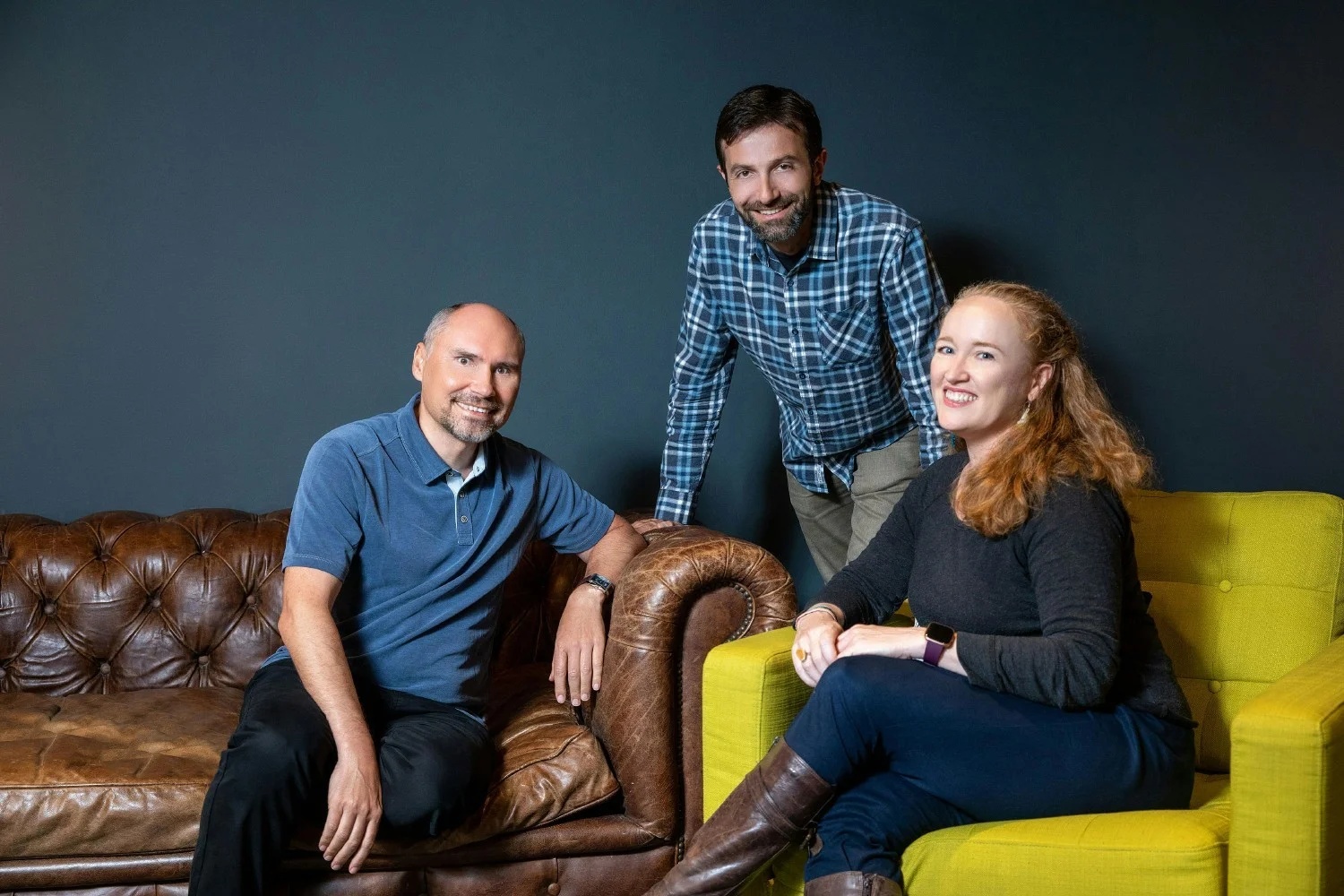
He founded Wisetack in 2018 with Kolya Klymenko and Liz O’Donnell. The team brought previous experience in payments, lending, and technology. The company was incubated at Greylock and launched its product in 2019. Early software relationships included Housecall Pro and InvoiceASAP; Jobber became another partner. Distribution was built around the working day of the small business.
- The jobA service business prepares the project or repair.
- The familiar softwareFinancing appears within the business’s existing tools.
- The payment choiceAn eligible customer selects a bank-provided installment option.
The arrangement gives Tzekin several customers to think about at once. A software company needs an integration that works; a merchant needs a usable payment option; a borrower needs to understand the offer. The bank supplies the loan. Making the experience feel straightforward means getting these separate interests to cooperate. There is considerably more diplomacy behind a payment button than its dimensions suggest.
A small team’s test: does anybody enjoy using it?
In late 2019, Wisetack processed its first fully automated loan with fewer than ten people on the team. Tzekin later described the pleasure of hearing that employees at an early merchant could use the product easily. For a company selling financial infrastructure, this was a practical verdict. The person using it had a business to run and little reason to admire the plumbing inside the software.
He returned to that theme when announcing the $45 million Series B led by Insight Partners in 2021. The previous year had involved careful hiring, watching risk, gathering customer feedback, and improving integrations. By late 2020, the company had begun surveying merchants and borrowers. In his 2021 account, its Net Promoter Score was 77, and more than 80 percent of respondents rated the experience nine or ten.
people on the team when Wisetack processed its first fully automated loan in late 2019.
These were company-reported measures from an early period, but they show what he wanted to measure. Alongside growth, Tzekin kept returning to whether the experience made sense to the people using it. A product can be technically accomplished and still make its customer feel foolish. His writing suggests he regards that as an expensive design mistake.
The bicycle gives way to the team
As the business grew, his own work changed. In an account of Wisetack’s culture written when the team had more than 130 people, he described concentrating on the most important problems, assembling the right team, and creating an environment where it could deliver. The founder cycling between meetings had become responsible for how other people could do their work.
“I want us to be a life-changing place for the people who work here,” he said. It is an ambition that reaches beyond recruiting language into management: people need room to take responsibility if the experience is going to change them. Wisetack operated remotely for most of its existence, making that question less about an office and more about how information and decisions travel.
His advice to software companies considering financial products carries a similar practicality. Understand the customer’s problem. Recruit people who know risk. Include sales, marketing, finance, and customer support. Keep measuring after launch. In a discussion of that work, he offered a compact warning: “It takes more commitment and planning than you expect.” An integration may be a software project; operating it becomes a continuing obligation.
Back to LendingClub, by another route
The partnership strategy continued to develop. Citizens announced a relationship with Wisetack in June 2023. U.S. Bank joined as a lending partner in January 2025. Between those announcements, Wisetack raised a Series C led by Quadrille Capital in 2024. The company ranked No. 21 on the 2024 Inc. 5000 and No. 15 on that year’s Deloitte Technology Fast 500.
Then came a connection with a particular resonance for Tzekin. In April 2026, LendingClub announced it had begun underwriting and originating home improvement loans through Wisetack, and had invested in the company. The announcement described a platform reaching more than 40,000 contractors. His former employer was now financing purchases through the company he had co-founded.
In May 2026, Hatch Bank also announced an expanded commitment to its Wisetack partnership, which dated to 2020. June brought Wisetack’s announcement of a $65,000 financing limit and lower rates for seven- and ten-year terms. The direction was toward supporting larger home projects, with banks participating through the network of software and merchants the company had assembled.
Tzekin has named an appetite for learning as a requirement for working in financial technology. His own route gives that advice some texture: Bulgaria, an American college, consulting, a chance internship, and a succession of product jobs before founding. The ambition at Wisetack is similarly concrete. Bring payment choices into the places people already do business, and make them understandable when a substantial bill arrives. The language may be fintech. The occasion is still someone’s house, someone’s repair, and someone deciding how to pay.
Keep the conversation going
More from Bobby Tzekin and the people building Wisetack.
Wisetack Company website ↗Bobby on LinkedIn Follow his updates ↗Why we started Wisetack His founding account ↗Fintech for the Real World Watch the Greylock conversation · recorded 2021 ↗Payments on Fire, episode 202 Listen to the 2023 interview ↗How Vertical SaaS is Approaching Fintech Watch the Mainsail webinar ↗The bank partnership strategy Read the Banking Dive Q&A ↗A return connection with LendingClub The April 2026 announcement ↗