At fourteen, Peter Hazlehurst received a career lesson from someone unlikely to have had a view on banking software. He was playing second piccolo during a school work experience week with the Sydney Symphony Orchestra. The conductor wanted more volume. The instruction, delivered with considerable force and an expletive, was to make mistakes big enough to be heard.
It is an appealing origin for a technology executive: a small instrument, a large room, and an adult impatient with excessive caution. Hazlehurst kept the lesson. Trying something audibly imperfect was preferable to performing so discreetly that nobody noticed. Decades later, he would still return to that encounter when discussing what children, founders and teams need permission to do.
His working life has supplied plenty of occasions to test the proposition. He helped build banking software before the word fintech became fashionable, worked on Google Wallet, ran payments at Uber, and co-founded Synctera in 2020. The recurring task has been to make financial machinery usable by people who have other things to get on with.
That career also contains a useful complication. An orchestra can survive an adventurous piccolo. A banking system must account for somebody else’s money. Hazlehurst’s story lives in the space between those obligations: give the builder room to try, then take the consequences of the building seriously.
Canberra, a keyboard, and an appointment for lunch
He grew up in Canberra. His early employment was with the Australian Quarantine and Inspection Services, and his university detour included a first year studying law at the Australian National University. He later earned an MBA from the University of Maryland. The route into software was less ceremonious than a prospectus might prefer.
In his government job, he was entering handwritten quarantine reports. A typing error, made while hurrying to take a girl to lunch, presented an irritating choice: repeat the work, or find a way around it. He taught himself enough programming to fix the problem. The immediate attraction was freedom from a tiresome task. An entire career followed the shortcut.
In 1993 he moved to the United States to work on his first startup, building the Phoenix core banking system. Core software handles the underlying business of accounts and transactions, far from the attractive surface that customers see. It was an education in the part of banking that remains after the launch party has ended.
Phoenix endured. Years later, Hazlehurst was still talking about community banks using the system. For someone accustomed to technology’s brisk replacement cycle, banking offered an unusually patient clock. Software could be described as modern while carrying three decades of accumulated working life. The person building it had to think beyond the next demonstration.
- 1993Phoenix
Core banking - GoogleWallet
Tap to pay - UberMoney
Driver services - 2020Synctera
Banking infrastructure
The phone, the driver, and the money between them
His subsequent roles read like a tour through the devices and services that changed everyday transactions. He led product work at Nokia in enterprise mobility and mobile email, became chief product officer at Yodlee, held senior payments responsibilities at Google, and served as chief operating officer at Postmates. The companies differed; the work repeatedly brought him back to the connections underneath a service.
At Google, he worked with the team launching Google Wallet and tap-to-pay experiences. A phone could become something a customer presented at a checkout. Making that gesture feel ordinary required arrangements among technology companies, card networks and banks. His responsibilities also included being CEO and a board member of Google Payments Corporation.
One small episode captures the negotiation involved. A partner bank wanted to approve every marketing message. Google’s systems adjusted messages dynamically. Hazlehurst described resolving the problem by showing the bank the possible variations and how they could change. The bank needed oversight; the product needed to operate. Understanding each side’s requirements made a workable agreement possible.
At Uber, where he led Uber Money, the stakes became particularly immediate. Riders and diners paid on one side of a marketplace; drivers and couriers earned on the other. In its 2019 earnings discussion, Uber identified faster access to drivers’ earnings as a central aim of the money team’s work. Payment timing was part of the service people experienced.
The driver banking project also offered evidence about usefulness beyond Uber itself. Hazlehurst later said that a fifth of the money entering the debit-card product came from work outside Uber. Drivers had chosen to route other earnings into it. For a product leader, voluntary repeat use is a more interesting compliment than applause at a conference.
Yet even inside a large technology company, launching banking products demanded an enormous collection of people and relationships. Lawyers, compliance specialists, engineers and product teams all had work to do. Hazlehurst came away with a question that would become his next company: how could a smaller builder attempt the same thing without assembling an Uber-sized organization?
“I love building things.”
Peter Hazlehurst
A matchmaker with a ledger
Synctera brought Hazlehurst together with fellow co-founders Kris Hansen and Dominik Weisserth. Its public launch in December 2020 came with $12.4 million in seed funding, led by Lightspeed. The business connected community banks with fintech companies and supplied technology to help them launch and operate financial products together.
There was a practical mismatch to solve. A fintech might understand a particular customer group and have an idea for serving it, while lacking a banking partner. A community bank might have the license and banking expertise, while lacking the technology resources to build every new experience itself. Synctera’s job was to help those capabilities meet.
The match required judgment. Banks have different appetites for risk and different preferences about the businesses they support. Connecting software is only part of the work. A relationship also needs operating rules, information both parties can inspect, and a realistic understanding of who is responsible when something needs attention.
Hazlehurst’s interviews make clear that he takes the customer group seriously. He has argued that an established connection with a defined community can give a financial product a reason to exist. Uber already had its drivers. Other businesses have their own customers, workers or merchants. The opportunity begins with understanding what those people actually need.
The company’s early customers also offered a corrective to tidy startup forecasts. In a 2023 conversation, Hazlehurst recalled four prospective pet-focused banking businesses arriving in the same early period. One, Sincere, survived. There is a certain comic abundance in four pet-banking pitches; there is a less comic lesson in how many young companies fail to reach the next stage.
His approach to community banks has also included connecting them to existing tools. A partnership with Plaid addressed account verification when customers moved money between institutions. It was familiar territory from his Yodlee years: an apparently simple transfer relies on knowing whether the person at the keyboard can legitimately access the account.
Banking expertise
Operations & oversight
Product experience
Protect is a product requirement
By March 2026, Hazlehurst was looking back at an original company name, Entangle, and an early ambition centered on risk and compliance. That narrower idea had expanded into a platform for running financial products. He remembered early fundraising slides beginning with the word “Protect.” It is a restrained opening for a venture presentation, and a revealing one.
He also acknowledged losing deals to cheaper alternatives. Some customers later returned. The account is his own assessment of the company, rather than a guarantee about any banking platform, but it makes his priorities explicit. He wants the operational work to count as part of the product, even when a less expensive offer is easier to sell.
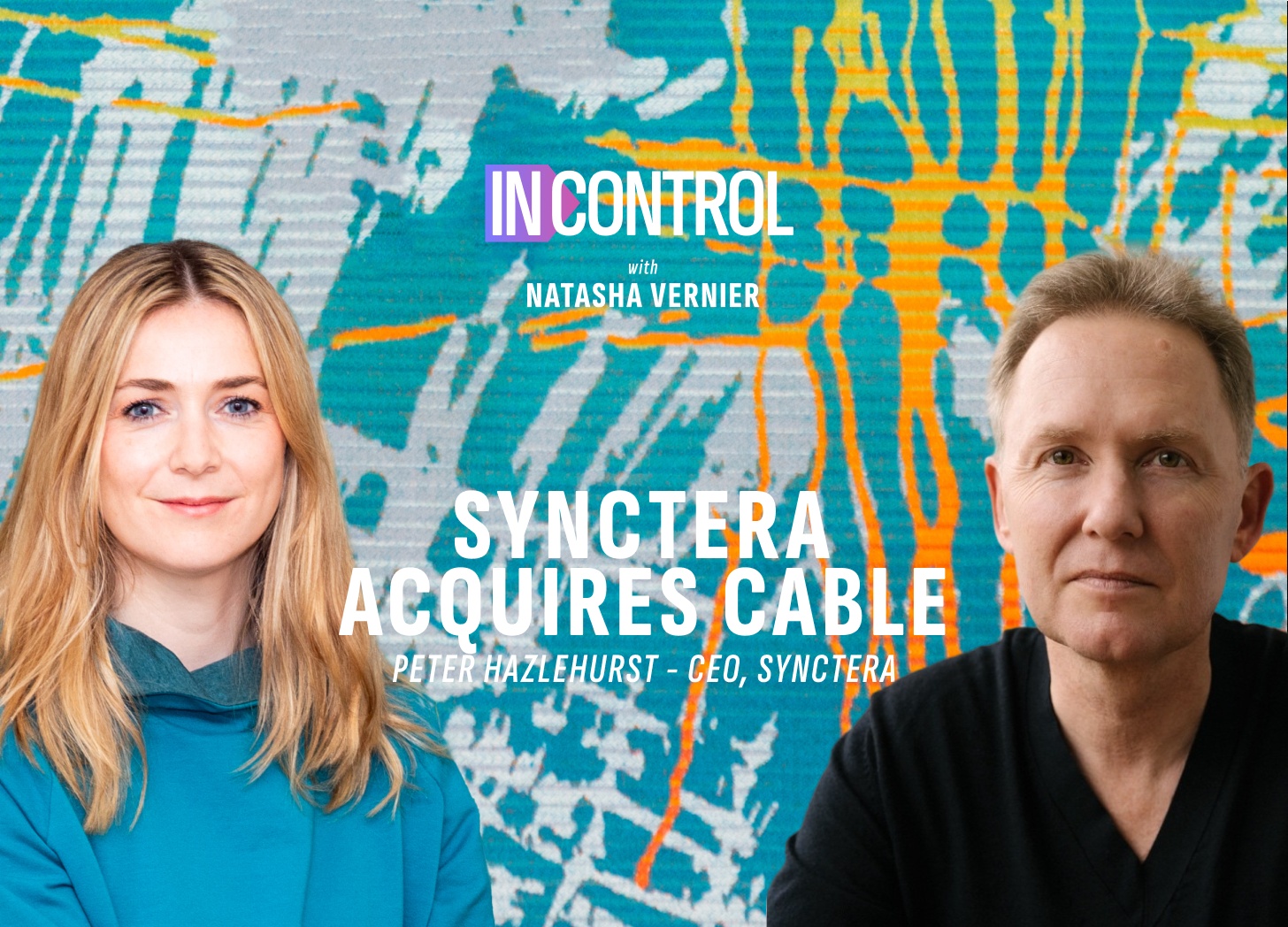
In April 2026, Synctera acquired Cable, the compliance testing company co-founded by Natasha Vernier. The distinction between the two businesses mattered. Synctera supplied tools used to execute banking and compliance processes. Cable checked whether controls were actually functioning as intended. Operating a process and independently testing it answer different questions.
The acquisition announcement said Cable would remain available as a standalone product, with continued investment as well as integration into Synctera. Its customers already included banks and fintech businesses. For Hazlehurst, the deal extended an argument he had been making for years: the responsibilities of a technology provider continue after it has delivered the technology.
That argument has a human foundation. People depend on the balance they see and on the payments they expect. Good intentions in a product meeting cannot substitute for reliable records and working controls. His choice of business puts him among the people responsible for that unglamorous, consequential work. A ledger has little use for a charming explanation.
A real customer is harder to simulate
His latest proposal returns to the small builder’s problem. On October 19, 2026, Hazlehurst announced the waitlist for Synctera Labs, a launch platform intended to put financial product ideas in front of real customers using real money. The full program is planned for February 2027. It remains a forthcoming offering, with terms and use cases subject to approval.
The published starting price is substantial: a $60,000 annual platform fee and a $10,000 fraud loss reserve, both prepaid. The proposed scope includes accounts, deposits, transfers, ACH and debit cards. Its purpose is to let a company learn whether customers use a product before committing to a custom program. Those are concrete boundaries for an experiment, rather than a promise that experimentation is free.
The question beneath Labs is familiar from his earlier work. A technical demonstration can establish that software behaves as expected. It cannot establish that a customer cares. Hazlehurst has spent much of his career trying to shorten the distance between an idea and that encounter with actual use.
Outside the product discussions, his interests resist the uniformity of an executive biography. He enjoys cooking for friends and family, reads spy thrillers, and has spoken about visiting Pelican Bay with a prisoner advocacy group to help incarcerated people prepare for life outside. Those relationships broaden his account of perseverance beyond the startup world.
The boy with the piccolo wanted to be heard. The programmer wanted to get to lunch. The executive now spends his time on the work that lets other people build something customers can use. There is a pleasing progression in that: an early lesson in making a sound, followed by a long apprenticeship in making things hold together.
Both prepaid. Full launch planned for February 2027; approved use cases and final agreements apply.