COMPANY Gaming Hardware · Peripherals · Taiwan → California
The Budget Gaming Brand Betting Its Whole Pitch on 0.2 Milliseconds
A4Tech has sold computer mice since 1987. Its Bloody line skips the metal contacts inside a switch and fires on a beam of light instead - then sells the result to gamers who won't pay Razer money.
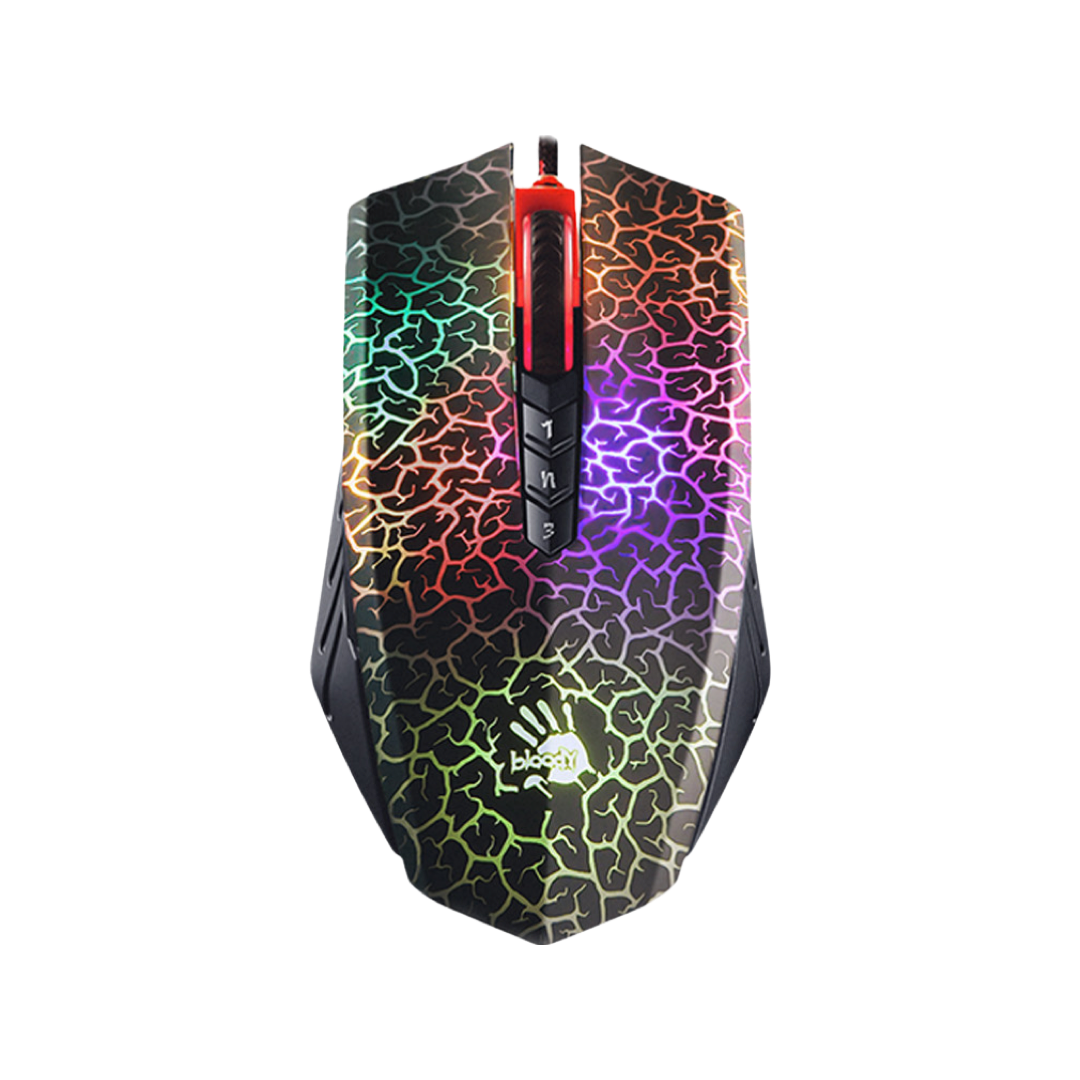
Inside every gaming mouse there is a tiny argument between speed and metal. Press the button and two metal contacts snap together; the tiny bounce that follows has to be filtered out in software before the click counts. Bloody Gaming - the gaming brand of the Taiwanese peripheral maker A4Tech - decided the metal was the problem. So it removed it. In a Light Strike switch there is nothing to touch. A press interrupts a beam of infrared light, a sensor notices, and the click registers. The company puts the number at 0.2 milliseconds, with no debounce delay to clean up after.
That single design decision is the entire personality of the brand. Bloody does not try to out-cool Razer or out-ecosystem Logitech. It picks one metric gamers already believe in - response time - engineers a real lead on it, prices the gear well under the famous names, and lets the spec sheet do the arguing. Most of its mice and keyboards sell between $25 and $60.
01A mouse company that got bored
A4Tech was founded in Taiwan in 1987 by Robert Cheng, and its very first product was the computer mouse. For decades it made unglamorous, dependable peripherals for offices and homes. That is a long time to make roughly the same object. In 2011 the company spun up Bloody as a dedicated gaming brand and, the following year, gave it a reason to exist: Light Strike optical switches. What happens when a firm has iterated on one product for 35 years is that it stops tweaking the shell and starts rebuilding the mechanism.
The parent still does the heavy lifting - manufacturing, R&D, and a workforce of roughly 2,500 - while Bloody carries the gaming identity. In the US, the operation is deliberately lean: a small team running sales, marketing and distribution out of Chino Hills, California, closer to the warehouses than to Silicon Valley.
02The physics, in plain English
A traditional mechanical switch is a spring and two pieces of metal. It works, it has worked for decades, and it has one nuisance: contact bounce. Bloody's fix is to route the signal through optics instead. Here is the whole idea, minus the marketing:
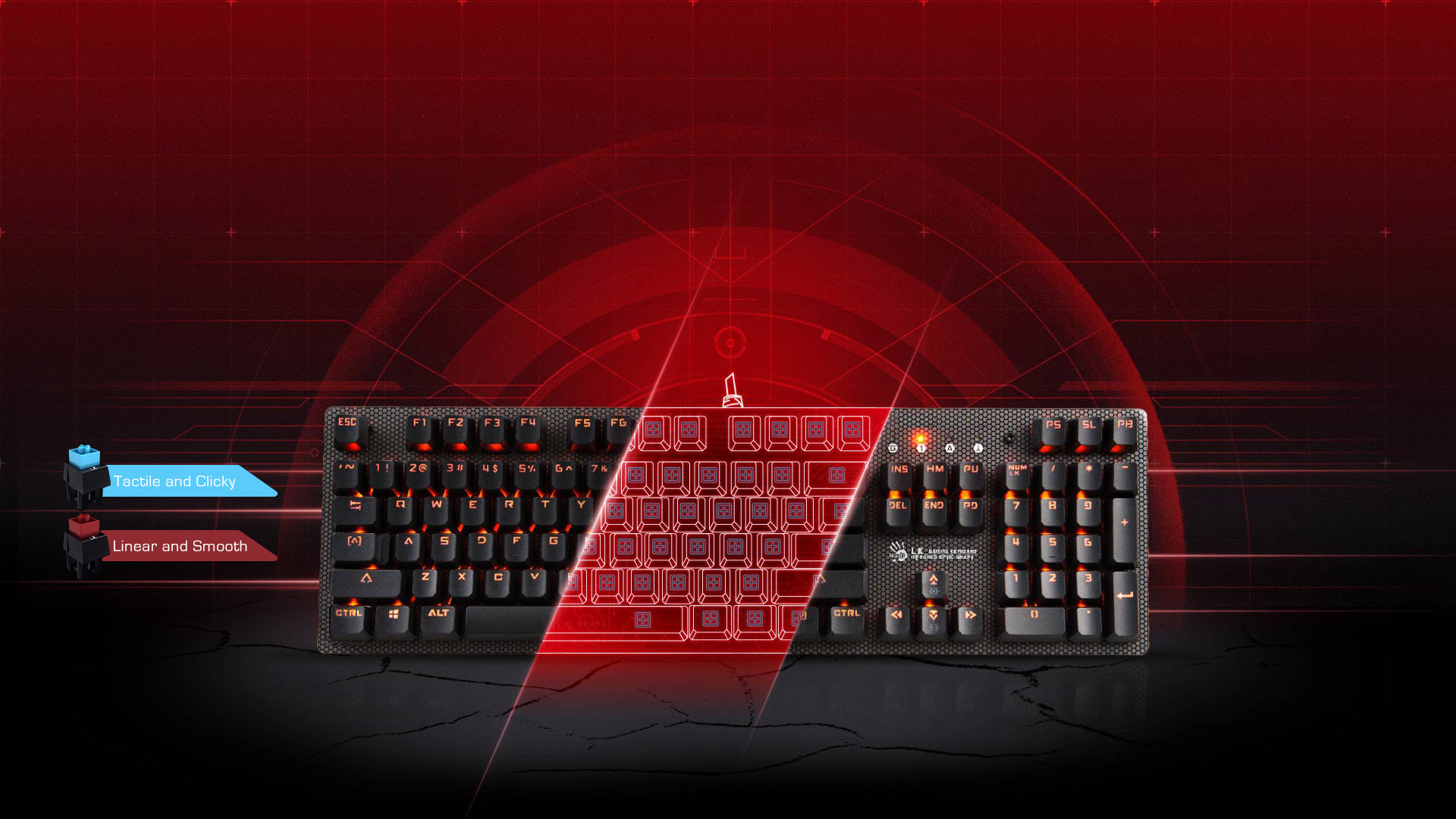
Because nothing physically touches, Bloody advertises two things a metal switch struggles to promise at once: an ultra-fast, jitter-free actuation, and a very long life - the optical keys are rated past 100 million presses. The same principle sits under both the keyboards and the mouse buttons, and even the scroll wheel on some models, which reads its position optically too.
03Optical vs. mechanical, where it counts
The honest version: at the budget tier, the response gap is real on paper and subtle in the hand. Competitive FPS players are the audience most likely to feel it, and they are exactly who Bloody markets to. Here is the comparison the brand leans on, drawn as it is usually pitched.
04The lineup, and one odd business idea
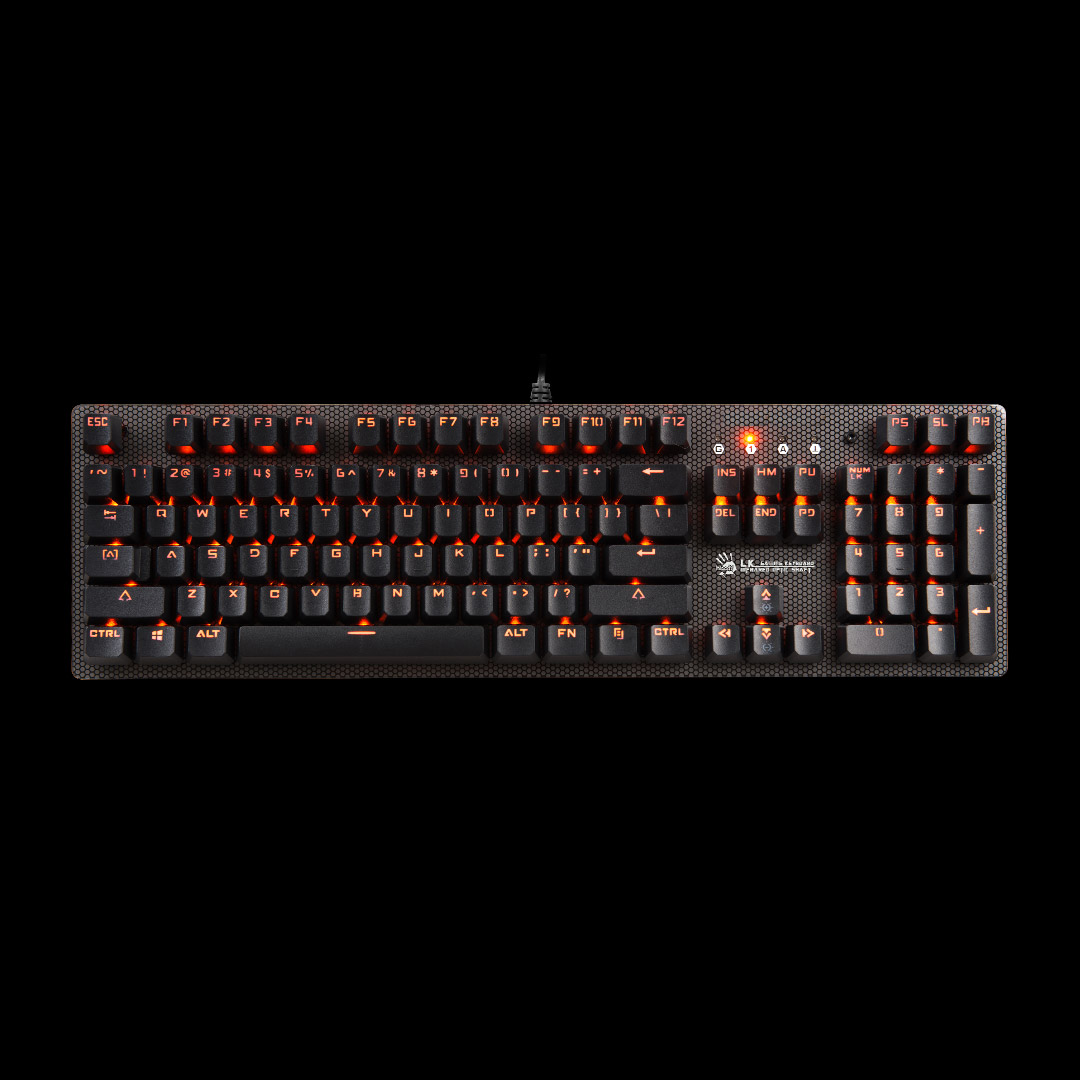
The catalog splits cleanly. Mice come in a wired V series and a wireless R series - the A70 and A70 II, the V7 and V8, the ES9 Pro, the R80 on a proprietary RF channel. Keyboards run from full optical boards like the B820, B800 and B760 down to clever hybrids like the B188, which spends its pricier optical switches only on the eight keys a gamer actually mashes and uses cheaper rubber domes for the rest. Headsets, pads and accessories fill out the shelf. Everything is tuned in Bloody7, the companion software, with onboard profiles so your macros travel with the mouse.
Then there is the part gamers actually argue about. Some Bloody mice ship with their advanced FPS features - recoil control, aim helpers, headshot modes - locked, and you activate higher "Core" levels through the software. It is an unusual model: sell the hardware, then gate the spiciest firmware behind an unlock. Fans call it flexible. Skeptics call it paying twice. Either way, the mouse keeps selling, which is its own kind of answer.
05Who buys it - and who doesn't know yet
Bloody's map is lopsided. It is a familiar name across Asia, the Middle East, Eastern Europe and Latin America, and a near-blank in the US and EU, where Razer and Logitech own the mindshare. Reviewers who do find it tend to land in the same place: strong value, genuinely fast switches, underrated brand. The gap is fame, not hardware - which is precisely the gap a bargain hunter exploits. You are buying the technology the expensive brands charge a tax for, minus the tax.
06Where it would not work
Bloody's playbook has edges. If you want a status product, the missing logo is the whole point and no spec sheet fixes it. If you live inside a single-vendor ecosystem - one app, one dongle, one lighting standard across mouse, keyboard and headset - a value brand's software will feel thinner. And the "Core" unlock model, whatever its logic, adds a step that premium rivals simply do not ask of you. The pitch is unbeatable for the buyer who reads the numbers and shrugs at the badge. For everyone shopping on brand, it barely registers - which is the market's gap, and Bloody's whole opening.
What is copyable here is not the switch. It is the discipline: own one measurable thing your buyer already cares about, build a real lead on it, price under the incumbents, and let independent reviewers do the convincing. A 1987 mouse company has been running that move for over a decade, out of a warehouse in Chino Hills, one 0.2-millisecond click at a time.