The most revealing item on the Blakely-Early County Chamber of Commerce benefit list may be the car wash. Members can get a $20 wash for $15. It sits there among legislative advocacy, business referrals, insurance plans, workshops, ribbon cuttings, youth leadership, demographic data, and the use of a conference room. A skeptic might call the list eclectic. A resident of a small county might call it accurate. Local economic life does not arrive in departments. It arrives as a person asking whom to call.
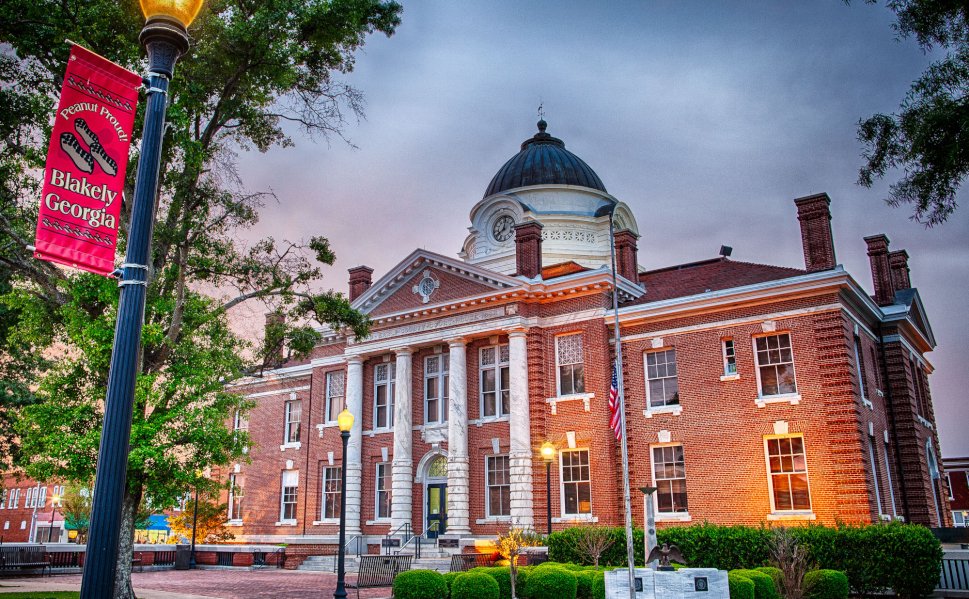
The chamber's answer is: start here. Its office at 214 Court Square is a welcome center, a business association, a promotional desk, an event convener, and an interpreter between institutions. The customers are not only merchants. They are schools, banks, manufacturers, governments, nonprofits, faith organizations, prospective residents, tourists, and young people trying to imagine a working life without leaving home.
The product is organized proximity
A directory is useful because it contains names. A chamber is useful because the names have relationships. When someone asks for a contractor, caterer, bank, bed, or boutique, the chamber says its policy is to refer members first. When a business opens, it helps coordinate the ribbon cutting. When a member has news, it can supply website and social exposure. When legislation affects commerce, the chamber describes itself as the local and state-level advocate.
That bundle explains the business model. This is a nonprofit corporation, not a venture-funded platform. Members pay tiered annual dues, sponsors contribute visibility money, and the institution pools the work that would be expensive or awkward to buy separately. The 2024 rate for a business with one to four employees was $135. At that price, the promise is not that the chamber will magically grow a company. The promise is that the company will be easier to find, harder to overlook, and less alone when public decisions arrive.
One membership, six jobs
Its closest competitors are mostly free: a recommendation in a Facebook group, a Google search, a call to city hall, a friend who knows a friend. The chamber cannot beat those tools on price. It competes on memory and trust. It knows which institutions are in the room, which business is a member, which public official handles a question, and which introduction might spare an owner three days of telephone tag.
“The Chamber works to provide your company with advantages not easily gained alone.”Blakely-Early County Chamber of Commerce
It learned to sell more than recruitment
The older chamber story was written in smokestacks. In 1960, its board endorsed a county bond referendum intended to finance incoming industry. The bet was direct: create a mechanism to land a large employer, then let jobs and tax receipts follow. Six years later, the chamber sponsored the dedication of Kolomoki Mounds as a National Historic Landmark. Even then, its remit was widening. Industry mattered, but so did the story a place could tell about itself.
By 2014, the published benefit package included mentorship, job shadowing, soft-skills training, and a program called BOSS - Businesses Offering Student Support. The progression is instructive. First, recruit the employer. Then promote the place. Then cultivate the people who can participate in its economy. In 2025, chamber leadership met with University of Georgia leadership students to discuss a mentorship program linking Early County students with business and industry professionals. In 2026, the chamber's board included a vice chair specifically for workforce development, and a local development column celebrated its first career fair under Executive Director Beth Chandler Noland.
The widening brief - an editorial reading of documented activity
The hardest recent reminder came in 2025, when Georgia-Pacific closed the Cedar Springs mill. The wider county response described a prospective $6.5 million loss in tax revenue and put worker support, retraining, industrial diversification, and redevelopment on the agenda. No chamber benefit coupon solves a shock of that scale. But a crisis reveals the value of relationships assembled before the meeting is urgent. The chamber board itself includes leaders from the Development Authority, city and county government, banks, schools, healthcare, industry, parks, and neighboring municipalities.
This is where the model works best: in a bounded place where repeated encounters matter, the members share public problems, and a central institution can convene people across sectors. It works less well when the network becomes a closed club, when referrals cannot be trusted, or when members cannot connect dues to visible help. A list of logos is not infrastructure. Someone must answer, introduce, follow up, and keep the directory honest.
The welcome desk is economic development
Look at the chamber's tourism pages and the boundaries blur again. Dining copy points visitors toward Blakely Chicken, homemade pimento cheese, coffee, and ice cream. Lodging runs from a national motel to cabins, a bed-and-breakfast, a plantation retreat, and farm stays at White Oak Pastures. Shopping, murals, geocaching, outdoor adventures, and local history sit beside relocation information and economic-development links.
To a visitor, this is trip planning. To a shopkeeper, it is foot traffic. To an employer recruiting from outside Early County, it is an answer to the candidate's spouse who asks what life will feel like. The same information performs three jobs because place marketing, talent attraction, and small-business promotion are the same puzzle viewed from different chairs.
There is no impressive technology behind this. The machinery is a phone number, a physical office, a directory, a board, a calendar, and accumulated social permission to make the introduction. That is precisely why the model travels. A town does not need an app before it knows its own network. It needs a reliable switchboard.
The little car-wash discount makes sense now. It is not the heart of the offer. It is evidence of the method. One local business gives another a reason to participate; the chamber makes the exchange visible; a small saving becomes one more thread in a denser web. Economic development is usually photographed with a shovel and a hard hat. In Blakely, some of it looks like five dollars off and a conversation on Court Square.