Blake Roney was sitting with investment bankers when his four-year-old son called. The bankers were serious. The caller had a different agenda. “Dad, this is Tannon. Uhm, can you come over and play?” Roney recalled ending the call and telling the room they should finish quickly. He had received an invitation he wanted to accept.
It is an unusually small scene for the co-founder of a company that crossed oceans and went public. No bell rings. Nobody signs a deal. A child simply assumes that his father might be available. Roney chose to retell it as a reminder of where family belonged in his life. The bankers, for once, had competition with a rather persuasive offer.
His career invites the usual accounting: a founding date, a stretch as chief executive, a longer stretch as chairman, awards. But his own account of success keeps returning to a more awkward question. Once you have built something that can occupy every hour, how do you decide which hours it deserves?
The family business, before it was a business
Roney was born in Santa Monica, California, and earned a bachelor’s degree in business finance at Brigham Young University. His route into business ran through people already close to him. In early 1984, his sister Nedra asked about making personal-care products without the fillers she disliked. He began contacting manufacturers. By June, Blake, Nedra, Sandie Tillotson and Steven Lund were selling products from her basement in Provo.
The practical details were less elegant than the ambition. There were homemade pamphlets. Bottles arrived bearing someone else’s labels, which the founders removed by hand. The enterprise depended on finding people willing to attend demonstrations, sometimes late into the night. Before there was an international distribution network, there was the problem of getting somebody into a room.
Lund brought legal experience and a friendship with Roney. The two had also met through church life. That overlap matters: the company grew out of existing relationships, with professional skills added to personal trust. Roney’s story begins with a sister’s question and a friend’s willingness to join him. Entrepreneurship can look remarkably domestic before it acquires an investor-relations department.
in Provo
and CEO to chairman
as board chairman
Provo gets a window on the world
At its beginning in 1984, Nu Skin had five employees, 18 products and 200 distributors. By early 1996, it employed more than 2,000 people and had more than half a million distributors worldwide. Those are historical snapshots, separated by about eleven years. Between them sits the work of turning a business conducted among acquaintances into an organization that could function at a distance.
The geography changed along with the scale. Canada opened in March 1990. Hong Kong followed in September 1991, Taiwan in January 1992, and Japan in April 1993. A company organized around personal selling was extending those relationships across borders. Each new market added another place where the original founders could no longer personally know everyone involved.
In 1996, Nu Skin Asia Pacific went public. The corporate structure subsequently evolved into Nu Skin Enterprises. For Roney, that year also marked a change of job: after serving as president and CEO since the founding, he became chairman, a position he held until 2012. The distinction is useful. The founder associated with the whole journey did different work at different stages of it.
Growth also brought scrutiny. Nu Skin entered an FTC consent order in 1994 addressing advertising and earnings representations. In 1997, the company agreed to a $1.5 million civil penalty to settle allegations that it had violated that order. The settlement did not constitute an admission of a legal violation. These episodes belong in the business history alongside the expansion: enthusiasm carried obligations when it became a public-facing sales message.
His university connections continued, too. Roney joined the BYU Marriott School’s National Advisory Council in 2000, bringing experience in marketing and product manufacturing back to the school where he had studied finance. It is a quieter entry on a résumé than an overseas expansion. Yet it traces another durable connection between the institutions of his early adulthood and the work that followed. Provo supplied more than an address; it supplied relationships he continued to maintain.
An uncomfortable word in the success formula
When Roney discussed achievement in 2012, his prescription was conspicuously repetitive. Decide what you want, work out the steps, work hard, persist, assess what is happening, and do it again. His choice of adverb is doing considerable work. It makes persistence sound less like a framed office maxim and more like an activity that might inconvenience you.
“You evaluate, adjust and rabidly persist some more.”
Blake Roney, 2012
He also warned that achievement in a narrow field could absorb so much attention that the wider life suffered. His proposed order was to decide what a successful life meant first, then fit professional ambitions inside it. Faith shaped that definition. The advice asks for something more demanding than a busy calendar with a family appointment squeezed into the margin.
There is humor in the way he delivers these lessons. Introducing a set of success workbooks, he recalled answering questions about his secret by saying “marrying my wife.” He then conceded that other people could hardly reproduce that particular strategy. Nancy could be part of his answer; she could not sensibly become everyone else’s business plan.
A graduation far from the boardroom
In a speech at the company’s 1993 annual convention, Roney described a vision of Nu Skin as a force for good. The phrase became part of the company’s vocabulary before the foundation existed. That sequence gives the words a particular meaning in his career. They began as an ambition for the business as a whole, rather than the name of a separate charitable organization. Establishing the foundation later gave one part of that ambition a formal home, while the broader claim remained attached to how the company conducted itself.
The language Roney attached to the company eventually acquired an institutional form. In 1996, he and the other founders established the Force for Good Foundation. He served as a trustee. The foundation gave employees, distributors and customers a structure through which to participate in charitable work, extending a company relationship into activity beyond selling.
One concrete chapter took place in Mtalimanja Village, Malawi. On June 18, 2011, 64 students completed a two-year program at the School of Agriculture for Family Independence. Husbands and wives graduated together. Roney attended alongside Malawi’s first lady, Callista Mutharika, and the school’s chairman, Napoleon Dzombe. The foundation provided funding for the school.
There was another appointment outside the familiar corporate hierarchy. Roney had been named chief of Mtalimanja Village. During a June visit to Zambia, the Chewa king presented him with robes for that role; Roney presented the king with a cow. The exchange makes a memorable addition to an executive biography. It also places the agricultural school in a community with its own institutions, leaders and ceremonies.
At SAFI, husbands and wives received their diplomas together. Roney attended the ceremony with local and national leaders.
France was a return, too
In 2012, Roney stepped away from the chairman’s role and became president of the France Lyon Mission of The Church of Jesus Christ of Latter-day Saints. France already had a place in his life: he had served there earlier as a missionary in the Toulouse mission. The later assignment returned him to the country with a different set of responsibilities.
He served in Lyon from 2012 to 2015. For someone whose public identity had been tied to a company since his twenties, the move provides a useful interruption in the corporate chronology. Religious service had appeared throughout his adult life, including as a bishop and stake president. Here it determined where he went and what he did for three years.
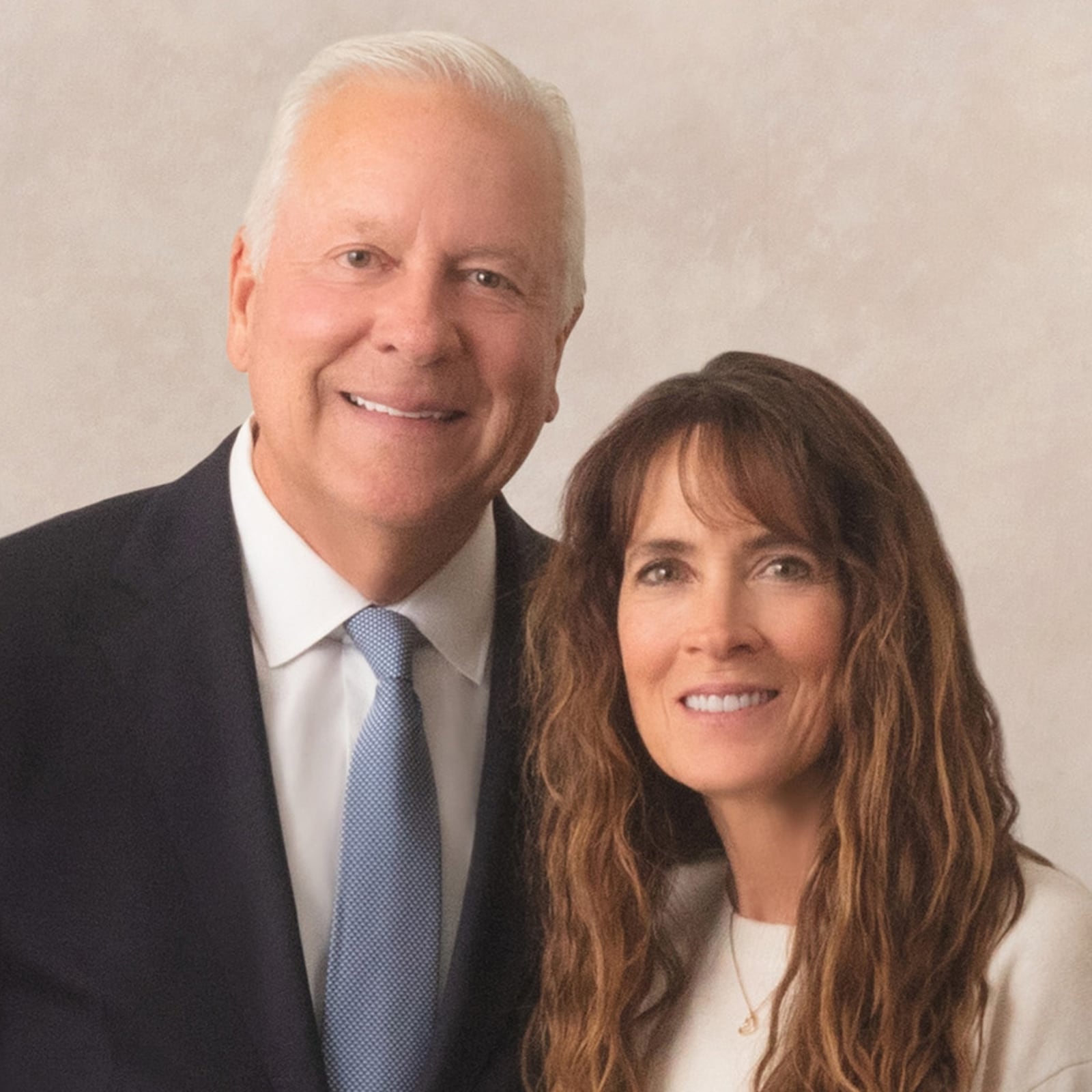
In February 2025, Blake and Nancy were called as president and matron of the Provo City Center Temple, with service scheduled to begin that September. The announcement set another chapter in the city where Nu Skin began. It also put the couple together in the public account, after years in which his business title had usually supplied the introduction.
The weather gets a vote
Roney’s activities have also included a more literal pursuit of a memorable experience. In April 2024, he brought a group of around 40 people to Central Texas for the solar eclipse. With cloud cover threatening the view, the group changed plans and left Waco aboard two private planes bound for Illinois. Even considerable resources could not negotiate with the forecast.
That episode sits comfortably beside the interests listed in his company biography: skiing, water sports, watching sports, and trying painting or the ukulele. These are modestly revealing details. They leave room for play, experimentation and family recreation in a life otherwise easily reduced to a sequence of formal appointments. A ukulele also offers fewer opportunities than a boardroom for mistaking solemnity for accomplishment.
Recognition has arrived from several directions. The International Business Awards named him Chairman of the Year in 2009. Utah’s EY Entrepreneur of the Year program recognized him with a lifetime achievement award in 2011. Provo’s mayor presented him with an Award of Excellence during the 2025 State of the City address, recognizing his contributions to the city’s economic life.
Roney’s work has traveled farther than the city where it started, while his public story keeps circling back to Provo, Nancy and family. The son’s phone call gives that pattern a human scale. For a moment, a room full of bankers had to make space for an invitation to play. In the version Roney chose to remember, the invitation mattered.