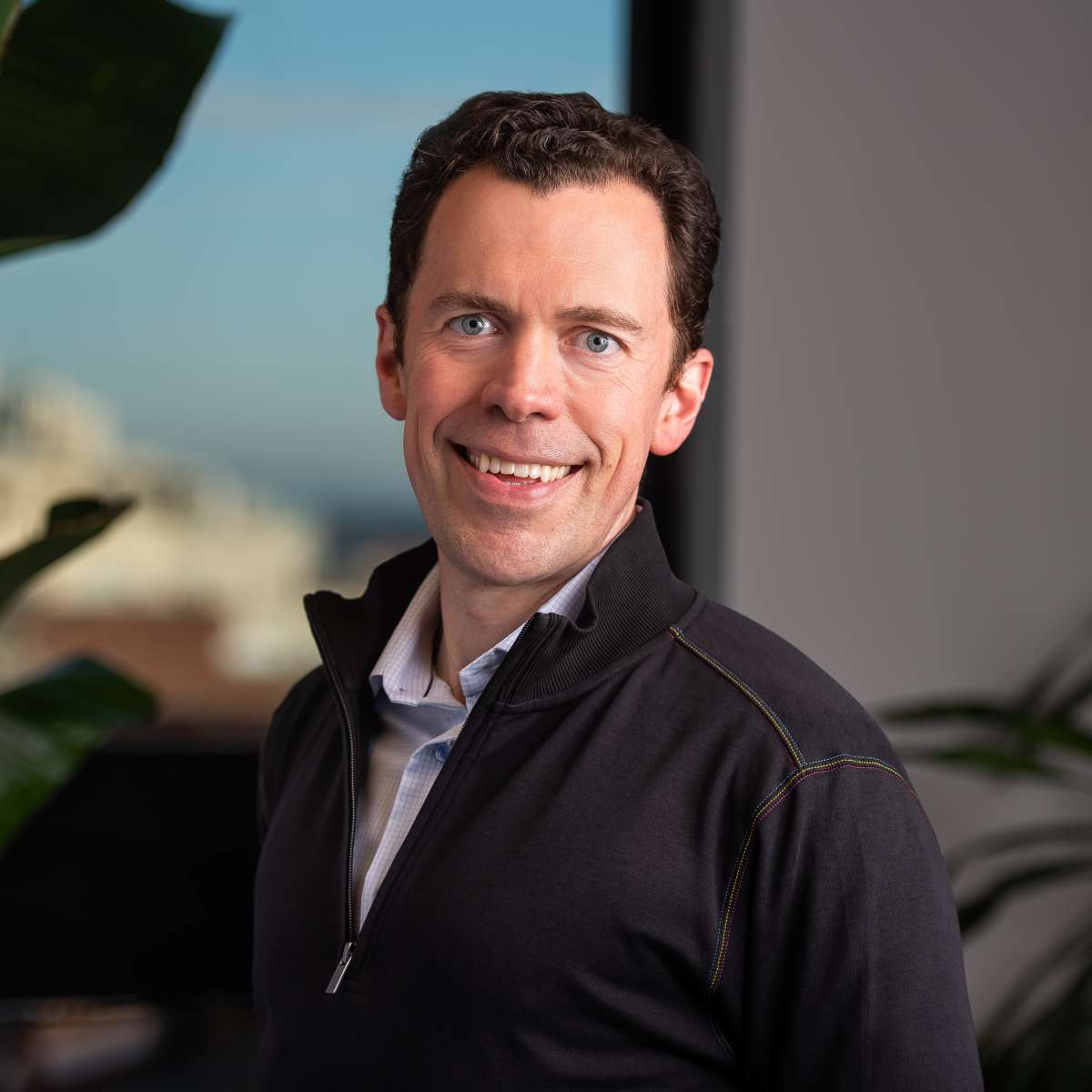
Two hundred and sixteen words. That's all it took for Lloyd Tabb to get Bill Trenchard's attention in 2012. Not a 40-slide deck. Not a product demo. Just an email outlining broader industry trends and what Looker was trying to do about them. Seven years later, Google wrote a check for $2.6 billion.
Trenchard knows what matters because he's seen both sides. The Microsoft acquisition at 23. The company that flatlined after six months. The brutal slog of building LiveOps to $100 million in sales while everyone else was still licking their dot-com wounds. By the time he joined First Round Capital in 2012 as their first external partner hire in six years, he'd already made the classic founder mistakes so others wouldn't have to.
What he brought wasn't just pattern recognition. It was process. The kind of methodical, write-it-down-if-you-do-it-three-times discipline that makes operators cringe and founders rich.
"For anything you do more than three times, write down your process in detail. Build playbooks that you can hand off to someone else, so they can execute something exactly the way you would."- Bill Trenchard
The Three-Company Education
Jump Networks made him confident. Microsoft's acquisition in 1999 meant Trenchard entered his mid-twenties with an exit under his belt and the dangerous assumption that startups weren't that hard. His second company corrected that assumption in under six months. Then came LiveOps.
Building a cloud contact center in 2001 meant explaining "the cloud" before anyone called it that. It meant scaling to hundreds of employees when most Valley companies were hemorrhaging staff. It meant learning that $100 million in sales doesn't happen because you're clever - it happens because you built systems that work when you're not in the room.
That operator DNA is what First Round wanted. Not another investor who'd read TechCrunch and pattern-match on pedigree. Someone who knew the difference between a founder who could pitch and a founder who could build.
The Pitch Assist Doctrine
Most VCs give fundraising advice. Trenchard built a bootcamp. The Pitch Assist program runs four to six weeks and doesn't mess around. Founders don't walk away with a polished deck and a pat on the back. They walk away with a narrative crystallized at the right level, a process-driven strategy, and the 10/90 rule burned into their brain: spend 10% of your time on the process, 90% executing it.
The framing meeting comes first. Not "let's refine your pitch." More like "what's the big story you need to tell, and why should anyone care?" Advisors don't observe - they build presentations side-by-side with founders. They rehearse. They kill darlings. They argue about which metrics matter.
"Don't trigger the bullshit meter. If the investor feels spun, you're done."- Bill Trenchard on fundraising
The results speak. First Round's portfolio companies have raised over $18 billion in follow-on funding. Not because they got lucky. Because someone taught them that fundraising isn't an art - it's a system you can optimize.
The Track Record
Before First Round, Trenchard was already building a founder-friendly reputation as an angel and partner at Founder Collective. He backed Uber early. Put money into IronPort before Cisco bought it for $830 million. Spotted PowerSet before Microsoft acquired it. By 2012, his pattern recognition was sharp enough that First Round broke their six-year hiring freeze to bring him on.
Notable Investments
- Uber (early angel)
- Looker → Google ($2.6B)
- Notion (workspace platform)
- Superhuman (email reimagined)
- Linear (issue tracking)
- Flexport (freight forwarding)
- Verkada (security cameras)
- Airtable (database platform)
- Rippling (HR/IT platform)
Investment Philosophy
Trenchard doesn't hunt for features. He hunts for categories. The companies he backs aren't trying to build a better mousetrap - they're redefining what catching mice means.
The criteria: founders who go unreasonably deep, who break problems down to atomic units, who obsess over mechanics others ignore. Not the ones with the smoothest pitch. The ones who can't stop talking about the tiny details that prove they understand the landscape better than anyone else.
The Looker Story
When Lloyd Tabb sent that 216-word email in 2012, he wasn't cold-emailing. Trenchard had known him since 2004, watched his track record, understood how he thought. The email didn't sell Looker - it encapsulated everything they were trying to do and all the things they'd get right. Context plus clarity.
First Round co-led the seed round that summer. Seven years later, Looker hadn't just grown from one customer to 1,700. They'd achieved something rarer: a 28-quarter streak of never missing their bookings plan. Not once. That's not luck. That's operational discipline built into the DNA from day one.
Google wasn't the only suitor. Microsoft and Amazon both circled. But by then, Looker had become exactly what Trenchard looks for - the inevitable victor of a huge market opportunity that was unfolding.
"The best founders go unreasonably deep. They don't just study a problem - they break it down to its atomic unit and live inside it. They obsess over the mechanics that others overlook, uncovering hidden leverage in the smallest details."- Bill Trenchard
The Cornell Connection
Before any of this, Trenchard was an undergrad at Cornell starting his first two businesses. Not side projects. Actual companies. Jump Networks - the web calendar that Microsoft bought - came from those years. So did the muscle memory of building under constraints, which would prove useful later when the dot-com bust turned venture capital into a punchline.
Now he's Vice Chairman of Entrepreneurship@Cornell and the Cornell eLab business incubator. Giving back, sure. But also recruiting. The best investors know talent compounds - find the ambitious 20-year-olds today, help them build for a decade, back them when they're ready to move fast.
What He Actually Does
Trenchard doesn't just write checks and show up for board meetings. He teaches the playbook approach to every founder who'll listen. Write down your process for anything you do more than three times. Turn tribal knowledge into transferable systems. Build a company that works when you're not the bottleneck.
The CEO time management philosophy is brutal in its simplicity: cast aside distractions, focus on what drives results. Not "prioritize better." More like "decide what actually matters and ignore everything else with extreme prejudice."
He reference-checks investors the same way they reference-check founders. Tells companies to mention why they want to work with specific VCs, not just take the highest valuation. The cap table matters. Alignment matters. Better to be selective than desperate.
The Trenchard Commandments
- Playbooks for anything done 3+ times
- 10% process, 90% execution
- Never trigger the BS meter
- Go unreasonably deep on problems
- Reference-check your investors
- Either fundraise or don't - no half-measures
- Focus ruthlessly, ignore distractions
Current Focus
B2B SaaS. Enterprise software. Developer tools. AI platforms. Fintech. The future of work. Anything where the founder understands the atomic unit of the problem better than anyone else in the room.
Recent bets include Cache (democratizing access to financial instruments for concentrated stock), AI healthcare platforms, and robotics companies architected for speed and field robustness.
The Failures Matter Too
That second company - the one that died in six months - shaped his approach as much as the exits. Trenchard talks about it openly. The highs and lows of company building. Selling to Microsoft at 23. Watching something fail spectacularly. Building LiveOps through the bust, struggling at first.
That's the education most investors never get. They pattern-match on success and miss the texture of what building actually feels like. Trenchard knows the difference between a founder who's hit adversity and learned from it versus one who's just been lucky so far.
It's why he gravitates toward second-time founders differently. There's plenty of first-time founder advice out there. But the nuances of building your second company - knowing when to reuse old playbooks and when to throw them out - that gets less attention. Trenchard gives it more.
The 2024 Portfolio
Verkada and Kentik get his board attention. Cache just raised a Series A with his lead. AI platforms for healthcare logistics. Robotics companies with foundation models for diverse daily tasks. He's not chasing trends - he's backing founders who spotted the opportunity before it was obvious.
The pattern holds. Find the person who's been thinking about this problem for years. Who goes deep on the mechanics. Who's building systems, not features. Who can articulate why now is the moment, but only after they've explained the problem in atomic detail.
"As a founder, you should either be fundraising or not - and if you are, it should be done with great intention."- Bill Trenchard
Why It Works
The Pitch Assist program. The playbook philosophy. The process-driven fundraising. It all comes back to one thing: Trenchard believes building companies is a craft you can systematize. Not the vision part - you can't teach someone to see around corners. But everything else? The fundraising, the hiring, the scaling, the operational discipline? That's learnable.
Most founders reinvent the wheel because nobody showed them there's a better way. Trenchard shows them. Then he backs the ones who take the system and make it their own. The ones who don't just copy the playbook - they internalize it, modify it, build on it.
That's the leverage. Not finding the next Uber. Finding the next founder who can turn 216 words into $2.6 billion because they understood the problem at a depth nobody else bothered to reach.
Trenchard's at First Round because he's seen what works. Early-stage chaos. Dot-com disasters. $100 million scale-ups. Billion-dollar exits. The full spectrum. And he knows the founders worth backing aren't the ones with the best pitch. They're the ones who've already started writing the playbook.