Bill Smith had already decided groceries were somebody else’s business. He was working on same-day delivery for big-box retailers, and people kept suggesting food. He resisted. Then he and his wife took their small children to Publix. There was crying. There was shopping. There was plenty of time to reconsider. A family errand supplied the argument that business conversations had failed to make.
The scene is useful because it punctures the tidiness of the Shipt story. In retrospect, a grocery delivery company sold to Target for $550 million looks like an idea with its destination printed on the box. Smith’s recollection is messier: an earlier concept struggled, a suggestion went unheeded, and an ordinary afternoon changed his mind. The shopping cart had become an unusually persuasive consultant.
That willingness to change direction runs through his career. Smith has sold phones, built a prepaid-card company, founded Shipt and started Landing, the furnished-apartment business. He remains anchored in Birmingham, Alabama, while pursuing services designed to work across the country. His subjects are familiar inconveniences: paying, shopping, moving, finding somebody who will pick up the phone. The ambition sits in how much of that inconvenience he thinks a company can remove.
A briefcase before a business plan
At five, Smith asked his parents for a briefcase. It is an excellent birthday request for a child who apparently found party bags insufficiently commercial. His father was an entrepreneur, and Smith liked accompanying him to work. By eleven he was working at The Country Mall in rural Alabama, where customers’ tabs were recorded in a spiral notebook. Business was something he could watch at close range.
He left school at sixteen and began selling cellphones. In his later account, his high-school counselor supported the decision rather than treating it as the end of his prospects. Smith’s father fielded his many questions about running companies. The story’s useful detail is the presence of adults willing to take the enterprise seriously. A teenage founder still needs people who will answer questions and extend trust.
Insight Card Services came before Shipt. It offered reloadable prepaid Visa cards and was acquired by Green Dot in 2014. That sale gave Smith room to finance another attempt. He had already experienced the less photogenic part of entrepreneurship: working out how an ordinary service reaches customers, collects money and keeps functioning. By the time groceries entered the picture, he was starting again with operating experience behind him.
The person picking the avocados
Shipt’s early grocery proposition was simple enough to explain without a presentation: order from nearby stores and have someone shop and deliver. The difficult part lived inside the shopping. An item could be unavailable. Produce could be disappointing. A household could care very much about a detail that seemed trivial to everyone else. The person walking the aisle had to exercise judgment.
By the time Target announced its acquisition in December 2017, Shipt’s network included more than 20,000 personal shoppers in over 72 markets. Smith described an operation in which the person selecting the items also brought them to the door. A customer who rated a shopper highly was more likely to be matched with that shopper again. Familiarity was being built into the transaction.
That helps explain what Target was buying. Its stores already held the merchandise. Shipt supplied software, shoppers and a way to connect the two to households within hours. The acquisition announcement set out plans to bring same-day delivery to roughly half of Target’s stores in early 2018. A company born from a household’s troublesome errand had become part of a national retailer’s distribution strategy.
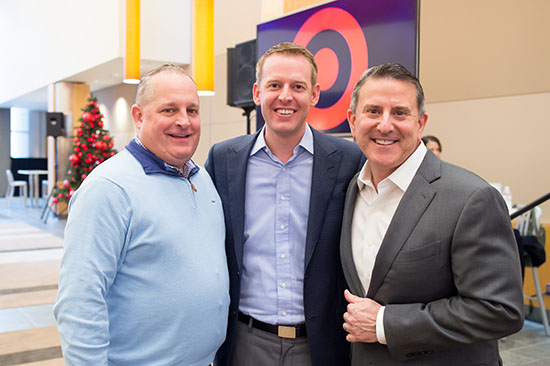
The purchase also contained commitments about place and continuity. Shipt would operate independently, keep its Birmingham and San Francisco offices, and continue serving other retailers. Smith stayed as CEO initially, reporting to Target’s chief operating officer, John Mulligan. The transaction gave him an exit while leaving a company, its people and its relationships with a future to negotiate.
In March 2019, Smith handed the chief executive role to Kelly Caruso. His farewell described a desire to return to pursuing ideas and building companies. Target, meanwhile, reported that Shipt-enabled same-day delivery had reached more than 200 markets across 47 states. His departure arrived after the business had acquired a much larger stage. There was another blank sheet waiting.
The idea nobody bought
After Shipt, Smith assembled six people he had worked with before. They called their group Caliza, borrowing the name of his favorite pool in his beach neighborhood. He had a list of 33 business ideas. The first experiment was Homesie, a home concierge service: send a text about a broken appliance or a plumbing problem, and the company would arrange a repair.
They built an initial product, launched a website and offered memberships for $99. After a couple of weeks of advertising, they had sold none. Smith closed the experiment. The detail deserves space beside the acquisition price. Experience, a capable team and an appealing explanation had produced no paying demand. A customer’s silence can be a remarkably clear piece of market research.
The group tried furnished apartments next. They prepared a few units at Birmingham’s 20 Midtown and advertised them on Craigslist. Those rented immediately. The difference gave the team a reason to proceed. Before Landing became a national network, it was a small number of furnished rooms and an answer to a practical question: would anybody actually want this?
Smith’s account of the early experiments. These are different measures of demand, not a revenue comparison.
Moving is an operations problem
Landing’s underlying frustration was personal too. Smith’s 2016 move with his family from Birmingham to San Francisco had involved Craigslist listings, paper applications and a cashier’s check. For someone building a service around the convenience of ordering groceries on a phone, renting a place to live offered a rather pointed contrast. The administrative machinery was difficult to ignore.
Founded in 2019, Landing offered furnished apartments through a flexible membership model. The promise extended past finding an address: furniture, utility arrangements and the difficulty of moving between cities were part of the problem. A renter wanted to arrive and begin living. Smith was trying to organize the sequence of tasks that stood between those two verbs.
Then came a lesson that Shipt’s successful sale could not provide in advance. Landing grew quickly, but Smith later acknowledged that its original economics did not work. By early 2022, he was changing the underlying business model. Consumer demand had established that people wanted the service. It had not established that the company could afford to deliver it that way.
“The economics have to work from the beginning.”
Bill Smith, in conversation with the CEO Podcast
The correction had consequences for employees. In October 2022, Landing cut 110 positions, including 77 at its Birmingham headquarters. That followed the company’s celebrated relocation from San Francisco and a 2021 announcement of plans for 816 new Alabama jobs. The promised jobs were a target, not an accomplished total. For Smith’s hometown ambitions, the restructuring made the distance between intention and execution visible.
A national business with a hometown address
Smith’s connection to Birmingham reaches beyond locating an office there. He helped found Birmingham Bound, which recruits and supports technology businesses, and became a founding investor and director of CommerceOne Bank. In 2023 he was elected chair of the Birmingham Airport Authority board for the coming year. These are different pieces of the infrastructure a growing business community needs.
His stated aspiration for Birmingham is international recognition for its founders and technology companies. The claim has a practical side: entrepreneurs need other employers, bankers, connections and transport links around them. A successful company can move elsewhere. A business community requires enough reasons for the next company to stay. Smith has spent time on both sides of that choice.
He also keeps track of people who built alongside him. In a public post, he celebrated former Shipt colleagues Elliott Potter, David Berk and Patrick Sullivan and their work at Linq. His account credited Berk’s rebuilding of Shipt’s technology organization and Potter’s role in its brand. The founder is the name attached to the sale; the operating history contains many more names.
The old buyer becomes the next opportunity
In November 2025, Smith’s career bent back toward prepaid cards and payments. Smith Ventures agreed to buy Green Dot’s non-bank fintech business for $690 million in cash as part of linked transactions involving CommerceOne. Green Dot had bought Insight more than a decade earlier. Smith was now approaching a familiar organization from the other side of the negotiating table.
Shareholders approved the proposed transactions in June 2026. Green Dot’s second-quarter update still described regulatory approvals and other closing conditions as outstanding. The distinction matters: agreement, approval and completion are separate events. Even a founder accustomed to moving quickly has to work within the timetable of a banking transaction.
The thread connecting the grocery cart, the apartment keys and the payments business is Smith’s attention to what people find cumbersome. His experiments have included a service nobody bought and a model that needed rebuilding. He keeps making the next attempt concrete enough for a customer to accept or reject. For a child who wanted a briefcase, adulthood has supplied plenty to put in it.