Bill Brady agreed to a telephone call. The two entrepreneurs agreed to an airplane. Rob Hanson and Pete Johnson had been trying to reach him at Mascoma, where his assistant, Dottie, guarded the calendar. When they finally secured a Friday appointment, they took an overnight flight and appeared in person. Brady remembered wrinkled clothes and bed hair. They had decided that a conversation with someone who knew the carbon black business was worth crossing the country.
There is something pleasing about this little failure of telecommunications. A call became a visit; the visit helped lead to Monolith Materials. Hanson and Johnson brought an industrial idea. Brady brought years of knowing what happened when industrial ideas met factories and customers. Chemistry was common ground. So was the willingness to sit down together.
That meeting offers a useful entrance into Brady’s career. The businesses change: carbon black, biofuels, nitrogen fertilizer, cement. The recurring problem is how to get an invention out of the room where it works beautifully and into the places where someone must pay for it. Those places have purchasing departments, delivery schedules and quite reasonable doubts.
Twenty-three plants are an education
Brady graduated from the University of Scranton in 1983 and earned an MBA at Fairleigh Dickinson University. The pairing of chemistry and business would become a practical arrangement. One discipline asks what a material can do. The other asks whether producing it will make sense when the bills arrive.
At Cabot, he spent 23 years in roles in the United States and Asia. He became Executive Vice President and ran a carbon black business with roughly $2 billion in revenue, 23 manufacturing plants and operations in 17 countries. His work included expansions in China and Brazil, an energy-efficiency initiative and the commercialization of inkjet colorants and elastomer composites.
Those numbers deserve a moment. Twenty-three plants means a new idea must travel farther than the distance between two desks. Seventeen countries means that success has to be repeatable across borders. A person who has worked at that scale has encountered the considerable gap between a persuasive presentation and a dependable shipment.
Carbon black is a material many people use without giving it a name. It goes into tires and other manufactured products. For Monolith’s founders, that established market offered an opportunity to change the way a familiar material was made. For Brady, it was a business he already understood from the inside.
The factory comes after the formula
In January 2010, Mascoma appointed him Chief Executive Officer. The announcement emphasized a particular task: moving an industrial biotechnology company toward commercial operations. His experience managing capital-intensive businesses and global customers was part of the reason he was hired. The company wanted someone who could connect technical milestones with an actual business.
Mascoma was developing ways to turn cellulosic feedstocks into ethanol and other products. Brady’s brief included reducing costs, building partnerships and pursuing commercial-scale production. These are workaday verbs beside the excitement of a scientific discovery. They also describe the work required before a discovery can become useful to anyone outside the laboratory.
He took the argument to Washington, too. In April 2011, he testified before the Senate Committee on Energy and Natural Resources as Mascoma’s CEO and Chairman of the Advanced Ethanol Council. His testimony described a demonstration facility in Rome, New York, and a proposed larger project in Michigan. He was discussing the steps between making a fuel and making an industry.
Mascoma was sold to Lallemand in November 2014. Brady later served as Executive Chairman of Lux Research, which was sold to Bregal Sagemount in 2017. Alongside operating companies, he became a partner in Clean Energy Venture Group, bringing capital and management experience to early-stage businesses. His work had widened from running operations to helping other teams build them.
A very small factory, delivered to the soil
Kula Bio brought that experience into agriculture. Founded in 2018, the company developed out of Harvard research. Its scientific story includes Dan Nocera’s bionic leaf and Kelsey Sakimoto’s work connecting chemistry, engineering and microbiology. In June 2020, Harvard brought Sakimoto, Brady and Pillar partner Russ Wilcox together for a discussion of the startup’s development.
The bionic leaf sounds like an object destined for a museum display case. Its underlying ideas instead helped inform a business built around nitrogen-fixing bacteria. Kula Bio develops propagation and feeding systems for Xanthobacter autotrophicus, a naturally occurring microbe. The aim is to help it do useful work in a farmer’s soil.
AgFunder’s explanation of its investment focused on a difficulty with microbial products: a promising organism can struggle once it leaves controlled conditions and has to compete in different soils. Kula’s approach builds energy reserves inside the microbes. The investor used the analogy of giving them batteries. The little workers arrive with provisions for the journey.
- 01CultivateGrow nitrogen-fixing microbes
- 02ProvisionBuild their energy reserves
- 03ApplyDeliver microbes to the soil
- 04WorkFix nitrogen from the air
A conceptual sequence, rather than a performance forecast.
Brady encountered the Kula idea through Wilcox. Before proceeding to application and deployment, they spent their first months examining cost. His recollection is admirably plain: “the first thing we did was cost.” A microscopic factory still needs a business model. Its smallness does not exempt it from arithmetic.
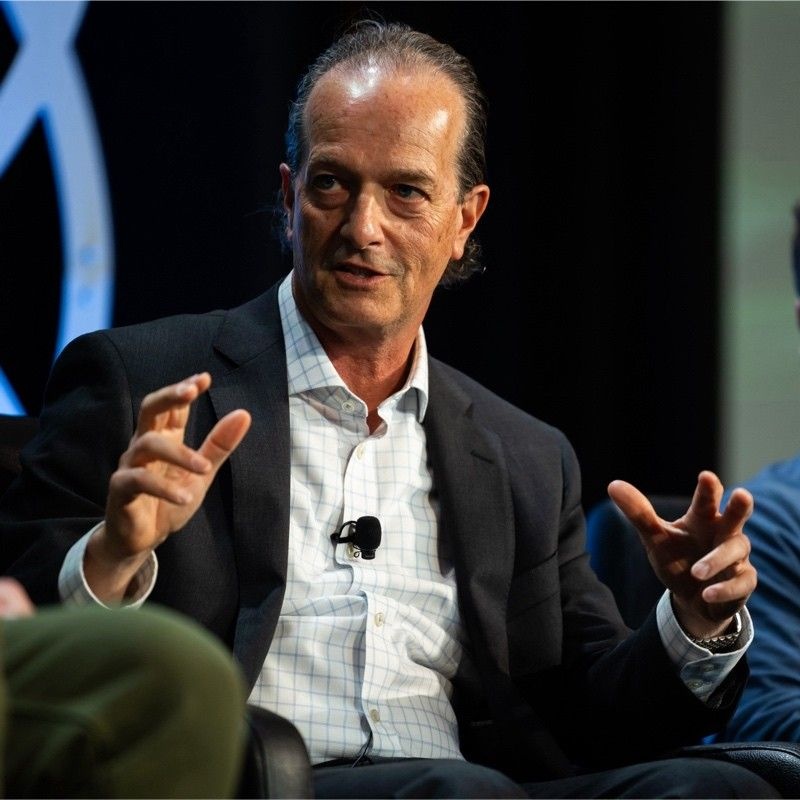
Seven hundred conversations before the sales pitch
Brady and his team interviewed 700 farmers to identify their priorities. The answers were specific: competitive cost, proven results, compatibility with existing crop management and no requirement to buy additional equipment. Kula-N was developed with those constraints in mind. The people expected to use the product were helping define it.
A list like that has a wonderfully deflating effect on grand ambitions. It puts the discussion back in a field, beside machinery that already exists, on a schedule that already matters. Farmers were asking for a useful addition to their work. Any environmental benefit had to come attached to a product that could earn its place.
In January 2022, Kula Bio announced a $50 million Series A round led by Lowercarbon Capital. The stated uses included increasing production capacity and further developing its technology. Funding supplied room to work on those tasks. Commercial success would still require people to choose the product and use it again.
This is where Brady’s career becomes particularly interesting. He had managed a large incumbent’s business and then worked with companies trying to introduce unfamiliar processes. The experience links two sides of a transaction: the team eager to change an industry and the customer whose livelihood depends on choosing carefully.
A grandmother at the boardroom table
Brady’s writing on innovation contains a small family detail: his Italian grandmother taught him to listen more than he spoke. He connects that advice with customer discovery. He also favors teams that combine experienced people with people willing to question established methods, and describes the resulting debates as “intellectual collisions.”
It is an appealing prescription for an executive with decades of experience. Expertise belongs in the room, alongside people prepared to challenge it. He stresses respect between colleagues and a willingness to improve an opinion during debate. Even the grandmother’s instruction has an operational use: other people might know something the company needs.
In March 2025, Brady joined Tim and Tyler Nuss on The Modern Acre to discuss building teams, boards and companies. Those subjects sit comfortably beside the biological fertilizer business. The organism has its own demanding requirements; so does the organization trying to bring it to market.
More careers, more materials
The later appointments extend the same industrial thread. In March 2024, Terragia announced a $6 million seed round and named Brady among its co-founders, serving as Board Chair. Its work uses thermophilic bacteria to convert cellulosic biomass into ethanol and other products. Lee Lynd and Chris Herring were fellow co-founders; Kristin Brief joined as CEO.
In October 2025, Sublime Systems appointed Brady Executive Chair as Rob Davies became CEO. The cement company cited Brady’s experience scaling chemical manufacturing technologies and raising capital. Sublime’s electrochemical process and Terragia’s biology are different technical propositions. Both need organizations capable of carrying them into commercial production.
Then, on November 3, 2025, Kula Bio announced Brady’s transition from founding CEO to Executive Chairman. Harrison Yoon, who had joined the company in 2020, became CEO. The announcement said more than 25 farmers were already purchasing its products. Brady would support the next phase from the board rather than the chief executive’s desk.
“It has been the honor of a lifetime”
Bill Brady, on leading Kula Bio from inception, November 2025
The product work continued. In February 2026, Kula Bio launched soluble powders designed to remove cold-storage requirements and extend shelf life. In May, it announced concentrated liquid formulations, organizing its offering around powder and liquid formats. These developments concern storage, handling and use: the ordinary details that determine how readily a product fits into someone’s day.
Seen together, Brady’s projects form a career concerned with what happens after an idea begins to work. There is science to understand, money to raise, a team to assemble and a customer to persuade. An overnight flight may open the conversation. Seven hundred conversations may help shape the product. Eventually, someone has to place an order.
Continue the conversation
- Kula Bio
- Bill Brady on LinkedIn
- The Modern Acre: teams, boards and Kula Bio
- Watch: Bill Brady on The Modern Acre
- MCJ: the Monolith meeting and Kula Bio’s beginnings
- The Innovator’s Imperative - Bill Brady’s essay
- Kula Bio’s leadership transition
- Sublime Systems appointment
- The Young Ike Project: Future Makers